
News
Recommendations On How To Avoid Building Demolition In Lagos


By Dennis Isong
The Lagos State Government reiterated its commitment to uniformly applying the law during the ongoing demolition of unauthorized structures in Lekki Phase II and the surrounding areas.
One of the most awful events that can happen to anyone is investing millions in properties only to be demolished by the government later.
This begs the question of why the government was watching while construction was going on and had to wait till it became something worthwhile before coming to destroy it. One thing we should understand is that, there are some marked up areas and the government knows what they are doing.
Unfortunately, land sellers are duly aware but they try very hard to shield you from this information because of the money they hope to gain from its sales. If you are a victim,
I sympathize with you. In order not to fall victim again, I will highlight the things you should watch out for.
At Ikota, the level of encroachments is just unimaginable; people have built on the canal path and we resolved that these nuisances cannot be allowed to continue;
Recommendations
- Avoid land close to drainage canal:
Land near drainage canals is susceptible to flooding during heavy rains. Poor drainage systems can exacerbate this issue, leading to water damage to properties and posing a risk to the safety of inhabitants. Drainage canals can contribute to soil erosion, particularly during heavy rain events. This erosion can undermine the stability of buildings’ foundations, which was a factor in the demolition of some structures in Lagos. In many areas, there are regulations and building codes that prohibit construction too close to drainage canals due to the associated risks. Non-compliance can result in legal issues and property demolition, as observed in Lagos. Proximity to drainage canals can lead to safety concerns. In some cases, poor maintenance of these canals can result in accidents or structural damage. Real estate located close to drainage canals may have reduced property values due to the associated risks and inconveniences. - When getting building approval,also get drainage approval
In Lagos State, building approval and drainage approval are two distinct but interrelated processes that property developers and builders must go through when planning and constructing a new building or structure.
Building approval refers to the legal authorization granted by the Lagos State Government or relevant local authority to undertake construction or renovation of a building. It involves a thorough review of architectural plans, structural designs, and construction details to ensure they comply with building codes, safety standards, and zoning regulations. Building approval is crucial to ensure that structures are constructed safely, with proper planning, and in accordance with the law.
Drainage approval, on the other hand, pertains to the permission granted by the relevant authorities to manage the drainage and sewage systems associated with the building. It involves assessing how the building’s drainage, sewage, and wastewater systems will interact with the overall drainage infrastructure of the area. This approval is essential to prevent issues like flooding, erosion, and environmental contamination, which can result from inadequate drainage planning. By obtaining both approvals in tandem, developers can help mitigate the risks associated with inadequate drainage, such as flooding and erosion, and ensure that their construction projects are both safe and environmentally responsible. It emphasizes the importance of comprehensive planning and compliance with local building and environmental regulations in Lagos State. - Follow the recommended setback
“At Ikota, the level of encroachments is just unimaginable; people have built on the canal path and we resolved that these nuisances cannot be allowed to continue; it just had to stop,’’ Commissioner for the Environment and Water Resources, Tokunbo Wahab(culled from Premium Times).
Following the recommended setback is crucial when building in Lagos to avoid the risk of demolition and legal consequences.
A setback in building terms refers to the minimum required distance between a building or structure and a property boundary, road, or other buildings. Lagos, like many urban areas, has specific building regulations that stipulate these setbacks. Lagos has zoning and building codes that mandate setbacks for safety, aesthetics, and urban planning. - Failing to adhere to these regulations can lead to legal violations and demolition orders. Setbacks are often designed to ensure that buildings have adequate spacing between them, allowing for proper ventilation, fire safety, and emergency access.
Disregarding setbacks can compromise safety. Encroaching onto neighboring properties due to insufficient setbacks can lead to property disputes and legal actions, potentially resulting in building demolition to resolve boundary conflicts.
In some cases, setbacks are established to protect public infrastructure like drainage systems. Failure to comply can disrupt these systems, causing flooding and further legal consequences.
- Government should employ the right staff with the right attitude in all the control agencies related to building.
This emphasizes the importance of having qualified and motivated personnel in government agencies responsible for overseeing and regulating building-related activities. It underscores the need to hire individuals who have the necessary knowledge, education, and expertise in fields such as architecture, engineering, urban planning, and building inspection.
These professionals are essential for making informed decisions and assessments regarding building construction, safety, and compliance with regulations.
Beyond qualifications, the right attitude is vital. Government employees working in control agencies related to building should be diligent, honest, and committed to their responsibilities.
They should prioritize the public interest, safety, and the enforcement of building codes and regulations.
Employing staff with the right attitude ensures that these agencies maintain a strong focus on quality control. It helps prevent corruption, negligence, and favoritism, which can compromise the safety and integrity of buildings.
The right staff can provide efficient oversight of construction projects, ensuring that they meet safety and environmental standards. This oversight is essential to prevent substandard construction, which can lead to disasters and costly corrections. When control agencies are staffed with qualified individuals who have the right attitude, it fosters public trust.
Citizens are more likely to have confidence in the government’s ability to regulate and enforce building standards effectively.
▪︎Dennis Isong is a TOP REALTOR IN LAGOS.He Helps Nigerians in Diaspora to Own Property In Lagos Nigeria STRESS-FREE. For Questions WhatsApp/Call 2348164741041
News
South African kills Nigerian bar worker
Olaleye was allegedly shot by a South African national following an argument over whether a drinking glass should be taken outside the bar.
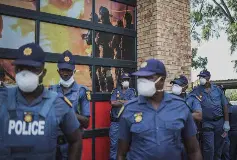
• South African police
The Nigerian Union in South Africa (NUSA) says Olatunde Olaleye, a 40-year-old father of two, has been shot dead in the country.
According to NAN, NUSA said Olaleye, an indigene of Ikere-Ekiti, was killed on September 21 while working at Spanata Bar and Grills in Mamelodi, Pretoria.
Smart Nwobi, NUSA president-general, in a statement on Thursday, said Olaleye was a husband and father of two children, adding that his death has left his family devastated.
He said the union is concerned by reports that Olaleye was allegedly shot by a South African national following an argument over whether a drinking glass should be taken outside the bar.
According to him, there were also reports that the suspect returned to the premises to threaten the bar’s management, with a promise that members of his crew would return.
Nwobi called for a thorough, transparent and impartial investigation into the circumstances surrounding the incident.
“We cannot continue to lose Nigerians under circumstances that leave families devastated and communities traumatised,” he said.
News
Nigerian Editors Brace for Democracy Protection Ahead of 2027 Elections
“As editors, we must remain above board in an increasingly polarised environment. We must not become agents of disorder. Neither should we display contradictory tendencies that cause the citizenry to question our credibility,” Anaba said.
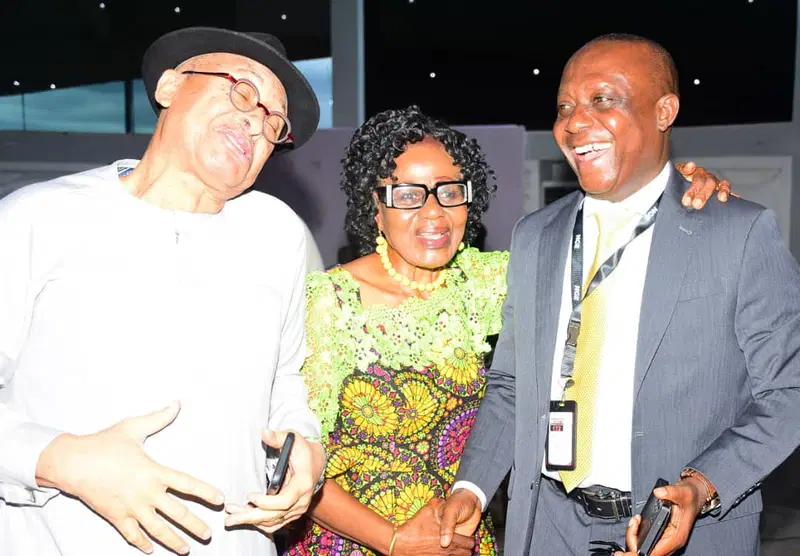
Enugu|•L-R Prof Pat Utomi; Prof Chinyere Okunna and Eze Anaba President Nigerian Guild of Editors at the 22nd All Nigerian Editors Conference in Enugu. Photo. Nwankpa Chijioke
Nigerian editors have been urged to protect the credibility of the ballot and help safeguard democracy as the country prepares for the 2027 general elections.
The call was made by Eze Anaba, President of the Nigerian Guild of Editors (NGE) and Editor of Vanguard Newspaper, in his welcome address at the 22nd Annual All Nigerian Editors Conference, which opened today in Enugu.
The conference is themed, “The Ballot, the Media and the Task of Keeping Democracy Alive.”
Anaba said the media, alongside other critical institutions, had a responsibility to nurture democracy by ensuring that voters were adequately informed and that electoral outcomes reflected the choices of the people.
According to him, the ballot can only fulfil its democratic purpose when voters have access to credible information and are able to make their choices freely, without intimidation or undue influence.
He urged editors and journalists to uphold verification, independence, accuracy, fairness, accountability and courage, particularly in an era of social media, artificial intelligence, deepfakes and the rapid spread of misinformation.
“As editors, we must remain above board in an increasingly polarised environment. We must not become agents of disorder. Neither should we display contradictory tendencies that cause the citizenry to question our credibility,” Anaba said.
He stressed that the media’s overarching responsibility was to serve the public good and help ensure that government derived its legitimacy from the consent of the people.
News
Works Minister Orders Tinubu’s Pictures On First Niger Bridge
“The President has worked so hard and we need to reward his hard work by decorating this bridge with his pictures.”

Minister of Works, David Umahi, has ordered the removal of illegal advertisements from the rehabilitated First Niger Bridge and their replacement with pictures of President Bola Tinubu, saying the display would recognise the President’s work on infrastructure.
Umahi gave the directive during an inspection of ongoing rehabilitation works on the bridge linking Anambra and Delta states.
He said the bridge was expected to reopen to motorists next week, subject to the completion of critical structural work.
“Once we are done with work on this bridge, I want all the illegal adverts on this bridge removed. Anyone who wants to advertise should apply to the Ministry of Works. For now, the bridge will be decorated with the pictures of President Tinubu,” Umahi said.
“The President has worked so hard and we need to reward his hard work by decorating this bridge with his pictures.”


TIME Names Moniepoint CTO Felix Ike Among 50 Global Executives of the Year

Naira Exchange Rates, Friday September 25

South African kills Nigerian bar worker

Tech Expert, Zuckerberg trains with UFC champions, Adesanya, Alexander

Organ Trafficking: Ekweremadu bags 10 years in UK prison

SAINT OBI: Between his marriage and his death
-
 News3 days ago
Independent Panel Begins Probe into 37 Deaths in Civil Defence Custody
-

 Business3 days ago
Fans shown 65,000 junk food ads at World Cup
-

 Sports3 days ago
Mbappé Leaves Nike To Promote Swiss Sportswear Brand On
-

 Business3 days ago
President Tinubu Urges Africa to Stop Exporting Raw Minerals
-

 International3 days ago
JUST IN: UK Removes Nigeria, Ghana Teachers from QTS Eligibility List
-
 Business2 days ago
FG Engages Stakeholders On Nigeria’s Rice Value Chain
-

 Business2 days ago
Naira To Dollar, Pound , Euro Rate Wednesday September 23
-
 Health3 days ago
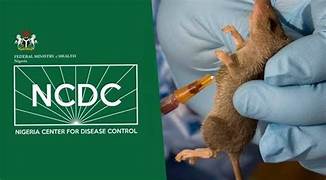
BREAKING: Lassa fever kills 259, infects 1,086 in 24 Nigerian states — NCDC