
News
Police Commission Explains Recruitment Of ‘Repentant Thugs’ To Fight Crimes


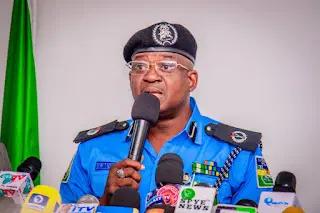
The Police Service Commission (PSC), on Thursday, explained the recruitment of ‘repentant thugs’ as Police Constables in Kano State.
This came amid viral videos showing how some repentant thugs were recruited as part of police constables drafted to fight crime in Kano. The situation drew condemnation from some Nigerians as they faulted the decision.
In a statement, PSC spokesman, Ikechukwu Ani, clarified that the “repentant criminals” were recruited as police constabulary because they had realised that crimes do not pay.
“The Commission wishes to state categorically that the Special Constabulary are not Police men and not recognised as such by the Commission and Government,” he said.
“The Commission however notes that the Constabulary operations are covered and recognised by the Police Act and are readily useful and needed now that the nation is fighting to end the siege of criminals across the country.”
He stated that the commission is in touch with the Kano State Police Command and is aware that the use of the Constabulary is to support the Police in building a crime-free Kano State.
To Ani, it is necessary to state that the men and women recruited as Special Constabulary are posted to work in their locality where they will be in a better position to fish out the criminals terrorising the place.
“Some of the repentant influential youths previously used in the past as political thugs and abandoned have realised that crime does not pay and have voluntarily offered themselves to assist fight for a crime free state,” he explained.
“The Commission is also aware that the Kano Special Constabulary has received adequate training and are working in their Local Government areas as required by law but under strict supervision of the State Police Command.”
Noting that their engagement is to promote sustainable peace, economic growth and development of the state, Ani said the PSC Chairman, Dr. Solomon Arase, will continue to partner with the police to ensure an improved security of lives and property in the country.
Arase, a retired Inspector General of Police, said that security is not only a government responsibility but that of every Nigerian and called for a citizen-based approach to security in Nigeria.









A Nigerian military aircraft, ATR-42 carrying 32 people has crashed near the Naval Base in Igbokoda, Ondo State.
Minister of Aviation Festus Keyamo said the aircraft, with tail number NGR 931, was flying from Benin to Lagos when contact was lost at about 9:13 a.m.
The wreckage has been located, and search and rescue operations are underway.
Preliminary information indicates there were 25 passengers and seven crew members on board.
Keyamo said he has spoken with the Chief of Air Staff, Air Marshal Sunday Kelvin Aneke, and pledged the ministry’s full support for the rescue effort.
Meanwhile, the Nigerian Air Force (NAF) has activated an immediate Search and Rescue operation following an ATR-42 aircraft accident in the Igbokoda area of Ondo State on 5 October 2026.
The aircraft was on a routine mission from Benin to Lagos when the accident occurred. Search and Rescue operations, in coordination with relevant authorities and emergency response agencies, are currently ongoing.
Ehimen Ejodame, Air Commodore, Director of Public Relations and Information Headquarters, Nigerian Air Force, said NAF is committed to ensuring the success of the ongoing Search and Rescue efforts. Further details will be communicated in due course.

News
NGE Tasks Newsrooms, INEC on Must-Do Measures for Credible 2027 Polls
The Guild warned that synthetic content could be produced and distributed rapidly, including fabricated election results, cloned voices of public officials, forged documents, manipulated result sheets and fake reports attributed to established media organisations.


• [File photo] L-R Prof Pat Utomi; Prof Chinyere Okunna and Eze Anaba President Nigerian Guild of Editors at the 22nd All Nigerian Editors Conference in Enugu. Photo. Nwankpa Chijioke.
The Nigerian Guild of Editors (NGE) has tasked news organisations and the Independent National Electoral Commission (INEC) with implementing far-reaching reforms to strengthen the credibility of Nigeria’s 2027 general elections.
The Guild, in a communiqué issued at the end of the 22nd All Nigeria Editors Conference (ANEC 2026) in Enugu, called on newsrooms to institutionalise fact-checking and verification systems and integrate digital verification, deepfake detection and forensic tools into their editorial workflows.
The communiqué, signed by NGE President, Eze Anaba, and General Secretary, Onuoha Ukeh, also called for electoral reforms, including the introduction of a 50 per cent threshold for presidential elections and the resolution of electoral disputes before the swearing-in of declared winners.
The Guild urged all news organisations to adopt the Nigerian Media Code of Election Coverage (Revised 2022) and train journalists and other editorial staff on its provisions ahead of the 2027 elections.
The Code was jointly endorsed by the Newspaper Proprietors’ Association of Nigeria, Broadcasting Organisations of Nigeria, Nigeria Union of Journalists, NGE, Radio, Television, Theatre and Arts Workers Union, and Guild of Corporate Online Publishers.
According to the Guild, the media has a critical responsibility to provide accurate, verified and independent information to the electorate while holding governments, political parties and other centres of power to account.
The NGE identified generative artificial intelligence, deepfakes, voice cloning and automated networks as major emerging threats to the integrity of electoral information.
The Guild warned that synthetic content could be produced and distributed rapidly, including fabricated election results, cloned voices of public officials, forged documents, manipulated result sheets and fake reports attributed to established media organisations.
The editors said the greatest danger was not merely the circulation of individual falsehoods but the broader erosion of public trust when citizens became unable to distinguish authentic information from fabricated content.
The conference, with the theme, “The Ballot, the Media and the Task of Keeping Democracy Alive,” was chaired by the Obi of Onitsha, His Royal Majesty Igwe Nnaemeka Alfred Achebe, while the Archbishop Emeritus of Abuja, His Eminence John Cardinal Onaiyekan, delivered the keynote address.
Vice President Kashim Shettima participated virtually as Special Guest of Honour, while Enugu State Governor, Dr Peter Ndubuisi Mbah, served as Chief Host.
More than 500 editors, publishers and senior media practitioners from print, broadcast and digital platforms, alongside political, traditional, religious, academic, regulatory and development-sector leaders, attended the conference.
News
Nigerian-Born Former Texas Professor Gets 78 Months For $921,000 Student Aid Fraud
Finnih submitted more than 100 fraudulent financial aid applications over approximately five years using other people’s identities at colleges and universities across Texas, prosecutors said.
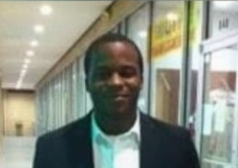
•Emmanuel Olugbaike Finnih
A former Texas Southern University adjunct professor will serve 78 months in federal prison for a student financial aid fraud scheme that obtained more than $921,000 and left victims with debt in their names, federal prosecutors announced Friday.
Dallas Express reported that Emmanuel Olugbaike Finnih, 43, of Richmond, is a naturalized U.S. citizen originally from Nigeria.
U.S. District Judge Andrew Hanen imposed the prison sentence and three years of supervised release, the U.S. Attorney’s Office for the Southern District of Texas said in a news release.
Finnih pleaded guilty March 20 to theft of government funds, fraud, unlawful use or transfer of identity documents, and aggravated identity theft.
Finnih submitted more than 100 fraudulent financial aid applications over approximately five years using other people’s identities at colleges and universities across Texas, prosecutors said.
He sought more than $1.3 million in federal grants and loans, and the scheme resulted in $921,189.08 in disbursements.
Finnih used other people’s personal information to complete and sign aid applications and master promissory notes.
He controlled the mailing addresses, phone numbers and email accounts that received communications from schools and the Department of Education, prosecutors said.
He then collected financial aid refunds through electronic transfers, checks and prepaid debit cards sent to addresses or accounts he controlled.


Military Aircraft Crashes Near Ondo Naval Base; 32 On Board

Naira Rates To Dollar , Pound, EURO… Monday, October 5

BBNaija season 11: “And The Winner is Temi Nkem”

Tech Expert, Zuckerberg trains with UFC champions, Adesanya, Alexander

Organ Trafficking: Ekweremadu bags 10 years in UK prison

SAINT OBI: Between his marriage and his death
-

 Business1 day ago
Diesel Costs Bite: LAMATA Accelerates Shift To CNG, Electric Buses
-

 International1 day ago
US’s Gullah Geechee communities celebrate historic cultural festival rooted in West Africa
-

 International1 day ago
Italy marks 800 years since death of Saint Francis of Assisi
-

 Sports19 hours ago
FIFA to decide 2030 World Cup final venue in 2028 as Morocco, Spain wait
-
 Entertainment19 hours ago
BBNaija season 11: “And The Winner is Temi Nkem”
-
 News1 day ago
Nigerian-Born Former Texas Professor Gets 78 Months For $921,000 Student Aid Fraud
-

 International1 day ago
Ethiopian woman says she hasn’t eaten or drunk water since age 10
-

 News19 hours ago
NGE Tasks Newsrooms, INEC on Must-Do Measures for Credible 2027 Polls