
News
PIONEERING ARCHIVAL SCIENCE AND DIPLOMATICS IN AFRICA: Sampling Prof. Elvis Efe Otobo’s Outstanding Career and achievements

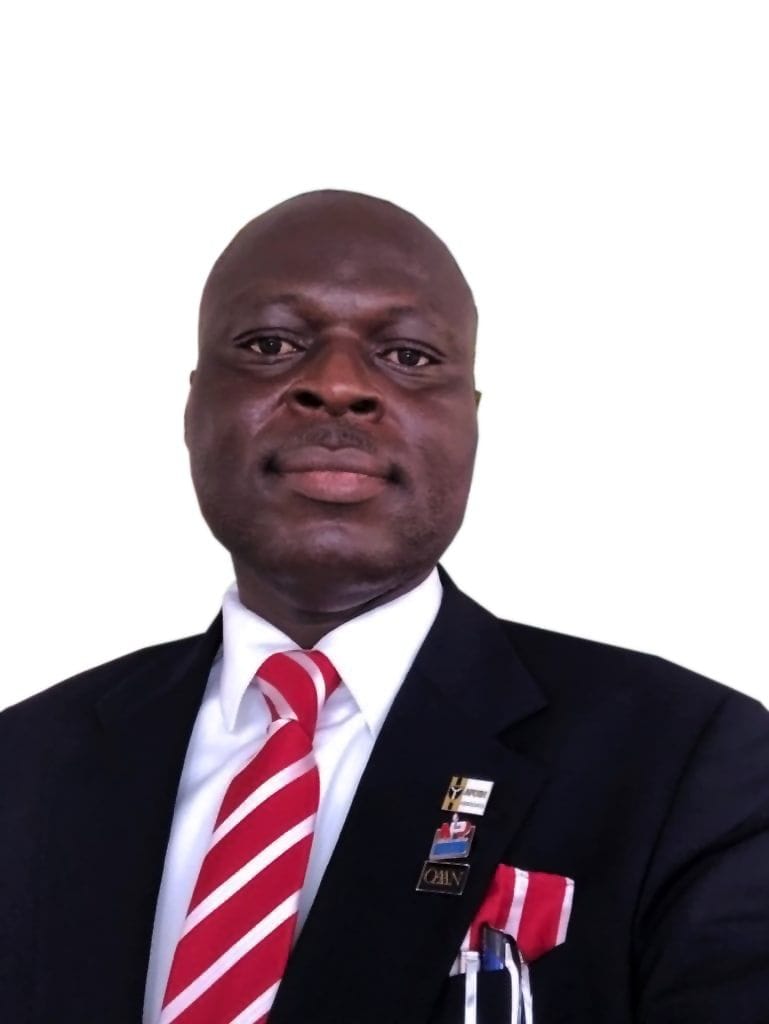
Professor Elvis Efe Otobo stands as a pioneering figure in the realm of archival science and diplomatics, marking significant milestones throughout his distinguished career. His achievements, spanning academia and international collaborations, underscore his profound impact on the field.
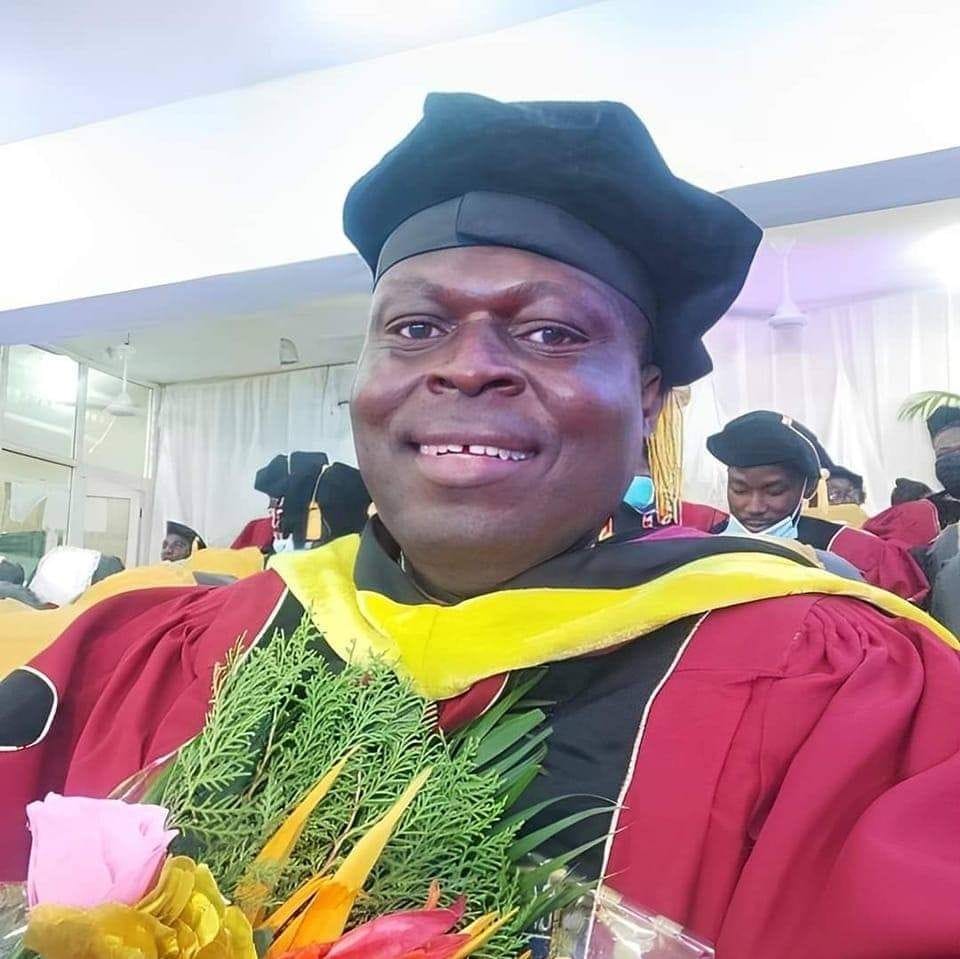
Firstly, Professor Otobo’s academic journey is adorned with notable accolades and educational achievements. His credentials include a Ph.D. in Information Resources Management with a specialization in Archival Administration and Records Management from Babcock University. His groundbreaking thesis on ‘Records Management Practices and Work Environment as Determinants of Administrative Effectiveness of Lagos State Judiciary, Nigeria’ reflects his deep commitment to advancing archival practices in a practical context.
Moreover, Professor Otobo’s scholarly contributions extend far beyond his academic qualifications. His extensive publication record in renowned journals and his collection of unpublished research papers have significantly enriched the discourse on archival science. His role as Nigeria’s first business archivist and his collaborative initiatives with international institutions such as the National Archives, United Kingdom, demonstrate his commitment to fostering global partnerships in the field of records and information management.
Professor Otobo’s influence is not limited to academia; he is also recognized for his leadership and educational initiatives. He has designed training courses in archives and records management that have received global acclaim, contributing to the professional development of practitioners worldwide. His role as a certified leadership coach and his experiences in SEN education highlight his diverse contributions to both academic and professional communities.
Furthermore, Professor Otobo’s international experience, including internships at institutions like the National Archives of Iceland, and collaborations with esteemed academics such as Professor Luciana Duranti, underscore the global reach and impact of his work. His involvement as a keynote speaker and organizer of training programs at prestigious venues like the National Archives UK further solidifies his reputation as a leader in archival science and diplomatics.
In conclusion, Professor Elvis Efe Otobo’s journey is a testament to his dedication, innovation, and leadership in advancing archival science on a global scale. His pioneering spirit and collaborative efforts continue to shape the future of records management and archival practices, inspiring generations of scholars and practitioners alike.
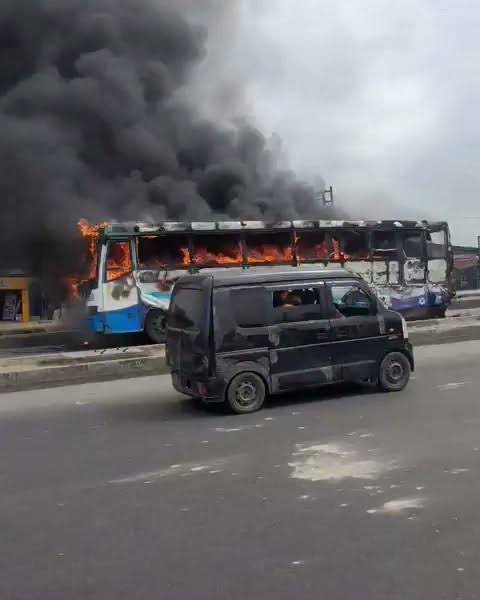
An angry mob has set a Bus Rapid Transit (BRT) bus on fire after it reportedly crushed a commercial motorcyclist to death at Ogolonto Bus Stop along Ikorodu Road in Lagos State.
The incident occurred on Friday, October 16, 2026. Eyewitness accounts and social media reports indicate that the motorcyclist was riding alone along the restricted BRT lane when the collision happened. He died at the scene.
Enraged residents and youths then attacked the bus driver and set the vehicle ablaze. Police officers and officials of the Lagos Neighbourhood Safety Corps (LNSC), who were nearby, intervened promptly and rescued the driver unharmed.
The identity of the deceased motorcyclist and the exact circumstances of the crash had not been officially confirmed at the time of filing this report. It was also unclear whether any arrests had been made in connection with the burning of the bus.
News
ARISE News Wins Seven Honours At Nigerian Broadcasters Merit Awards
The awards recognised the network’s achievements in television journalism and programming, with ARISE News winning the Best TV Channel (Viewer’s Choice) category.

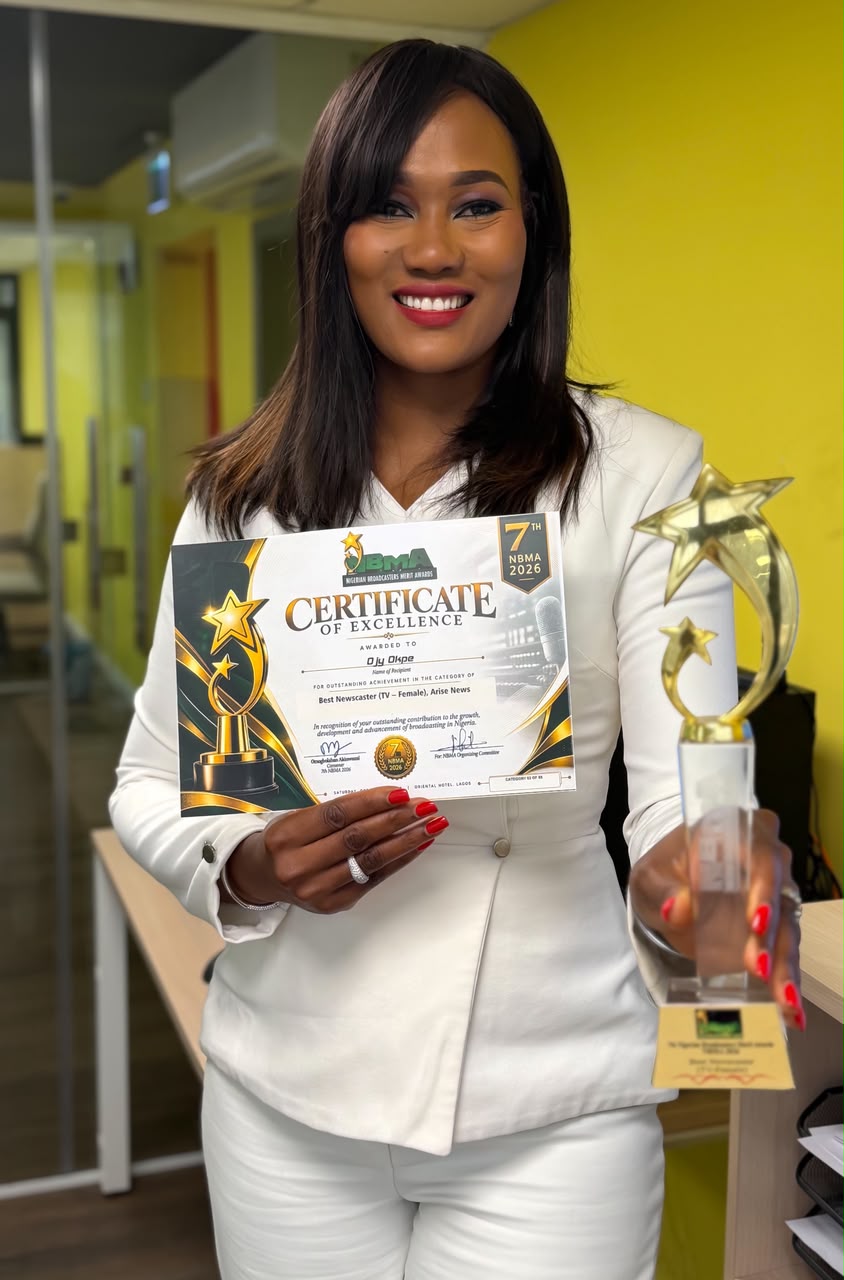
• ARISE News Anchor and host of What’s Trending Ojy Okpe was named Best Newscaster (TV – Female)
ARISE News has emerged as one of the major winners at the just ended Nigerian Broadcasters Merit Awards (NBMA).
ARISE News won seven honours across television broadcasting, news reporting, presentation and production during the ceremony.
The awards recognised the network’s achievements in television journalism and programming, with ARISE News winning the Best TV Channel (Viewer’s Choice) category.
The network’s flagship breakfast programme, The Morning Show, also won the Best TV Talk Show award, further strengthening its recognition in television broadcasting.
ARISE News Anchor and host of What’s Trending Ojy Okpe was named Best Newscaster (TV – Female).
Rufai Oseni was named Nigerian Broadcaster of the Year (Male), while Vimbai Mutinhiri-Ekpeyong received the Nigerian Broadcaster of the Year (Female) award.
The recognition extended to the network’s newsroom, with Ovieteme George winning Best TV News Reporter (Male) for his contributions to television news reporting.
Behind the camera, Sam Adeyemi received the Best Camera Operator/Cinematographer award, recognising his work in television production and visual storytelling.
News
Meta removes 3.7 million accounts in West Africa scam crackdown
The joint operation led to 28 arrests, identified more than 30 suspected scam centres and rescued 117 people allegedly trafficked and forced to work in scam compounds in Ghana.
Meta, the parent company of Facebook and Instagram, has removed more than 3.7 million Facebook and Instagram accounts, pages and groups linked to suspected scam networks operating in West Africa.
The joint operation led to 28 arrests, identified more than 30 suspected scam centres and rescued 117 people allegedly trafficked and forced to work in scam compounds in Ghana.
The company announced the crackdown in a statement on Tuesday, October 13, 2026. It involved 14 technology companies and law enforcement agencies from 10 countries.
The United Kingdom’s National Crime Agency coordinated the operation with the US Department of Justice, the Federal Bureau of Investigation and other agencies. Nigerian authorities were involved.
Other countries included Ghana, Australia, Canada, New Zealand and India.Tech companies that took part included Google, Microsoft, OpenAI, Coinbase, Starlink and Adobe.
Meta said the partnership let participants share intelligence across digital platforms, countries and financial systems to identify criminal networks.


JUST IN: Mob Sets BRT Bus Ablaze After Motorcyclist’s Death in Lagos

BREAKING: DSS Arrests Fugitive Maina Son, Hands Him to EFCC

BREAKING: 5 Arrested Over Imo NYSC Abduction

BREAKING: Lagos Govt Declares Today, Thursday Work-Free to Mark 2026 Ìṣẹ̀ṣe Day

Tech Expert, Zuckerberg trains with UFC champions, Adesanya, Alexander

Organ Trafficking: Ekweremadu bags 10 years in UK prison
-

 Business2 days ago
NAFDAC scolds fake manufacturers: “You are killing Nigerians in order to make money”
-

 Business2 days ago
Naira Exchange Rates For Thursday, October 15
-
 Business2 days ago
Oyedele Chairs G-24 Call for Fairer Global Financial System, Affordable Development Financing
-

 Business3 days ago
BREAKING: Shell to Exit Nigeria’s Domestic Gas Distribution Business
-
 Sports2 days ago
CAF Increases Annual Funding for Member Federations to $700,000
-

 Business1 day ago
Germany plans tax on sugary drinks
-
 Politics2 days ago
Exclusion of candidates from INEC list: CD cautions INEC against manipulation by politicians
-
 Business1 day ago
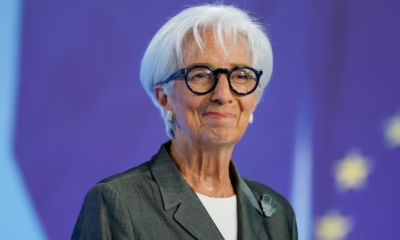
WEF could appoint Lagarde as its next chair, sources say