
Politics
Pat Utomi Forms Shadow Govt • It’s an Abberation – FG
The Minister of Information and National Orientation, Mohammed Idris, said, “At a time when our nation is set to celebrate 26 unbroken years of presidential democracy, the idea of a so-called “shadow government” is an aberration

Human rights lawyer, Dele Farotimi, was named head of the Ombudsman and Good Governance portfolio.
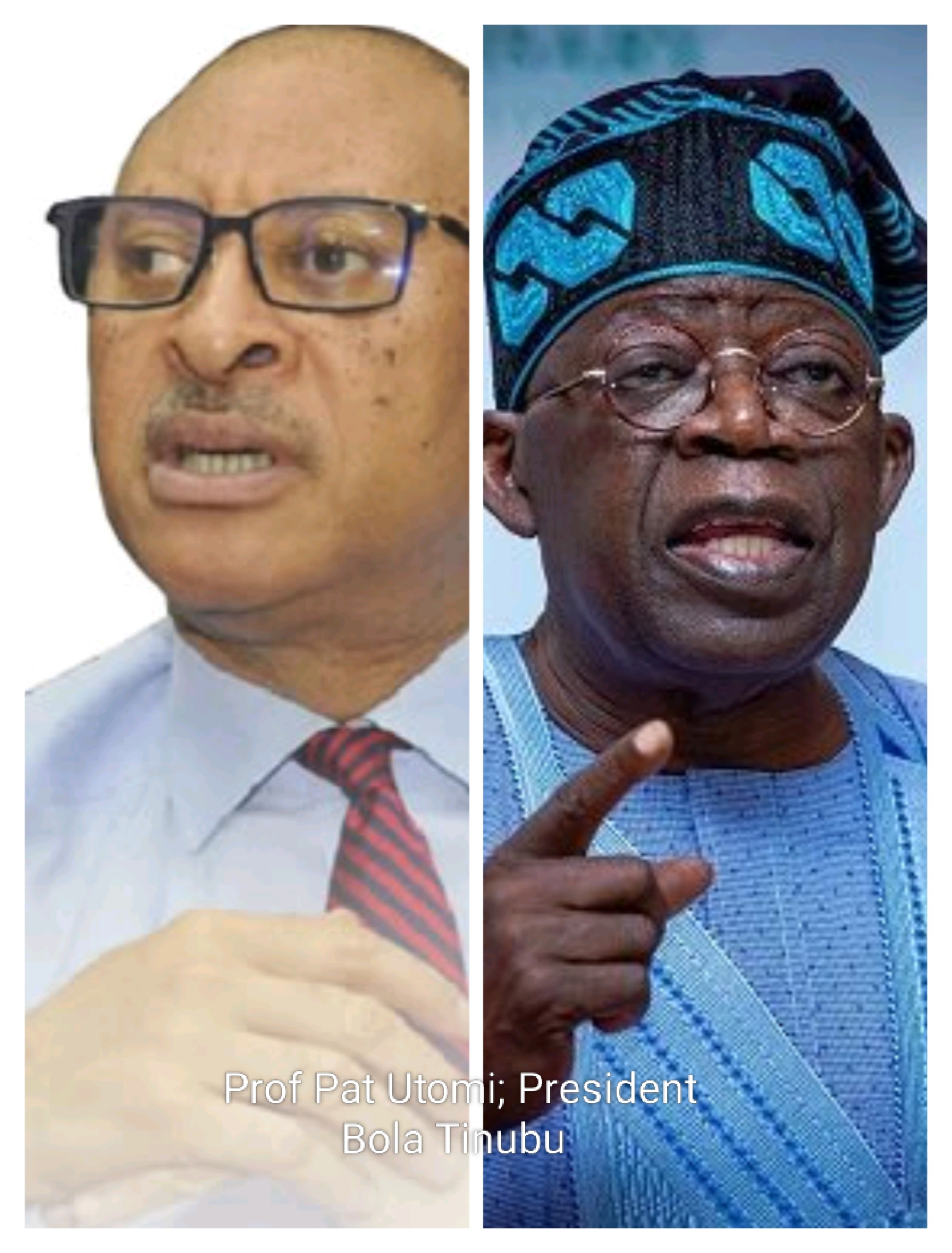
Prof. Pat Utomi, has inaugurated a shadow government composed of members from various opposition parties.
A shadow government is individuals or an organization providing counsel to government officials without being publicly accountable.
Human rights lawyer, Dele Farotimi, was named head of the Ombudsman and Good Governance portfolio.
Others appointed to the policy delivery unit include Oghene Momoh, Cheta Nwanze, Daniel Ikuonobe, Halima Ahmed, David Okonkwo, and Obi Ajuga.
Other members of the shadow cabinet include Dr. Adefolusade Adebayo, Dr. Peter Agadah, Dr. Sadiq Gombe, Chibuzor Nwachukwu, Salvation Alibor, Bilkisu Magoro, Dr. Victor Tubo, Charles Odibo, Dr. Otive Igbuzor, Eunice Atuejide, Gbenga Ajayi, and Dr. Mani Ahmad, as well as Peter Oyewole and Dr. Omano Edigheji.
Utomi said that the “Big Tent Coalition Shadow Government,” launched virtually on Monday evening, will function as a credible opposition force, highlighting the failures of the Bola Tinubu administration while offering ideas for better governance.
Utomi, however, justified the move, arguing that policy missteps by the current Federal Government had worsened poverty, driven multinational companies out of the country, and intensified terrorism in Benue and Plateau states, alongside rising insecurity and corruption nationwide.
The political activist expressed concern over what he described as the government’s resort to propaganda and the suppression of opposing views.
“The recent spate of defections to the All Progressives Congress provides further evidence that all is not well with democracy in Nigeria,” he said.
“The imperative is that if a genuine opposition does not courageously identify the performance failures of incumbents, offer options, and influence culture in a counter direction, it will be complicit in subverting the will of the people.”
He said the shadow cabinet—made up of figures drawn from several opposition parties—was created to respond to what he called a national emergency.
“Today, I bring to this pioneer body the desperate cries of a people troubled by how their reality seems bound for serfdom.
I challenge you to awaken these people who wrongly believe that everything is fine as long as they can manage a share of what little still trickles down from crude oil sales,” Utomi said.
Utomi stated that the shadow government would hold weekly cabinet meetings to assess government policies and propose practical alternatives.
He identified immediate priorities as the stimulation of production, the formulation of a coherent economic growth strategy, decentralisation of security, and constitutional reform.
The cabinet, he said, would also focus on providing alternatives in healthcare, education, infrastructure development, law and order, and policy monitoring.
However , in a swift reaction, the Federal Government kicked against the move, describing it as an aberration in a federal system of government.
In an interview with the Punch, the Minister of Information and National Orientation, Mohammed Idris, said, “At a time when our nation is set to celebrate 26 unbroken years of presidential democracy, the idea of a so-called “shadow government” is an aberration.”

Politics
You’re looking for campaign funds — Okonkwo reacts to Obi’s N5bn defamation suit
Okonkwo, a former spokesperson for Obi during the 2023 presidential election campaign made his position known in a statement posted on his X account on Wednesday.

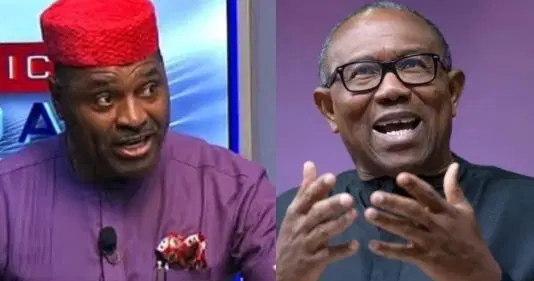
Photo: A collage of Kenneth Okonkwo, and Peter Obi
Actor-turned-politician Kenneth Okonkwo has reacted to the N5 billion defamation suit reportedly being prepared against him by the Nigeria Democratic Congress (NDC) Party’s presidential candidate Peter Obi, describing the move as unwise and challenging Obi to proceed with the court action.
Okonkwo, a former spokesperson for Obi during the 2023 presidential election campaign made his position known in a statement posted on his X account on Wednesday.
Okonkwo’s reaction followed reports that Obi had threatened legal action against him over alleged defamatory comments, with a demand for N5 billion in damages.
Responding to the development, Okonkwo said he had been informed of a letter allegedly sent by Obi and his lawyers but had yet to read it.
“It has been brought to my notice that there is a letter circulating online from Peter Obi, and his Lawyers that I should pay him N5 billion ; Hahaha!” he wrote.
“If Peter Obi is looking for money to campaign, he should privately ask me for assistance, not come from extortion, and I will help him.”
The former Labour Party chieftain claimed that he personally incurred expenses while serving as Obi’s spokesperson during the 2023 election campaign.
“I did so when I was his Spokesperson paying for my flight tickets and booking for my hotel accommodation to some of our campaigns,” he said.
The former campaign spokesman maintained that he would respond formally after reviewing the letter, while urging Obi and his legal team to proceed with the case.“It will be a shame to Peter Obi and his Lawyers if they do not take this case to court. I don’t have time or patience for scammers,” he said.
Politics
Bamidele tasks 11th Senate to consider single term for President, govs
… If you know you are there for six years, only one tenure, you put in your best from day one. You know this is the only chance that you have.
•Senate Leader, Opeyemi Bamidele
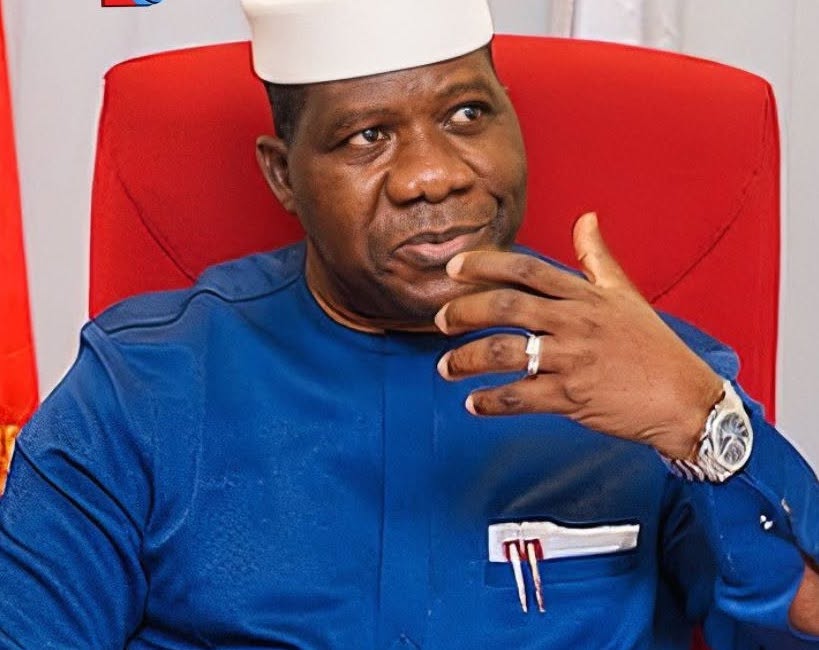
Senate Leader, Opeyemi Bamidele, has proposed a six-year single term for the President and governors to enable them to put in their best from the moment they are voted in after 2027 elections.
In South Africa ,the Constitution limits the president’s time in office to two five-year terms.
Speaking to journalists during an interactive session ahead of the 3rd anniversary of the 10th Senate, in Abuja, Bamidele said: “I now see why one of the first sets of bills that I look forward to moving by God’s grace when we come back for the 11th Senate is for a bill that will only make it possible for anyone who wants to be President of this country or governor in any state of this country to spend only one tenure of six years.
“With this, you don’t even have to worry about wasting almost one and a half years of your first term thinking and struggling and looking forward to how you’ll be re-elected. If you know you are there for six years, only one tenure, you put in your best from day one. You know this is the only chance that you have.”
The Senate Leader also strongly defended the 10th Senate against allegations that it functioned as a rubber-stamp legislature, insisting that the upper chamber deliberately adopted a strategy of constructive engagement with the executive to address Nigeria’s economic and governance challenges rather than pursuing public confrontations.
Politics
Peter Obi demands N5bn from Kenneth Okonkwo over defamation allegations
Okonkwo allegedly claimed that “Obi, together with the leaders of the Nigeria Democratic Congress (NDC) in the South-East, informed the party’s aspirants that any person seeking to contest as a member of the House of Representatives must, after paying the prescribed expression of interest fee, pay a bribe of Ten Million Naira (N10,000,000.00) to the NDC and to the Caucus leaders.”
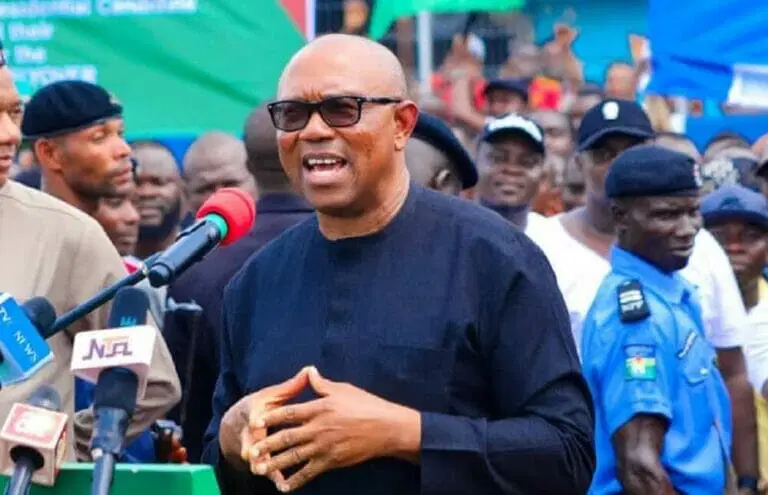
The presidential candidate of the Nigeria Democratic Congress, Peter Gregory Obi, has demanded N5 billion in damages and a public apology from actor-turned-politician Kenneth Okonkwo over alleged defamatory statements made during a television appearance.
In a letter dated June 9, 2026, Obi’s lawyers, led by Alex Ejesieme (SAN), accused Okonkwo of making false, malicious and defamatory allegations against their client during an appearance on Channels Television’s Sunrise Daily programme on Monday, June 8.
The legal team said that the remarks were subsequently published and circulated by several media organisations and online platforms.
According to the letter, Okonkwo allegedly claimed that “Obi, together with the leaders of the Nigeria Democratic Congress (NDC) in the South-East, informed the party’s aspirants that any person seeking to contest as a member of the House of Representatives must, after paying the prescribed expression of interest fee, pay a bribe of Ten Million Naira (N10,000,000.00) to the NDC and to the Caucus leaders.”
The lawyers also alleged that Okonkwo claimed there was documentary evidence of the payments, that Obi personally compiled the party’s list of candidates from a hotel room, warned aspirants that Obi would “scam” them, collected money from people abroad and was involved in criminal activities alongside other party leaders.
The letter stated that the allegations portrayed Obi as a person engaged in bribery, extortion, fraud, financial dishonesty and criminal conduct.


FIFA World Cup Day 2: Canada holds 1-1 Bosnia-Herzegovina

Democracy Still Struggling 33 Years After June 12, PDP Laments by Comrade Ini Ememobong

JUNE 12: President Bola Ahmed Tinubu’s Democracy Day Address (Full Speech)

Tech Expert, Zuckerberg trains with UFC champions, Adesanya, Alexander

Organ Trafficking: Ekweremadu bags 10 years in UK prison

SAINT OBI: Between his marriage and his death
-
 Business3 days ago
UBA wins 2026 ‘Banker Technology’ award for AI innovation
-
 Business2 days ago
Exchange Rates Thursday,11June 2026
-
 Sports3 days ago
Olympic qualifier: Comoros to face Super Falcons following 30-0 victory over Sudan
-
 Business3 days ago
Invest in Lagos 3.0 Summit Attracts more than 600 delegates
-
 Politics3 days ago
Bamidele tasks 11th Senate to consider single term for President, govs
-

 News1 day ago
JUST IN: Nigerians evacuated from South Africa arrives Lagos
-

 News1 day ago
BREAKING: House of Reps Unveils New Minority Leader
-
 Health3 days ago
Ebola: President Tinubu approves N10bn to strengthen NCDC preparedness