
Business
Nigeria, Trinidad & Tobago Sign Direct Air Connectivity Agreement to Boost Trade
The agreement grants designated airlines from both countries the rights to operate passenger and cargo flights, establish commercial agreements, and access the other’s territory under agreed terms.


• The Minister of Aviation and Aerospace Development, Festus Keyamo
The Federal Government of Nigeria and Trinidad and Tobago have signed a Bilateral Air Service Agreement (BASA) to boost trade, tourism, and air connectivity.
The Minister of Aviation and Aerospace Development, Festus Keyamo, and his counterpart, the Minister of Works and Transport, Rohan Sinanan, signed the agreement on behalf of both countries at the Piarco International Airport, Trinidad and Tobago.
The agreement, according to a statement by the Media Aide to the minister of Aviation and Aerospace Development, Tunde Moshood marks the official commencement of direct air links between both nations.
The agreement is the culmination of diplomatic and technical conversations that began during the administration of former President Olusegun Obasanjo.
Keyamo commented: “Today’s signing not only fulfills a long-standing bilateral vision initiated during President Obasanjo’s time but also represents our commitment to expanding Nigeria’s global aviation footprint.
This agreement will enhance trade, tourism, cultural exchange, and connectivity between Nigeria and the Caribbean region.
”The agreement grants designated airlines from both countries the rights to operate passenger and cargo flights, establish commercial agreements, and access the other’s territory under agreed terms.
It is expected to strengthen economic and people-to-people ties.Sinanan expressed optimism about the potential of the agreement to boost cooperation and expand aviation opportunities for Caribbean and African carriers.
The agreement adds to Nigeria’s growing list of strategic international aviation agreements and reinforces President Bola Tinubu’s administration’s commitment to improving air connectivity, promoting regional integration, and strengthening diplomatic relations through aviation diplomacy.
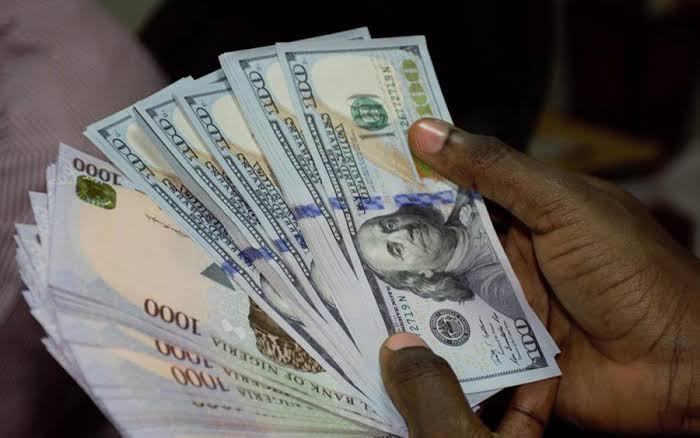
Olayemi Cardoso, Governor of the Central Bank of Nigeria has said that the country’s $54.87 billion foreign exchange reserves is strong enough to withstand pressures on the naira.
Cardoso gave the assurance during the 308th meeting of the Monetary Policy Committee, held yesterday,in Abja.
Responding to concerns about the reserves decline and pressure on the naira, Cardoso said that the movement is a normal and temporary market adjustment.
Cardoso said Nigeria’s reserves, between $54 billion and $55 billion, provide about 10 months of import cover.
That, he said, gives the country a substantial buffer against external shocks.“Buffers remain strong. $54 billion reserves is very substantial,” he said.
He acknowledged that reserves had fallen and the exchange rate had seen volatility.
He argued that the movements were not large enough to undermine Nigeria’s external position.
He assured that the apex bank would keep taking measures to preserve stability.
Cardoso linked part of the pressure to seasonal factors. Portfolio investors are adjusting positions towards the end of the year. Domestic businesses are hedging against possible foreign exchange movements ahead of the new year.
Business
Naira Exchange Rates, Wednesday, 25 Nov 2026
The black market (parallel market) dollar to naira rate is the most searched forex query in Nigeria.
BLACK MARKET RATES
US Dollar =₦1,445
British Pound= ₦1,870
EURO = ₦1,580
Canadian Dollar (CAD) = ₦950
Chinese Yuan (CNY) = ₦190
Ghanaian Cedi =₦100
South African Rand (ZAR)=₦ 70
UAE Dirham =₦ 350
West African CFA franc (XOF) = ₦ 2, 240
Central African CFA franc (XAF)=₦ 2,180
Australian Dollar (AUD)=₦ 820
Business
Naira falls 2.57% despite $1.30bn CBN intervention
The latest decline has raised questions about the effectiveness and sustainability of CBN interventions.
The naira weakened to N1,389.73 per dollar in the official foreign exchange market after a 2.57% weekly depreciation, despite an estimated $1.30 billion intervention by the Central Bank of Nigeria.
The currency had been moving towards N1,400 per dollar, renewing concerns about how long the CBN can defend it.
The decline comes as businesses and households prepare for higher dollar demand during Christmas.
Analysts warn that festive demand and spending ahead of the 2027 general elections could deepen pressure on the naira and push up prices for Nigerians.
CBN data showed the naira depreciated by 2.57% during the week, closing at N1,389.73 per dollar in the official market.
In the parallel market, the currency traded around N1,458 per dollar, with some market reports quoting rates as high as N1,468.
The latest decline has raised questions about the effectiveness and sustainability of CBN interventions.
Despite an estimated $1.30 billion injection into the foreign exchange market, demand from importers, investors and other participants continued to weigh on the currency.


El-Rufai makes u-turn on wiretapping

Katsina Suspends Emir of Daura Over Sexual Allegations By Polish Tourist

Mother, daughter crushed to death by truck in Abuja

BREAKING: Lagos Govt Declares Today, Thursday Work-Free to Mark 2026 Ìṣẹ̀ṣe Day

Tech Expert, Zuckerberg trains with UFC champions, Adesanya, Alexander

Why we Increase the 2025 Budget by ₦700bn – Bichi
-
 News3 days ago
Emir, 92, Under Probe For Alleged Palace Romance
-

 Business3 days ago
Naira Exchange Rates, Monday 23 Nov 2026
-
 News3 days ago
Tinubu Tasks APC on Winning Lagos in 2027 general elections
-

 Sports3 days ago
Zenith Bank/Delta Principals’ Cup kicks off November 26
-
 News2 days ago
Omo-Agege survives assassination attempts at campaign rally in Delta, four dead
-

 Health2 days ago
Medical Academy Warms Nigerians New COVID-19 Variant Spreading
-

 Politics3 days ago
Atiku: I’m in 2027 presidential race to win
-

 Sports2 days ago
Nigeria Lacks Infrastructure To Host FIFA World Cup – Infantino