
Business
CBEX: Nigerians lose N1.3tn as digital trading platform crashes


Nigerians have taken to their various social media platforms to lament their losses after a digital asset trading platform, known as CBEX, allegedly swept over N1.3 trillion from investors’ accounts on Monday.
This comes as CBEX, operating without legal approval from the Nigeria Securities Commission, crashed on Monday after the money in their investors’ wallets vanished.
The digital platform also locked its Telegram channels and postponed withdrawals while offering investors the option of $2,000 for $200 verification and $1,000 for $100 verification.
The development has sparked condemnations from Nigerians on X.
Explaining the CBEX crash, cryptocurrency expert and security analyst Taiwo Owolabi said the total volume of stolen investors’ funds so far in USDT is $847 million and likely to increase.
Owolabi questioned why Nigerians would invest their money in a digital platform that is unregistered by the SEC with the promise of a 100 percent return on investment.
They designed the weak website to convince people in the future that it was a security breach that affected them.
Apparently, when you make payments, you pay them into a TRX account, and then, immediately, they move it from that TRX wallet, gather it, convert it to USDT, and then to ETH. So, when you are logging into your account, there is literally no money on your profile.
“What you see are just numbers. All the daily activities you do to ‘trade’ increase your money. All the AI trading is fake. When it’s time for withdrawal, they will send you another person’s money,” Owolabi explained on an X space.
Similarly, Steve Fred, a user on X, wrote on Tuesday:
“Are we not just fantastically stupid in Nigeria?
“Nigerians are as gullible as their leaders. How many times will they be scammed before they have sense?
“How can a company like ‘CBEX’ just appear from thin air and promise you 100 percent ROI in 1 month, and you begin to invest?”
Another user, known on X as Oku, reacting to the CBEX crash, said: “The smaller the profit, the more I TRUST YOU.
“You have no business doing a business that promises you 50 percent to 100 percent ROI.
”The development comes after the SEC recently warned Nigerians to stay clear of unregistered trading platforms.
The SEC particularly pointed out that, in accordance with the ISA 2025 recently signed by President Bola Tinubu, it is now an offense for any entity to operate an online forex trading platform or provide related services without prior registration with the commission.
“By virtue of this act, it is an offense in Nigeria for any entity that is not registered by the commission to carry out the business of online foreign exchange trading platforms or related services.
“Any business entity planning to set up a business in any of these areas is advised to visit the HOD DRM Department of the commission for further direction on how to register with the commission to avoid sanctions,” it added.





BLACK (PARALLEL) MARKET RATES
₦1370 DOLLAR (USD
₦1800 POUND (GBP)
₦1500 EURO (EUR)
₦970 CANADIAN DOLLAR (CAD)
₦65 SOUTH AFRICAN RAND (ZAR)
₦350 UAE DIRHAM (AED)
₦190YUAN (CNY)
₦2300CFA F.(XOF)
₦2200CFA F.(XAF)
₦850AUSSIE (AUD)SELL₦1000
Official CBN Exchange Rates
DOLLAR (USD)₦1332.59
POUND (GBP)₦1765.55
EURO (EUR)₦1491.57
SWISS FRANC (CHF)₦1590.77
JAPANESE YEN (JPN)₦8.39
CFA FRANC (XOF)₦2.27
WEST AFRICAN UNIT OF ACCOUNT (WAUA)₦1802.33
CHINESE YUAN (CNY)₦199.10
SAUDI RIYAL (SAR)₦354.92
SOUTH AFRICAN RAND (ZAR)₦80.37
Business
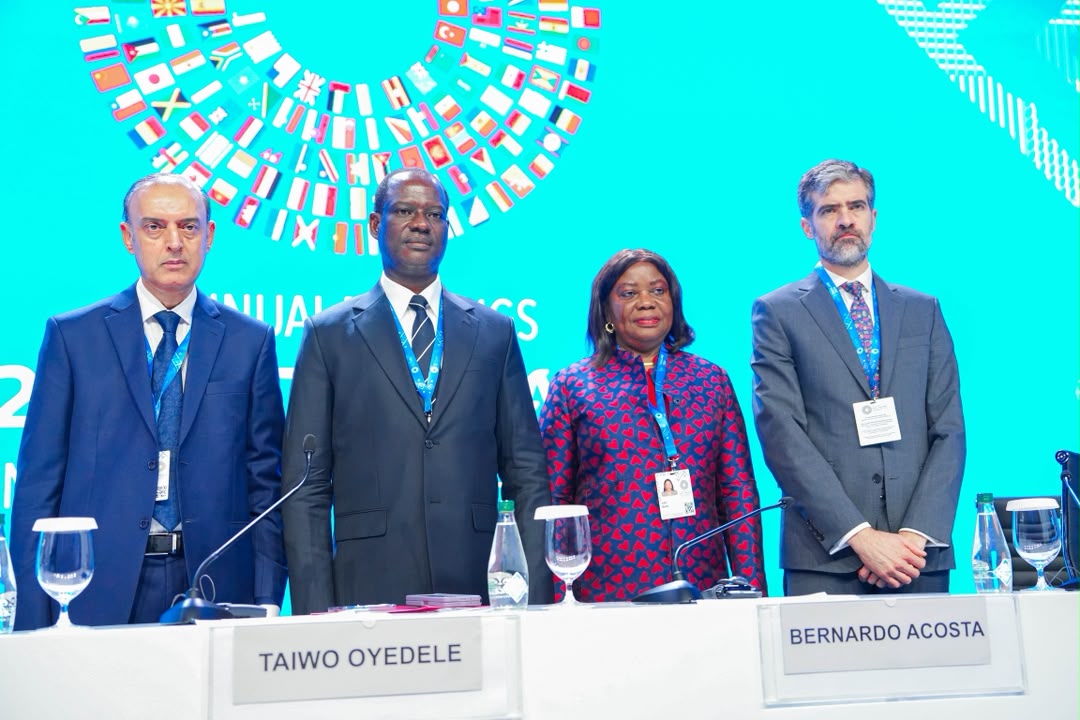
Oyedele Chairs G-24 Call for Fairer Global Financial System, Affordable Development Financing
The meeting concluded that domestic reform alone will not shield developing economies from external shocks — affordable finance, effective debt resolution, fairer representation in international institutions, and sustained cooperation are equally necessary.

Business
NAFDAC scolds fake manufacturers: “You are killing Nigerians in order to make money”
He warned that the circulation of counterfeit drinks posed a serious public health concern, urging suspected manufacturers to abandon the illegal trade.

“You are killing Nigerians in order to make money,which is not good.”
That’s the National Agency for Food and Drug Administration and Control (NAFDAC) scolding Nigerians caught in the act of counterfeiting drinks.
The occasion was at Zamfara Plaza, BBA Trade Fair Complex, along the Badagry Expressway, Ojo, Lagos State.
The Assistant Director of the Investigation and Enforcement Directorate of NAFDAC, Mr Kunle Ojo, who led the enforcement said the agency caught some of the suspects in the act and recovered drums, filters, packaging materials, a heating device and other equipment allegedly used in the illicit production process.
The suspects, identified as Okafor and John, were arrested during an enforcement operation in a two-storey building where equipment and materials allegedly used to repackage and produce counterfeit alcoholic and energy drinks where discovered.
The raid, according to NAFDAC, followed credible intelligence and surveillance on suspected counterfeiters operating within the Trade Fair International Market.
He warned that the circulation of counterfeit drinks posed a serious public health concern, urging suspected manufacturers to abandon the illegal trade.


ASCON To Be Rebranded “National School Of Government”

CAF Increases Annual Funding for Member Federations to $700,000

Naira Exchange Rates For Thursday, October 15

Tech Expert, Zuckerberg trains with UFC champions, Adesanya, Alexander

BREAKING: Lagos Govt Declares Today, Thursday Work-Free to Mark 2026 Ìṣẹ̀ṣe Day

Organ Trafficking: Ekweremadu bags 10 years in UK prison
-

 Business2 days ago
Dangote Refinery IPO Attracts N8.61trn in Subscriptions, Four Times Offer
-
Business2 days ago
Top 10 Highest-Paid CEOs in Nigeria
-

 Business3 days ago
AI to eliminate 40% of global jobs – IMF boss
-
 Business2 days ago
Naira Exchange Rates To Dollar , Pound ,Euro, … Tuesday, October 13
-

 International3 days ago
JUST IN: Pope Leo XIV to Undergo Surgery for Early-Stage Lung Nodule
-

 Business2 days ago
Global smartphone shipments fall 20% in Q3 2026, lowest in 14 years
-
Sports2 days ago
Rwanda to host F1’s first race in Africa since 1993
-
 News2 days ago
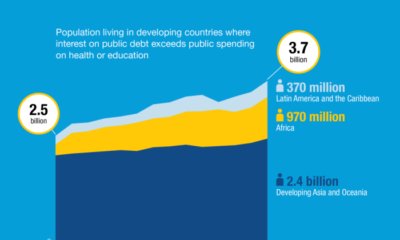
UNCTAD Warns Debt Burden Threatens Future of 3.7bn People