
News
Nigeria Seeks global action against West Africa’s cattle rustlers
IGP Egbetokun, in his submission, called for urgent and concerted international cooperation to address the escalating security challenges posed by cattle rustling and its dangerous convergence with terrorism financing, as well as the spread of chemical, biological, radiological, nuclear, and explosive (CBRNE) threats across Africa.

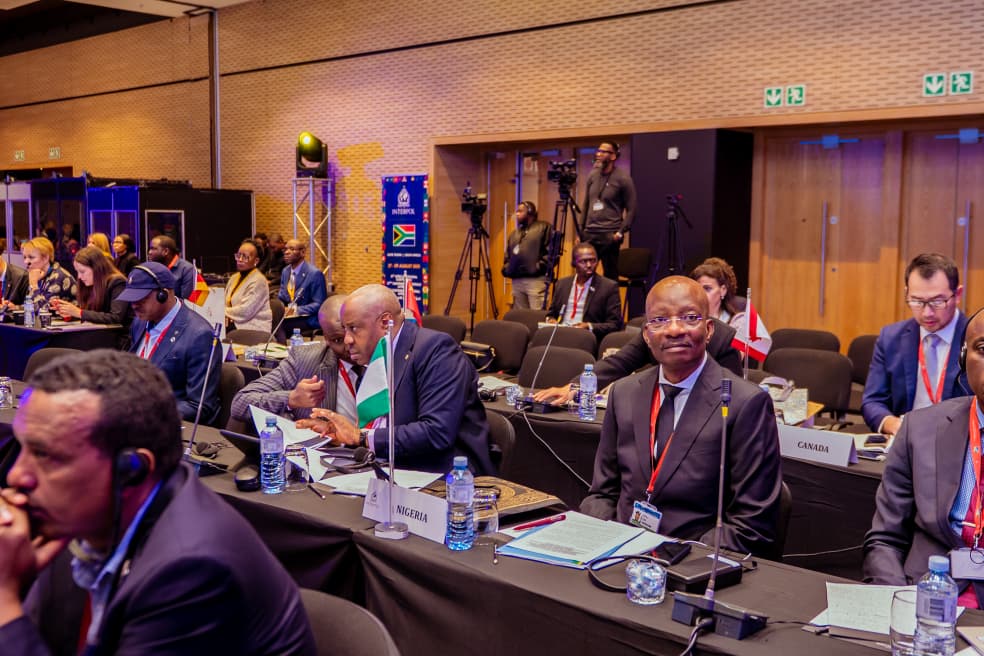
The Inspector-General of Police, IGP Kayode Adeolu Egbetokun, reaffirms Nigeria’s commitment to combating terrorism and transnational Crimes at the ongoing 27th INTERPOL African Regional Conference in Cape Town, South Africa.
IGP Egbetokun, in his submission, called for urgent and concerted international cooperation to address the escalating security challenges posed by cattle rustling and its dangerous convergence with terrorism financing, as well as the spread of chemical, biological, radiological, nuclear, and explosive (CBRNE) threats across Africa.
He also raised concern over the transformation of cattle rustling in West Africa from a rural nuisance into a sophisticated criminal enterprise that fuels terrorism, armed groups, and cross-border criminal networks.
He further warned of the dangerous nexus between cattle rustling and CBRNE threats, including the spread of zoonotic diseases like anthrax and brucellosis, the exploitation of smuggling routes for trafficking radiological materials, and the use of proceeds from livestock theft to fund production of improvised explosive devices (IEDs), thereby worsening insecurity across conflict zones.
In a statement with the Ref No:CZ.5300/FPRD/FHQ/ABJ/VOL.6/500 Date: August 28, 2025, DCP Olumuyiwa Adejobi, Force Public Relations Officer, Force Headquarters, said that the IGP also outlined six strategic pillars for response, including intelligence fusion, livestock market reforms, anti-money laundering frameworks, stronger border cooperation, community partnerships, and CBRNE preparedness.
He concluded by calling for a continent-wide and global alliance to secure Africa’s livestock trade, protect rural populations, and block extremist exploitation of regional vulnerabilities.
On the sidelines of the conference, the IGP held strategic meetings with INTERPOL President, Major General Dr. Ahmed Naser Al-Raisi, and Secretary General Valdecy Urquiza, where discussions centred on strengthening border security, expanding access to global policing databases, enhancing real-time information exchange, and improving institutional capacity against terrorism financing.
He also met with a Brazilian delegation led by De Souza Rinaldo and Dos Reis Guedes Ferreira Alvares Andrea, with both parties committing to deepen Nigeria–Brazil police cooperation through intelligence sharing, combating organized crime, and building capacity for CBRNE threat mitigation.
Egbetokun reaffirms Nigeria’s commitment to leading from the front, sharing best practices, and working collaboratively with its regional and international partners to ensure peace, security, and resilience in Africa and beyond.


News
Just in: Tuggar resigns as Foreign Minister
Tuggar submitted his resignation letter to the President in preparation to contest under the All Progressives Congress (APC) platform.
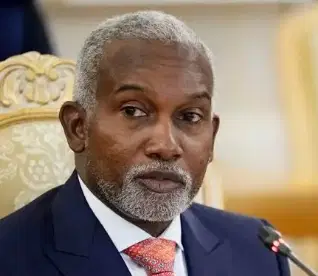
The Minister of Foreign Affairs, Yusuf Maitama Tuggar, has resigned from President Bola Tinubu’s cabinet to pursue the Bauchi State governorship in the 2027 elections.
The Ministry confirmed the resignation on Monday through its spokesperson, Kimiebi Ebienfa.
Tuggar submitted his resignation letter to the President in preparation to contest under the All Progressives Congress (APC) platform.
Tuggar’s resignation comes following a presidential directive issued earlier in March.
The order, communicated through the office of Secretary to the Government of the Federation, George Akume, required all political appointees seeking elective positions to resign by March 31, 2026.
The directive applies to ministers, ministers of state, special advisers, senior special assistants, special assistants, personal assistants, and heads of federal agencies.


The Federal High Court Lagos Division is set to fully transition to a digital era, as it mandates electronic filing for all new cases starting from April 27, 2026.
In a major push towards modernizing justice delivery, the court announced that manual filing of new cases will cease on April 24, 2026. From April 27 onwards, legal practitioners will be required to file all fresh matters exclusively through the court’s new e-filing platform.
Existing cases filed before the transition date will continue to be processed under the traditional manual system until final judgment is delivered, ensuring no disruption to ongoing litigation.
According to a statement from the court, any understatement of claims or misrepresentation of documents submitted via the platform will attract a penalty of ₦10,000 per filing, in addition to the payment of any outstanding fees.
To gain access to the e-filing system, lawyers must first obtain a Legal Mail account. Law firms are also required to upload their Corporate Affairs Commission (CAC) registration documents when creating their digital profiles.
Oath-related documents will be handled through the dedicated e-Affidavit portal. However, deponents will still be required to physically appear before a Commissioner for Oaths to complete the process.
This initiative forms part of the Federal High Court’s broader digital transformation drive aimed at enhancing efficiency, transparency, and accessibility in the justice system.
Legal practitioners are advised to familiarize themselves with the platform ahead of the deadline to avoid any hitches in filing new matters.
News
President Tinubu at 74, Donates Salaries to Armed Forces Welfare Fund
As a personal commitment, the President has pledged to contribute all his salaries since assuming office as seed funding for the initiative, reinforcing his resolve to ensure that those who have borne the cost of Nigeria’s peace and security are not forgotten.
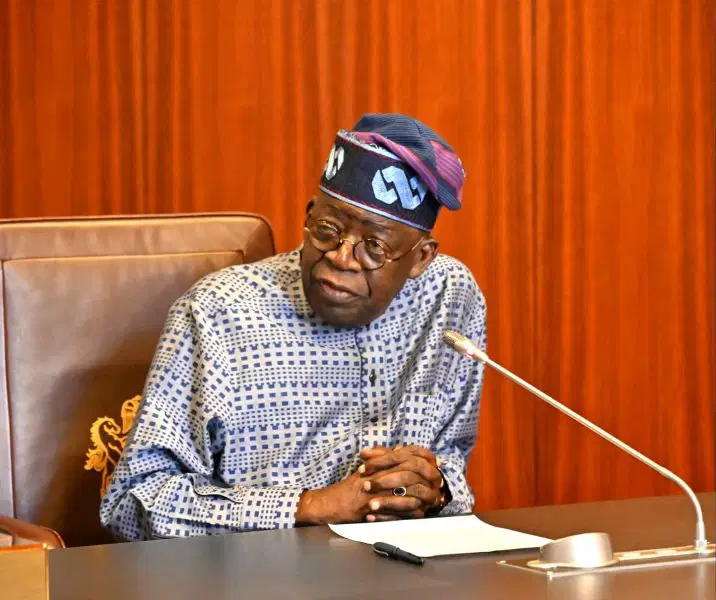
President Bola Ahmed Tinubu has announced the establishment of a dedicated support fund for members of Nigeria’s Armed Forces, those wounded in the line of duty, and the families of fallen heroes.
The President announced the initiative on Sunday, using the commemoration of his 74th birthday, to honour the courage, sacrifice, and service of the nation’s military personnel.
In a statement , Bayo Onanuga the Special Adviser to the President Information and Strategy, said that President Tinubu has directed the Accountant-General of the Federation to establish a special account for the fund, which will provide targeted support to injured service members, as well as to widows, widowers, and children of those who lost their lives in service to the country.
As a personal commitment, the President has pledged to contribute all his salaries since assuming office as seed funding for the initiative, reinforcing his resolve to ensure that those who have borne the cost of Nigeria’s peace and security are not forgotten.
The President called on State Governors, members of the National Assembly, the private sector, his friends, and well-wishers to support the initiative, noting that details of the fund will be made available in due course.
President Tinubu emphasised that the initiative is rooted in a solemn national obligation to care for those who stand in harm’s way and the families who carry the burden of their sacrifice, irrespective of insurance programmes available to members of the armed forces.
President Tinubu also stated that supporting members of the Armed Forces and their families is not an act of charity, but a duty that all must fulfil.
The President reaffirmed his administration’s commitment to strengthening the welfare of military personnel and ensuring that their service to the nation is matched with dignity, care, and sustained support.”


Lagos PDP Governorship Aspirant Adeoye Rejects One-Party Dominance

Kwankwaso officially joins ADC in Kano

Just in: Tuggar resigns as Foreign Minister

Tech Expert, Zuckerberg trains with UFC champions, Adesanya, Alexander

Organ Trafficking: Ekweremadu bags 10 years in UK prison

SAINT OBI: Between his marriage and his death
-

 Business1 day ago
Governor Otti Commissions Ultimum Manufacturing Plant in Aba
-

 Sports1 day ago
CAF appoints Nigeria’s Samson Adamu as acting secretary general
-
 News1 day ago
President Tinubu at 74, Donates Salaries to Armed Forces Welfare Fund
-
 Politics2 days ago
JUST IN: Kwankwaso Set to Join ADC on Monday
-
 Politics24 hours ago
PDP will contest 2027 polls, says Wike
-

 Business24 hours ago
OPay launches new office in Jos
-
 News16 hours ago
Lagos High Court Embraces Full Digital Transformation with Mandatory E-Filing
-

 Crime14 hours ago
JUST IN: Terrorists Invade Kaduna Wedding Ceremony, Kill 13 Guests In Late-Night Attack