
Business
NCC approves 50% tariff hike for telecoms


The Nigerian Communications Commission has approved requests from network operators for tariff adjustments in response to rising operational costs, marking the first change in rates since 2013.
The decision, announced in a statement signed by the Director of Public Affairs, Reuben Muoka, on Monday, allows for a maximum adjustment of 50% to current tariffs, significantly less than the over 100% proposed by some operators.
The NCC said it is exercising its authority under Section 108 of the Nigerian Communications Act, 2003 and emphasised that the new tariffs would remain within the limits outlined in its 2013 Cost Study.
According to the commission, the adjustments will also adhere to its 2024 Guidance on Tariff Simplification, ensuring transparency and fairness in implementation.
“The adjustment, capped at a maximum of 50 per cent of current tariffs, though lower than the over 100 per cent requested by some network operators, was arrived at taking into account ongoing industry reforms that will positively influence sustainability.
“These adjustments will remain within the tariff bands stipulated in the 2013 NCC Cost Study, and requests will be reviewed on a case-by-case basis as is the commission’s standard practice for tariff reviews.
It will be implemented in strict adherence to the recently issued NCC Guidance on Tariff Simplification, 2024.
“Tariff rates have remained static since 2013, despite the increasing costs of operation faced by telecom operators.
The approved adjustment is aimed at addressing the significant gap between operational costs and current tariffs while ensuring that the delivery of services to consumers is not compromised,” the statement said.
The NCC noted that the adjustment was necessary to sustain investment in infrastructure and innovation, benefiting consumers through improved services, better network quality, and wider coverage.
“This decision was made after extensive consultations with key stakeholders across the public and private sectors,” Muoka stated, adding that the commission prioritised balancing consumer protection with industry sustainability.
While recognising the financial pressures faced by Nigerian households and businesses, the NCC mandated operators to implement the new rates transparently and educate consumers on the changes.
Operators are also required to demonstrate measurable improvements in service delivery as part of the adjustments.
“Recognising the concerns of the public, this decision was made after extensive consultations with key stakeholders across the public and private sectors.
“The NCC has prioritised striking a balance between protecting telecom consumers and ensuring the sustainability of the industry, including the thousands of indigenous vendors and suppliers who form a critical part of the telecommunications ecosystem.
“The NCC recognises the financial pressures faced by Nigerian households and businesses and remains deeply empathetic to the impact of tariff adjustments.
To this end, the commission has mandated that operators implement these adjustments transparently and in a manner that is fair to consumers. Operators are also required to educate and inform the public about the new rates while demonstrating measurable improvements in service delivery,” it added.
The commission underscored its commitment to fostering a resilient and inclusive telecommunications sector.
“Beyond protecting consumers, the commission’s actions are designed to ensure the long-term sustainability of the industry, support indigenous vendors and suppliers, and promote the overall growth of Nigeria’s digital economy,” the statement added.
The NCC assured Nigerians of continued engagement with stakeholders to maintain a telecommunications environment that protects consumers while enabling the ecosystem that drives connectivity across the nation.








Business
TIME Names Moniepoint CTO Felix Ike Among 50 Global Executives of the Year
In its citation, TIME said Ike “has helped to establish the business as one of Africa’s leading financial platforms.


TIME magazine has named Felix Ike, co-founder and Chief Technology Officer of Nigerian fintech Moniepoint, to its inaugural Executives of the Year: Tech and Data list.
Ike is the only executive representing an African company among the 50 leaders selected for the 2026 list.
The list, unveiled on Tuesday, September 22, recognises chief information officers, chief technology officers, chief data officers and chief product officers whose decisions are shaping how major organisations deploy technology and use data.
Moniepoint is also the only African company represented on the inaugural list.
Ike was named alongside executives from Netflix, CrowdStrike, Dell, Duolingo, AT&T, OpenAI, Anthropic, Shopify and Reddit, among others.
In its citation, TIME said Ike “has helped to establish the business as one of Africa’s leading financial platforms.
“The recognition follows Moniepoint’s inclusion in TIME’s 2025 list of the 100 Most Influential Companies, giving the Lagos-founded fintech another global distinction.

Black Market Rates
₦1382DOLLAR (USD)
₦1855POUND (GBP)
₦1545EURO (EUR)
1000 DOLLAR (CAD)
₦70 RAND (ZAR)
370DIRHAM (AED)
190YUAN (CNY)
₦100G.CEDI (GHS)
₦2350 CFA F.(XOF)
₦2250 CFA F.(XAF)
₦850 AUSSIE (AUD)
Official CBN Exchange Rates
DOLLAR (USD)₦1328.67
POUND (GBP)₦1758.36
EURO (EUR)₦1511.63
SWISS FRANC (CHF)₦1605.45
JAPANESE YEN (JPN)₦8.38
CFA FRANC (XOF)₦2.31
WEST AFRICAN UNIT OF ACCOUNT (WAUA)₦1808.03
CHINESE YUAN (CNY)₦197.92
SAUDI RIYAL (SAR)₦353.86
SOUTH AFRICAN RAND (ZAR)₦81.09
Business
Djibouti, Ethiopia and Dangote to build $660 million petroleum pipeline
In Kenya, Dangote and the government are due to break ground on a new 700,000-barrel-per-day crude oil refinery in Lamu next week.
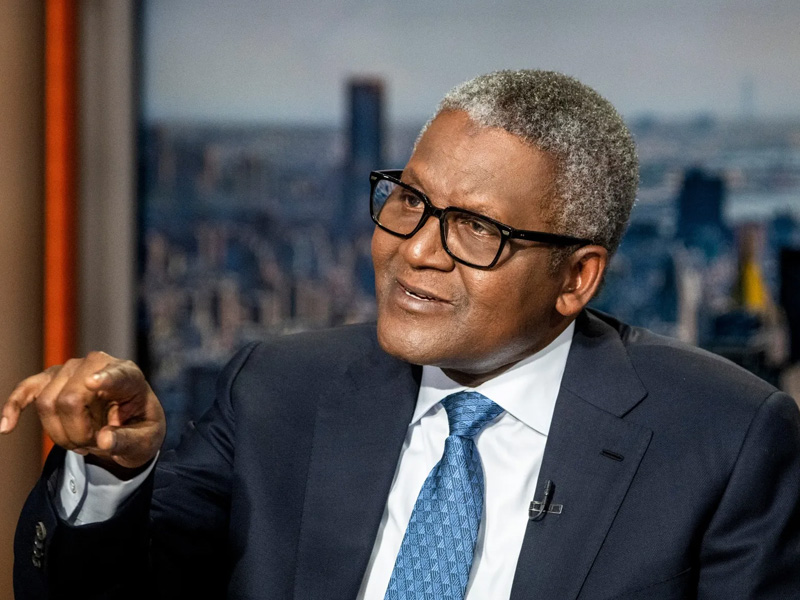
Ethiopia, Djibouti and Nigerian billionaire Aliko Dangote plan to build a $660 million refined petroleum pipeline that will connect Ethiopia and Djibouti, a spokesperson in Ethiopian Prime Minister Abiy Ahmed’s office said on Thursday.
The project will include a 120-km (75-mile) pipeline, as well as approximately 375,000 cubic metres of storage capacity at Damerjog in Djibouti and 800,000 cubic metres at Dewele in Ethiopia, the spokesperson told Reuters, adding it should become operational within 18 months.
Abiy said on his X account the project will be developed through a partnership between Ethiopian Investment Holdings and the Dangote Group, which separately is already building a $4 billion fertiliser pipeline and power plant, and a polypropylene packaging facility, in Ethiopia.
The project aims to reduce logistics costs and delays along the Ethiopia-Djibouti transport corridor, Abiy said.
Developers say the infrastructure will strengthen energy security and improve supply chain resilience for the two countries, he said.
Abiy is on a visit to Djibouti and made the announcement alongside its president, Ismail Omar Guelleh, and Dangote.
In Kenya, Dangote and the government are due to break ground on a new 700,000-barrel-per-day crude oil refinery in Lamu next week.


Congo military plane crash kills 13, including three officers

Manchester City Faces Expulsion For Breaching 114 EPL Financial Rules

TIME Names Moniepoint CTO Felix Ike Among 50 Global Executives of the Year

Tech Expert, Zuckerberg trains with UFC champions, Adesanya, Alexander

Organ Trafficking: Ekweremadu bags 10 years in UK prison

SAINT OBI: Between his marriage and his death
-

 Business2 days ago
MAN Urges CBN To Consider CRR Cut Next Phase of Monetary Easing
-

 Crime2 days ago
JUST IN: Zamfara LG Chairman Freed After 61 Days in Captivity
-

 News2 days ago
VP Shettima, Gov Mbah to address Over 500 editors on 2027 election issues
-

 Sports2 days ago
FIFA names Nigerian referee among 81 officials for U-17 World Cup
-

 Entertainment2 days ago
MultiChoice launches Wethu+ as DStv overhauls packages
-

 Business2 days ago
Naira To Dollar , Pound, Euro Rate, Thursday September 24
-

 Business2 days ago
Otedola bypasses seven African billionaires as fortune hits $2 billion
-
 Business2 days ago
China Woos Nigeria To Join WAICO Memberships For Technology Advantages