
News
NBC Celebrates 33 Years of Broadcasting Leadership in Nigeria

…..As Director-General Reflects on the National Broadcasting Commission’s Legacy and Future.
In a message marking the 33rd anniversary of the National Broadcasting Commission (NBC), the Director-General, Charles Ebuebu, acknowledged the organization’s significant contributions to the Nigerian broadcasting landscape.
Established three decades ago, the NBC was created with the crucial role of regulating, guiding, and developing the broadcasting industry nationwide.
The Director-General’s message highlighted the NBC’s journey, acknowledging both the successes and challenges faced over the years.
The statement reads:
“To the Management and Staff of the NBC, Esteemed Licensees, and Fellow Nigerians:” “Today marks a significant milestone in our nation’s broadcasting journey”.
“The National Broadcasting Commission (NBC) was established 33 years ago with a singular mandate: to regulate, guide, and nurture the broadcasting industry in Nigeria”.
“Over these three decades, we have grown together — from the era of limited analogue transmissions to the present digital age where voices, stories, and innovations find expression across multiple platforms”.
“This anniversary is not merely about numbers, but about the shared commitment of our staff, the resilience of our licensees, and the trust of the Nigerian public”.
“It is about the values of professionalism, integrity, and service to the public interest that have carried us through the years.
I therefore extend my heartfelt congratulations to the Executive Board of Management, the entire NBC family, and indeed all stakeholders who continue to uphold these values”.
“Looking Back with Pride from the earliest days of national radio and television, through the liberalisation of the broadcast space, to the present drive towards digital switchover, the Commission has consistently sought to ensure that broadcasting remains a tool for education, information, and national integration”.
“We have weathered challenges, adapted to changes, and remained a pillar in upholding national standards”.
Looking Forward with Purpose.
“As we celebrate this 33rd anniversary, we must equally look to the future with clarity and resolve”.
“The landscape of broadcasting is changing rapidly — artificial intelligence, online streaming, satellite-driven platforms, and converged media are now defining the way societies consume information”.
“Nigeria cannot afford to be left behind.
The NBC is committed to:
Deepening Digital Transition: Ensuring the success of Nigeria’s Digital Switchover project, with platforms that guarantee universal access, affordability, and inclusivity.
- Strengthening Local Content: Supporting Nigerian creativity and talent so that our airwaves reflect who we are — our values, our cultures, and our aspirations.
- Promoting Responsible Broadcasting: Expanding our capacity to monitor, guide, and check misinformation, disinformation, and harmful content that threaten social cohesion.
- Harnessing Technology for Regulation: Deploying modern digital tools, including AI-driven monitoring and data-driven audience measurement systems, to keep pace with global standards.
- Partnerships and Collaboration: Working hand-in-hand with licensees, industry players, and international partners to create a broadcasting environment that is vibrant, innovative, and globally competitive.
- Our Shared Responsibility:
- Broadcasting is not only about regulation; it is about nation building. Every station, every producer, every regulator, and every viewer or listener is a custodian of our collective narrative.
- “Together, we can ensure that the airwaves remain a space of truth, creativity, education, and unity.
- “On this 33rd anniversary, let us renew our pledge — as management, staff, licensees, and the Nigerian people — to build a broadcasting industry that not only serves today but also secures the future”.
- “Congratulations once again to the NBC family and all our stakeholders”.
- “May the years ahead be marked by even greater achievements for the broadcasting sector and for Nigeria”.


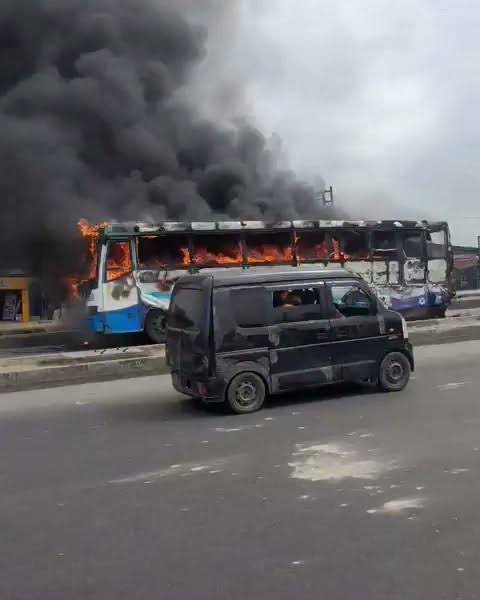
An angry mob has set a Bus Rapid Transit (BRT) bus on fire after it reportedly crushed a commercial motorcyclist to death at Ogolonto Bus Stop along Ikorodu Road in Lagos State.
The incident occurred on Friday, October 16, 2026. Eyewitness accounts and social media reports indicate that the motorcyclist was riding alone along the restricted BRT lane when the collision happened. He died at the scene.
Enraged residents and youths then attacked the bus driver and set the vehicle ablaze. Police officers and officials of the Lagos Neighbourhood Safety Corps (LNSC), who were nearby, intervened promptly and rescued the driver unharmed.
The identity of the deceased motorcyclist and the exact circumstances of the crash had not been officially confirmed at the time of filing this report. It was also unclear whether any arrests had been made in connection with the burning of the bus.
News
ARISE News Wins Seven Honours At Nigerian Broadcasters Merit Awards
The awards recognised the network’s achievements in television journalism and programming, with ARISE News winning the Best TV Channel (Viewer’s Choice) category.

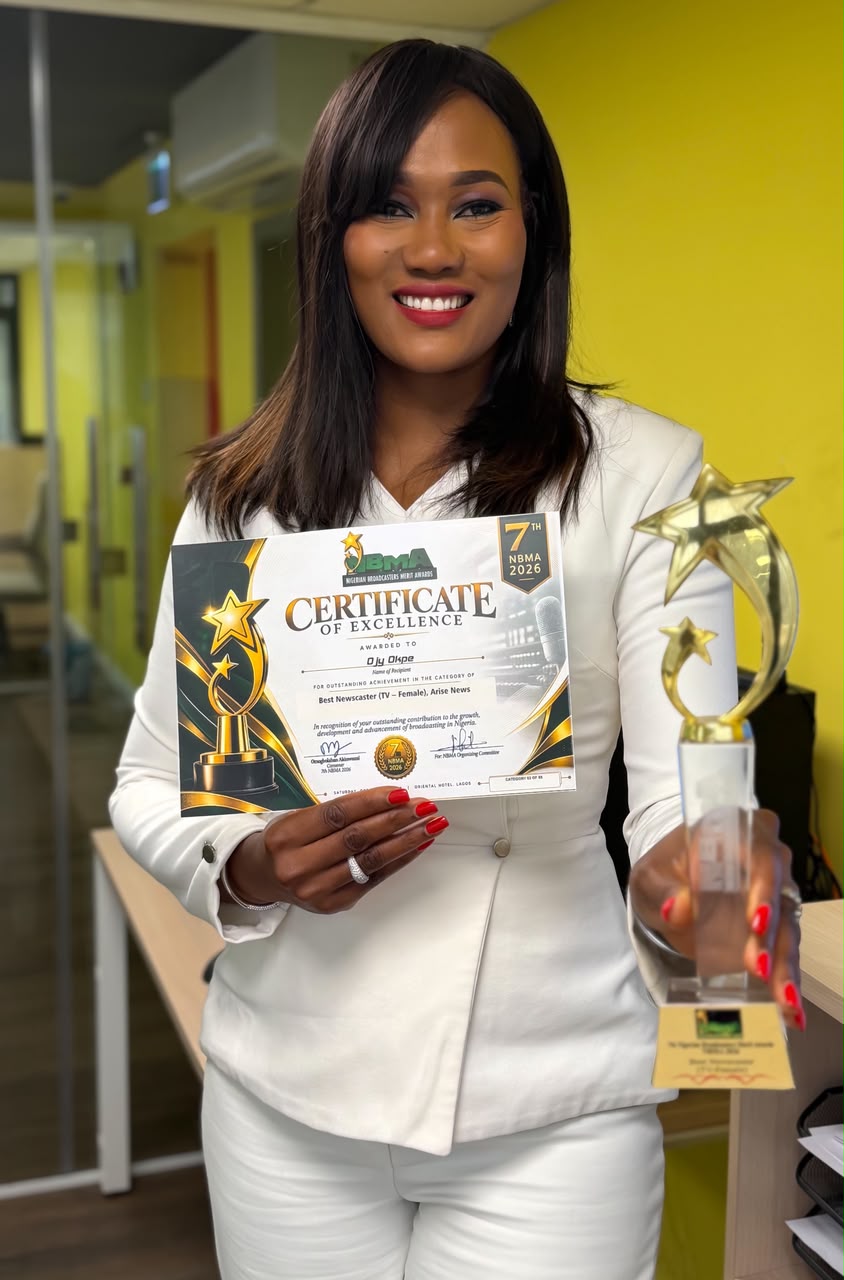
• ARISE News Anchor and host of What’s Trending Ojy Okpe was named Best Newscaster (TV – Female)
ARISE News has emerged as one of the major winners at the just ended Nigerian Broadcasters Merit Awards (NBMA).
ARISE News won seven honours across television broadcasting, news reporting, presentation and production during the ceremony.
The awards recognised the network’s achievements in television journalism and programming, with ARISE News winning the Best TV Channel (Viewer’s Choice) category.
The network’s flagship breakfast programme, The Morning Show, also won the Best TV Talk Show award, further strengthening its recognition in television broadcasting.
ARISE News Anchor and host of What’s Trending Ojy Okpe was named Best Newscaster (TV – Female).
Rufai Oseni was named Nigerian Broadcaster of the Year (Male), while Vimbai Mutinhiri-Ekpeyong received the Nigerian Broadcaster of the Year (Female) award.
The recognition extended to the network’s newsroom, with Ovieteme George winning Best TV News Reporter (Male) for his contributions to television news reporting.
Behind the camera, Sam Adeyemi received the Best Camera Operator/Cinematographer award, recognising his work in television production and visual storytelling.
News
Meta removes 3.7 million accounts in West Africa scam crackdown
The joint operation led to 28 arrests, identified more than 30 suspected scam centres and rescued 117 people allegedly trafficked and forced to work in scam compounds in Ghana.
Meta, the parent company of Facebook and Instagram, has removed more than 3.7 million Facebook and Instagram accounts, pages and groups linked to suspected scam networks operating in West Africa.
The joint operation led to 28 arrests, identified more than 30 suspected scam centres and rescued 117 people allegedly trafficked and forced to work in scam compounds in Ghana.
The company announced the crackdown in a statement on Tuesday, October 13, 2026. It involved 14 technology companies and law enforcement agencies from 10 countries.
The United Kingdom’s National Crime Agency coordinated the operation with the US Department of Justice, the Federal Bureau of Investigation and other agencies. Nigerian authorities were involved.
Other countries included Ghana, Australia, Canada, New Zealand and India.Tech companies that took part included Google, Microsoft, OpenAI, Coinbase, Starlink and Adobe.
Meta said the partnership let participants share intelligence across digital platforms, countries and financial systems to identify criminal networks.


JUST IN: Mob Sets BRT Bus Ablaze After Motorcyclist’s Death in Lagos

BREAKING: DSS Arrests Fugitive Maina Son, Hands Him to EFCC

BREAKING: 5 Arrested Over Imo NYSC Abduction

BREAKING: Lagos Govt Declares Today, Thursday Work-Free to Mark 2026 Ìṣẹ̀ṣe Day

Tech Expert, Zuckerberg trains with UFC champions, Adesanya, Alexander

Organ Trafficking: Ekweremadu bags 10 years in UK prison
-

 Business3 days ago
NAFDAC scolds fake manufacturers: “You are killing Nigerians in order to make money”
-

 Business2 days ago
Naira Exchange Rates For Thursday, October 15
-
 Business3 days ago
Oyedele Chairs G-24 Call for Fairer Global Financial System, Affordable Development Financing
-
 Sports2 days ago
CAF Increases Annual Funding for Member Federations to $700,000
-
 Politics3 days ago
Exclusion of candidates from INEC list: CD cautions INEC against manipulation by politicians
-
 News2 days ago
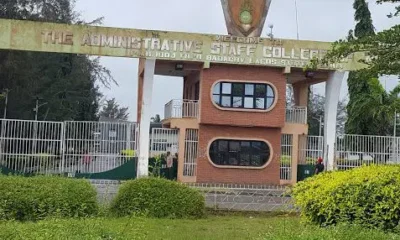
ASCON To Be Rebranded “National School Of Government”
-

 Business2 days ago
Germany plans tax on sugary drinks
-

 News3 days ago
Sanwo-Olu Appoints Olatunbosun Ogunbanwo, 5 Others as Perm Secs