
Business
Middle East War: Dangote Refinery Cushions Global Oil Costs By 20% For Nigerian Market
The Dangote Refinery will ensure that Nigeria is insulated from these supply shocks by prioritising supply to the domestic market. This is one of the many benefits of domestic refining.

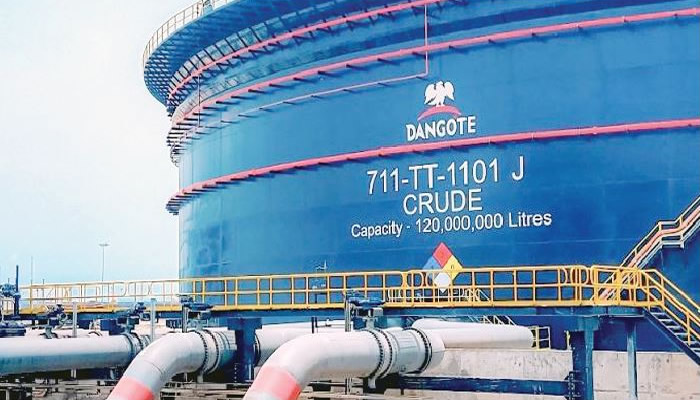
Dangote Refinery on Thursday said that it has absorbed 20 percent of the cost escalation of global oil price, for now, to cushion the domestic market.
In a statement on its official X , the company reassures Nigerians of its unwavering commitment to serving as a stabilising force amid recent shocks in the international oil market.
The conflict in the Middle East has led to the shutdown of some refineries and cut in refinery production across the world. This is leading to a global scarcity of petroleum products.
China has banned export of gasoline and diesel.
The Dangote Refinery will ensure that Nigeria is insulated from these supply shocks by prioritising supply to the domestic market. This is one of the many benefits of domestic refining.
The conflict has driven global crude and freight prices sharply higher, with benchmark Brent prices rising by about 26% within a short period to above $84.0 per barrel.
In response, the refinery implemented a measured adjustment of N100 per litre in its ex-depot price of Premium Motor Spirit, representing an increase of about 12%.
The refinery has absorbed 20% of the cost escalation, for now, to cushion the domestic market.
This is despite continuing to source crude at prevailing international market prices, whether purchased locally or from foreign suppliers.
It is worth noting that Nigerian crude oil is more expensive than the Brent benchmark price by $3 to $6 per barrel. After adding freight of $3.50 per barrel, crude oil will be landing in our tanks between $88 and $91 per barrel.
For context, crude oil was landing our tanks at about $68 per barrel when our ex-depot price was N774/litre.
Furthermore, while we receive about five cargoes a month from NNPC which we pay for in Naira, these cargoes are priced at international market prices + Premium and fall short of the 13 cargoes which we require to support sales into Nigeria.
We therefore, end up procuring foreign exchange at open market rates to pay for crude cargoes purchased from local and international traders.
The high crude cost is compounded by the fact that Nigeria upstream producers have failed to supply crude oil to the refinery as required under the PIA, forcing us to source a substantial portion through international traders who charge an additional premium.
As a private enterprise operating in a deregulated environment, Dangote Petroleum Refinery has remained responsive and has made significant sacrifices by aligning pricing with market realities to ensure sustainability, particularly as it sources all its crude at prevailing international market prices, whether locally or from foreign suppliers.
Selling below cost would undermine its ability to procure crude, sustain production and guarantee uninterrupted supply to Nigerians.
Despite these pressures, local refining at this scale continues to reduce exposure to international supply disruptions, moderate foreign exchange demand and protect the country from severe shortages during periods of global instability.
The refinery is also accelerating deployment of Compressed Natural Gas-powered trucks to cushion the impact of global shocks, enhance nationwide distribution efficiency, reduce logistics costs and improve delivery timelines across the downstream sector.
The rollout is scheduled to commence this month.
We remain committed to transparency, operational excellence and the long-term objective of securing sustainable energy security and stability for Nigeria at an affordable cost.
Business
Oil price jumps to $106, stocks drop on uncertainty over US-Iran talks
Crude prices rallied more than three percent on Thursday, with Brent crude above $106 per barrel and WTI around $93.
Oil prices jumped and equities slid Thursday as hopes for a peace deal between the US and Iran wavered after Tehran rejected Washington’s bid to wind down the nearly four-week war.
Markets had been buoyed this week by US President Donald Trump’s announcement that strikes targeting Iran’s energy infrastructure would be postponed, adding that the two sides were in peace talks.
But uncertainty over the talks and the virtual closure of the Strait of Hormuz — through which around 20 percent of oil and liquefied natural gas passes — have cast a shadow over market sentiment.
“The market rollercoaster continues,” said Joshua Mahony, chief market analyst at Scope Markets.
Crude prices rallied more than three percent on Thursday, with Brent crude above $106 per barrel and WTI around $93.
( VANGUARD)
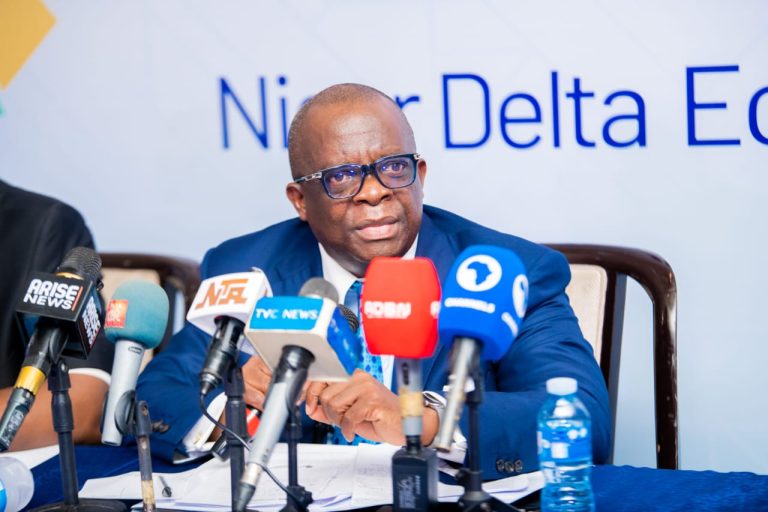
Photo: Ambassador Idaere Gogo Ogan
The Niger Delta Chamber of Commerce, Industry, Trade, Mines and Agriculture (NDCCITMA) has unveiled plans to attract up to five billion dollars structured investments to the oil-producing region in five years.
The Chairman of NDCCITMA, Ambassador Idaere Gogo Ogan, made the disclosure at a pre-summit conference ahead of the Niger Delta Economic and Investment Summit in Port Harcourt, Rivers State.
He said that the initiative would catalyse no fewer than 500,000 direct and indirect jobs as well as spur investments and create wealth.
He said the summit with the theme, “Driving Investment, Innovation, and Industrial Growth in the Niger Delta”, slated for Port Harcourt, would deliberate on investment mobilisation, enterprise growth, industrial expansion, and regional coordination.
Business
Dangote: Middle East crisis might take us back to ‘Work from home’ COVID era
In some countries today, what they’ve done is ask everybody to work from home because they cannot afford it.“I think in Indonesia, they only go to work four days a week.
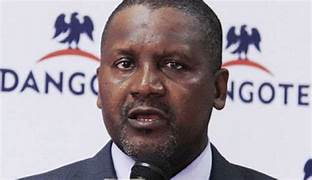
The President of the Dangote Group, Aliko Dangote, has expressed concerns about the ongoing Middle East crisis taking many countries back to the COVID19 era’s work from home.
Dangote stated this on Monday, after a meeting with President Bola Ahmed Tinubu at his residence in Lagos.
While expressing concern about the economic impact of oil price uncertainty, Africa’s Richest man noted that Nigeria and other African countries might be forced to start working from home, just like the COVID19 era.
Dangote called for prayers and international intervention to end the conflict which has affected the price of fuel and other energy sources in the country.
He said, “In some countries today, what they’ve done is ask everybody to work from home because they cannot afford it.“I think in Indonesia, they only go to work four days a week. And they will look at the situation. If it doesn’t improve, they will ask everybody not to go to work anymore. We will do like that time of COVID, where people will now go and work from home,” Dangote said.
It’s not only energy. Some people will try to take a chance and say, ‘Ah, this is an opportunity. So, let me make money. So, if this thing doesn’t de-escalate, it is going to keep going up and governments cannot really now go and add salaries also. So, people will really feel the pinch,” he said.
Dangote explained that the crisis would hit hardest at ordinary Africans operating small businesses, “People who are barbers, people who are doing bread, people who have industries who have to pay their own generator, I mean, you can see what is happening,” he said.


JUST IN: Kwankwaso Set to Join ADC on Monday

El-Rufai’ loses mother, Hajiya Umma

Kano Deputy Governor Resigns

Tech Expert, Zuckerberg trains with UFC champions, Adesanya, Alexander

Organ Trafficking: Ekweremadu bags 10 years in UK prison

SAINT OBI: Between his marriage and his death
-

 Politics3 days ago
What Ex-INEC Commissioner Igini says about 2026 Electoral Act
-
 News2 days ago
Kano Deputy Governor Resigns
-
 Politics3 days ago
APC Holds National Convention on Saturday
-

 Crime2 days ago
Vietnam Police Dismantle Multi-Billion Dollar Cryptocurrency Fraud Operation
-
 News2 days ago
Soludo Orders Suspension of Absentee Workers After Surprise Secretariat Visit
-

 News2 days ago
Abia State Holds State Burial for Renowned Evangelist Rev. Dr. Uma Ukpai
-
 News2 days ago
El-Rufai’ loses mother, Hajiya Umma
-
 Politics11 hours ago
JUST IN: Kwankwaso Set to Join ADC on Monday