
News
Kogi State Government Bans Traditional Procession in Kotonkarfe and its environs

In a bid to maintain the peace enjoyed in Kotonkarfe and its environs in Kogi Local Government Area of the state, the Kogi State Government has announced a ban on all forms of processions in Kotonkarfe and neighboring communities.
A press statement signed by Hon. Kingsley Femi Fanwo, Commissioner for Information and Communications noted that the proactive ban is aimed at curbing plans by some elements in the area to disturb the peace of the ancient town.
The statement read, “His Excellency Alh. Ahmed Usman Ododo reiterates his administration’s commitment to peaceful co-existence among all Kotonkarfe people and will always leave his doors open to listen to complaints and grievances rather than resort to violence.
“We urge all concerned to strictly abide by the ban as violators will be treated as enemies of peace and the state.
“The decision of the State Government is aimed at protecting the rights of the Kotonkarfe people, and indeed all Kogites, to peace and security.
“We urge law enforcement agents to enforce the ban in accordance with the laws of the land. Kotonkarfe people should also be committed to peace and harmony as the Government is prepared to protect them from violence,” Fanwo added.


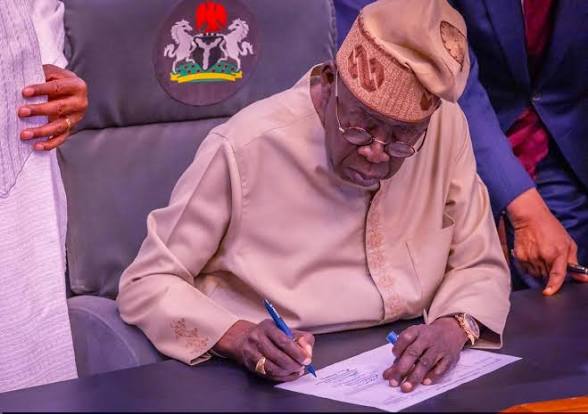
President Bola Tinubu’s request for approval to borrow $20.52 billion and €1.045 billion has intensified debate over Nigeria’s rising debt burden and its long-term implications.
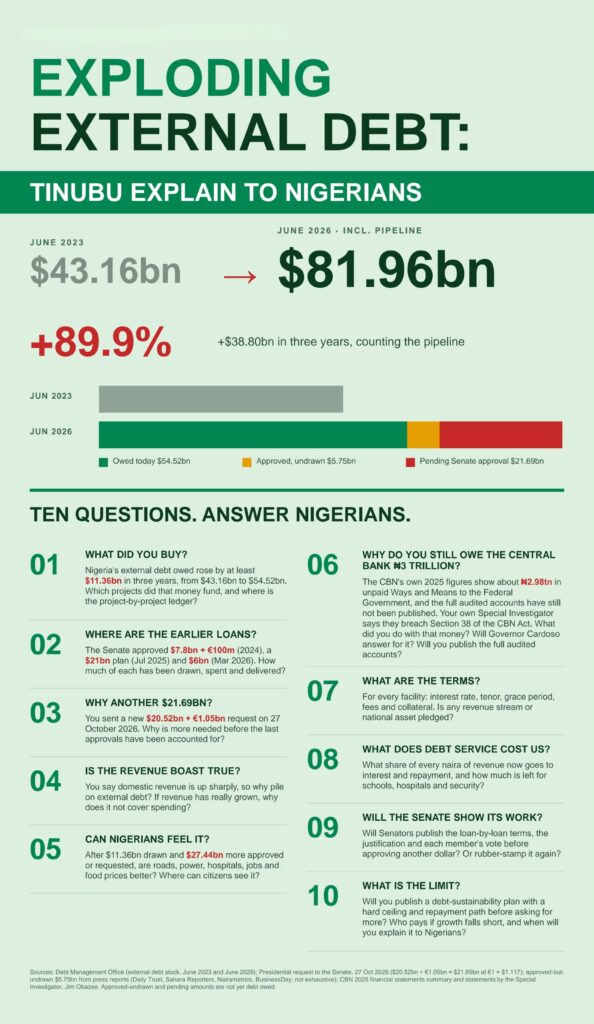
Nigeria’s external debt climbed from $43.16 billion in June 2023 to $54.52 billion in June 2026 — an increase of $11.36 billion, or 26.3%. Over the same period, total public debt rose from ₦87.38 trillion to ₦166.79 trillion, a jump of roughly 90.9%.
When the latest loan request is combined with previously approved but undrawn financing, potential external debt exposure could reach about $81.96 billion if all facilities are fully drawn and there is no overlap. Officials stress this remains an illustrative figure rather than current outstanding debt.
The government says the new borrowing will finance critical development projects. Critics, however, are demanding greater transparency. They want clear evidence of what earlier loans have delivered — completed roads, functional hospitals, power projects that have increased electricity supply, and measurable gains for businesses and households facing high living costs.
Questions are also being raised about the scale of new borrowing at a time when government revenues are reported to be rising, and amid concerns from lawmakers about inadequate capital releases to ministries under previous budgets.
Opposition voices and civil society groups are calling for the National Assembly to insist on full disclosure before approving further loans. They want a project-by-project register of external loans since May 2023, showing amounts borrowed and disbursed, loan terms, project locations, implementation status and independently verified results. They also seek a clear assessment of future debt-service obligations and the risks from exchange-rate movements.
Borrowing can support development when investments produce measurable returns and repayment remains sustainable. The central issue, observers say, is not only how much more debt Nigeria can carry, but what citizens receive in return.
The National Assembly is expected to subject the requests to rigorous scrutiny.
News
Senate Proposes Conversion of NILDS To West African University Of Legislative Studies
The proposed university would extend Nigeria’s contribution to democratic development and regional integration by admitting legislators and other relevant stakeholders from across West Africa.

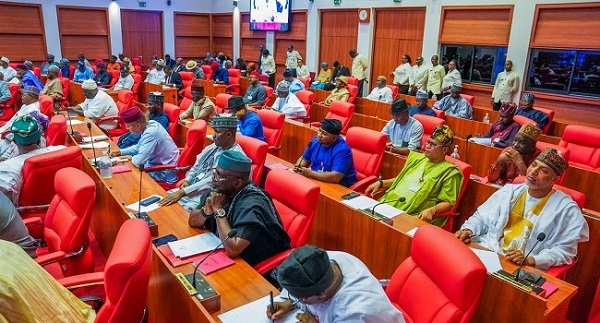
Senate has begun legislative moves to transform the National Institute for Legislative and Democratic Studies (NILDS) into a full-fledged regional university to provide specialised training in legislative practice, democratic governance, and institutional development across West Africa.
The proposed legislation, sponsored by Deputy President of the Senate, Senator Jibrin Barau, scaled First Reading during plenary on Wednesday.
The bill, titled West African University of Legislative Studies (Establishment) Bill, 2026 (SB. 1087), seeks to establish an institution that would build on NILDS’ existing infrastructure and institutional capacity to provide specialised academic and professional training for legislators and other stakeholders in democratic governance across the sub-region.
Barau, who is also First Deputy Speaker of the ECOWAS Parliament and Chairman of Senate Committee on the Review of the 1999 Constitution, announced his intention to sponsor the bill on Monday while representing President of the Senate, Senator Godswill Akpabio, at the 10th Convocation Ceremony of the NILDS-University of Benin (UNIBEN) postgraduate programmes in Abuja.
At the ceremony, he disclosed he had begun discussions with Director-General of NILDS, Professor Abubakar Sulaiman, on the modalities for converting the institute into a full-fledged university.
In a statement issued on Wednesday by his Special Adviser on Media and Publicity, Ismail Mudashir, the deputy senate president said the proposed university would extend Nigeria’s contribution to democratic development and regional integration by admitting legislators and other relevant stakeholders from across West Africa.
News
Senate confirms Vanguard’s Editor, Eze Anaba For National Human Rights Commission Board
President Bola Tinubu had in April written to the Senate, seeking the screening and confirmation of the nominees as part of efforts to strengthen the country’s human rights protection framework.
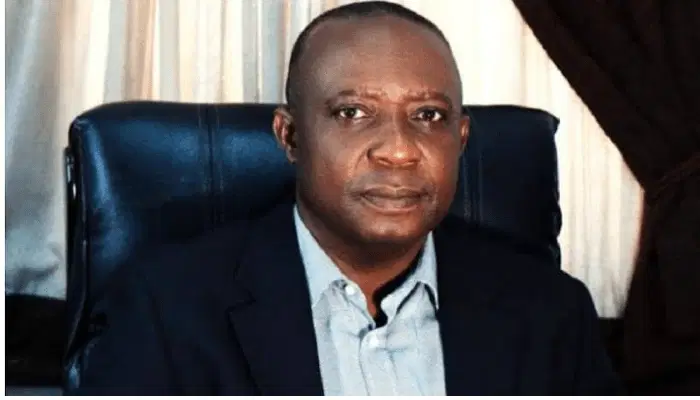
The Senate on Wednesday confirmed the appointment of the President of the Nigeria Guild of Editors (NGE) and Editor of Vanguard Newspapers, Eze Anaba, and 15 other nominees to the governing board of the National Human Rights Commission (NHRC).
The NHRC is mandated to promote and protect human rights, investigate alleged violations and encourage compliance with national and international human rights standards.
The confirmation followed the consideration of a report presented today by the Chairman of the Senate Committee on Judiciary, Human Rights and Legal Matters, Senator Adeniyi Adegbonmire (SAN, APC, Ondo Central).
The Senate also confirmed Dr Salamatu Hussaina Suleiman as chairman of the board and Dr Anthony Ojukwu (SAN) as Executive Secretary.
Other confirmed nominees are Mrs Roseline Tasha, Ambassador Adam Yubak Baku, ACG Felix Lawrence, Edmund Chinonye, Chinonye Obiaku (SAN), Oluwakemi Asiwaju Okere-Odo, Professor Adedeji Ogunji, Kingsley Chidozie, Mohammed Adelodu, Maupe Ogun Yusuf, Otunba Francis Meshioye, Patience Patrick Udoh and Hawwa Ibrahim.
President Bola Tinubu had in April written to the Senate, seeking the screening and confirmation of the nominees as part of efforts to strengthen the country’s human rights protection framework.
The letter was read on the floor of the Senate by the President of the Senate, Senator Godswill Akpabio.
In the letter, Tinubu sought the reconstitution of the commission’s governing board in line with statutory provisions.
The President said the nominations were made pursuant to Section 2(3) of the National Human Rights Commission (Establishment) Act, 2010, which empowers him to constitute the board, subject to Senate confirmation.
The nominees were drawn from diverse professional backgrounds, including the media and legal sectors.


Nigeria Debt Concerns Mount as Tinubu Seeks Fresh $20.5bn, €1bn Loans

JUST IN: IMO WEST: Uzodinma Loses Senatorial Bid as Court Orders INEC to Publish Okorocha’s Name

Survivors recount horrors as Spain mourns 68 dead victims of trains crash

BREAKING: Lagos Govt Declares Today, Thursday Work-Free to Mark 2026 Ìṣẹ̀ṣe Day

Tech Expert, Zuckerberg trains with UFC champions, Adesanya, Alexander

Organ Trafficking: Ekweremadu bags 10 years in UK prison
-

 Business1 day ago
Exchange Rates Thursday October 29 2026
-

 Business2 days ago
Investors from 120 countries participate in Dangote Refinery’s IPO
-

 Entertainment2 days ago
Davido, Kirk Franklin, to hit airwaves with new song ‘Hope In You’
-
 Entertainment2 days ago
Sultan of Sokoto to Honour Peter Igho as Kakakin Daular Usmaniyya
-

 Sports2 days ago
Team Nigeria Braces For Historic Dakar 2026 Youth Olympic Games
-

 Sports2 days ago
Nigeria Thrash New Caledonia 7-0 In FIFA U15 World Cup Festival
-

 News2 days ago
FG Approves ₦70k Transport Allowance for Civil Servants
-
 Business2 days ago
MTN Pushes Back Fast Data Depletion Complaints To Subscribers