
Health
JUST IN: Suspected measles outbreak kills 10 children in FCT

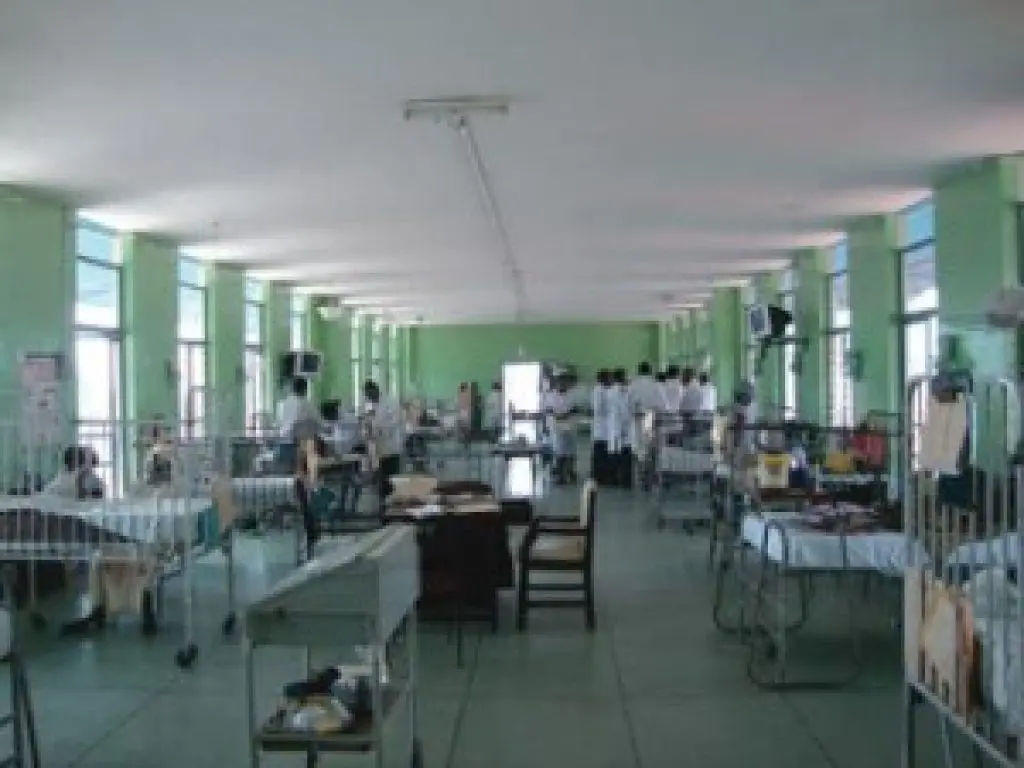
No fewer than ten children have died due to suspected measles outbreak in Damangaza community, Lokogoma District, Federal Capital Territory, FCT, Abuja.
Head of the Damangaza community, Mr James Budebo, disclosed this during a one-day outreach programme on Friday in Abuja.
The programme was organized by Primary Health Care, Damangaza and the Vaccine Network for Disease Control (VNDC), a grassroots organisation dedicated to health interventions in underserved communities.
Suspected measles outbreak kills 10 children in FCTPublished on July 13, 2024By Matthew Atungwu.
No fewer than ten children have died due to suspected measles outbreak in Damangaza community, Lokogoma District, Federal Capital Territory, FCT, Abuja.
Head of the Damangaza community, Mr James Budebo, disclosed this during a one-day outreach programme on Friday in Abuja.
The programme was organized by Primary Health Care, Damangaza and the Vaccine Network for Disease Control (VNDC), a grassroots organisation dedicated to health interventions in underserved communities.
Measles is a highly contagious viral infection characterized by fever, cough, runny nose, red eyes, and a distinctive rash.
It can lead to serious complications such as pneumonia and encephalitis, especially in young children and those with weak immune systems.
Budebo said vaccination was important in preventing measles and its complications, hence the need for widespread immunisation to protect the community.
He said the recent deaths were due to the suspected measles outbreak, adding that there have been challenges to vaccine acceptance within the community.
Mrs Chika Offor, CEO of VNDC, said the one-day outreach programme was a crucial . to the health crisis in Damangaza.
She said it was aimed at providing immediate assistance and laying the groundwork for long-term community resilience.
Offor said efforts were on to promote vaccine accessibility and provide clear, accurate information to address community concerns and misconceptions.
She said the deaths due to measles were preventable, adding that the organisation was committed to supporting community dialogue on vaccination and public health measures.
Ms Longtang Shawen, a Health Worker at PHC, Damangaza, said the outbreak exacerbated the community’s ongoing challenges with limited healthcare access.
She said education was important in empowering the community about vaccine-preventable diseases, sanitation and hygiene.
Shawen said vaccination was critical in preventing measles outbreaks, protecting individuals and ensuring community-wide immunity.
She urged the residents of the community to accept vaccination to guard against such preventable diseases and protect the vulnerable populations.
Chief Bello Musa, the Head of Damangaza Hausawa, said that the Public Health Department, FCT, had been notified of the situation, with previous visits made two weeks ago.Responding, Dr Teresa Nwachukwu, FCT Epidemiologist, said in an interview that she would investigate the current situation.
NAN recalls that data from the Nigeria Centre for Disease Control and Prevention (NCDC) revealed that Abia, Anambra, Jigawa, Edo, Lagos and Bauchi accounted for a significant portion of reported measles cases by December 2023.
As of December 2023, specific states such as Abia (46), Anambra (23), Jigawa (21), Edo (18), Lagos (17), and Bauchi (14) collectively accounted for 64.6% of the 215 suspected measles cases reported.
Among these, 33 cases (15.4%) were confirmed, with no clinically compatible cases, while 43 cases (20%) were discarded and 139 cases (64.6%) were pending classification.
During the period from January to December 2023, major contributors to the 19,470 suspected measles cases included Borno (7,635), Yobe (1,325), Ogun (611), and Zamfara (601), with Lagos also significant at 563 cases, making up 52.2 per cent of the total.Of these suspected cases, 11,433 (58.72%) were confirmed, comprising 1,861 lab-confirmed, 3,120 epi-linked, and 6,452 clinically compatible cases.
The age group 9 – 59 months accounted for 7,317 (64%) of all confirmed cases.
A total of 89 deaths (CFR = 1.1%) were reported among confirmed cases, with 8,380 (73%) of these cases being individuals who had not received any measles vaccine (‘zero dose’).
By December 31, 2023, outbreaks were reported in 8 LGAs across 7 states, bringing the cumulative number of affected LGAs to 184 across 35 states for the year, with only FCT and Osun States not reporting any confirmed measles outbreaks,” it stated.
NAN also reports that NCDC data underscore the need for vaccination campaigns and public health interventions to curb measles outbreaks across Nigeria.










The Nigeria Centre for Disease Control and Prevention (NCDC) has confirmed that Lassa fever has claimed 259 lives and infected 1,086 people across 24 states and 118 local government areas so far in 2026.
In its latest Lassa Fever Situation Report for epidemiological week 36 (August 31 to September 6), the agency said the figures represent a case fatality rate of 23.9 percent — significantly higher than the 18.6 percent recorded during the same period in 2025.
Twelve new confirmed cases were recorded in week 36, a decline from the 18 cases reported the previous week. The fresh infections were detected in Ondo, Edo and Kogi states.
Five states continue to bear the heaviest burden, accounting for 87 percent of all confirmed cases this year: Bauchi, Ondo, Taraba, Benue and Edo. People aged 21 to 30 remain the most affected age group.
The NCDC noted that no new infections among healthcare workers were recorded during the latest reporting week. The agency continues to urge the public to maintain hygiene, avoid contact with rodents and their droppings, and seek early medical care if symptoms appear.
Health
Nigerian hospital successfully performs kidney cancer surgery via tele-robotic
The development could reduce the need for Nigerians to travel abroad for specialised medical treatment, thereby reducing expenditure on international travel, accommodation and medical services.


• A surgeon performing tele-robotic surgery.
Nisa Premier Hospital, Abuja, has partnered with RoboMed Global and The Redeemer’s Health Village (RHV) to successfully perform what the hospital described as the first tele-robotic surgery in Nigeria and West Africa.
The landmark kidney cancer surgery was performed on a patient at Nisa Premier Hospital, Abuja, while the surgeon, Professor Obi Ekwenna-Davis, remotely controlled the robotic surgical platform from Redeemer’s Health Village in Lagos.
The procedure, which lasted approximately three hours, was performed to remove a kidney affected by a cancerous tumour.
The hospital said the patient had been discharged following the successful procedure, although details about the patient’s identity and condition were withheld for privacy reasons.
Speaking during an event to mark the milestone, the Chief Executive Officer of Nisa Premier Hospital, Dr Ibrahim Wada, said the development demonstrated the potential of tele-robotic surgery to connect specialist surgical expertise with patients across Nigeria.
Wada said the procedure was carried out using the MicroPort robotic surgical platform installed at Nisa Premier Hospital, with the remote surgeon controlling the system from Lagos.
He said the development could reduce the need for Nigerians to travel abroad for specialised medical treatment, thereby reducing expenditure on international travel, accommodation and medical services.
According to him, the technology also creates an opportunity for Nigerians to access specialised expertise from doctors located in other parts of the world without requiring the doctors to travel physically to Nigeria.
Source: Daily Trust
Health
Ondo ‘Monkey Tail’ herbal drink kills 49
The Commissioner for Health in the State, Dr Banji Ajaka, who disclosed this on Wednesday night, said the number of affected persons has now climbed to 170.

A locally produced herbal concoctions known as ‘Monkey Tail’ in Ondo State has killed 49 people .
The Commissioner for Health in the State, Dr Banji Ajaka, who disclosed this on Wednesday night, said the number of affected persons has now climbed to 170.
He explained that the latest deaths were recorded in Irele Local Government Area of the state, where eight persons have died from suspected poisoning.
Ajaka disclosed that health authorities had deployed response teams to Irele LGA and other affected communities to conduct surveillance, manage cases and trace the source of the suspected toxic substance.


Obi advocates policy support for manufacturers

Japan beer giants raided over alleged price-fixing cartel

Belgian Students Protest Over Rising Education Costs

Tech Expert, Zuckerberg trains with UFC champions, Adesanya, Alexander

Organ Trafficking: Ekweremadu bags 10 years in UK prison

SAINT OBI: Between his marriage and his death
-

 Politics2 days ago
BREAKING: APC Chairmen Accused of Leading Armed Attacks on ADC Members in Igueben
-
 News1 day ago
Military Chiefs Visit Ondo Crash Site As Underwater Search Intensifies
-

 News2 days ago
UPDATE: NAF Release Identities of Ondo Crash Victims
-
 News12 hours ago
NAF Helicopter Makes Precautionary Landing In Makurdi
-

 Politics2 days ago
I sleep And Eat Thinking About Tinubu’s Re-Election – Wike
-

 Business12 hours ago
Naira Today Exchange Rates, Thursday October 8
-
 International11 hours ago
Belgian Students Protest Over Rising Education Costs
-
 Business1 day ago
African Union launch continent’s first credit rating agency