
News
JUST IN: Supreme Court dismisses states’ suit challenging constitutionality of EFCC, others


….. Strikes out FG’s preliminary objections
The Supreme Court of Nigeria on Friday dismissed a suit filed by 19 states challenging the constitutionality of the acts establishing the Economic and Financial Crimes Commission (EFCC) and two other anti-corruption agencies.
The suit, which was instituted against the Attorney-General of the Federation (AGF), argued that the establishment of these agencies was unconstitutional and infringed upon the powers of the states.
The plaintiffs had argued that the Supreme Court, in Dr Joseph Nwobike Vs Federal Republic of Nigeria, had held that it was a UN Convention against corruption that was reduced into the EFCC Establishment Act and that in enacting this law in 2004, the provision of Section 12 of the 1999 Constitution, as amended, was not followed.
They argued that, in bringing a convention into the Nigerian law, the provision of Section 12 must be complied with.
According to them, the provision of the Constitution necessitated the majority of the states’ Houses of Assembly agreeing to bringing the convention in before passing the EFCC Act and others, which was allegedly never done.
While delivering judgement on Friday, Justice Uwani Abba-Aji, who led a seven-member panel of justices, ruled that “the EFCC Act, which is not a treaty but a convention does not need the ratification of the houses of assembly.”
“Let me first look at the constitutional provision. The plaintiffs rely on Section 12 of the constitution in their argument. Treaty is an agreement reached by two or more countries which has to be ratified.
“Convention: Conventions are agreed by a larger number of nations. Conventions only come into force when a larger number of countries agree.
“Therefore, the EFCC Act, which is not a treaty but a convention does not need the ratification of the houses of assembly.
A convention would have been ratified by members state and the NASS can make laws from it, which will be binding on all the states in Nigeria as it is the case of EFCC Establishment Act,” the Judge said.
The Supreme Court dismissed the suit in its entirety and resolved the case against the plaintiffs.
“In a country like Nigeria, the federating units do not have absolute power. The NFIU guideline is to present a benchmark and not to control the funds.
“Where an Act of law is made by NASS like the NFIU and its guideline, it is binding on all. Any act that has been competently enacted by the NASS cannot be said to be inconsistent.
“Where the NASS has enecated several laws on corruption, money laundering, etc, no state has the right to make law to compete with it.
The investigative power of the EFCC cannot be said to be in conflict with legislative powers of the state assembly.
“I must agree with the AGF that the plaintiffs’ argument, that is, the houses of assembly of the plaintiffs states is not tenable in law,” the Supreme Court added.
The Court ruled that the NFIU guideline had not contravened the provision of the constitution to manage the funds of their states and resolve the issues against the plaintiffs.
All other judges agreed with the lead judgment, saying all the issues raised in the states’ suit had no merit “and are accordingly dismissed.
“The Court had earlier dismissed all objections of the Federal Government to the suit filed by the states.
Justice Abba-Aji said the plaintiffs case was against the Attorney-General of the Federation and not any of the agencies mentioned, hence, the Supreme Court has jurisdiction to determine it.
“Since the AGF is assumed to be the chief law officer of the federation, he is by all means the proper and necessary party.
“The AGF has locus standi to institute action against any oneAnd the AGF can be sued in any civil matter against the government.
“It is clear that the Federal Government has legal tussle with the states based on the directive of the NFIU which the states are contending.
The preliminary objection is hereby dismissed,” he ruled. Reacting, the Counsel to Kogi State, Abdulwahab Mohammed, SAN, said, “This is an issue we have raised before the FHC, it was not addressed.
We raised it at the Appeal Court and was not addressed.
This is going to enrich our jurisprudence. We thank your lordship for hearing us out.
“Representative of the AGF, Rotimi Oyedepo, SAN, said, “We convey our gratitude to the court for your wisdom.
Your lordship has permanently settled the legality of the anti-corruption agency in fighting corruption.”






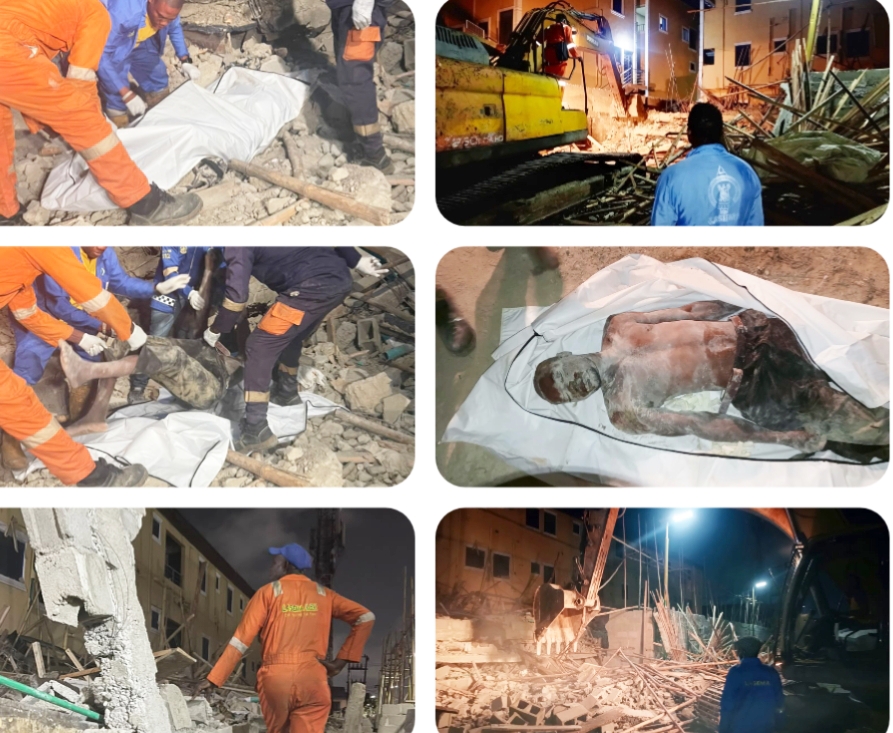
A two-storey building has collapsed in the Fadeyi area of Lagos, resulting in one fatality and the rescue of three people, emergency officials confirmed on Friday morning.
The incident occurred in the early hours, sending residents and nearby traders into panic as the structure suddenly gave way. Rescue teams from the Lagos State Emergency Management Agency (LASEMA) and other first responders quickly arrived at the scene and began extracting victims from the rubble.
According to preliminary reports, one person was confirmed dead at the site, while three others were pulled out alive and rushed to a nearby hospital for treatment. Their conditions have not yet been disclosed.
Security personnel have cordoned off the area to allow rescue operations to continue and to prevent further access by onlookers. Officials are still assessing whether any other persons remain trapped under the debris.
The cause of the collapse has not been established. Authorities have not ruled out structural failure, but investigations are ongoing.
Further updates are expected as the rescue operation progresses and more details become available from emergency services.
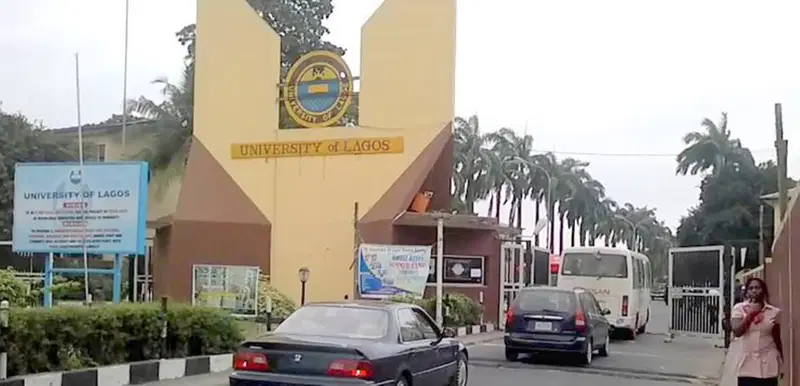
Teachers at the International School, University of Lagos (ISL), on Wednesday commenced a work-to-rule action over unpaid salary arrears, their removal from the university’s payroll, and delays in implementing a National Industrial Court judgment.
The staff are demanding the payment of outstanding Consolidated Tertiary Institutions Teaching Allowance (CONTTA) arrears, as well as arrears from the 25 per cent and 35 per cent salary adjustments approved in 2024. They also want full restoration to the university’s payroll.
Comrade Razak Yusuf, Chairman of the Senior Staff Association of Nigerian Universities (SSANU), University of Lagos branch, said the industrial action followed prolonged delays in resolving the teachers’ employment status and financial entitlements.
The teachers had approached the National Industrial Court of Nigeria, which ruled in their favour on May 11, 2026. Despite the judgment, they claim the university has yet to fully restore their names to the payroll or settle outstanding benefits.
Protesters carried placards with messages such as “Equal Work, Equal Rights,” “ISL tutors deserve their due,” and “Other UNILAG staff paid, ISL tutors still owed.” The action disrupted teaching and a scheduled mid-term examination at the school.
The teachers called on the university management to restore the affected staff to the payroll, settle all outstanding financial obligations, and provide a clear payment plan with timelines.
They rejected suggestions that any interim arrangement under the university’s Council protocol amounted to goodwill, insisting they were only seeking recognition of their employment rights.
The development continues a pattern of industrial disputes at the University of Lagos over salary and allowance issues.
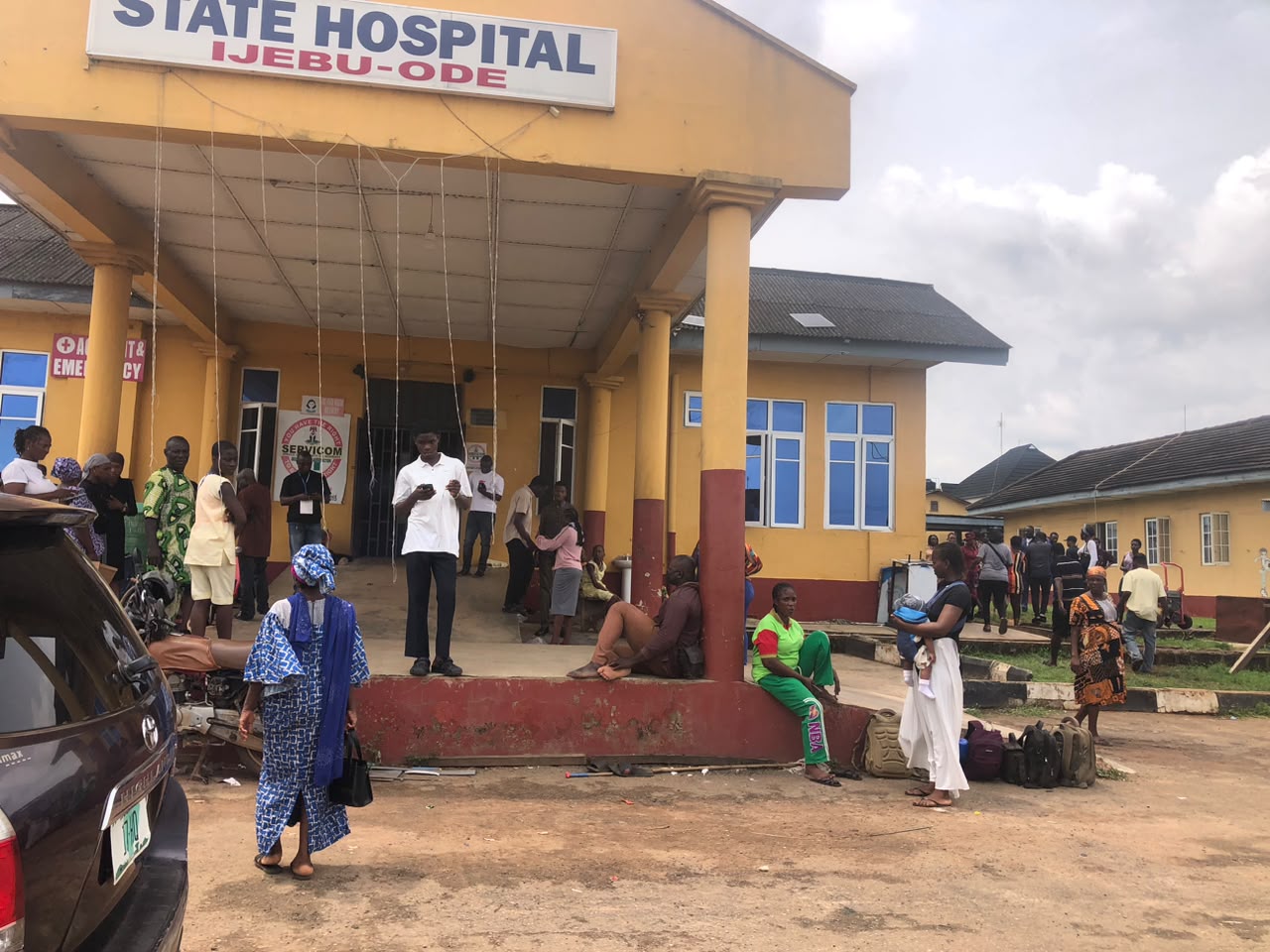
Hundreds of students were hospitalised on Wednesday morning after fresh gaseous emissions hit parts of Ogun State, including Ijebu-Ode, Ijebu-Igbo and Ago-Iwoye.
The incident affected pupils at Anglican Girls Grammar School, Obalende, Ijebu-Ode, and Ijebu-Igbo Girls Grammar School. Several schools in Ago-Iwoye suspended academic activities and sent students home as a precaution.
Kehinde Bello, General Manager of the Ogun State Environmental Protection Agency (OGEPA), visited the affected areas and linked the emissions to underground gas previously recorded in Ijebu-Ode since April 2026. He said the situation was under control and attributed the releases to natural geological and tectonic fault lines, ruling out sabotage or a gas pipeline leak.
Bello assured residents that the state government was working on a lasting solution. He advised anyone exposed to the odour to cover their noses and mouths with wet handkerchiefs.
The recurring emissions have renewed concerns about the safety of students and residents in the affected communities.


JUST IN: Four Pilots Die After Mid-Air Collision of Military Planes in Philippine

JUST IN: Another Nollywood Actor, Dies After Brief Illness

Ebola patient in Abuja showing signs of recovery – FG

BREAKING: Lagos Govt Declares Today, Thursday Work-Free to Mark 2026 Ìṣẹ̀ṣe Day

Tech Expert, Zuckerberg trains with UFC champions, Adesanya, Alexander

Organ Trafficking: Ekweremadu bags 10 years in UK prison
-

 Business2 days ago
Naira To Dollar, Pound, Euro… Today October 23
-
 Health3 days ago
Ebola Outbreak: Don’t Panic, FG Assures Nigerians
-

 Health3 days ago
UPDATE: Identity of Woman Who Flew into Nigeria with Ebola Virus Revealed
-
Business3 days ago
Dollar to Naira Exchange Rate – Thursday, October 22, 2026
-

 Business2 days ago
Obasanjo Accuses Tinubu : “You Made Every Nigerian Poor By 300% Naira Devaluation”
-

 News3 days ago
UNILAG School Teachers Begin Work-to-Rule Over Unpaid Arrears
-
 Entertainment2 days ago
JUST IN: Nollywood Veteran Francis Duru Dies at 57 After Brief Illness
-
 News2 days ago
JUST IN: 1 Dead, 3 Rescued in Fadeyi Building Collapse, Lagos