
News
JUST IN: SSANU, NASU Begin Indefinite Nationwide Strike Over Withheld Salaries

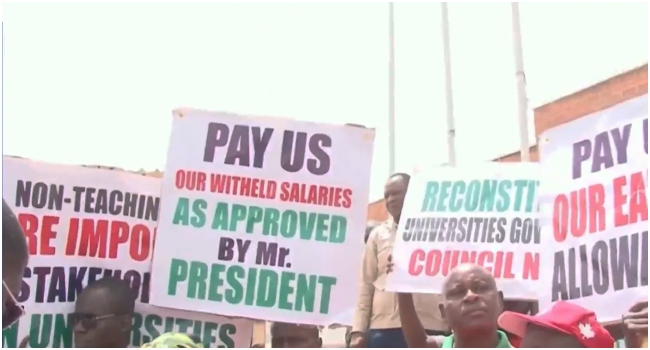
Members of the Senior Staff Association of Nigerian Universities (SSANU) and the Non-Academic Staff Union of Educational and Associated Institutions (NASU) have commenced an indefinite nationwide strike within campuses of public universities to demand the immediate release of their four months’ withheld salaries.
In a statement on Sunday co-signed by SSANU President Mohammed Ibrahim and NASU General Secretary Peters Adeyemi, the two unions said it is appalling that despite several ultimatums issued to the government, no positive result has come from the government.
The two unions directed their members in all public universities and inter-university centres throughout the country to “hold a joint congress in their respective campuses on Monday, October 28, 2024, and proceed on an indefinite, comprehensive and total strike action as no concession should be given in any guise”.
On September 17, 2023, the Joint Action Committee of SSANU and NASU handed the Federal Government a three-week ultimatum to pay the outstanding withheld salaries of their members or risk an industrial action.
Before now, the two unions had staged several protests and warning strikes to protest their eight months’ withheld salaries by the Federal Government.
During the warning strikes, nothing moved administratively within any public university in Nigeria as hostels and varsity gates were locked up and electricity supply was cut off by disgruntled non-academic staff.
The two unions berated the Federal Government for paying withheld salaries to the Academic Staff Union of Universities (ASUU) while neglecting the non-academic unions.
All the unions had embarked on an eight-month strike in 2022 to press home some of their demands including a better welfare package.
The administration of then President Muhammadu Buhari subsequently invoked a ‘No Work, No Pay policy’ against the unions but President Bola Tinubu last October approved the release of withheld salaries to ASUU members.
SSANU and NASU accused the Federal Government of unfair treatment and discrimination by failing to pay them the full eight months’ salaries like their academic counterparts.
Then Education Minister Tahir Mamman had in April blamed a “communication problem” for the non-payment of the full amount to SSANU and NASU members, whilst he insisted that they were not discriminated against.






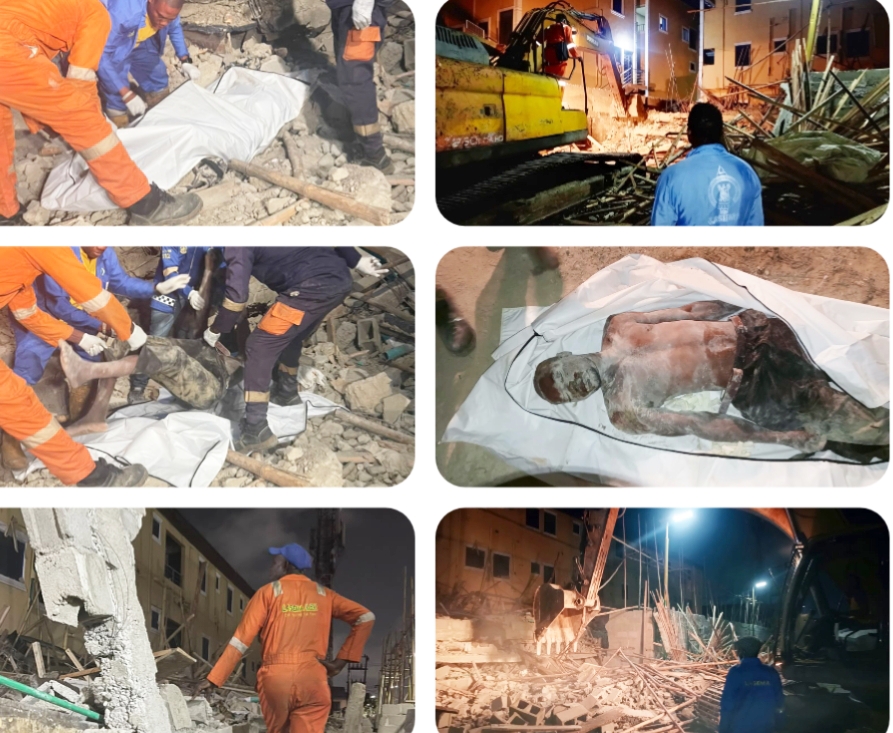
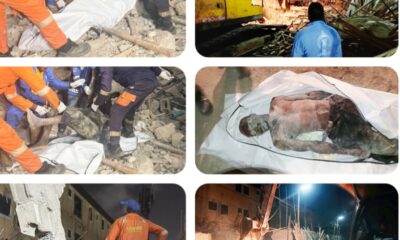
A two-storey building has collapsed in the Fadeyi area of Lagos, resulting in one fatality and the rescue of three people, emergency officials confirmed on Friday morning.
The incident occurred in the early hours, sending residents and nearby traders into panic as the structure suddenly gave way. Rescue teams from the Lagos State Emergency Management Agency (LASEMA) and other first responders quickly arrived at the scene and began extracting victims from the rubble.
According to preliminary reports, one person was confirmed dead at the site, while three others were pulled out alive and rushed to a nearby hospital for treatment. Their conditions have not yet been disclosed.
Security personnel have cordoned off the area to allow rescue operations to continue and to prevent further access by onlookers. Officials are still assessing whether any other persons remain trapped under the debris.
The cause of the collapse has not been established. Authorities have not ruled out structural failure, but investigations are ongoing.
Further updates are expected as the rescue operation progresses and more details become available from emergency services.
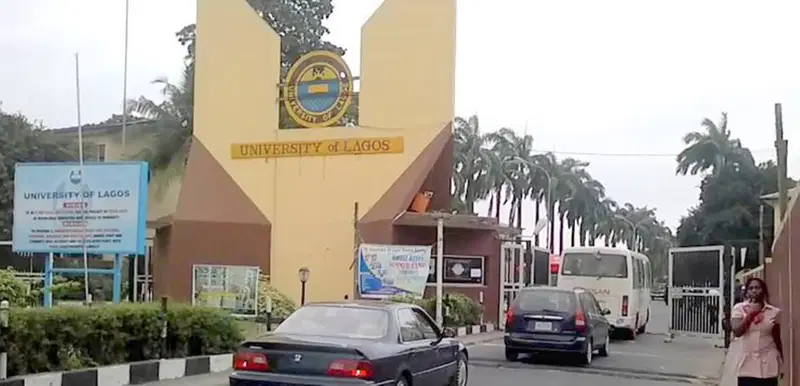
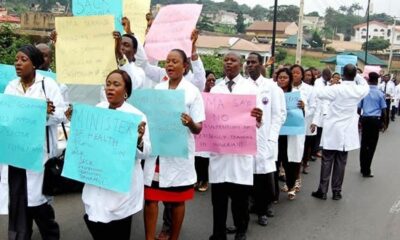
Teachers at the International School, University of Lagos (ISL), on Wednesday commenced a work-to-rule action over unpaid salary arrears, their removal from the university’s payroll, and delays in implementing a National Industrial Court judgment.
The staff are demanding the payment of outstanding Consolidated Tertiary Institutions Teaching Allowance (CONTTA) arrears, as well as arrears from the 25 per cent and 35 per cent salary adjustments approved in 2024. They also want full restoration to the university’s payroll.
Comrade Razak Yusuf, Chairman of the Senior Staff Association of Nigerian Universities (SSANU), University of Lagos branch, said the industrial action followed prolonged delays in resolving the teachers’ employment status and financial entitlements.
The teachers had approached the National Industrial Court of Nigeria, which ruled in their favour on May 11, 2026. Despite the judgment, they claim the university has yet to fully restore their names to the payroll or settle outstanding benefits.
Protesters carried placards with messages such as “Equal Work, Equal Rights,” “ISL tutors deserve their due,” and “Other UNILAG staff paid, ISL tutors still owed.” The action disrupted teaching and a scheduled mid-term examination at the school.
The teachers called on the university management to restore the affected staff to the payroll, settle all outstanding financial obligations, and provide a clear payment plan with timelines.
They rejected suggestions that any interim arrangement under the university’s Council protocol amounted to goodwill, insisting they were only seeking recognition of their employment rights.
The development continues a pattern of industrial disputes at the University of Lagos over salary and allowance issues.
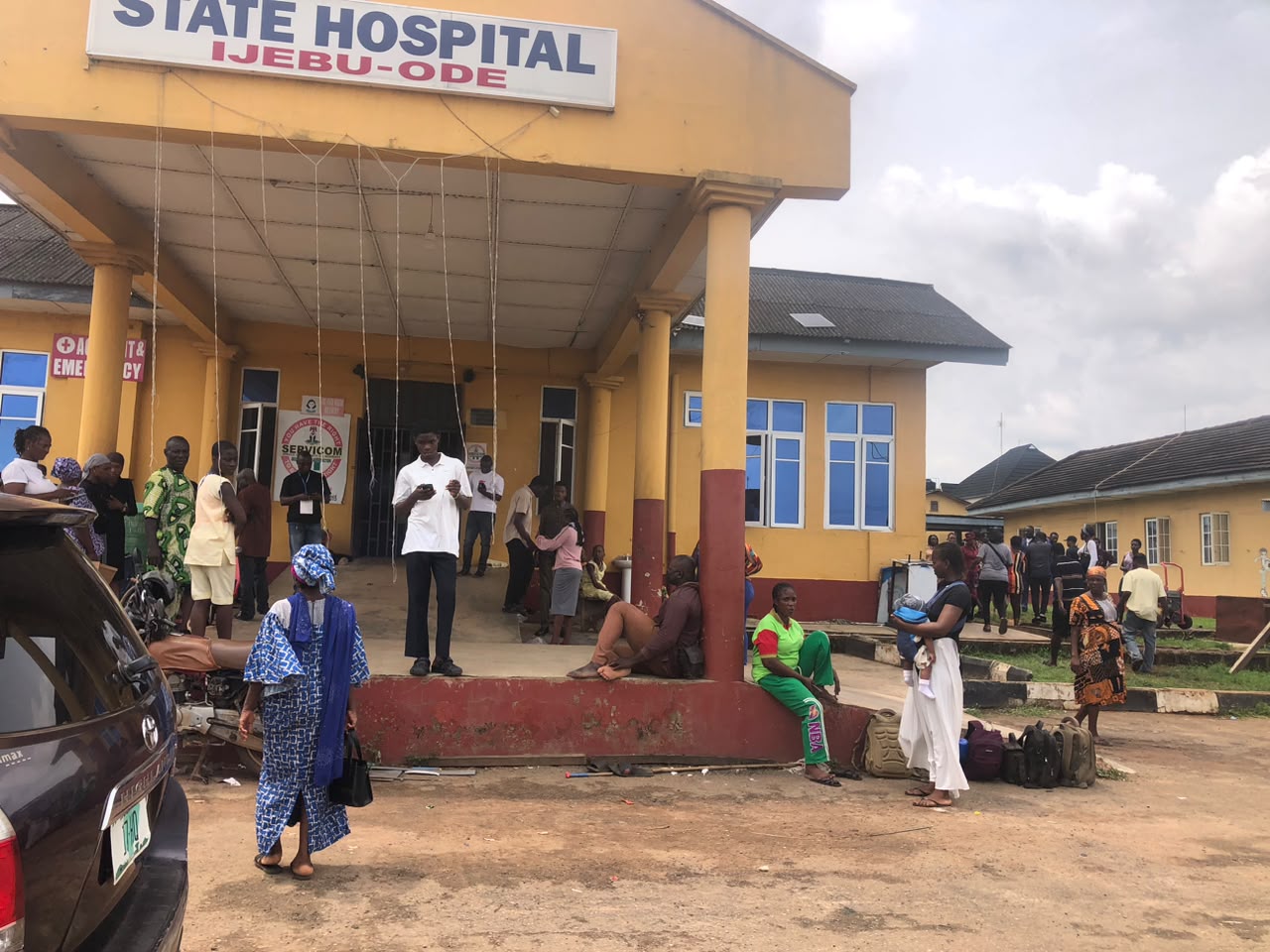
Hundreds of students were hospitalised on Wednesday morning after fresh gaseous emissions hit parts of Ogun State, including Ijebu-Ode, Ijebu-Igbo and Ago-Iwoye.
The incident affected pupils at Anglican Girls Grammar School, Obalende, Ijebu-Ode, and Ijebu-Igbo Girls Grammar School. Several schools in Ago-Iwoye suspended academic activities and sent students home as a precaution.
Kehinde Bello, General Manager of the Ogun State Environmental Protection Agency (OGEPA), visited the affected areas and linked the emissions to underground gas previously recorded in Ijebu-Ode since April 2026. He said the situation was under control and attributed the releases to natural geological and tectonic fault lines, ruling out sabotage or a gas pipeline leak.
Bello assured residents that the state government was working on a lasting solution. He advised anyone exposed to the odour to cover their noses and mouths with wet handkerchiefs.
The recurring emissions have renewed concerns about the safety of students and residents in the affected communities.


JUST IN: Four Pilots Die After Mid-Air Collision of Military Planes in Philippine

JUST IN: Another Nollywood Actor, Dies After Brief Illness

Ebola patient in Abuja showing signs of recovery – FG

BREAKING: Lagos Govt Declares Today, Thursday Work-Free to Mark 2026 Ìṣẹ̀ṣe Day

Tech Expert, Zuckerberg trains with UFC champions, Adesanya, Alexander

Organ Trafficking: Ekweremadu bags 10 years in UK prison
-

 Business2 days ago
Naira To Dollar, Pound, Euro… Today October 23
-
 Health3 days ago
Ebola Outbreak: Don’t Panic, FG Assures Nigerians
-

 Health3 days ago
UPDATE: Identity of Woman Who Flew into Nigeria with Ebola Virus Revealed
-

 Business2 days ago
Obasanjo Accuses Tinubu : “You Made Every Nigerian Poor By 300% Naira Devaluation”
-
Business3 days ago
Dollar to Naira Exchange Rate – Thursday, October 22, 2026
-
 News3 days ago
UNILAG School Teachers Begin Work-to-Rule Over Unpaid Arrears
-

 Entertainment2 days ago
JUST IN: Nollywood Veteran Francis Duru Dies at 57 After Brief Illness
-
 News2 days ago
JUST IN: 1 Dead, 3 Rescued in Fadeyi Building Collapse, Lagos