
News
JUST IN: Reps, Benue gov clash Over Insecurity as NASS resumes today

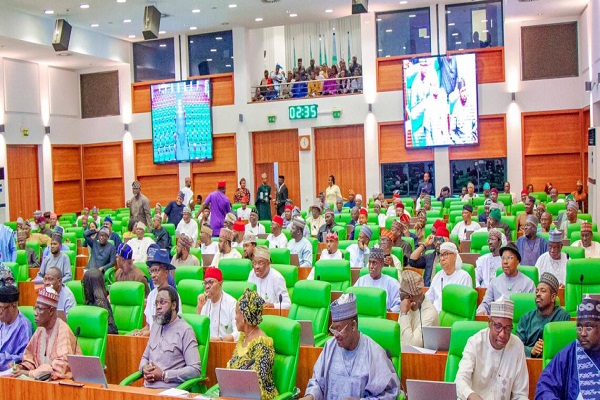
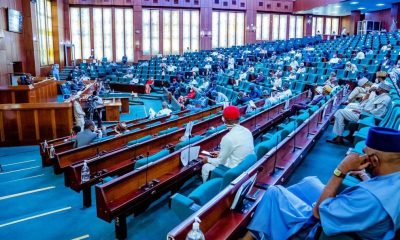
As the National Assembly resumes from its long recess today, the House of Representatives and the Benue State Government have disagreed on the reasons for the spates of killings in the state in the past few months.
While the Deputy Spokesman of the House, Philip Agbese blamed Governor Hyacinth Alia for what it called his abandonment of the state anti-open grazing law for the increase in the killings of innocent citizens in recent times, the governor fired back, accusing Agbese of knowing next to nothing about how laws are suspended in state legislatures.
Attacks in Ukum and Logo Local Government Areas of Benue State in the past three weeks have left no fewer than 56 persons dead, with Gov Alia last week, appealing for Federal Government’s intervention to stem the tide.
Recall The two chambers had on March 27 proceeded on break to mark the Eid-el-Fitr and Easter celebrations and fixed Tuesday, April 29, 2025, as the resumption date. However, the Workers’ Days celebration on May 1 led to the extension of resumption by an additional week.
While on break, bandits in a senseless campaign of violence killed innocent Nigerians in Plateau, Benue and Zamfara States, culminating in calls for President Bola Tinubu to cut short his vacation in France to return home to lead the fight against insecurity from the front
The Deputy Spokesman of the House of Representatives, Philip Agbese, said the leadership of the House is committed to speaking against all forms of criminality in the country, particularly the killings of defenceless Nigerians and destruction of their property.
He said, “As we resume tomorrow (Tuesday), we are prepared to tackle squarely the issue of insecurity across the country. We are tired of observing one-minute silence in honour of the dead all the time.
Like the Speaker, the Right Honourable Tajudeen Abbas always says, the life of every Nigerian is very important to the 10th National Assembly.
“To bring these issues to the attention of the government through urgent public importance is not a question we should be asking ourselves now.
We want to see action, we want to see Nigeria secure so that everyone can move freely without fear of being attacked or killed.
“During our sectoral engagement with security chiefs not long ago, they promised action, and we saw a reduction in these attacks. But that was then.
“Things have worsened again, and we cannot continue. We hope to engage them again, and if we are convinced that they don’t have fresh ideas on how to address the challenge of insecurity, we will recommend to Mr President to relieve them of their duties and appoint fresh hands to step in.
”Agbese also commended the leadership of the House, saying, “Since we came on board in June 2023, Speaker Abbas has continued to prioritise the well-being of Nigerians, and as part of this parliament, we are not prepared to rest yet.
Nigerians expect more from us and we can’t afford to let them down. What we must do as parliamentarians is to speak up when things are not going well.
“Killing Nigerians in their homes, farms or wherever should not be condoned. We are hopeful that as we resume our duty, we will lend our voices to the call for the safety of Nigerians wherever they are and that those tasked with maintaining peace and order, as well as the protection of lives and property, will step up their game and make this country secure for us all.
”On the incessant killings in Benue State over the past few months, Agbese who represents Ado/Ogbadigbo/Okpokwu Federal Constituency of the State, blamed the governor, Rev Fr Hyacinth Alia for his handling of the state anti-grazing law.
He said, “Before his (Gov Alia) election, there was an anti open grazing law in place. He completely abandoned that law and was busy claiming that there were no issues in Benue.
The governor kept referring to the ECOWAS Protocol which guarantees free movement of people and goods within the West Africa sub region.
“Truth as that may sound, the ECOWAS Protocol does not make room for reckless human transit without documentation, and this is what some of us pointed out to the governor.
“Before now, when herders came into new settlements, the law required them to give information about themselves to the locals.
They were known to the people, but Gov Alia came and changed everything. At a point, he said there was no problem in Benue. We are happy that he is beginning to realise that this is not the way to go.
Meanwhile, Mr Agbese has called on Gov Hyacinth Alia and his Zamfara State counterpart, Dauda Lawal, to appear before the House Committee on Public Petitions as directed by the Committee Chairman, Mike Etaba last week.
Last week, the committee summoned the two governors, along with the leadership of their Houses of Assembly to appear before them on Thursday, May 8, to explain why their functions should not be taken over by the House of Representatives.
According to the statement, the invitation, “Was sequel to a petition written by a civil rights organisation, Guardians of Democracy and Rule of Law, urging the House to take over the functions of the two Houses of Assembly.
”The Committee insisted that its intervention is necessary “To ensure that the rule of Law is upheld at all times. The parties have a wonderful opportunity to state their cases clearly so that Nigerians can know what is going on.
Anarchy would never be given any space in our polity.
”Reminded that the State Assemblies have denied receiving the House summons, the Benue lawmaker urged them to move away from technicalities and appear before the Committee to enable Nigerians to hear their own side of the story.
“We can’t be hiding under needless technicalities all the time. If Nigerians are aware that there is a summon for the governors and State Assemblies to appear before a Standing Committee based on a petition, we expect the parties involved to appear before the committee.
“The National Assembly has the power to take over the functions of State Assemblies in line with the provision of Section 11 (4) of the Constitution. They should appear and let Nigerians know why that should not happen,” he said.
When asked if there will be consequences if they fail to appear, Agbese said, “Let us not discuss that yet. Let’s hope they will appear.
Thursday is not today, and I sincerely hope they will be here. There is no reason to think otherwise,” he added.
Meanwhile, the Benue State Governor, Hyacinth Alia has asked the deputy spokesman of the House of Representative, Philip Agbese to go for further study on what democracy entails.
Responding to the allegations by the house deputy spokesman that the governor abandoned the anti open grazing law of the state leading to reckless attack on Benue communities.
The governor who spoke through his Technical Adviser on Communication, Media and Publicity, Solomon Iorpev said that in a democratic system, there are processes to repeal existing laws.
He said, “I don’t like to respond to those who do not know their right hand from their left hand because it’s only in a military regime that you hear about suspension of laws without following due process.
“But in a democratic system, you should know that there must be processes to suspend existing laws and since he (deputy spokesman) does not give evidence to that, it means the he doesn’t know anything about democracy.
Iorpev added that the governor had at several fora, reiterated his stance on the full enforcement of the anti open grazing law in the state.








News
Police must pay transport fares, says AIG
” No police officer has the right to enter your vehicle without paying. We should assist one another willingly, not by force,” he said.

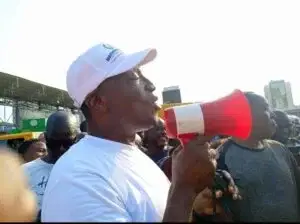
• The Assistant Inspector-General of Police(AIG) in charge of Zone 2 Command, Mr Olohundare Jimoh, speaking with transporters at Obalende garage, Lagos State, on Wednesday.
The Assistant Inspector-General of Police, Zone 2 Command, Mr Olohundare Jimoh, has declared that officers must pay fares before boarding commercial vehicles, warning against abuse of authority.
Jimoh spoke on Wednesday at Obalende garage during a sensitisation meeting with drivers and transport workers marking National Police Day 2026.
He stressed that relations between police and the public must be based on partnership, not coercion, urging both sides to support each other voluntarily.
“No police officer has the right to enter your vehicle without paying. We should assist one another willingly, not by force,” he said.
Jimoh called for stronger cooperation to maintain safety and order on roads, insisting there was no conflict between officers and transport unions.
“I don’t collect money from officers. We don’t arrest people arbitrarily. If you have issues with any officer, report directly to me,” he said.
(Vanguard)
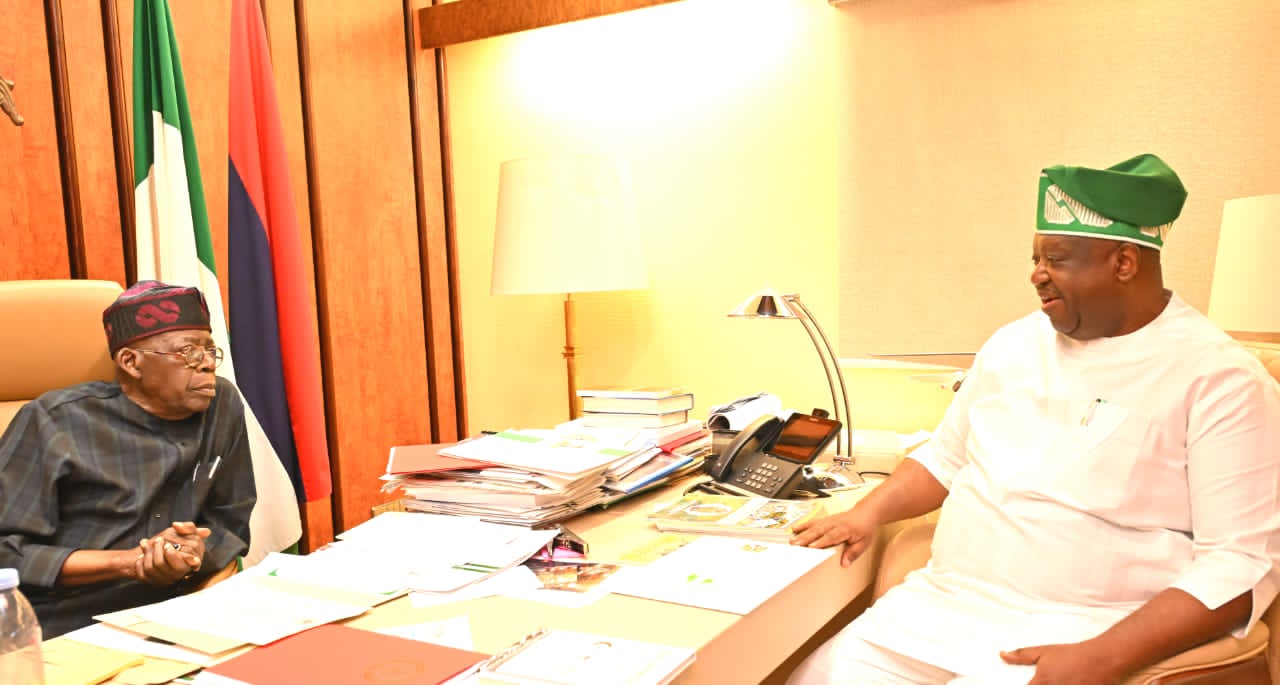
President Bola Ahmed Tinubu will leave for Jos tomorrow to commiserate with the state government and residents over recent deadly gun attacks that lefts dozens dead.
This was following Governor Caleb Mutfwang’s security briefing to the President on the recent violent attack in Angwan Rukuba, Plateau State.
During the meeting on Wednesday at the presidential villa in Abuja, Governor Caleb Mutfwang told Mr President that although security forces have restored calm after fresh disturbances involving looters on Wednesday morning, following the deadly Palm Sunday attack that left more than a dozen dead and many others injured.
He said that investigations are continuing to determine the identities or motives of the attackers who are yet to be apprehended .
Presidency source said that President Tinubu was initially scheduled for a planned trip to Ogun State to flag off operations at the Gateway International Cargo Airport on Thursday.
From Jos, the President will travel to Lagos to observe Good Friday.
On Saturday, April 4, he will visit Ogun State to commission projects including the cargo airport.
He will then return to Lagos during the Easter holiday to commission several state infrastructure projects, including the Ojota/Opebi Link Bridge.
Before heading back to Abuja, the president will visit Bayelsa State on April 10 to commission projects completed under Governor Duoye Diri.
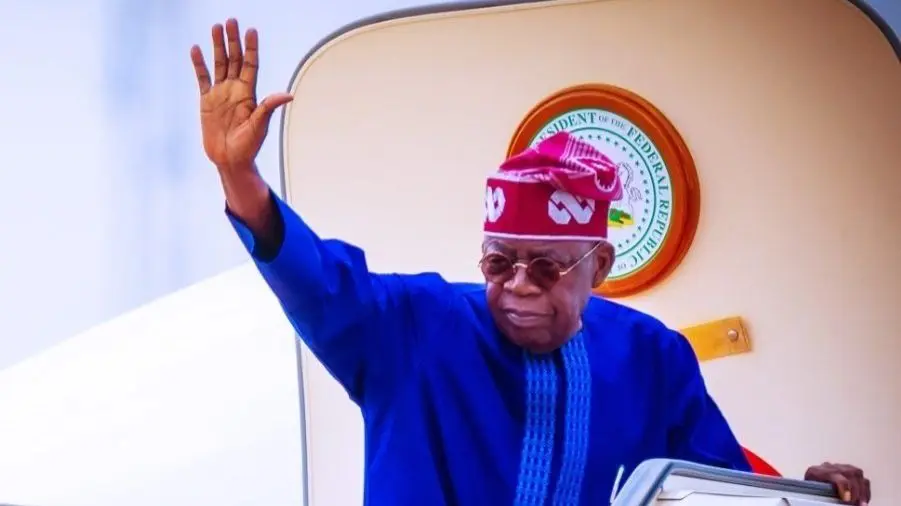
President Bola Ahmed Tinubu will tomorrow embark on a visit to Jos, Plateau State, as the first leg of a five-state tour across the country.
The Presidency announced that the President has postponed his scheduled trip to Ogun State to enable him to commence the series of official visits.
Details of the remaining four states in the tour are expected to be released by the Presidency in due course.
The development comes as President Tinubu continues nationwide engagements aimed at assessing development projects, interacting with stakeholders, and addressing key national issues in the respective states.
Further updates on the itinerary will be communicated as the visits progress.


Ebonyi: Gunmen Assasinate Another Traditional Ruler

From South Africa to US, ‘Cicada’ COVID-19 variant spreading

FIFA ranks Super Eagles third in Africa, 26th globally

Tech Expert, Zuckerberg trains with UFC champions, Adesanya, Alexander

Organ Trafficking: Ekweremadu bags 10 years in UK prison

SAINT OBI: Between his marriage and his death
-

 Business3 days ago
BUA Foods Plc Reports Strong 2025 Performance with ₦1.77 Trillion Revenue, Proposes Record ₦28 Dividend per Share
-

 News3 days ago
NELFUND Debunks Claims of ₦25,000 Student Upkeep Allowance
-
 Business2 days ago
33 Nigerian Banks Beat CBN’s Recapialisation with ₦4.65trn Combined Capital Base
-
 News3 days ago
Tinubu Appoints CAC, NPC, Officials, Names Adviser on Political Economy
-
 Sports3 days ago
Sportsville Awards: Olopade Leads NSC Delegation to Honour Dikko with Transformative Impact Award
-
 News3 days ago
Nigeria Welcomes African Games Bid Evaluation Committee
-

 Politics1 day ago
BREAKING: INEC Withdraws Recognition of David Mark’s ADC
-
 News3 days ago
El-Rufai Appear in State High Court, after Mother’s death, as Trial Continues