
News
JUST IN: Delta Election Tribunal dismisses Omo-Agege’s application for new witness

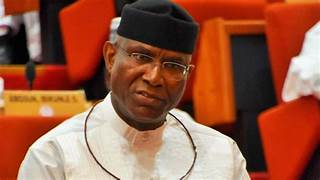
The application of the governorship candidate of the All Progressive Congress (APC), Senator Ovie Omo-Agege, seeking to bring in a statistician expert witness to testify before the tribunal has been dismissed by the Delta State Governorship Election Petition Tribunal sitting in Asaba.
Led by Justice C.H. Ahuchaogu, the three-man panel also dismissed another application by the APC candidate seeking an extension of time for INEC subpoenaed witness to file a witness statement on oath and also to testify before the tribunal.
Counsels to the second respondent (Governor Sheriff Oborevwori) and third respondent (Peoples Democratic Party, PDP), had opposed the applications on the ground that granting same would overreach the respondents.
They had argued that the first application specifically, was aimed at bringing in new facts when pleadings had long closed, and would not afford them another opportunity to reply.
In dismissing the first application, the tribunal while citing previous cases, agreed with the respondents that the application cannot be granted, noting that it was brought 101 days after an order for inspection of election materials was granted.
The tribunal faulted the petitioners’ claims that INEC was responsible for the delay, declaring that there was no evidence to show that the petitioners applied to INEC for the materials after the order for inspection of materials was granted on April 3 until May 17.
It added while the inspection was done on May 23, the petitioners waited till July 13 to file the report.
“The petitioners having failed to file their expert witness statement on oath, cannot be allowed to eat their cake and have it. The application for an extension to allow for an expert statistician witness is not grantable as it will overreach the respondents who will be left with the short end of the stick as they cannot file another reply to the petition,” the tribunal held.
On the second application which is seeking extension of time for INEC to file a statement on oath based on the subpoena issued by the tribunal, the panel of justices held that the petitioners exhibited no evidence for the application to be granted.
They further held that INEC as an adversary, the tribunal cannot compel the electoral body to file witness deposition for the petitioners, noting that the best the tribunal could do which has been done was the issuance of a subpoena.
“It is not logical that a party should make a witness deposition for an adversary who is a respondent against a petition. Expecting that such a witness would sign and adopt a statement is beyond human reasoning.
“Such expectation is beyond our capacity as a tribunal. The best thing to do and we have done in this circumstance, is to issue a subpoena for INEC to appear. In some, we find no merit in this application, and it is dismissed in its entirety,” the tribunal held.
News
FG Unmasks 60 Persons and Corporates Behind Terrorism Financing, Order Banks To Freeze Their Accounts
The updated sanctions list is part of a crackdown on financial networks supporting extremist groups, particularly following investigations into Bureau De Change (BDC) operators and other entities.

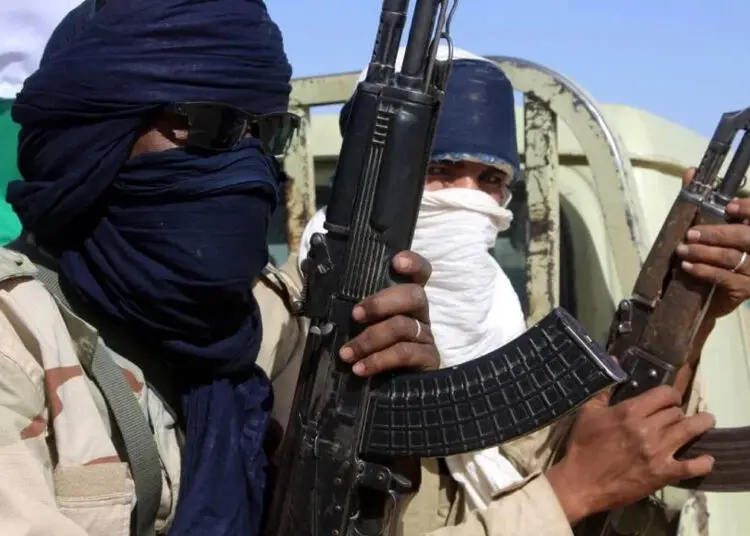
The Federal Government on Saturday released a list of 48 individuals and 12 corporate entities allegedly linked to terrorism financing in Nigeria, as part of ongoing efforts to curb the funding of extremist activities.
The Federal Government also directed financial institutions to freeze all accounts and assets associated with these individuals and firms.
The list, published on the website of the Nigeria Sanctions Committee (NIGSAC), disclosed the nationalities of those named, their specific roles, and the terrorist groups they were allegedly connected to.
The Nigeria Sanctions Committee (NIGSAC) operates under the authority of the Office of the National Security Adviser (ONSA), which coordinates its activities within the national security framework.
Its core mandates include the implementation of United Nations sanctions—particularly those targeting terrorism financing—ensuring compliance with international obligations, and facilitating coordination among agencies such as financial intelligence, defense, and foreign affairs.
Those named in the latest released include Abdulsamat Ohida, Mohammed Sani, Abdurrahman Abdurrahman, Fatima Ishaq, Tukur Mamu, Yusuf Ghazali, Muhammad Sani, Abubakar Muhammad, Sallamudeen Hassan, Adamu Ishak, Hassana Isah, Abdulkarim Musa, Umar Abdullahi, Abdurrahman Ado, Bashir Yusuf, Ibrahim Alhassan, Muhammad Isah, Salihu Adamu, Surajo
Mohammad, Fannami Bukar, Muhammed Musa, Sahabi Ismail, Mohammed Buba, Jama’atu Wal-Jihad, Ansarul Sudan (ANSARU), Islamic State West Africa Province (ISWAP), Indigenous People of Biafra (IPOB), Yan Group, Yan Group NLBDG, Adamu Hassan, Hassan Mohammed, Usman Abubakar, Kubara Salawu, Rabiu Suleiman, Simon Njoku, Godstime Iyare, Francis Mmadubuchi, John Onwumere, Chikwuka Eze, Edwin Chukwuedo, Chiwendu Owoh, Ginika Orji, Awo Uchechukwu, Mercy Ali, Ohagwu Juliana, Eze Okpoto, Nwaobi Chimezie, and Ogumu Kewe.
The entities listed include West and East Africa General Trading Co. Ltd, Settings Bureau De Change Ltd, G. Side General Enterprises, Desert Exchange Ventures Limited, Eagle Square General Trading Co. Ltd, Alfa Exchange BDC, Alin Yar Yaya General Enterprises, K. Are Nigeria Limited, Suhailah Bashir General Enterprises, Igwe Ka Ala Enterprises, Seficuvi Global Company, and Lakurawa Sect.
News
Breaking: INEC postpones voter revalidation exercise till after 2027 elections
The decision was announced in a statement issued and signed by Mohammed Haruna, the commission’s national commissioner and chairman of its information and voter education committee.
The Independent National Electoral Commission (INEC) on Friday postponed its planned nationwide voter revalidation exercise until after the 2027 general elections.
The decision was announced in a statement issued and signed by Mohammed Haruna, the commission’s national commissioner and chairman of its information and voter education committee.
Haruna said that the postponement followed deliberations at a meeting between the commission and resident electoral commissioners (RECs).
“Following deliberations, the commission resolved to postpone the exercise until after the 2027 General Election,” the statement read.
(VANGUARD)
News
Plateau Community Laments ‘ No Security To Repel Attackers’
Those confirmed dead include Elder Iliya Mangut Dakus, Mr. Luck Titus Dakus, Mr. Habila Istifanu Dakus, Mr. Hassan Istifanus Dakus, Mrs. Hassan Moses Dakus, Biggie Lucky Dakus, Sunday Gideon Dakus, and Mr. Innocent Barnabas Makwin.
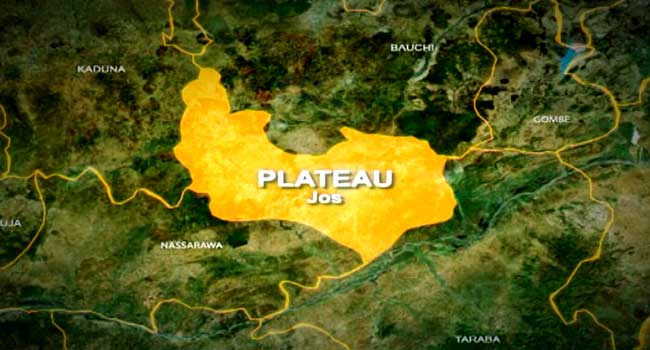
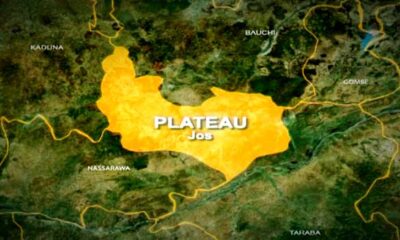
People of Mbwelle village, Bokkos Local Government Area of Plateau State lamented that the Thursday Late-night attack which left eight persons killed lasted for several hours with no visible security presence to repel the attackers.
The assailants reportedly stormed the community at about 11 p.m. on Thursday, and opened fire on residents in a sporadic shooting that lasted nearly an hour.
Seven of the victims were members of the same family, while at least three others sustained injuries and several persons are missing.
Those confirmed dead include Elder Iliya Mangut Dakus, Mr. Luck Titus Dakus, Mr. Habila Istifanu Dakus, Mr. Hassan Istifanus Dakus, Mrs. Hassan Moses Dakus, Biggie Lucky Dakus, Sunday Gideon Dakus, and Mr. Innocent Barnabas Makwin.
The Chairman of Bokkos Local Government Area, Samuel Amalau, confirmed the incident to Arise news during a phone interview, expressing concern over the recurring violence in the area.
The Chairman condemned what he described as a resurgence of unprovoked attacks in Bokkos, particularly the incident in Mbwelle community of Kwatas Ward.
The Chairman of the Community Peace Observers in Bokkos, Kefas Mallai, added that the attack has heightened tension in the area.
He extended condolences to the bereaved families, noting that the killings were “a direct assault on our collective humanity and peaceful coexistence,” while also wishing the injured a speedy recovery.
He also appealed to youths to exercise restraint and avoid actions that could escalate tensions, even as he reaffirmed the right to lawful self-defense.
Also confirming the attack, the Police Public Relations Officer, SP Alfred Alabo, said investigations are ongoing and assured that further details would be made available.


Dozens Feared Dead in Nigerian Air Force Airstrike on Jilli Market in Yobe State (Images)

FG Unmasks 60 Persons and Corporates Behind Terrorism Financing, Order Banks To Freeze Their Accounts

Police reopens, handover PDP Hqtrs to Wike backed Faction

Tech Expert, Zuckerberg trains with UFC champions, Adesanya, Alexander

Organ Trafficking: Ekweremadu bags 10 years in UK prison

SAINT OBI: Between his marriage and his death
-

 News3 days ago
CBN Debunks Viral Fake News of ₦5,000 Banknote Featuring President Tinubu’s Image
-
 Politics2 days ago
2027: Bode George warns INEC, Judiciary Drifting Nigeria Towards ” One Party Rule”
-
 Crime3 days ago
Tinubu Mourns Soldiers Killed in Benisheikh Terror Attack
-
 Business3 days ago
DR Congo Central Bank Announces Ban on Foreign Currency Cash Transactions from 2027
-
 Politics2 days ago
NBA Cautions Lawyers Against Involvement in Political Party Disputes
-

 Business2 days ago
Supreme Court Overturns Appellate’s Ruling on $2bn Debt Recovery Battles Nestoil /Neconde Energy vs FBNQuest Merchant Bank
-
 News3 days ago
Police Debunk Viral “Terror Attack” Video in Abuja, Launch Investigation
-
 News2 days ago
Plateau Community Laments ‘ No Security To Repel Attackers’