
Business
Heineken to launch first large-scale brewery in Dubai

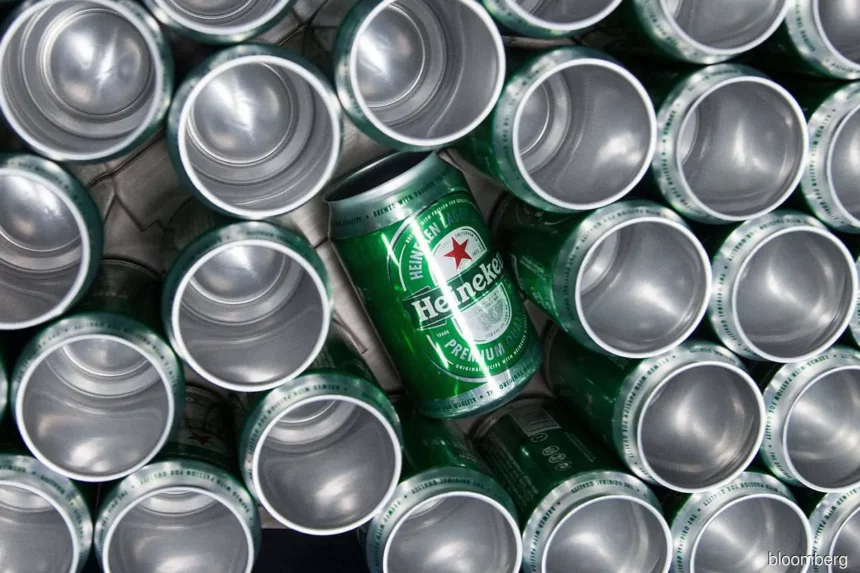
Dubai is set to host the Gulf’s first large-scale brewery as a joint venture involving Heineken NV prepares to produce popular beer brands in the emirate.
Bloomberg reports that this marks a significant shift in a region traditionally known for its strict regulations on alcohol sales and consumption.
Sirocco, a partnership between Heineken NV and Dubai-based Maritime and Mercantile International, announced plans to begin construction of the brewery late next year, having already secured the required permits.
The project is expected to be completed by 2027. Dubai, the Middle East’s business and tourism hub, is among the region’s most cosmopolitan cities.
Officials permitted alcohol consumption and sales over two decades ago, with regulations gradually easing to accommodate a surge in tourism.
Recently, the city eliminated a 30% sales tax on alcohol and liquor license fees, though sales to Muslims remain restricted. Dubai, part of the United Arab Emirates, is one of seven sheikhdoms in the federation.
The UAE has been gradually loosening restrictions on alcohol, with notable developments such as Las Vegas-based Wynn Ltd. building the region’s first casino in Ras Al Khaimah and Abu Dhabi granting a license for on-site beer brewing at a restaurant last year.
The planned brewery in Dubai will produce popular brands like Heineken, Kingfisher, Amstel, and Birra Moretti.
The company also aims to expand its workforce from 60 to 190 full-time employees.
Sirocco, which has been supplying alcohol in the UAE for nearly 20 years, states that local production will help increase output to meet rising demand in a market that attracts over 17 million tourists annually.
The establishment of the new brewery highlights the Gulf’s efforts to liberalize their economies while navigating conservative social norms.
With Middle Eastern governments aiming to reduce their dependence on oil, Dubai continues its push to attract tourists and expatriates as part of its economic diversification strategy.

Business
Investors Rush For Airtel Money IPO on LSE
Airtel Money is proving popular among retail investors ahead of full admission next week.

Airtel Money began conditional trading on the London Stock Exchange this morning in a £5.3 billion market debut, dubbed Africa’s Revolut.
Shares, which were open only to investors allocated stock in the offer, were trading flat at around 194p.
But armchair investors are rushing to sign up to the City’s largest IPO in five years ahead of full admission on October 14.
It is the ninth most popular initial public offering on AJ Bell’s investment platform based on the number of customers applying to take part in the offer, it said.
Airtel Money is proving popular among retail investors ahead of full admission next week
Airtel Money, a subsidiary of Airtel Africa, which offers mobile payment services in 13 countries across Africa, is a subsidiary of FTSE 100 telecoms group Airtel Africa, whose shares have trebled in less than two years.

The Nigerian National Petroleum Company Limited (NNPC Ltd) has clarified that its ongoing petrol discount is a temporary customer relief measure and does not amount to a restoration of the petroleum subsidy abolished in 2023.
In a statement issued on Friday by Chief Corporate Communications Officer Andy Odeh, the company said the N66-per-litre sales discount, first introduced on 1 October 2026 to mark Nigeria’s 66th Independence Anniversary, will continue until 31 October 2026 at NNPC Retail stations nationwide.
NNPC stressed that the initiative is designed to ease the burden of rising fuel prices linked to elevated global crude oil costs and the Middle East conflict. It applies only to NNPC Retail outlets and does not set a uniform national pump price or change the market-based pricing framework for petroleum products.
“This discount is a customer relief initiative and does not represent the reintroduction of petroleum subsidy,” the statement said. The company urged the public to disregard any interpretation of the measure as a return to the subsidy regime.
The clarification followed comments by Finance Minister and Coordinating Minister of the Economy Taiwo Oyedele, who explained that the discount is funded solely from NNPC Retail’s own profit margin and involves no public funds from the federal budget or Federation Account.
Business
Manufacturers sitting on N40trn untapped opportunities, says report
The Nigerian Manufacturing Opportunity Report 2026 provides decision-makers with the insights on opportunities that are most immediate, where Nigeria is already making progress and what needs to be done better to unlock greater value.
SEID, a marketing communications and market intelligence firm in Lagos, has estimated that the Manufacturing industries in Nigeria is sitting on more than N40 trillion in untapped manufacturing opportunities.
The Managing Partner at SEID, Tubosun Akeju, disclosed this in a report -The Nigerian Manufacturing Opportunity Report 2026 launched by the during the 54th Annual General Meeting of the Manufacturers Association of Nigeria, held at the Oriental Hotel.
Akeju emphasised that the report provides decision-makers with the insights on opportunities that are most immediate, where Nigeria is already making progress and what needs to be done better to unlock greater value.
“The opportunity is to understand where those strengths exist, deepen them, and build the competitiveness required to capture more value locally and compete beyond our borders,” he said .
The report examines manufacturing opportunities across Nigeria’s subsectors, states, value chains and industrial clusters, while identifying areas where existing strengths can be deepened and competitiveness improved.
It said that Nigeria’s manufacturing landscape was shaped by distinct areas of industrial strength, with different states, regions and value chains demonstrating varying levels of scale, specialisation and competitiveness.
The report noted that this created an opportunity to build on existing capabilities rather than adopt a one-size-fits-all approach to industrial development.
Manufacturing activity is spread across states with different levels of scale, specialisation and growth.
The South-West remains the country’s largest manufacturing zone, while other regions are developing strengths in areas ranging from food and agro-processing to textiles, chemicals, pharmaceuticals, cement, steel and light manufacturing.
The report maps these differences to show where investment and industrial development can build on existing capabilities.


Investors Rush For Airtel Money IPO on LSE

JUST IN: NNPC Clarifies Petrol Discount: Relief Initiative, Not Subsidy Restoration

JUST IN: A’Court Stalls SERAP, Oluwadare Defamation Appeals Over Late Briefs

Tech Expert, Zuckerberg trains with UFC champions, Adesanya, Alexander

Organ Trafficking: Ekweremadu bags 10 years in UK prison

SAINT OBI: Between his marriage and his death
-

 News2 days ago
Tears, Embraces as Rescued NYSC Members Reunite with Families in Ibadan
-
 News2 days ago
VON now broadcast in nine languages — DG
-

 Business2 days ago
Naira Exchange Rates Friday, October 9
-
 Business2 days ago
Manufacturers sitting on N40trn untapped opportunities, says report
-
 News2 days ago
Ahmadu Bello University Hikes Fees Across Programme
-
 Politics2 days ago
2027: INEC Displays Voter Register, Begins PVC Distribution Today
-
 News2 days ago
FG Plans National Strategic Fuel Reserve As Oil Price Bites
-
 News2 days ago
NDC Dismisses Tinubu’s 30-Day Petrol Discount as “Tokenism and Deceit,”