
News
#EndBadGovernance Protests : CISLAC Says Detention of Minors Not Good for Nigeria’s Global Image, Urges Swift Release


The Civil Society Legislative Advocacy Centre (CISLAC) has strongly condemned the detention and reported maltreatment of minors involved in the #EndBadGovernance protests.
“It is disturbing and damaging to Nigeria’s global image to witness such treatment of young citizens who were only exercising their constitutional rights,” said CISLAC’s Executive Director, Auwal Musa Rafsanjani.
In a position statement today, CISLAC called on First Lady Senator Oluremi Tinubu to intervene, urging her to see these young detainees as “her own children.”
CISLAC appealed to President Bola Tinubu to halt these actions by government officials, including the Minister of Justice, and to immediately order the release of the minors.
The organization further urged international bodies like UNICEF, the World Food Organization, the World Health Organization, and the Save the Children Foundation to join in condemning the incident and pressuring the Nigerian government for an unconditional release.
Said CISLAC: We expressed deep concern following reports that several detained children, some under the age of 15, collapsed due to malnutrition inside a Federal High Court in Abuja.
The minors have been held since August by the Nigerian police after participating in protests against worsening insecurity and deprivation in the country.
“The inhumane detention and maltreatment of these children must end. Anyone responsible for detaining these minors unjustly is the true criminal here, and this incident warrants urgent intervention.”
Images and videos from the courtroom, circulating widely on social media, depict the harrowing scenes of some minors lying on the floor as lawyers and others tried to revive them.
The incident occurred when the minors were brought to court from various police detention cells, where reports claim they were denied adequate food and medical care.
Sources allege that the prolonged detention and harsh conditions were intended to punish the minors, who have been accused of fighting the government despite the absence of credible evidence.
CISLAC called on the Nigerian Bar Association (NBA) to take immediate action, advocating for the rights of the detained minors.
The organization further urged international bodies like UNICEF, the World Food Organization, the World Health Organization, and the Save the Children Foundation to join in condemning the incident and pressuring the Nigerian government for an unconditional release.
“Detaining these children under such appalling conditions is unconscionable,” said Rafsanjani.
“We are appealing to all responsible authorities to ensure their swift release and hold accountable those who orchestrated their detention. This incident stands as a dark stain on our national commitment to the rule of law and respect for human rights.”
The minors were initially detained following a police order, which cited alleged involvement in a supposed plot to destabilize the government.
However, CISLAC and other rights groups argue that their detention violates both national and international human rights standards.


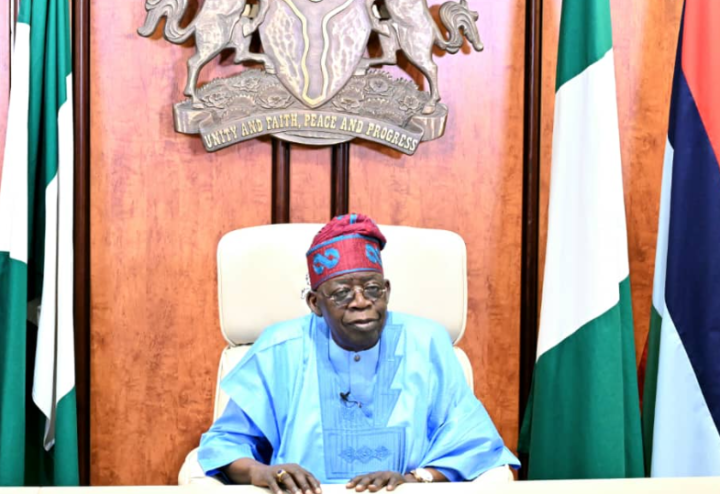
Nigeria’s President, Bola Ahmed Tinubu has addressed Nigerians following the marking of June 12 Democracy Day today.
The President speaks on economic reforms, and new minimum wage.
Read full speech below:
Fellow Nigerians
Today, we celebrate not only democracy but also the enduring Nigerian spirit. For 27 unbroken years, since May 29, 1999, Nigerians have chosen their leaders through the ballot, witnessed peaceful transitions of power, and resolved disagreements in courtrooms and legislative chambers—not through violence. We have experienced the longest stretch of civilian rule in our history. Our democracy is not perfect, but it is ours, and we must continue to defend and strengthen it.
In the coming days, Ekiti and Osun States will hold elections. I urge INEC, security agencies, and all parties to ensure these polls are peaceful and credible. Democracy fails when citizens doubt the process. To our National Assembly, Judiciary, the Press, and Civil Society: you are the guardrails of our republic. Criticise me, disagree with me, but never stop believing in Nigeria.
To our young people: Nigeria is your home and your future. Build here, code here, work here, and vote here. Every great nation was built by those who stayed to solve problems, not by those who abandoned ship.
To our armed forces, police, and intelligence services: Nigeria salutes your sacrifice. To our traditional rulers, faith leaders, and community heads: thank you for your support of peace and reconciliation. The government cannot do it alone.
Today, we honour the resilience of Nigerians who refused to surrender their faith in freedom, and the courage of those who stood firm against intimidation. We pay tribute to patriots who endured persecution, imprisonment, exile, and even death so that future generations could enjoy democracy. I salute labour leaders, journalists, activists, students, women, professionals, political leaders, and soldiers—both those who have passed and those still with us—for their patriotic contributions.
Though this year’s mood is dampened by the abduction of our children in Oyo and Borno, we remain hopeful for their safe return. Democracy without security is a mirage. That is why this administration declared a security emergency and approved the recruitment of more than 50,000 new police officers and thousands of military recruits. Our 2026 budget commits N5.41 trillion—our largest ever—to defence and security. Our administration is ever ready to do much more to secure our people.
We have moved from training with our allies, the United States, France and other European countries, to precision targeting. In Arege, Borno State, we degraded ISWAP’s command centre. Terror-related deaths are down by 81% since 2015. Over 13,000 terrorists have been neutralised in the past year. But we also keep the door of surrender open. Over 124,000 fighters and dependents have laid down their arms since 2023 through Operation Safe Corridor.
To bandits, kidnappers, and sponsors of terror: Surrender or face the full force of the Nigerian State. These windows of surrender will not remain open forever. No mercy will be shown to those who trade in the blood of Nigerians.
At a time like this, let us not assign blame or point fingers. Crime has no ethnicity. We must stand united and be assured that the enemies of our nation shall soon be history. We will triumph over terror and continue to build a more prosperous nation.
June 12 occupies a sacred place in our national memory. It represents more than an election; it is a defining chapter in our story. We remember Chief M.K.O. Abiola, who won a pan-Nigerian mandate transcending ethnicity and religion. We remember Alhaja Kudirat Abiola.
We also remember Chief Gani Fawehinmi, Chief Bola Ige, Chief Alfred Rewane, Pa Abraham Adesanya, Chief Anthony Enahoro, Alhaji Balarabe Musa, Commodore Dan Suleiman, Dr Beko Ransome-Kuti, Frank Kokori, Arthur Nwankwo, Chima Ubani, Shehu Musa Yar’Adua, and the many other heroes and heroines of democracy whose sacrifices helped secure the freedoms we enjoy today.
As beneficiaries of their struggle, we have a duty to strengthen and deepen the democratic institutions for which they fought. The greatest tribute we can pay is to build a Nigeria where freedom is protected, justice is upheld, opportunity is expanded, and government is accountable.
June 12, 1993, revealed the possibility of a true Nigerian nation. The heroes of June 12 secured political freedom. Our challenge is to secure economic freedom. Democracy must be felt in the quality of people’s lives—in opportunities for youth, in prosperous farmers, successful entrepreneurs, and the dignity of our workers.
The reforms we are undertaking were not chosen for ease, but for necessity. Three years ago, our public finances were under severe strain, investment was discouraged, and economic uncertainty threatened our future. We chose to act, embracing reforms to advance Nigeria’s economic freedom.
Since 2023, our reforms have restored stability and credibility to economic management. Federation revenues have risen, providing states and local governments with more resources for infrastructure, education, healthcare, and security. Fiscal transparency has improved, leakage has been reduced, and public funds are better directed to national priorities. Investor confidence has returned, with investments in agriculture, energy, manufacturing, technology, mining, transportation, and the creative industries growing.
Domestic refining capacity has increased, strengthening energy security and reducing our reliance on imported petroleum products.
By 2023, when we came on board, the electricity sector was characterised by chronic generation shortfalls, an unreliable gas supply, and transmission infrastructure so fragile that it could not evacuate available power. Distribution companies were burdened by massive losses and a metering deficit of over four million. Worst of all, the value chain was drowning in legacy debt. The result was a sector that generated less than the 13,500 Megawatts installed capacity, a sector that transmitted less than it generated, distributed less than it transmitted and collected revenue far below what it needed to sustain itself.
To address the problems besetting the sector, I signed the Electricity Act, which grants states authority to generate, transmit, and distribute power. The Presidential Power Sector Task Force is working hard to reduce the metering deficit. It has also been authorised to raise N4 trillion bond to settle verified legacy debts. The Rural Electrification Agency, supported by the World Bank and the African Development Bank, has deployed off-grid and mini-grid power to underserved communities, universities, markets, and hospitals. Electricity is a democratic dividend we owe every Nigerian. We intend to deliver it.
Across the country, infrastructure projects are connecting producers to markets and creating opportunities for enterprise and employment. The National Agricultural Development Fund is deploying 10,000 tractors over five years. Over 1,000 SMEs have been certified for export. Non-oil exports grew by 21% last year.
Yet, many Nigerians still face economic hardship. We remain focused on reducing inflation, expanding food production, creating jobs, improving living standards, rebuilding confidence in our economy, and creating conditions for sustainable prosperity.
We are moving from uncertainty to stability. The next phase is about accelerating growth and ensuring the benefits are felt in every home, every community, and every region. We believe that Democracy must be felt in the pocket.
Recognising that democracy is undermined when people do not feel its impact, my administration has sought financial autonomy for our 774 local councils. A fundamental challenge to our nation’s advancement has been ineffective local government administration. The insecurity we are addressing is partly due to the collapse of grassroots governance. The Renewed Hope Agenda is about ensuring that all Nigerians benefit from governance.
Every generation has a defining responsibility. The generation of our founding fathers secured independence—the generation of June 12 secured democracy. Our generation must secure prosperity.
Let us move forward together—rejecting division, cynicism, and despair; embracing unity, hope, and confidence. Let us build a Nigeria united by a common purpose, strengthened by diversity, where justice is accessible, liberty is secure, and opportunity is abundant.
Among the architects of modern democratic Nigeria, we honour General Shehu Musa Yar’Adua for his vision of national partnership. In recognition of his contributions, the Federal Government has approved the revitalisation and renaming of the completed Institute of Petroleum Studies, Kaduna, as the General Shehu Musa Yar’Adua University of Geological Sciences and Engineering Technology.
I am also pleased to announce national awards to the following Nigerians, who suffered persecution, endured indignities, exile, incarceration, and, at times, solitary confinement, so that we have democracy today.
Barrister Ayoka Lawani
Tunde Fagbenle
Oladele Alake
Olatunji Bello
Louis Odion
Segun Babatope
Sam Omatseye
Sir Ademola Osinubi
Bola Bolawole
Lade Bonuola
Femi Kusa
Debo Adeniran
Chief Ayo Opadokun
Chief Ralph Obiora
Ose Osayande
Barrister Osa Director
Prof. Sylvester Odion-Akhaine
Dr Arthur Nwankwo (Posthumous)
Dr Osagie Obayuwana
Dr Joe Okei-Odumakin
Barrister Titus Mann
Joe Igbokwe
Richard Akinnola
Ben Charles-Obi (Posthumous)
George Mbah
Dr Niran Malaolu
Major-General Ishola Williams (rtd)
Femi Aborisade
Jenkins Alumona
Gbemiga Ogunleye
Muyiwa Adekeye
Babajide Kolade-Otitoju
Ike Okonta
We also recognise the soldier-democrats of the June 12 struggle:
Major General MA Garba
Brigadier General Lawal Jaafaru Isa
Col Umar Farouk Ahmed;
Col Sambo Dasuki;
Col Lawan Gwadabe;
Brigadier Jonathan Ndam Temlong
Col Musa Shehu;
Major General Chris Eze;
Major General Harris Dzarma;
Col Isa Jibrin;
Maj. General Joseph Oshanupin;
Col Olusegun Oloruntoba, Olugbede of Gbede Kingdom)
Lieutenant Colonel Happy Kefas Bulus
Col J Okai;
Col Emmanuel Ndubueze;
Lt Col Yakubu Muazu
Brigadier Yahaya Abubakar, the Current Etsu Nupe, who is already the holder of the CFR title.
The honours list will be released in the next few days.
Fellow Nigerians, 27 years ago, many doubted democracy would survive here because of our diversity. Today, our diversity sustains our democracy. The road ahead is steep. But June 12 reminds us: Nigerians do not break. We bend, we bleed, but we do not break.
Let us renew our covenant: That the labours of our heroes past shall never be in vain, and that government of the people, by the people, for the people, shall not perish from this land.
May God bless the heroes of our democracy. May God bless the Federal Republic of Nigeria. May God continue to bless us all.
Happy Democracy Day.
BOLA AHMED TINUBU, GCFR
President and Commander-in-Chief of the Armed Forces, Federal Republic of Nigeria
News
Nigerian Court Fines Indian Sailors $6million for cocaine shipment
The 1st defendant, which is the vessel, is to pay restitution to the Federal Republic of Nigeria in the sum of Five Million Three Hundred Thousand US dollars ($5,300,000) or its equivalent in Naira.
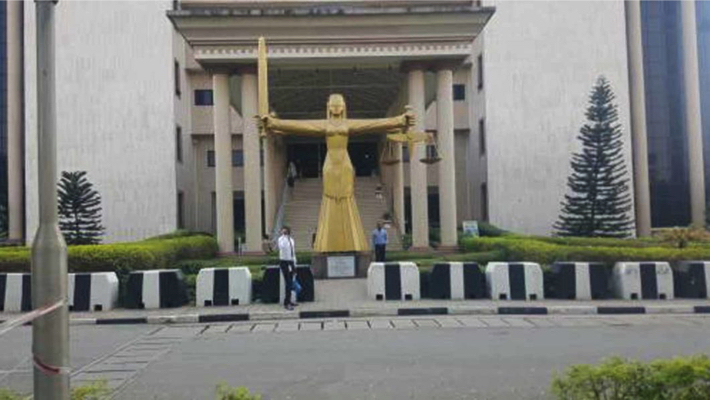
A Federal High Court in Lagos today convicted and fined eleven Indian sailors a total of Six Million US Dollars ($6million for importation of 31.5 kilograms of cocaine from Marshall Islands into Nigeria through the Apapa seaport in Lagos.
They were arrested by operatives of the National Drug Law Enforcement Agency (NDLEA) six months ago.
In a statement by Femi Babafemi Director, Media & Advocacy NDLEA Headquarters Abuja, said that the agency took into custody the Indian crew members and their merchant vessel, MV Aruna Hulya, following the discovery of 31.5 kilograms of cocaine in hatch 3 of the ship by NDLEA operatives at the GDNL terminal, Apapa port Lagos on Friday 2nd January 2026.
The Master of the Vessel, Sharma Shashi Bhushan and 10 other crew members, namely: Bharati Manoj Kumar; Nevage Sandesh Suresh; Pandey Prashant; Nuttu Anand; Akash Babu; Nilesh Mukuno Bhalerad; Melethil Insaf Rahman; Barla Chantanya Krishna; Prabhasukhan Singu; and Jai Parkash were eventually arraigned on two counts charge in suit number FHC/ L/56C/2026 before Joseph Chukwujekwu Aneke of the Federal High Court, Lagos.
After months before the court, the trial judge on Thursday 11th June 2026 delivered his ruling on plea bargain terms filed by the prosecution and defence in the case.
As a result, all 12 defendants were convicted under Section 25 of the NDLEA Act and sentenced to pay the sum of 100,000 Naira each which is the penalty for the offence under the Act.
In addition, the 1st defendant, which is the vessel, is to pay restitution to the Federal Republic of Nigeria in the sum of Five Million Three Hundred Thousand US dollars ($5,300,000) or its equivalent in Naira.
The three principal officers of the vessel who are the 2nd, 3rd and 4th defendants, namely: Sharma Shashi Bhushan; Nilesh Mukuno Bhalerad; and Melethil Insaf Rahman are also to pay restitution to the Federal Government in the sum of 100,000 US dollars each, whileother crew members, the 5th to 12th defendants are to pay their restitution in the sum of 50, 000 US dollars each.
Reacting to the landmark judgement, Chairman/Chief Executive Officer of NDLEA, Brig Gen Mohamed Buba Marwa (rtd) noted that the conviction of the vessel and its crew members sends a resounding message to every drug trafficking network in the world that “Nigeria is no longer a safe corridor for cocaine or any other illicit substance.”
“This judgment is the third of its kind in recent times, following the convictions of foreign nationals and vessels on similar charges. Let it be known that these are not coincidences, they are the direct result of deliberate, intelligence-led operations by our officers who remain vigilant at every port of entry.“
The NDLEA will not relent. Whether you come by air, land, or sea; whether you are a Nigerian or a foreign national, if you attempt to use our waters as a narcotics highway, you will face the full weight of Nigerian law. Our courts have spoken, and we will continue to give them reason to speak. The war against drug trafficking is one we are winning and we intend to keep it that way.”
He commended the officers, men and women of the Apapa Strategic Command of the Agency for their vigilance in identifying the cocaine consignment buried deep within the cargo of a massive commodity vessel. He specifically expressed appreciation to the Agency’s Directorate of Prosecution and Legal Services for their diligence in the prosecution of the case.
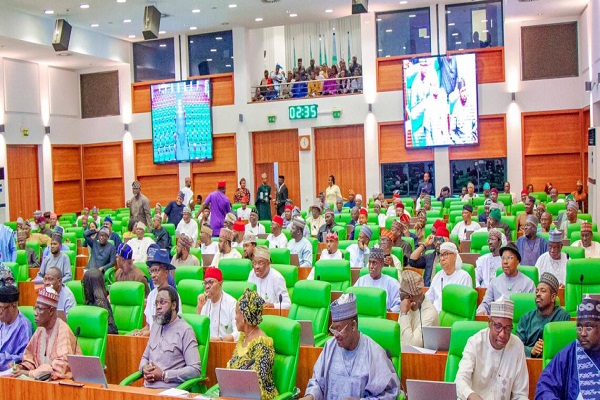
.... As Agbedi Emerges House Minority Leader, and Dasuki as Deputy
The House of Representatives has officially announced a new minority leadership, effectively resolving weeks of uncertainty and intense horse-trading within the opposition caucus.
Hon. Fred Agbedi of the Peoples Democratic Party (PDP), representing Sagbama/Ekeremor Federal Constituency of Bayelsa State, has emerged as the new Minority Leader.
Hon. Abdulsamad Dasuki of the African Democratic Congress (ADC), representing Kebbe/Tambuwal Federal Constituency of Sokoto State, was named Deputy Minority Leader, while Hon. Manu Mansur Soro of the Action Peoples Party (APM), representing Darazo/Ganjuwa Federal Constituency of Bauchi State, emerged as Minority Whip.
The announcement, which followed a unanimous agreement among opposition lawmakers on the filling of key principal positions, brings to a close recent leadership disputes and competing claims within the minority caucus.
The new leadership lineup is expected to provide stronger coordination and direction for the opposition in the House of Representatives.


FIFA World Cup Day 2: Canada holds 1-1 Bosnia-Herzegovina

Democracy Still Struggling 33 Years After June 12, PDP Laments by Comrade Ini Ememobong

JUNE 12: President Bola Ahmed Tinubu’s Democracy Day Address (Full Speech)

Tech Expert, Zuckerberg trains with UFC champions, Adesanya, Alexander

Organ Trafficking: Ekweremadu bags 10 years in UK prison

SAINT OBI: Between his marriage and his death
-
 Business3 days ago
UBA wins 2026 ‘Banker Technology’ award for AI innovation
-
 Sports3 days ago
Olympic qualifier: Comoros to face Super Falcons following 30-0 victory over Sudan
-
 Business2 days ago
Exchange Rates Thursday,11June 2026
-

 News2 days ago
JUST IN: Nigerians evacuated from South Africa arrives Lagos
-
 Business3 days ago
Invest in Lagos 3.0 Summit Attracts more than 600 delegates
-
 Health3 days ago
Ebola: President Tinubu approves N10bn to strengthen NCDC preparedness
-
 Politics3 days ago
Bamidele tasks 11th Senate to consider single term for President, govs
-
 News2 days ago
NLC President Joe Ajaero wins Arthur Svensson International award for worker’s rights