
Business
BREAKING: FG Moves to restart ALSCON following $1.2bn Investment By BFI Group and CNCEC

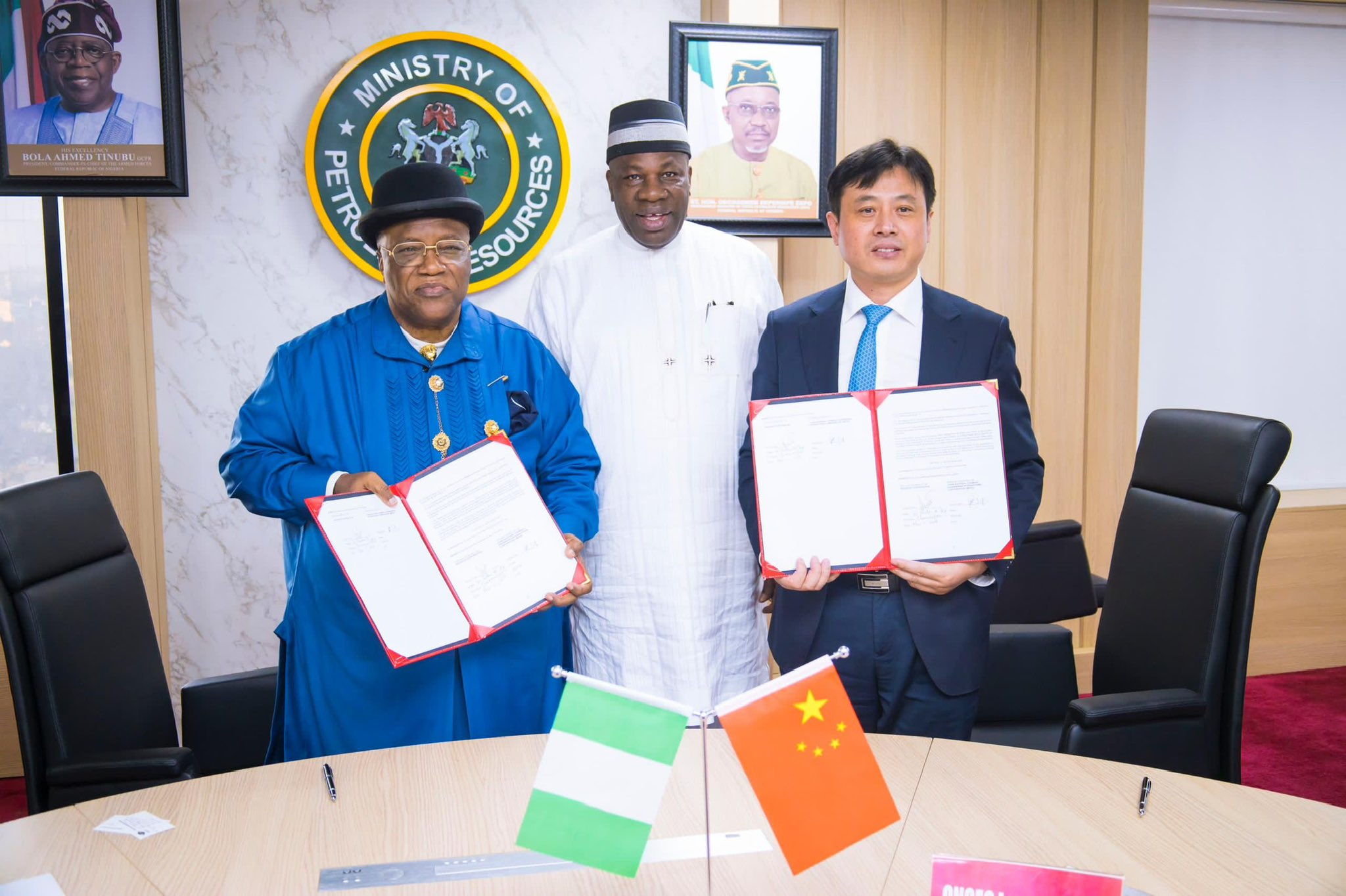
The Minister of Petroleum Resources (Gas), Ekperikpe Ekpo, has announced a pivotal agreement signed between BFI Group and CNCEC International to revive the long-dormant 135MMscfd Gas Processing Plant at ALSCON in Ikot Abasi, Akwa Ibom State.
Ekpo , on his official X, on Tuesday, said, ” This $1.2 billion investment marks a historic step forward for Nigeria’s industrial sector, placing ALSCON back on the path to becoming a leading aluminum producer for both domestic and international markets, with an annual capacity of 300,000 metric tonnes.
This ‘epoch-making’ partnership reflects the steadfast commitment of President Bola Tinubu to foster investments in natural gas utilization, supporting Nigeria’s industrialization, economic growth, and development.
I commend the collaborative synergy between BFI Group and CNCEC International, as well as the fruitful relationship between the governments of Nigeria and China that is driving this ambitious vision forward.
Through this agreement, I am confident that we will soon see the necessary actions taken to restart the Gas Processing Facility, marking a crucial first phase to reignite ALSCON’s full potential.
The reactivation of ALSCON promises to reshape Nigeria’s aluminum sector, using natural gas to position the country as a significant player in Africa and on the global stage.
I congratulate both BFI Group and CNCEC International on reaching this milestone and look forward to seeing this project delivered on time and within budget, supported by the companies’ expertise and dedication.”
Business
Dangote Refinery Targets $5bn from IPO
On 1 April, the Nigerian Exchange Group and the African Securities Exchanges Association convened senior executives from leading exchanges across the continent to discuss the structure of the planned listing.
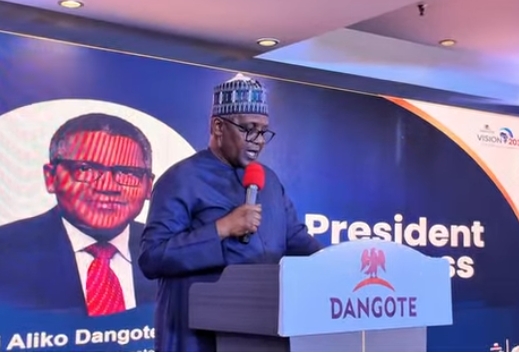
Dangote Petroleum Refinery & Petrochemicals is seeking to raise up to $5 billion from investors across African market during it’s upcoming initial public offering on the Nigerian Exchange Group (NGX).
The share sale is expected to open as early as May, with analysts valuing the company between $40 billion n and $50 billion, making it one of the most significant capital market events in Africa’s history.
The offer is expected to cover between 5 percent and 10 percent of the company’s equity, creating an opportunity for both local and international investors to participate in the continent’s largest refining project.
Market stakeholders have continued to position the listing as a major milestone that could deepen liquidity and expand participation across African financial markets.
On 1 April, the Nigerian Exchange Group and the African Securities Exchanges Association convened senior executives from leading exchanges across the continent to discuss the structure of the planned listing.
The meeting focused on how the Dangote Refinery IPO could serve as a model for cross-border capital mobilisation and improve investor access across multiple African markets.
Business
Supreme Court Overturns Appellate’s Ruling on $2bn Debt Recovery Battles Nestoil /Neconde Energy vs FBNQuest Merchant Bank
In the lead judgment read by Justice Mohammed Baba Idris, the five-member apex court panel held it was a “legal anomaly” to allow lawyers appointed by the Receiver/Manager to also represent the companies, citing a conflict of interest.

The Supreme Court of Nigeria on Friday ruled in favor of Nestoil and Neconde Energy, overturning a previous appellate court decision that disqualified their legal counsel, including Wole Olanipekun (SAN) and Muiz Banire (SAN).
The court upheld the companies’ right to appoint their own lawyers to challenge the ongoing receivership.
The apex court ruled that despite the receivership initiated by a consortium of banks, Nestoil and Neconde retain the right to appoint their own legal counsel to challenge that very receivership.
Nestoil Limited (an oil services firm) and its affiliate Neconde Energy Limited (which holds interests in Oil Mining Lease 42) are embroiled in a multi billion-dollar debt recovery suit filed by lenders, primarily FBNQuest Merchant Bank Limited and First Trustees Limited.
The lenders allege that Nestoil, Neconde, and their promoters (Ernest Azudialu-Obiejesi and Nnenna Azudialu-Obiejesi) owe over $2 billion (plus N430 billion in related liabilities) under financing arrangements, including a Common Terms Agreement.
In the lead judgment read by Justice Mohammed Baba Idris, the five-member apex court panel held it was a “legal anomaly” to allow lawyers appointed by the Receiver/Manager to also represent the companies, citing a conflict of interest.
The judgment affirms that the boards of the companies retain the authority to act in defense of the companies’ interests.
A receiver/manager was appointed over the companies’ assets and interests, leading to disputes over who controls the companies and who can represent them in court.
In January 2026, the Supreme Court sent related appeals back to the Court of Appeal to resolve the preliminary issue of legal representation before proceeding on the merits.
On January 23, 2026, the Court of Appeal disqualified senior advocates Wole Olanipekun (SAN) (for Neconde) and Muiz Banire (SAN) (for Nestoil), ruling that the Ernest Azudialu-Obiejesi-led boards lacked authority to appoint counsel once the receiver/manager was in place. It allowed counsel appointed by the receiver to represent the companies instead.
Nestoil/Neconde and their promoters appealed this disqualification to the Supreme Court (one key appeal being SC/CV/48B/2026 by Neconde).
The apex court had reserved judgment after hearing arguments from a five-member panel.
In Friday’s ruling, the Supreme Court upheld the appeal by Nestoil and Neconde (and their promoters).
It set aside the Court of Appeal’s judgment disqualifying the companies’ chosen counsel.
Their boards (led by Ernest Azudialu-Obiejesi) retain the authority to appoint counsel of their choice to defend their interests, particularly since the validity of the receivership itself is being challenged.
Allowing the receiver/manager’s counsel (appointed by the lenders) to represent the companies would create a serious conflict of interest and undermine fairness and independence in legal representation.
The arrangement involving the lenders (FBNQuest and First Trustees) as appointors of the receiver was deemed fundamentally flawed.
The appointments of Wole Olanipekun (SAN) and Dr. Muiz Banire (SAN) (along with their teams) as counsel for Neconde and Nestoil are restored.
The companies are now free to proceed with their preferred lawyers in the ongoing debt recovery proceedings.
The ruling is procedural (focused solely on representation) and does not decide the merits of the underlying debt claims or receivership.
Those substantive issues will now continue in the lower courts with the restored counsel.

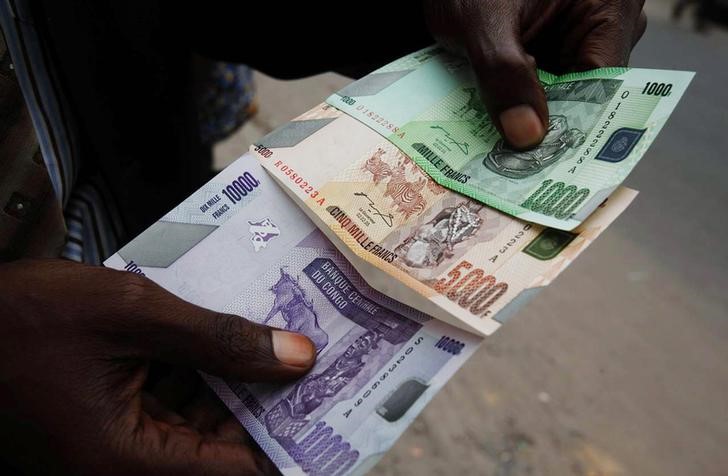
The Central Bank of the Democratic Republic of Congo (BCC) has announced plans to prohibit cash transactions in foreign currencies, including the US dollar, starting April 9, 2027, in a fresh attempt to promote the use of the local Congolese franc (CDF) and reduce dollarisation in the economy.
In a statement issued on Thursday, April 9, 2026, the BCC declared that from the effective date, “no person will be authorised to carry out cash transactions in foreign currencies,” and commercial banks will no longer be allowed to import or distribute physical foreign banknotes.
Under the new measure, payments in dollars, euros or other foreign currencies will still be permitted, but only through electronic means such as bank transfers, cards, or mobile money platforms. Cash dealings must be conducted exclusively in Congolese francs.
The BCC’s move aims to strengthen the national currency, enhance monetary sovereignty, and curb the widespread use of the US dollar, which dominates many business transactions in the country despite official policies favouring the CDF.
The Congolese economy has long been heavily dollarised, with foreign currency widely accepted even in everyday dealings.
This is not the first attempt by the BCC to limit dollar use. Previous efforts to ban or restrict foreign currency have largely failed to take full effect, as the dollar remains deeply entrenched in commerce, mining, and daily life across the vast Central African nation.
The announcement comes amid broader initiatives by the central bank, including interventions in the foreign exchange market and efforts to build gold reserves, to support the Congolese franc and reduce reliance on the US dollar.
Analysts and businesses are watching closely to see how the policy will be enforced, given past challenges in implementing similar restrictions in a country where cash remains king and banking penetration is relatively low.
The BCC has urged the public and financial institutions to prepare for the transition and to rely increasingly on formal banking and electronic payment systems.
Further details on implementation guidelines and penalties for non-compliance are expected in the coming months. The public is advised to monitor official communications from the Banque Centrale du Congo for updates.


Dangote Refinery Targets $5bn from IPO

Bundesliga: Marie-Louise Eta Emerges First Woman To Coach Men’s Team

Pope Leo reacts to Trump’s blasts “I have no intention to debate with Trump”

Tech Expert, Zuckerberg trains with UFC champions, Adesanya, Alexander

Organ Trafficking: Ekweremadu bags 10 years in UK prison

SAINT OBI: Between his marriage and his death
-

 Business3 days ago
Supreme Court Overturns Appellate’s Ruling on $2bn Debt Recovery Battles Nestoil /Neconde Energy vs FBNQuest Merchant Bank
-

 Politics3 days ago
NBA Cautions Lawyers Against Involvement in Political Party Disputes
-

 News2 days ago
FG Unmasks 60 Persons and Corporates Behind Terrorism Financing, Order Banks To Freeze Their Accounts
-

 Entertainment9 hours ago
Tuface, Laolu Gbenjo, others set to electrify Vanguard Personality of the Year Award
-

 News9 hours ago
NUPENG Braces Up for Leaderships Change
-

 News3 days ago
Plateau Community Laments ‘ No Security To Repel Attackers’
-

 News8 hours ago
NAF Jilli Airstrike: Bomb Don’t Know Who’re Terrorists
-

 News3 days ago
Breaking: INEC postpones voter revalidation exercise till after 2027 elections