
Business
BACITI Urges NPA to Accelerate Ports Digitization, Peering Kenya, Morocco and Rotterdam
BACITI further noted that without the full digital upgrades, the full promise of AfCFTA remains out of reach.

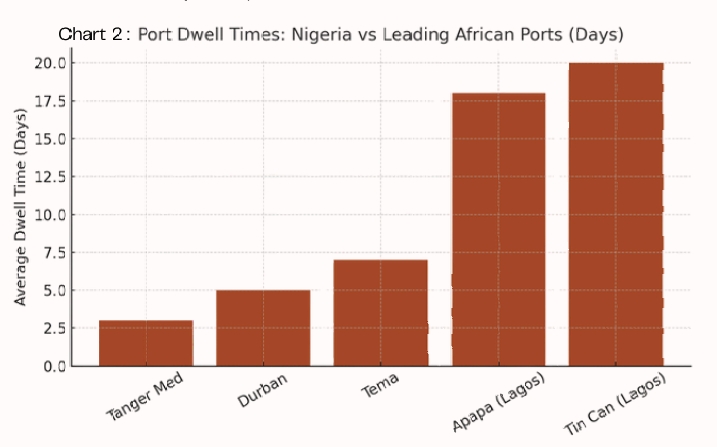
The Bashir Adeniyi Centre for International Trade and Investment (BACITI) of the Nigerian Institute of International Affairs (NIIA), called on the Nigerian Ports Authority (NPA) to accelerate full digitalization of the port community system (PCS) across all major ports in the country.
BACITI made the call in its just released May Economic Insight, noting that the competitiveness of Nigeria’s sea ports are still below that of Morocco, Kenya, Singapore and Rotterdam.
Said the report: “The World Bank recently ranked Lagos ports at 311 out of 370 ports globally in its Container Port Performance Index (CPPI).
” Nigeria is West Africa’s trade gateway. According to the Nigerian Ports Authority (NPA, 2024), Nigerian ports handle over 80 percent of national trade volume.
In 2023, Lagos ports alone processed 1.5 million TEUs (Twenty-foot Equivalent Units) — about 70% of Nigeria’s container trade.”
Conversely, in digitalization and smart ports, Singapore and Rotterdam lead the way: over 95 percent of port transactions are fully digital.
“Equally, in Africa, Tanger Med (Morocco) has become a continental model, reducing dwell times from 12 days to 3 days through Port Community Systems (PCS) whereas, in Nigeria, long port dwell times further raise costs, undermining the competitiveness of African businesses.”
BACITI further noted that without the full digital upgrades, the full promise of AfCFTA remains out of reach.
It added : In a world of unpredictable shocks, Africa’s best defense is a strong, flexible continental trading system. Building resilient port and trade logistics in Africa will nothappen overnight, but the trajectory is set. Nigeria, with its immense economic weight, has a leading role to play in this journey.
By modernizing its ports, investing in infrastructure, embracing digital efficiency, and championing the tenets of AfCFTA, Nigeria can transform to a powerhouse of regional trade.
This transformation is already underway – seen in projects like the Lekki Deep Sea Port and initiatives to streamline port operations.
The ripple effects of a more efficient Nigeria’s ports will be felt across the continent: smoother supply chains, more robust intra-African commerce, and better insulation from global turbulence.”

Business
Dangote Refinery’s IPO Ends Tomorrow
“The level of investor interest reflects growing confidence in our business and in the strong financial results we have delivered,” the company said.
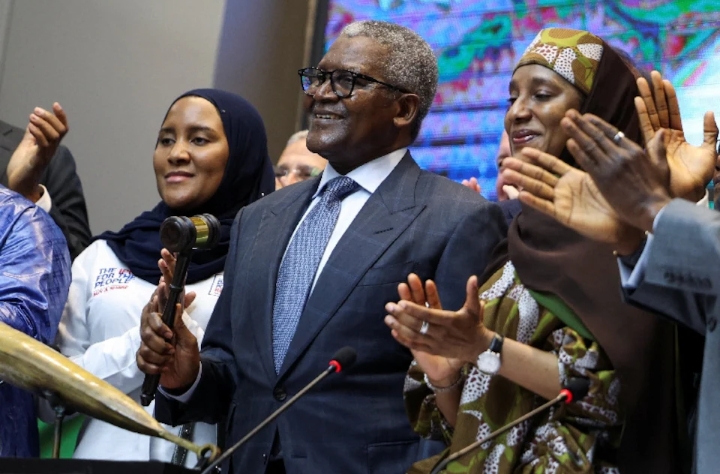
[File photo] Opening ceremony of Dangote Refinery’s IPO on the NGX, September 14,2026
Dangote Petroleum Refinery & Petrochemicals has confirmed that its Initial Public Offering (IPO) will close on Tuesday, 27 October 2026 as scheduled, with no extension.
In a statement, the management said that the IPO has become a historic ownership moment, an opportunity for Africans at home and abroad to own a stake in one of the continent’s most strategic industrial assets.
“Investors recognise that this refinery is not merely an energy asset. It is a platform for industrial growth, foreign-exchange generation, regional trade, energy security and economic development across Africa,” management said.
The offer was structured to ensure ordinary investors participate alongside institutions, broadening ownership of the world-class asset.
“The level of investor interest reflects growing confidence in our business and in the strong financial results we have delivered,” the company said.
Business
Dangote Visit London Stock Exchange Ahead of November Cement Listing
Unlike an initial public offering, a secondary listing would let Dangote Cement, already listed on the Nigerian Exchange, set up an additional presence in London.
Aliko Dangote visited the London Stock Exchange on Friday, October 23, 2026, as Dangote Cement Plc prepares a proposed $1 billion share sale and a secondary listing in the United Kingdom.
The company is reportedly targeting November 2026 for the listing, subject to market conditions and regulatory approval.
A video circulating on social media captured the visit, with exchange officials and attendees welcoming Africa’s richest man.
The trip is part of efforts to pull international investment into his business empire.
The proposed deal could see Dangote Cement offer about 10% of its equity to international investors, potentially raising roughly $1 billion.
The final timetable is not fixed and remains subject to market conditions and regulatory requirements.
Unlike an initial public offering, a secondary listing would let Dangote Cement, already listed on the Nigerian Exchange, set up an additional presence in London.
That could raise the company’s visibility with international institutional investors, including pension funds, asset managers and other investment firms.
The share sale has not been completed. Its final structure, valuation and pricing are still subject to confirmation.
Business
Olagunju to head JPMorgan’s Proposed Nigerian Merchant Bank
The proposed bank would expand JPMorgan’s presence beyond its representative office in Lagos. It could undertake a broader range of regulated banking activities after securing a final licence.

The Central Bank of Nigeria has granted JPMorgan approval-in-principle to establish a merchant bank in Nigeria.
The regulator also approved Adedapo Adedayo Olagunju as Managing Director of the proposed JPMorgan Merchant Bank Nigeria Limited.
The approval came on Friday, October 23, 2026. The bank has not received its final operating licence.
Olagunju has led JPMorgan’s West African operations since 2018.
He is an Oxford-trained banker with more than two decades of experience in treasury management, financial markets, institutional banking and structured finance.
His appointment puts him in line to head the American bank’s proposed Nigerian merchant bank once final licensing is completed.
The CBN also approved four non-executive directors and three independent non-executive directors for the proposed institution.
The proposed bank would expand JPMorgan’s presence beyond its representative office in Lagos. It could undertake a broader range of regulated banking activities after securing a final licence.


Suffocation, Overcrowding Kill 37 Niger Miners – Panel

Nigeria’s First Imported Ebola Patient Moved to Switzerland

Dangote Refinery’s IPO Ends Tomorrow

BREAKING: Lagos Govt Declares Today, Thursday Work-Free to Mark 2026 Ìṣẹ̀ṣe Day

Tech Expert, Zuckerberg trains with UFC champions, Adesanya, Alexander

Organ Trafficking: Ekweremadu bags 10 years in UK prison
-

 News2 days ago
BREAKING: Former Arise News Anchor, Constance Ikokwu Appointed NDC National Campaign Council Spokesperson
-

 Business2 days ago
Naira To Dollar, Pound, Euro…Rate Monday, October 26
-
 Business2 days ago
Dangote Visit London Stock Exchange Ahead of November Cement Listing
-

 International2 days ago
Brazil’s Lula Wins Fourth Term In Presidential Runoff
-

 Health2 days ago
EBOLA: Lagos Heightens Watch at Airports After Abuja Case
-
News2 days ago
Sanwo-Olu: Opebi-Ojota Link Bridge Will Open Before Christmas
-

 Business2 days ago
History of Naira Revaluation and Devaluation (1973–2026) (Part 2)
-
Business2 days ago
Olagunju to head JPMorgan’s Proposed Nigerian Merchant Bank