
Business
ALTON Commends FCCPC on DEON Suspension as Airtime Credit Returns to Airtel, Others
” It is economic infrastructure that approximately 40 million people use regularly, with the vast majority of them at the base of the economy. Removing that infrastructure, even temporarily, had consequences that went far beyond the telecom sector.”


•Gbenga Adebayo, ALTON Chairman
The Association of Licensed Telecommunications Operators of Nigeria (ALTON) has commended the Federal Competition and Consumer Protection Commission for suspending enforcement of the Digital, Electronic, Online, or Non-traditional Consumer Lending (DEON) regulations against telecommunications operators.
ALTON described the decision as a critical step towards restoring confidence in Nigeria’s regulatory environment.This comes as airtime and data credit services resume across several of Nigeria’s mobile networks.
Airtel Nigeria has fully restored airtime credit to its subscribers, and Glo has also brought its services back online in recent days.
The restoration follows weeks of disruption that left approximately 40 million active users, overwhelmingly prepaid subscribers in the lower-income bracket, without access to the small airtime and data advances they rely on daily.
Gbenga Adebayo, ALTON Chairman, said that the FCCPC’s decision reflects the kind of institutional discipline that the sector and the broader investment community had been looking for.
“We commend the FCCPC for taking this decision in the interests of Nigerian consumers and the telecommunications industry,” Adebayo said.
“Suspending the DEON regulations as they apply to telecom services recognises that the established regulatory architecture, with the NCC as the sector’s primary regulator, is the appropriate framework for governing these products.
That recognition matters enormously for industry stability and investor confidence.”
Adebayo noted that the disruption had exposed how deeply embedded airtime credit is in the daily economic activity of millions of Nigerians.“
What this episode demonstrated is that airtime credit is not a financial product in the way regulators initially characterised it.
It is economic infrastructure that approximately 40 million people use regularly, with the vast majority of them at the base of the economy. Removing that infrastructure, even temporarily, had consequences that went far beyond the telecom sector.”
The airtime credit market, estimated at N300 to N400 billion annually, was effectively frozen in early April when MTN, Airtel, Glo, and T2mobile suspended their offerings after an FCCPC enforcement directive required immediate compliance with the DEON framework.
The FCCPC had classified airtime credit as consumer lending, bringing it within the scope of regulations originally designed to curb predatory practices by digital loan applications.
The classification triggered a jurisdictional dispute with the Nigerian Communications Commission, which regulates telecommunications services under the Nigerian Communications Act 2003.
Two Federal High Court orders followed: an interim injunction in Lagos on 15 April, restraining the FCCPC from enforcing DEON against WASPAN members, and a separate order in Abuja on 24 April, restraining MTN and Airtel from interfering with licensed VAS providers’ access to the platform.
The FCCPC’s application to discharge the Lagos injunction was refused on 28 April. Airtel’s decision to move first on restoration has drawn particular attention within the industry.
The operator restored services shortly after the regulatory path cleared, a move several analysts have described as a signal of confidence in the legal and commercial environment. Nigeria’s largest local telco, Globacom, followed within days.
MTN Nigeria, the country’s largest operator by subscriber count with over 95 million subscribers, had not restored its airtime credit services at the time of this report.
Industry sources familiar with the situation say there are no regulatory or legal impediments to restoration, and that MTN’s subscribers, who represent the largest bloc of airtime credit users in the country, are now the most significant group still waiting for service to resume.
Adebayo said ALTON expects full restoration across all networks to follow swiftly.
“The regulatory environment is now clear, and we are confident that full restoration is imminent.
The courts have spoken, the FCCPC has acted responsibly, and two of the four major operators have already restored services. There is no ambiguity left, and we expect every operator to act with the urgency their subscribers deserve.
”Looking ahead, Adebayo called for a structured dialogue between the FCCPC and the NCC to prevent a recurrence.“
The lesson is that Nigeria’s regulatory agencies need formal coordination protocols for services at the intersection of telecommunications and financial products.
The FCCPC’s consumer protection mandate and the NCC’s telecom regulatory mandate can coexist without either displacing the other. We are ready to participate in that conversation and urge both agencies to begin it without delay.”
Business
Dangote Refinery’s IPO Ends Tomorrow
“The level of investor interest reflects growing confidence in our business and in the strong financial results we have delivered,” the company said.
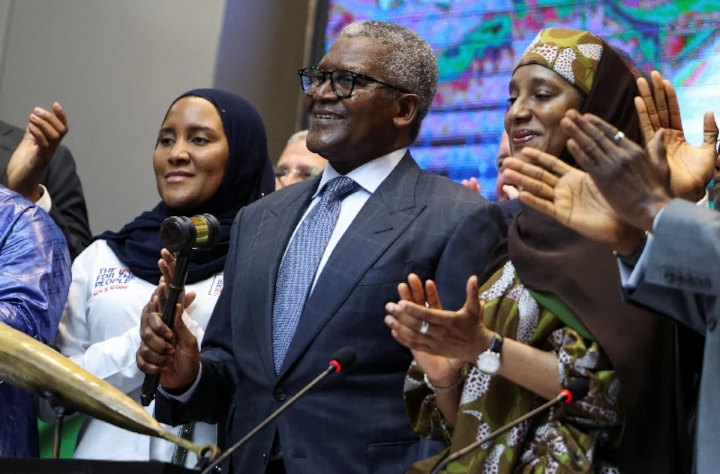
[File photo] Opening ceremony of Dangote Refinery’s IPO on the NGX, September 14,2026
Dangote Petroleum Refinery & Petrochemicals has confirmed that its Initial Public Offering (IPO) will close on Tuesday, 27 October 2026 as scheduled, with no extension.
In a statement, the management said that the IPO has become a historic ownership moment, an opportunity for Africans at home and abroad to own a stake in one of the continent’s most strategic industrial assets.
“Investors recognise that this refinery is not merely an energy asset. It is a platform for industrial growth, foreign-exchange generation, regional trade, energy security and economic development across Africa,” management said.
The offer was structured to ensure ordinary investors participate alongside institutions, broadening ownership of the world-class asset.
“The level of investor interest reflects growing confidence in our business and in the strong financial results we have delivered,” the company said.
Business
Dangote Visit London Stock Exchange Ahead of November Cement Listing
Unlike an initial public offering, a secondary listing would let Dangote Cement, already listed on the Nigerian Exchange, set up an additional presence in London.

Aliko Dangote visited the London Stock Exchange on Friday, October 23, 2026, as Dangote Cement Plc prepares a proposed $1 billion share sale and a secondary listing in the United Kingdom.
The company is reportedly targeting November 2026 for the listing, subject to market conditions and regulatory approval.
A video circulating on social media captured the visit, with exchange officials and attendees welcoming Africa’s richest man.
The trip is part of efforts to pull international investment into his business empire.
The proposed deal could see Dangote Cement offer about 10% of its equity to international investors, potentially raising roughly $1 billion.
The final timetable is not fixed and remains subject to market conditions and regulatory requirements.
Unlike an initial public offering, a secondary listing would let Dangote Cement, already listed on the Nigerian Exchange, set up an additional presence in London.
That could raise the company’s visibility with international institutional investors, including pension funds, asset managers and other investment firms.
The share sale has not been completed. Its final structure, valuation and pricing are still subject to confirmation.
Business
Olagunju to head JPMorgan’s Proposed Nigerian Merchant Bank
The proposed bank would expand JPMorgan’s presence beyond its representative office in Lagos. It could undertake a broader range of regulated banking activities after securing a final licence.

The Central Bank of Nigeria has granted JPMorgan approval-in-principle to establish a merchant bank in Nigeria.
The regulator also approved Adedapo Adedayo Olagunju as Managing Director of the proposed JPMorgan Merchant Bank Nigeria Limited.
The approval came on Friday, October 23, 2026. The bank has not received its final operating licence.
Olagunju has led JPMorgan’s West African operations since 2018.
He is an Oxford-trained banker with more than two decades of experience in treasury management, financial markets, institutional banking and structured finance.
His appointment puts him in line to head the American bank’s proposed Nigerian merchant bank once final licensing is completed.
The CBN also approved four non-executive directors and three independent non-executive directors for the proposed institution.
The proposed bank would expand JPMorgan’s presence beyond its representative office in Lagos. It could undertake a broader range of regulated banking activities after securing a final licence.


Nigeria’s First Imported Ebola Patient Moved to Switzerland

Dangote Refinery’s IPO Ends Tomorrow

Ebola: Nigeria Sends Back Swiss Woman Via Medivac Plane

BREAKING: Lagos Govt Declares Today, Thursday Work-Free to Mark 2026 Ìṣẹ̀ṣe Day

Tech Expert, Zuckerberg trains with UFC champions, Adesanya, Alexander

Organ Trafficking: Ekweremadu bags 10 years in UK prison
-

 Politics2 days ago
2027 presidential election: Tinubu’s Northern test begins today
-

 News8 hours ago
BREAKING: Former Arise News Anchor, Constance Ikokwu Appointed NDC National Campaign Council Spokesperson
-

 Health2 days ago
Ebola patient in Abuja showing signs of recovery – FG
-
 Health19 hours ago
EBOLA: Lagos Heightens Watch at Airports After Abuja Case
-

 Business8 hours ago
Naira To Dollar, Pound, Euro…Rate Monday, October 26
-
 Business7 hours ago
Dangote Visit London Stock Exchange Ahead of November Cement Listing
-

 Entertainment2 days ago
JUST IN: Another Nollywood Actor, Dies After Brief Illness
-

 Business18 hours ago
History of Naira Revaluation and Devaluation (1973–2026) (Part 2)