
Business
Afreximbank Strengthens Dangote Refinery with US$1.35 Billion Loan
“This refinancing strengthens our balance sheet and accelerates with ease the refinery’s supply of high-quality refined petroleum products across Africa, ” said Aliko Dangote.

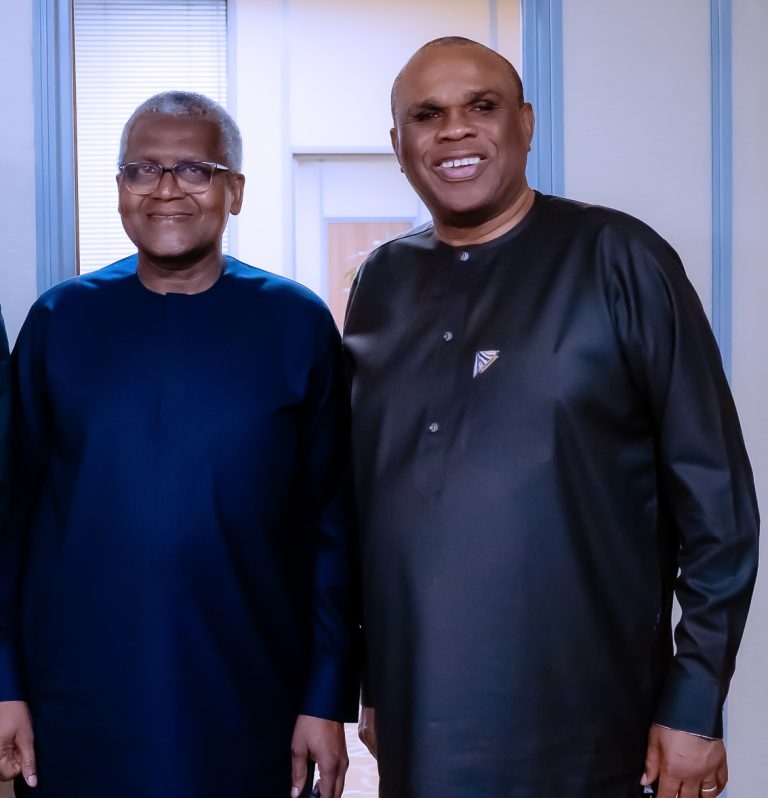
• Aliko Dangote and Benedict Oramah
African Export-Import Bank (Afreximbank) has contributed US$1.35 billion of the US$4 billion syndicated financing arrangement for Dangote Industries Limited (DIL) to refinance the Dangote Petroleum Refinery and Petrochemicals Complex.
Commenting on the development, Professor Benedict Oramah, President & Chairman of Board of Directors at Afreximbank, said:“With this landmark deal, we once again demonstrate that Africa’s development can only be meaningfully financed from within.
“It is only when African institutions lead the way that others can follow.
The journey to utilise African resources for its own economic transformation is well underway.
Through the Bank’s funding support, we are enhancing the capacity of the Dangote Refinery and Petrochemical Industries Ltd to produce and supply high quality refined petroleum products to the Nigerian market, as well as for export to the entire continent and the world. Our energy security is in sight.”
Aliko Dangote, President/Chief Executive, Dangote Industries Limited, added:“Afreximbank’s contribution to this milestone financing underscores our shared vision to industrialize Africa from within.
“This refinancing strengthens our balance sheet and accelerates with ease the refinery’s supply of high-quality refined petroleum products across Africa, ” said Aliko Dangote.
Afreximbank acted as the Mandated Lead Arranger, for the syndication.
This financing— one of the largest syndicated loans in recent African financial markets—will refinance capital expended on constructing
The financing alleviates initial operational expenditures and enhances DIL’s balance sheet, supporting its continued growth trajectory.
Afreximbank contributed US$1.35 billion, the largest share among participating banks, underscoring its commitment to large-scale infrastructure that advances Africa’s industrialization, energy security, and intra-African trade.
Since operations at the refinery complex began in February 2024, Afreximbank has continued to support the Dangote Refinery by providing key financing solutions—for crude supply and product offtake—ensuring uninterrupted operations and reinforcing its role in Africa’s most significant refining intervention.
Business
BUA Foods Plc Reports Strong 2025 Performance with ₦1.77 Trillion Revenue, Proposes Record ₦28 Dividend per Share

Leading Nigerian food manufacturer BUA Foods Plc has announced robust full-year 2025 audited results, with revenue climbing 16% to ₦1.77 trillion from ₦1.53 trillion in 2024.
The growth was driven by sustained consumer demand for the company’s core staples sugar, flour, pasta, and rice alongside higher sales volumes and strategic pricing amid a challenging economic environment marked by inflationary pressures on households.
Profit after tax nearly doubled, rising 95% to ₦518.4 billion, while gross profit surged to ₦737.3 billion from ₦540.8 billion the previous year.
Operating profit also increased significantly to ₦656.6 billion.In a strong signal of confidence in its outlook and commitment to shareholder value, the Board of Directors has proposed a final dividend of ₦28 per ordinary share of 50 kobo.
This represents a 115% increase from the ₦13 per share paid in 2024, translating to a total payout of approximately ₦504 billion, subject to approval by shareholders at the company’s 2026 Annual General Meeting.
Chairman Abdul Samad Rabiu highlighted the results, stating that the substantial dividend hike underscores the company’s dedication to rewarding investors while continuing to invest in business expansion and operational efficiency.
BUA Foods, a major player in Nigeria’s food processing sector controlled by billionaire Abdul Samad Rabiu, has continued to benefit from scale advantages, market expansion, and resilient demand for essential food products despite broader economic headwinds.
The company’s shares have reacted positively in recent trading, reflecting investor optimism over the strong earnings and generous dividend proposal.
Full details of the financial statements were filed with the Nigerian Exchange (NGX) on Monday.
Analysts view the performance as a testament to BUA Foods’ robust business model and ability to navigate Nigeria’s macroeconomic challenges through volume growth and cost discipline.
Business
OPay launches new office in Jos
” Opening this office in Jos allows us to stay closer to the people we serve, better understand their needs, and continue to provide fast, secure, and reliable financial services that improve everyday life.”
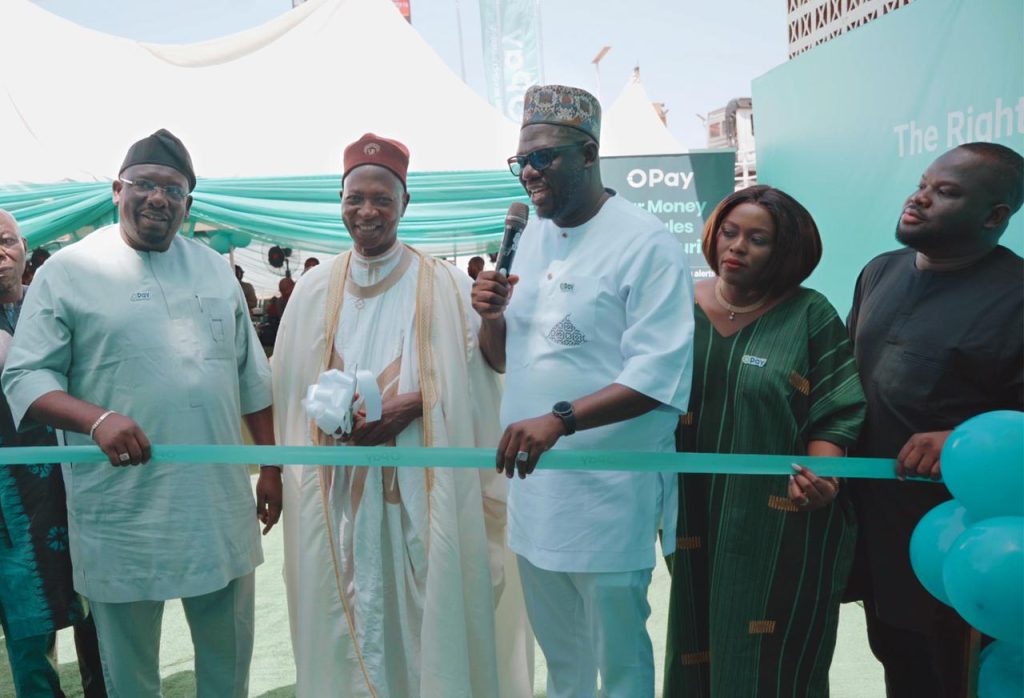
OPay has officially launched its new office in Jos, Plateau State.
Speaking at the event, OPay’s Chief Operations and Technology Officer, Dotun Adekunle, said that the new Jos office reflects OPay’s continued commitment to putting customers first and advancing financial inclusion across Nigeria.
He said :” Our customers are at the center of everything we do.
Opening this office in Jos allows us to stay closer to the people we serve, better understand their needs, and continue to provide fast, secure, and reliable financial services that improve everyday life.”
Business
Governor Otti Commissions Ultimum Manufacturing Plant in Aba
Razzle beverages include Razzl Pamplemousse (a unique and special grapefruit flavour), Razzl Cola, Razzl Orange, and Razzl Lemon.
Ultimum Limited, the manufacturers of Razzl brand of carbonated soft drinks has commissioned its state-of-the-art beverage manufacturing plant in Aba, Abia State.
Razzle beverages include Razzl Pamplemousse (a unique and special grapefruit flavour), Razzl Cola, Razzl Orange, and Razzl Lemon.
Located in the Osisioma Industrial Layout, the new plant was commissioned by the Governor of Abia State, Dr. Alex Chioma Otti.
Otti described the investment as a clear signal of economic revival and growing investor confidence in Abia State.
“This investment confirms that we are creating the right conditions for businesses to grow, thrive, and succeed. Investors will always go where there is clarity, stability, and opportunity.
Our focus has been to build that environment, and today’s commissioning shows that the strategy is working,” he said.
The Chairman of Ultimum Limited and representative of the investor group, Mr. Whalen Kadji, emphasized the company’s long-term commitment to Aba and Nigeria.
“We did not come here by chance. We came because of the energy and entrepreneurial spirit of Aba. This city has always been a center of enterprise, and we believe strongly in its future.
This plant is more than an investment in beverages; it is an investment in people, in jobs, and in the growth of local industry. We are here for the long term, and this is just the beginning of what we intend to build here.”
The Managing Director of Ultimum Limited, Mr. Austin Ufomba, described the plant as a bold step in the company’s journey.
“Ultimum Limited started with a simple idea, to build world-class products right here in Africa,”he said.


El-Rufai Appear in State High Court, after Mother’s death, as Trial Continues

Nigeria Welcomes African Games Bid Evaluation Committee

NELFUND Debunks Claims of ₦25,000 Student Upkeep Allowance

Tech Expert, Zuckerberg trains with UFC champions, Adesanya, Alexander

Organ Trafficking: Ekweremadu bags 10 years in UK prison

SAINT OBI: Between his marriage and his death
-

 Sports2 days ago
CAF appoints Nigeria’s Samson Adamu as acting secretary general
-

 Business2 days ago
Governor Otti Commissions Ultimum Manufacturing Plant in Aba
-
 Politics2 days ago
JUST IN: Kwankwaso Set to Join ADC on Monday
-

 News1 day ago
President Tinubu at 74, Donates Salaries to Armed Forces Welfare Fund
-

 Politics23 hours ago
PDP Leadership Crisis: Faction Heads to Supreme Court as Tussle Deepens
-

 Politics1 day ago
PDP will contest 2027 polls, says Wike
-

 Business1 day ago
OPay launches new office in Jos
-

 Crime21 hours ago
JUST IN: Terrorists Invade Kaduna Wedding Ceremony, Kill 13 Guests In Late-Night Attack