
Business
BREAKING: FG drops money laundering charges against Binance executive Gambaryan


The Federal government of Nigeria has dropped all charges against Tigran Gambaryan, an executive at Binance Holdings, who has been on trial for money laundering and currency speculations at the Federal High Court in Abuja.
The trial judge, Emeka Nwite, ordered Mr Gambaryan, a US citizen, to be immediately released from Kuje prison in Abuja, following a request by the prosecution during Wednesday morning’s proceedings.
The development, coming two days ahead of the previously scheduled hearing set for 25 October, which had been announced in open court last Friday, appears to be planned to avoid attracting widespread attention.
Meanwhile, the judge sustained the money laundering charges against Binance, a cryptocurrency firm, which now stands as the sole defendant in the case.
The firm is accused of money laundering and currency speculation involving as much as $34.4 million to the detriment of the Nigerian forex market and economy.
A lawyer, R.U. Adaba, representing the Economic and Financial Crimes Commission (EFCC) – the prosecuting agency – applied on Wednesday morning to the court to stop the prosecution of Mr Gambaryan.
She cited diplomatic interventions and the extent of the defendant’s involvement in the alleged crimes as the key reasons for the decision.
“The government has reviewed the case and, taken into consideration that the second defendant (Mr Gambaryan) is an employee of the first defendant (Binance Holdings Limited), whose status in the matter has more impact than the second defendant’s, and also taking into consideration some critical international and diplomatic reasons, the state seeks to discontinue the case against the second defendant,” Ms Adaba said.
She also cited Mr Gambaryan’s worsening health in custody.
She noted that “the health of the defendant has been a recurrent issue which the state has managed well at the correctional centre facility through NSA (the National Security Adviser.”
But despite the Nigerian government’s best efforts at caring for him, Ms Adaba said “the second defendant can barely walk without a wheelchair or crutches and in addition with other ailments.”
“A surgery had been recommended,” she added, and the recovery process “may take some time that may impact on the pace of the trial.
”Mark Mordi, a Senior Advocate of Nigeria (SAN) representing Mr Gambaryan, agreed with the prosecution, saying that his client was not involved in the company’s broader financial decisions.
“We ask the court to expedite everything to ensure Mr Gambaryan leaves the facility of the correctional centre,” the senior lawyer said.
In addition to seeking his client’s discharge, Mr Mordi asked for full acquittal, citing Section 108 of the Administration of Criminal Justice Act (ACJA) for the second defendant to be “discharged and acquitted.
Wednesday’s hearing marked the culmination of months of intense, behind-the-scenes diplomatic talks between Nigerian and US government officials, aimed at securing the release of Mr GambaryanIn the weeks leading up to the hearing, some US lawmakers had campaigned for the release of Mr Gambaryan, writing to relevant Nigerian and American authorities to intervene.
The pressure on the Nigerian government intensified after the trial court twice denied the defendant’s bail requests.
Business
TIME Names Moniepoint CTO Felix Ike Among 50 Global Executives of the Year
In its citation, TIME said Ike “has helped to establish the business as one of Africa’s leading financial platforms.

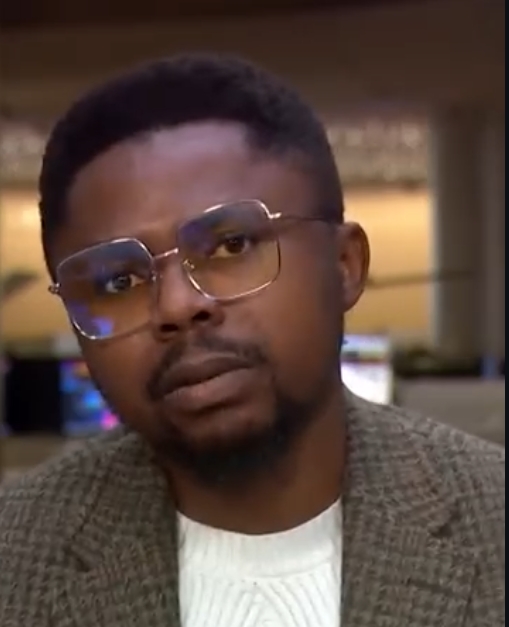
TIME magazine has named Felix Ike, co-founder and Chief Technology Officer of Nigerian fintech Moniepoint, to its inaugural Executives of the Year: Tech and Data list.
Ike is the only executive representing an African company among the 50 leaders selected for the 2026 list.
The list, unveiled on Tuesday, September 22, recognises chief information officers, chief technology officers, chief data officers and chief product officers whose decisions are shaping how major organisations deploy technology and use data.
Moniepoint is also the only African company represented on the inaugural list.
Ike was named alongside executives from Netflix, CrowdStrike, Dell, Duolingo, AT&T, OpenAI, Anthropic, Shopify and Reddit, among others.
In its citation, TIME said Ike “has helped to establish the business as one of Africa’s leading financial platforms.
“The recognition follows Moniepoint’s inclusion in TIME’s 2025 list of the 100 Most Influential Companies, giving the Lagos-founded fintech another global distinction.
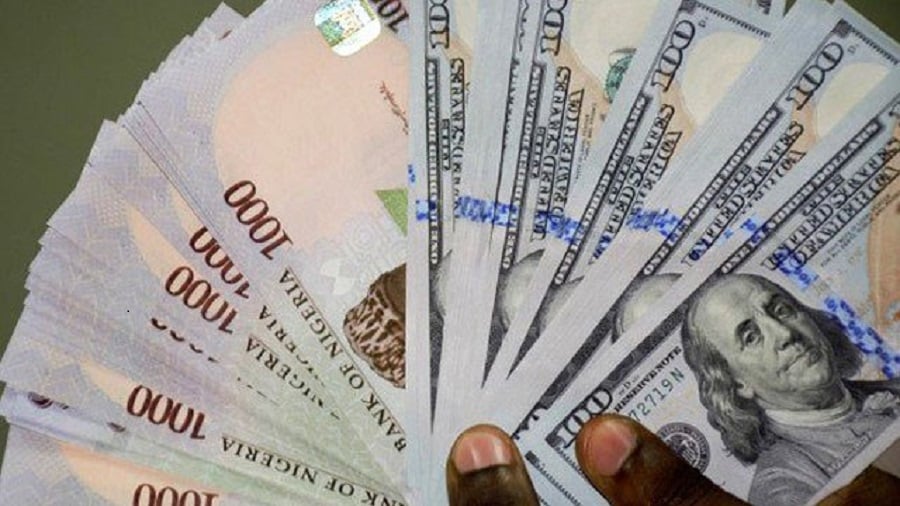
Black Market Rates
₦1382DOLLAR (USD)
₦1855POUND (GBP)
₦1545EURO (EUR)
1000 DOLLAR (CAD)
₦70 RAND (ZAR)
370DIRHAM (AED)
190YUAN (CNY)
₦100G.CEDI (GHS)
₦2350 CFA F.(XOF)
₦2250 CFA F.(XAF)
₦850 AUSSIE (AUD)
Official CBN Exchange Rates
DOLLAR (USD)₦1328.67
POUND (GBP)₦1758.36
EURO (EUR)₦1511.63
SWISS FRANC (CHF)₦1605.45
JAPANESE YEN (JPN)₦8.38
CFA FRANC (XOF)₦2.31
WEST AFRICAN UNIT OF ACCOUNT (WAUA)₦1808.03
CHINESE YUAN (CNY)₦197.92
SAUDI RIYAL (SAR)₦353.86
SOUTH AFRICAN RAND (ZAR)₦81.09
Business
Djibouti, Ethiopia and Dangote to build $660 million petroleum pipeline
In Kenya, Dangote and the government are due to break ground on a new 700,000-barrel-per-day crude oil refinery in Lamu next week.
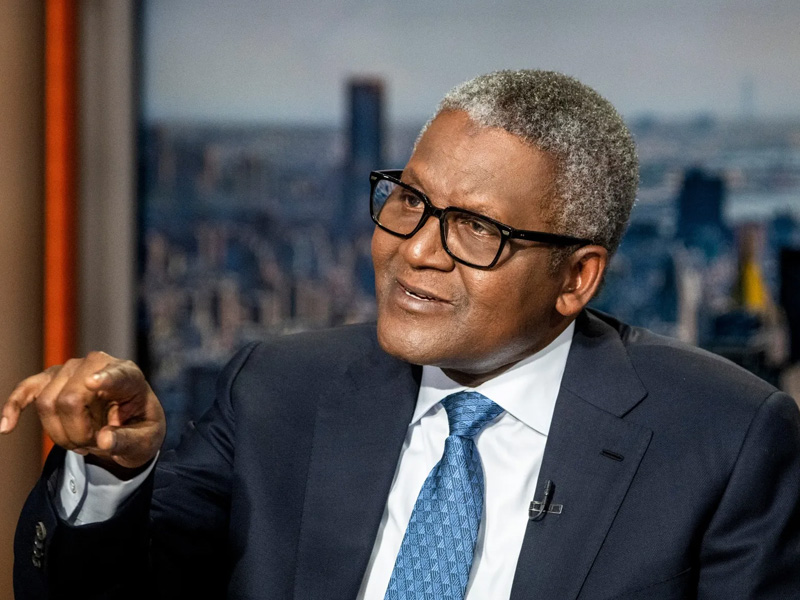
Ethiopia, Djibouti and Nigerian billionaire Aliko Dangote plan to build a $660 million refined petroleum pipeline that will connect Ethiopia and Djibouti, a spokesperson in Ethiopian Prime Minister Abiy Ahmed’s office said on Thursday.
The project will include a 120-km (75-mile) pipeline, as well as approximately 375,000 cubic metres of storage capacity at Damerjog in Djibouti and 800,000 cubic metres at Dewele in Ethiopia, the spokesperson told Reuters, adding it should become operational within 18 months.
Abiy said on his X account the project will be developed through a partnership between Ethiopian Investment Holdings and the Dangote Group, which separately is already building a $4 billion fertiliser pipeline and power plant, and a polypropylene packaging facility, in Ethiopia.
The project aims to reduce logistics costs and delays along the Ethiopia-Djibouti transport corridor, Abiy said.
Developers say the infrastructure will strengthen energy security and improve supply chain resilience for the two countries, he said.
Abiy is on a visit to Djibouti and made the announcement alongside its president, Ismail Omar Guelleh, and Dangote.
In Kenya, Dangote and the government are due to break ground on a new 700,000-barrel-per-day crude oil refinery in Lamu next week.


Congo military plane crash kills 13, including three officers

Manchester City Faces Expulsion For Breaching 114 EPL Financial Rules

TIME Names Moniepoint CTO Felix Ike Among 50 Global Executives of the Year

Tech Expert, Zuckerberg trains with UFC champions, Adesanya, Alexander

Organ Trafficking: Ekweremadu bags 10 years in UK prison

SAINT OBI: Between his marriage and his death
-
 Business3 days ago
FG Engages Stakeholders On Nigeria’s Rice Value Chain
-

 Business3 days ago
Naira To Dollar, Pound , Euro Rate Wednesday September 23
-
 Business2 days ago
Airtel Money Targets October Listing On London Stock Exchange
-

 Business3 days ago
Cardoso Says Multiple FX Windows Cost Nigeria 3% of GDP, Higher Than Fuel Subsidy
-

 Business2 days ago
MAN Urges CBN To Consider CRR Cut Next Phase of Monetary Easing
-

 Crime1 day ago
JUST IN: Zamfara LG Chairman Freed After 61 Days in Captivity
-

 News2 days ago
VP Shettima, Gov Mbah to address Over 500 editors on 2027 election issues
-

 Sports1 day ago
FIFA names Nigerian referee among 81 officials for U-17 World Cup