
Business
Selling Crude oil to Dangote in Naira Begins October 1

The Technical Sub-Committee on Domestic Sales of Crude Oil in Local Currency, on Sunday, confirmed that the supply of crude in naira by the Nigerian National Petroleum Company Limited to the Dangote Petroleum Refinery is to begin on Tuesday, October 1, 2024.
On September 13, 2024, the committee announced that the Federal Executive Council under the leadership of President Bola Tinubu approved the sale of crude to local refineries in naira and the corresponding purchase of petroleum products in naira.
“From October 1, NNPC will commence the supply of about 385kbpd (385,000 barrels per day) of crude oil to the Dangote refinery to be paid for in naira,” the committee had declared.
The Chairman of the Technical Sub-Committee is Zacch Adedeji, who doubles as Chairman of the Federal Inland Revenue Service.
When contacted on Sunday and asked if the plan for the crude oil supply to the $20 billion Lekki-based plant is still intact, the Special Adviser on Media to the FIRS Chairman, Mr Dare Adekanmbi, responded in the affirmative.
He said, “I can confirm to you that the Chairman, Sub-Technical Committee, Zacch Adedeji, is working day and night to ensure that things go according to plans.
He knows how important it is to have the agreement implemented as has been planned for the benefit of Nigerians.”
This implies that NNPC is to supply about 11.5 million barrels of crude oil to the Dantote refinery monthly, and based on the deal, the plant will release equivalent volumes of refined diesel and petrol to the domestic market also in naira.
Source: PUNCH




Business
Tony Elumelu’s United Capital Secures approval to operate in Ethiopia
Elumeu lauded the transformational Prime Minister of Ethiopia, His Excellency @AbiyAhmedAli , for promoting economic reforms and regional cooperation, the Director General of Ethiopian Capital Market Authority @CMAEthiopia , Ms. Hana Tehelku, and the team at @UnitedCap on this landmark achievement.
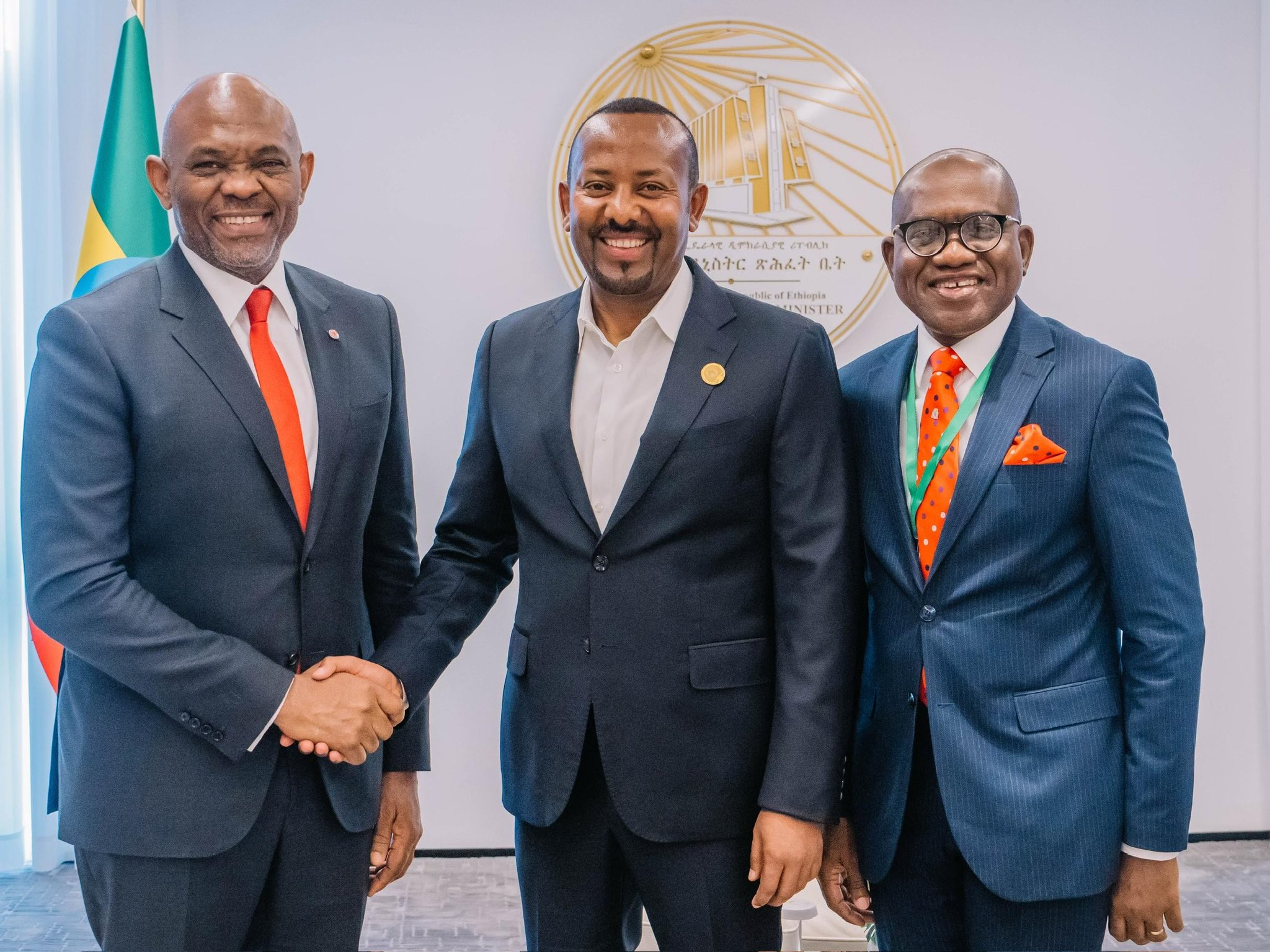
United Capital Group has again secured regulatory approvals to commence operations in Ethiopia.
Its Chairman, Tony Elumelu, broke the news on Tuesday, via his official X.
” This development is particularly noteworthy because Ethiopia only recently opened its financial sector to foreign participation, making United Capital’s entry a historic step for both the company and the ongoing integration of African capital markets,” said Elumelu.
Last month, United Capital commenced operations in Rwanda, marking its formal entry into East Africa and reinforcing its ambition to build a leading continental financial services institution.
The Group’s newly established entities include United Capital Trustees Rwanda Limited, licensed to provide trusteeship services, and United Capital Financial Services Rwanda Limited, licensed to offer investment management services, including portfolio management, investment advisory, capital mobilisation, capital market advisory, and fund management solutions.
With this development, United Capital now operates in 11 countries, including Nigeria, with a strong presence in key African markets, a recent expansion into the eight countries within the West African Economic and Monetary Union (WAEMU) region, alongside a growing footprint in East Africa.
According to Elumelu, African institutions are increasingly leading, competing, and succeeding across the continent.
For decades, Africa witnessed foreign capital flowing in while profits largely flowed out.
That narrative is beginning to change.
This is Africapitalism in action — a vision that recognizes the importance of both indigenous and international capital working together to finance Africa’s development and unlock shared prosperity.
Elumeu lauded the transformational Prime Minister of Ethiopia, His Excellency @AbiyAhmedAli , for promoting economic reforms and regional cooperation, the Director General of Ethiopian Capital Market Authority @CMAEthiopia , Ms. Hana Tehelku, and the team at @UnitedCap on this landmark achievement.
Business
Lagos developing world – class new business district —Sanwo-Olu
Sanwo-Olu said Lagos was deliberately building a globally competitive economy driven by innovation, infrastructure and private-sector participation.
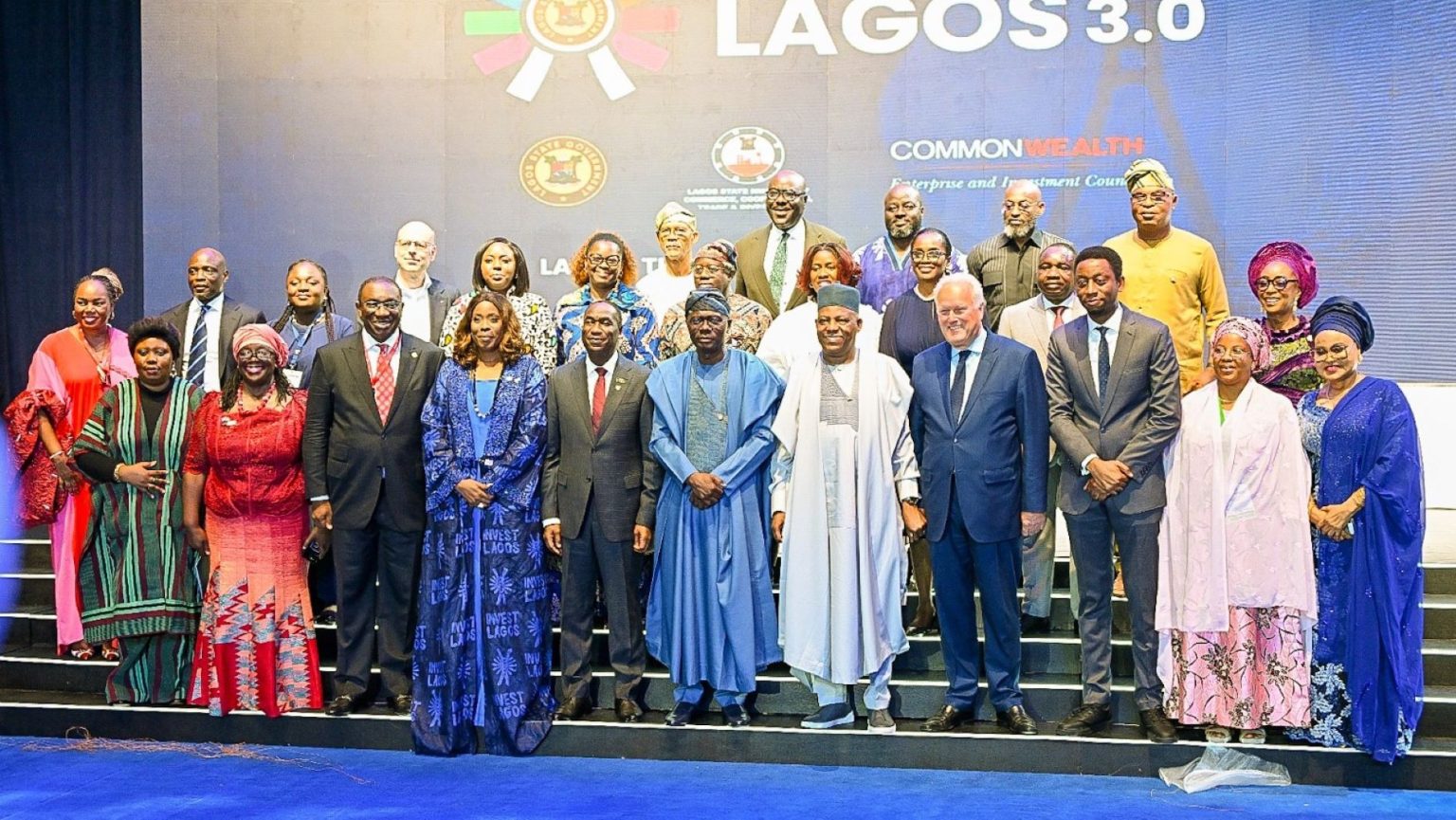
• Invest Lagos Summit 3.0: Secretary to the Lagos State Government, ‘Bimbola Salu-Hundeyin (right); Member, House of Representatives, Kafilat Ogbara; Commissioner for Innovation, Science and Technology, Tunbosun Alake; Chairman, Commonwealth Enterprise & Investment Council (CWEIC), Lord Jonathan Marland; Vice President Kashim Shettima; Governor of Lagos State, Babajide Sanwo-Olu; his Deputy, Dr. Obafemi Hamzat; Commissioner for Commerce, Cooperatives, Trade & Investment, Mrs Folashade Bada Ambrose-Medebem; Deputy Chief of Staff to the Governor, Sam Egube, Dr Toyosi Akerele-Ogunsiji and members of the State Executives Council at the opening of Invest Lagos 3.0, themed: “Lagos – The Business Gateway to Africa”, in Lagos, yesterday.
Lagos State Governor, Babajide Sanwo-Olu, has disclosed that as part of efforts to deepen access to global capital, his administration is developing the Lagos International Financial Centre (LIFC), envisioned as a world-class financial district that would strengthen the state’s position as a gateway for investment into Africa.
Speaking yesterday at the third edition of the Invest Lagos Summit, attended by Vice President Kashim Shettima, other governors, foreign investors, development finance institutions and business leaders, Sanwo-Olu said Lagos was deliberately building a globally competitive economy driven by innovation, infrastructure and private-sector participation.
Sanwo-Olu said that the state had recorded significant economic progress in recent years through targeted reforms across transportation, digital infrastructure and industrial development.
Highlighting key infrastructure achievements, Sanwo-Olu cited investments in road networks, waterways and rail transportation, describing them as critical enablers of economic growth and investor confidence.
The governor noted that Lagos was increasingly serving as a gateway to African markets and global capital, positioning itself at the centre of continental trade under the African Continental Free Trade Area (AfCFTA).
According to him, Lagos remains one of the continent’s most strategic economic hubs, with a population exceeding 25 million and a gross domestic product steadily approaching the $300 billion mark.
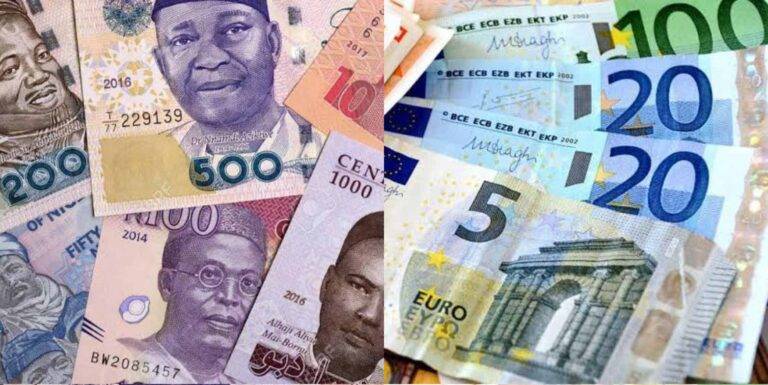
Official CBN Exchange Rates
US Dollar (USD) ₦1, 362.84
Great British Pound (GBP) ₦1,821. 30
EURO (EUR) ₦1,574. 53
SWISS FRANC (CHF) ₦1,714. 05
JAPANESE YEN (JPN) ₦8.52
CHINESE YUAN (CNY) ₦200.99
West African CFA (XOF) ₦2.42
West African Unit Account (WAUA) ₦1,863.83
SAUDI RIYAL (SAR) ₦302. 83
SOUTH AFRICAN RAND (ZAR) ₦82.75
Black Market Rates
US Dollar (USD) Buy ₦1,395 Sell ₦1,400
Great British Pound (GBP) Buy ₦1,860 Sell: ₦1, 880
EURO (EUR) Buy ₦1,000 Sell ₦1, 100
South African Rand (ZAR) Buy ₦75 Sell ₦90
UAE Dirham Buy ₦350 Sell ₦370
Chinese Yuan Buy ₦180 Sell ₦200
Ghana Cedi (GHS) Buy ₦100 Sell ₦115
West African CFA Buy ₦2,450 Sell ₦2550
Central African CFA Buy ₦2,320 Sell 2,400
Australian Dollar Buy ₦800 Sell ₦900
Sources: CBN / Aboki Forex


JUST IN: IED Explosion Kills One, Injures Seven on Anka-Bagega Road in Zamfara ( Photos)

FG Welcomes Positive IMF Assessment of Nigeria’s Economy, Vows to Sustain Reform Momentum

Tony Elumelu’s United Capital Secures approval to operate in Ethiopia

Tech Expert, Zuckerberg trains with UFC champions, Adesanya, Alexander

Organ Trafficking: Ekweremadu bags 10 years in UK prison

SAINT OBI: Between his marriage and his death
-
 News1 day ago
Court Voids ₦110bn N’Assembly Vehicles, Allowances
-
 Business2 days ago
Senate’s approval of Sugar – Sweetened Beverages Tax Bill, Shocking, says CPPE, Lobbying Reps for rejection
-

 News1 day ago
Lagos Begins 500-Tree Campaign to Tackle Extreme Heat
-

 Crime3 days ago
BREAKING: Police Rescue Kidnapped Sister of Ex-minister Adelabu and Twin Sons
-
 News2 days ago
Court Declares National Assembly’s N110bn SUV and Allowance Schemes Unlawful
-

 Politics1 day ago
2027: Lagos APC picks Damilola as Hamzat ‘s Deputy Governor
-
 Politics1 day ago
NDC Declares Party Supremacy, Approves Code of Conduct Committee
-
 News1 day ago
FG Clears Five-Month Allowance Arrears for University Lecturers