International
BREAKING: Senegal swears in former opposition figure, recently freed from prison, as new president


Senegal inaugurated Bassirou Diomaye Faye as its new president on Tuesday, completing the previously little-known opposition figure’s dramatic ascent from prison to the palace in recent weeks.
Faye was released from prison less than two weeks before the March 24 election, along with popular opposition figure and mentor Ousmane Sonko, following a political amnesty announced by outgoing President Macky Sall. It is the former tax inspector’s first time in elected office.
“It’s the culmination of a long struggle for democracy and the rule of law,” said Aissata Sagna, a 39-year-old factory worker who worked on Faye’s campaign. “This is a day of celebration for us, even if we have lost young people killed during the demonstrations.”
The election tested Senegal’s reputation as a stable democracy in West Africa, a region that has experienced coups and attempted coups. It followed months of unrest ignited by the arrests last year of Sonko and Faye and concerns that the president would seek a third term in office despite constitutional term limits. Rights groups said dozens were killed in the protests and about 1,000 were jailed.
Faye, 44, campaigned on promises to clean up corruption and better manage the country’s natural resources. His victory was seen as reflecting the will of young people frustrated with widespread unemployment and former colonial ruler France, seen by critics to be using its relationship with Senegal to enrich itself.
Such frustrations are common across many countries in Africa, home to the world’s youngest population, where a number of leaders have clung to power for decades.
In his first speech as president-elect, Faye promised to fight corruption and reform the economy.
A practicing Muslim from a small town, Faye has two wives, both of whom were present on Tuesday. Ahead of the election, he released a declaration of his assets to show transparency and called on other candidates to do the same. It listed a home in Dakar and land outside the capital and in his hometown. His bank accounts totaled roughly $6,600.
“I think the first challenge is the formation of his (Faye’s) government,” said Alioune Tine, founder of the Senegalese think tank Afrikajom Center. “This will be the first concrete message he sends to the Senegalese people. The size, diversity and profiles will be analyzed with a fine-tooth comb, to see if they meet the demand for a break with the past.”
The new president was little known until Sonko, a popular opposition figure who came third in the previous election in 2019, named him to run in his place after being barred from the election for a prior conviction. While Sonko’s future role in the new administration is unclear, he is expected to have a prominent role.
Faye was arrested for alleged defamation last year, while Sonko faced a number of charges, including a prolonged legal battle that started when he was accused of rape in 2021. He was acquitted of the rape charges but was convicted of corrupting youth and sentenced to two years in prison last summer. Sonko’s supporters say his legal troubles were part of a government effort to derail his candidacy.
While Sall eventually ruled out running for a third term, he then abruptly postponed the election in February with only weeks to go, triggering another wave of protests. That move was blocked by the country’s constitutional court and the election was eventually held weeks later in March.
Source: AP





International
“Mother of all bombs,” Trump Plans To Hit Iran
The 21,600-pound airburst weapon is designed to affect surface targets over a wide area and has so far not been deployed by the U.S. in previous strikes on targets inside Iran. It was used in Afghanistan in 2017 during the previous Trump administration.

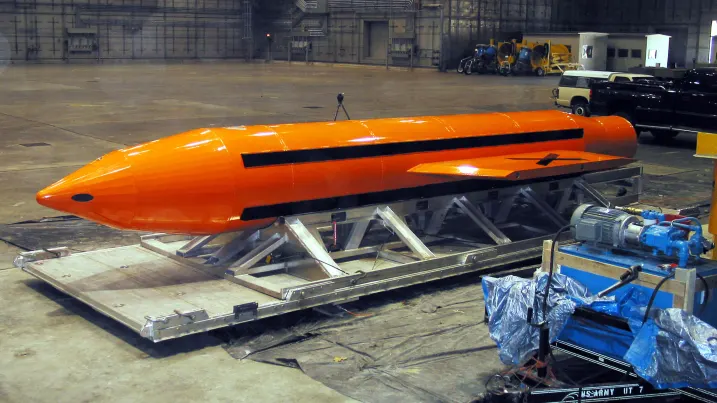
The U.S. military is considering use of the GBU-43/B Massive Ordnance Air Blast (MOAB) bomb if it resumes strikes inside Iran, CNN reported Thursday, citing U.S. officials.
The 21,600-pound airburst weapon is designed to affect surface targets over a wide area and has so far not been deployed by the U.S. in previous strikes on targets inside Iran. It was used in Afghanistan in 2017 during the previous Trump administration.
Trump said Oct. 8 that he would not resume U.S. strikes on Iran before the Nov. 3 midterm elections, while attacks on shipping near the Strait of Hormuz and deadly Houthi strikes in Saudi Arabia have raised regional tensions.
Iranian Parliament Speaker Mohammad Bagher Ghalibaf said Tehran will combine military capabilities and negotiations to press its demands.
International
Child marriage in southern Germany: Over 350 cases recorded, some brides as young as 11
The most recent entries in the overview relate to 2026. They include, among other things, marriages of 16- and 17-year-old girls to adult men.

• Child marriage / UNICEF
In the southwestern German state of Baden-Württemberg, a total of 358 so-called child marriages have been officially recorded since 2012.
Euro News reported that only eight of these forced marriages have so far been legally annulled.
According to authorities, the other 350 cases were brought to an end in other ways.
This alarming finding comes from a response by the Baden-Württemberg state government to a minor inquiry submitted by AfD state parliament members Nikolaos Boutakoglou and Emely Knorr.
The Tübingen regional authority is responsible for recording the data, the answer came from the Ministry of the Interior.
The eight final annulments took place between 2018 and 2024. Among the documented cases was the marriage of an 11-year-old girl from Iraq to a 17-year-old Iraqi, which was annulled in 2020.
As early as 2018, the marriage of a 14-year-old Afghan girl to a 30-year-old man had been ended.
In 2024 two further annulments were added: they concerned a 16-year-old German girl and a 25-year-old Pakistani man and a 16-year-old Syrian girl and a 27-year-old man from the same country.State parliament member Nikolaos Boutakoglou wrote on Facebook that the issue was “really awful” but was being treated as a taboo.
According to its own account, the ministry deals exclusively with such marriages entered into abroad.
Since summer 2017, the Act to Combat Child Marriages has been in force in Germany.
In 2024, the Bundestag adopted new rules to protect minors in marriages concluded abroad.
Hundreds of cases without state intervention
The significantly higher number of cases concluded in other ways raises questions about how these marriages continued.
For the period from 2015 to 2026, the regional authority lists a total of 350 proceedings under the heading “other disposals.”But what became of the other child marriages?
The state government cites, among other things, the death of a spouse, reaching adulthood, a decision not to seek annulment or a new marriage concluded abroad.
In these cases, there was therefore no legally binding annulment.
For 2023, the records include the case of a 12-year-old Afghan girl who was married to a 21-year-old Afghan man. Girls aged 13 and 14 also appear several times in the statistics.
The most recent entries in the overview relate to 2026. They include, among other things, marriages of 16- and 17-year-old girls to adult men.
The statistics record the age of the spouses at the time of marriage and their respective nationalities.
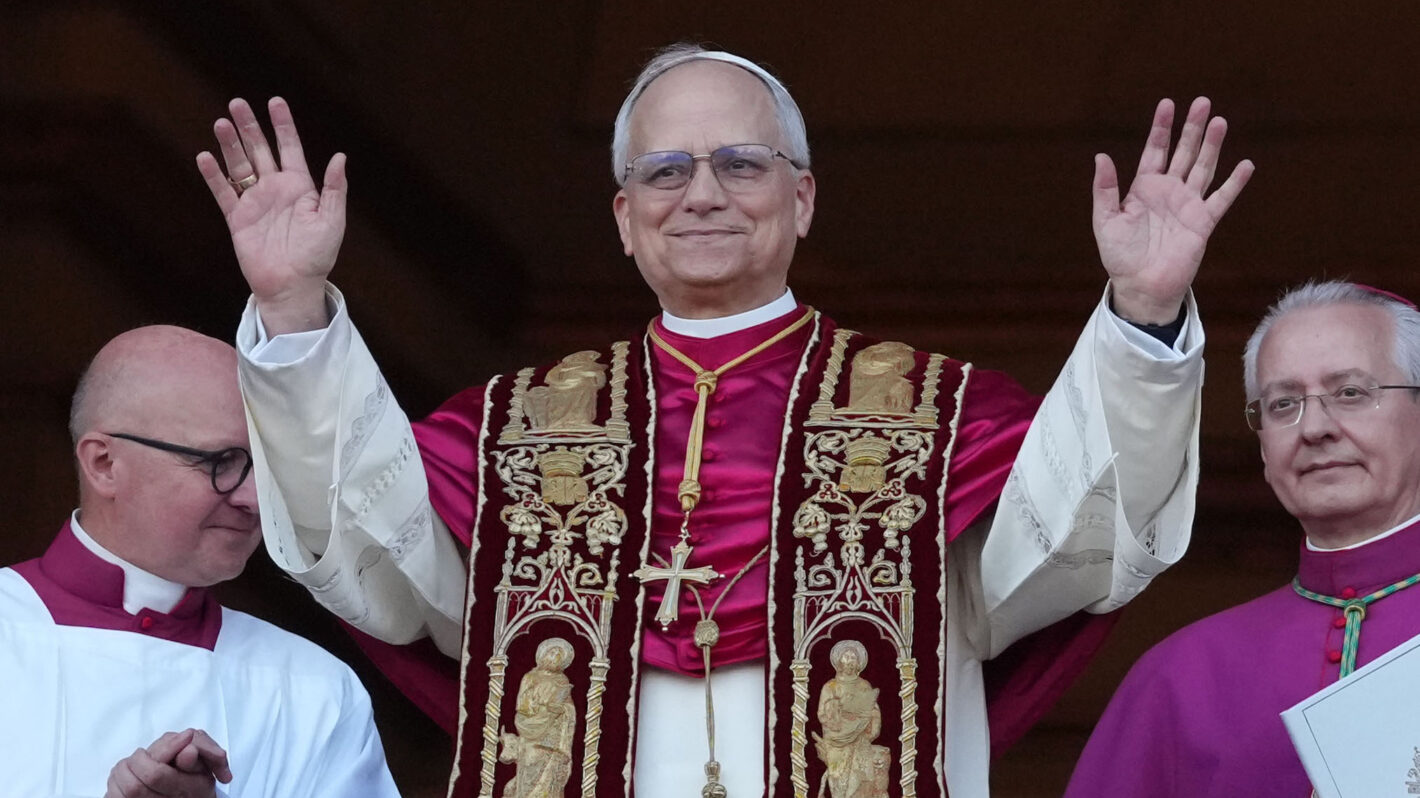
Pope Leo XIV has announced that he will undergo surgery in the coming days to remove a small, localized nodule found on his lung during a recent routine medical checkup.
The 71-year-old pontiff made the disclosure himself during his weekly Angelus prayer in St. Peter’s Square. “Doctors found a localized nodule in my lung,” he said. “It was detected at a very early stage and is well-contained.
The doctors believe it is advisable to intervene, so, following their advice, I have decided to undergo surgery to remove it.”
The Vatican confirmed the operation is scheduled for the first days of this week at Rome’s Gemelli Hospital, which has a dedicated papal suite. Holy See spokesman Matteo Bruni said the Pope is expected to need about a week to recover. On Monday, the Vatican added that Leo will be admitted Tuesday morning.
The nodule’s nature—whether benign or malignant—has not been specified. Medical experts note that most lung nodules are non-cancerous, and early detection generally carries a favorable outlook.
This marks the first significant health issue of Leo’s papacy since his election in May 2025. The American-born pope, known for remaining physically active, has continued his full schedule of audiences and is still expected to proceed with a planned trip to Latin America next month.


Mbappé wins Onze d’Or award for 2025/26 season

Ronaldo Gets 30-Day Suspension For Portugal Camp Walkout

JUST IN: Ex-Delta Gov Uduaghan Dies at 71, Oborevwori Mourns

BREAKING: Lagos Govt Declares Today, Thursday Work-Free to Mark 2026 Ìṣẹ̀ṣe Day

Tech Expert, Zuckerberg trains with UFC champions, Adesanya, Alexander