
News
International Men’s Day: Recognizing and Honouring the Unseen Struggles & Sacrifices of Men


With International Men’s Day on the horizon, the silence surrounding men’s struggles and the lack of acknowledgement for their sacrifices and emotional well-being demand our immediate attention. In a world where International Women’s Day is celebrated with fervour and prominence, the muted celebration of men’s contributions and the absence of recognition for their hardships is a pressing societal concern that needs urgent addressal. It is time to shatter this silence and confront the complex challenges faced by men in today’s society.
Before enlisting men as allies in the pursuit of gender equality, it is crucial to acknowledge and support their emotional struggles. Men often bear the weight of societal expectations that demand emotional resilience, stoicism, and adherence to the traditional “be a man” culture. This entrenched cultural norm, passed down through generations, has ensnared men in a suffocating silence, dissuading them from expressing vulnerability or seeking essential help.
As we delve into this crucial issue, it is imperative to illuminate the multifaceted challenges men face. Men just like women, can be victim of violence, yet their experiences are frequently marginalized or dismissed. Reports of violence, be it emotional, physical, or domestic, perpetrated against men are often under-reported, owing to stigmas surrounding male victimhood. The prevailing notion that men should epitomize strength and remain impervious to pain forces them into silence, exacerbating mental health issues and contributing to alarmingly high rates of depression and suicide among men.
To drive this change, access to mental health support for men must not only be free but also easily accessible. Through my years of advocating for men’s mental health and providing support for men in need, we have found that when provided with a safe, non-judgemental space, men—regardless of their trauma—do open up and seek help.
Governments and stakeholders worldwide must establish systems and structures that provide indispensable resources to men without prejudice or financial burden. There is an urgent need for a clearly defined and distinctive system tailored to meet men’s specific needs.
As we commemorate International Men’s Day on the 19th of November 2023, I invite society, Government and all relevant stakeholders to shed light on the often unspoken sacrifices made by fathers, breadwinners, and husbands. These men silently shoulder immense responsibilities, enduring sleepless nights, relentless hard work, and the weight of providing for their families. Their struggles often remain unseen, yet they embody a profound dedication and resilience that deserves acknowledgement and appreciation.
For too long, societal norms have downplayed the emotional toil and sacrifices of men who take on the role of provider. The stereotypical image of stoic, unyielding masculinity has masked the internal battles they face—the invisible tears shed in solitude, the fears of inadequacy, and the constant pressure to fulfil expectations. These men confront countless challenges on the path to success, bearing the burden of supporting their loved ones, often without seeking recognition or appreciation.
It’s time to dismantle the misconceptions and societal norms that overlook the sacrifices of men. We must foster an environment that encourages open conversations about the challenges they encounter, breaking the stigma that surrounds vulnerability in men.
Recognition and gratitude are fundamental human needs. A simple acknowledgement, a heartfelt “thank you,” can serve as a powerful affirmation for the sacrifices made. Society must take a collective step forward, acknowledging the multifaceted sacrifices of these men, not just on this dedicated day, but consistently and genuinely.
Moreover, the call to action on International Men’s Day is not just about recognition but also about systemic changes. We need to redefine masculinity in a way that allows men to embrace their vulnerabilities without fear of judgement. Creating support networks, both within communities and professionally, will provide a safe space for men to share their challenges and seek help when needed.
Additionally, workplaces and Government policies should evolve to accommodate the evolving roles of men in families. Flexibility in work hours, parental leaves, and support programs can significantly ease the burden and stress on men, allowing them to balance their professional and personal responsibilities more effectively.
In conclusion, it is imperative that as a world, we express our gratitude and understanding for the unseen sacrifices made by these men. Let us actively listen, support, and appreciate the fathers, breadwinners, and husbands who tirelessly strive to provide for their families. Together, let’s create a culture that honours and respects these contributions, fostering a more inclusive and compassionate society for everyone.
This International Men’s Day, let’s not just celebrate men, but commit to creating an environment where their sacrifices, emotions, and efforts are recognized, appreciated, and supported throughout the year. It’s time to redefine masculinity and create a world where everyone’s contributions are valued, seen, and appreciated.
Halima Layeni is the Founder, Life After Abuse Foundation, she is an incandescent Men’s Mental Health advocate and the Founder & Executive Director of the Life After Abuse Foundation – a non-profit currently focused on providing education, mentorship and mental health support to boys and men through policy involvement, organizational and community outreaches, media activism and psychotherapy.
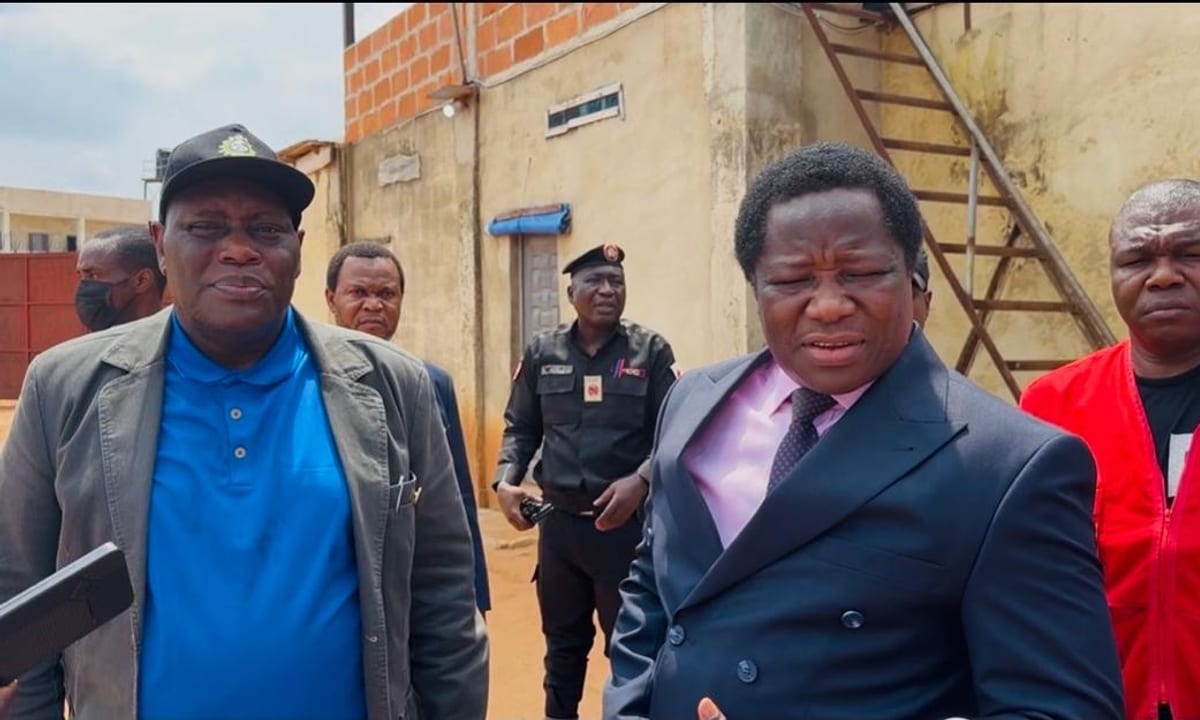
The Nigerian Midstream and Downstream Petroleum Regulatory Authority (NMDPRA) and operatives of the Economic and Financial Crimes Commission (EFCC) on Tuesday stormed an illegal Chinese-operated refinery in Ogere-Remo, Ikenne Local Government Area of Ogun State.
The joint operation followed intelligence reports that revealed a well-fenced but crude yet technically sophisticated facility occupying more than three hectares of land.
During the inspection, officials observed underground tanks believed to have been used for heating and processing sludge oil, refining waste products, and substances suspected to be Automotive Gas Oil (AGO), popularly known as diesel. NMDPRA officials immediately sealed the facility.
Ogun State Coordinator of NMDPRA, Dr. Atilola Akinyemi, described the plant as a complete illegality operating without any permit from regulatory authorities.
“The underground storage facility behind the site has an estimated capacity of more than 90,000 litres, complete with underground heating systems, water hydrants for cooling, locally fabricated tanks and silos for separation,” Akinyemi told journalists.
He warned that if such adulterated products entered the market, they would pose serious risks to vehicles and engines. All recovered products have been confiscated by the Federal Government.
Director of the Department of Proceeds of Crime Management at the EFCC, Gbolahan Latona, stressed the need for collective patriotism in tackling economic crimes.
“Upon conclusion of investigation, the suspects will have their day in court and the proceeds of crime will be put to meaningful use,” Latona said.
Watch video below:
News
Sanusi: Critics Are Not Enemies Of The Govt
” It’s not every time people talk about poverty or talk about difficulty that they’re just enemies of the government or making an attack on the president. That is not how to respond to economic distress,” he said.

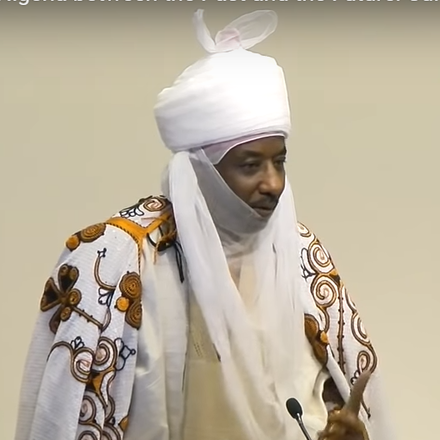
The Emir of Kano, Alhaji Muhammadu Sanusi II, has advised the Federal Government against treating every comment about the administration as an attack on President Bola Tinubu.
The royal father gave the advise on the occasion of the Oxford Global Think Tank Leadership Conference, organised by the Oxford Global Think Tan.
Speaking virtually to the audience at the event, on Tuesday, Sanusi advised the government to tolerate constructive criticism.
“It’s not every time people talk about poverty or talk about difficulty that they’re just enemies of the government or making an attack on the president. That is not how to respond to economic distress,” he said.
News
Urbanisation: Lagos To Fall Behind Luanda as sub-Saharan Africa’s biggest city by 2050
The report titled ‘Sub-Saharan Africa’s Urban Awakening: Catalyzing Economic Growth and Job Creation’, also calculated that sub-Saharan Africa’s urban population will increase by 748 million between 2025 and 2050, reaching about 1.7 billion.

A report conducted by the World Bank and the European Commission’s Joint Research Centre, has projected that Angola’s capital, Luanda,will overtake Lagos as sub-Saharan Africa’s most populous city by 2050, rising by 78 percent from 11.4 million to 20.3 million.
The report titled ‘Sub-Saharan Africa’s Urban Awakening: Catalyzing Economic Growth and Job Creation’, also calculated that sub-Saharan Africa’s urban population will increase by 748 million between 2025 and 2050, reaching about 1.7 billion.
The report estimated that Luanda’s population would increase from 11.4 million in 2025 to 20.3 million in 2050, adding 8.9 million residents over the period.
Lagos, the region’s most populous city in 2025 with an estimated 12.8 million residents, is projected to grow to 16.2 million by 2050, an increase of more than 25 percent.
Despite the growth, Lagos is expected to fall behind Luanda, whose population is projected to exceed that of Nigeria’s commercial hub by 4.1 million.
“Over this period, the population of Angola’s capital city, Luanda, is projected to increase by 78 percent from 11.4 million to 20.3 million.
In doing so, Luanda will overtake Lagos as SSA’s most populous city,” the report said.


JUST IN: Ronaldo Ends 23-year Portugal Career, Hangs National Team Boots

JUST IN: Court sacks Mark-led ADC, invalidates Atiku Abubakar’s nomination

Naira Exchange Rates Thursday, 5 Nov 2026

BREAKING: Lagos Govt Declares Today, Thursday Work-Free to Mark 2026 Ìṣẹ̀ṣe Day

Tech Expert, Zuckerberg trains with UFC champions, Adesanya, Alexander

Organ Trafficking: Ekweremadu bags 10 years in UK prison
-
 Business2 days ago
Naira Exchange Rates Wednesday, 4 Nov 2026
-
 Business2 days ago
NNPCL wants to sell 10% equity via IPO on NGX, LSE
-

 Business2 days ago
MTN migrates MoMo Customers to Alipay+ platform
-
 Business2 days ago
Naira Exchange Rates 3 November,2026
-

 News1 day ago
Sanusi: Critics Are Not Enemies Of The Govt
-

 International1 day ago
Democrats Win US midterm elections
-

 Politics21 hours ago
2027 Elections Campaign: NDC Reacts To Today’s Attack On Peter Obi in Cross River
-

 Sports2 days ago
Boxer Stabs To Death in Ibadan street fight