
Business
Afreximbank Hails Africa Credit Rating Agency
” We must all use it, and in return expect a complete assessment of where we (Africa) stand: the strengths the market has ignored, and the weaknesses we still need to fix.”

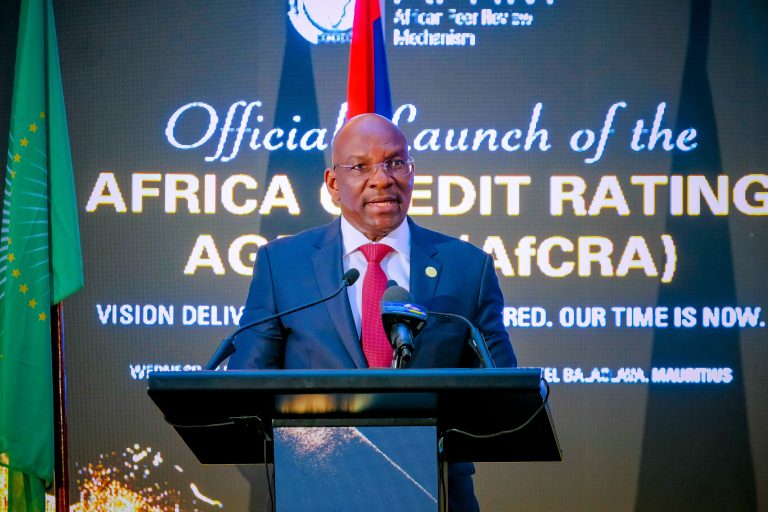
Photo: Mr Denys Denya, Senior Executive Vice President of Afreximbank addresses guests during the launch of the Africa Credit Rating Agency in Port Louis, Mauritius on October 7, 2026
African Export-Import Bank (Afreximbank) has declared it’s strong backing for the recently launched Africa Credit Rating Agency (AfCRA) by the African Union.
“AfCRA is an important milestone in strengthening Africa’s financial architecture and expanding the continent’s capacity to generate credible, independent analysis of African credit risk,” said Mr Denys Denya, Senior Executive Vice President of Afreximbank.
Mr Denya emphasised that credit ratings play an important role in determining access to capital, influencing investor perceptions and shaping the cost at which governments, institutions and businesses can finance development.
It is therefore essential that assessments of African credit risk are independent, rigorous and evidence-based, while reflecting a complete understanding of the structures, institutions and economic realities being assessed.
The establishment of AfCRA adds an important African-led source of credit opinion to the market.
Its value will not be measured by whether it produces more favourable ratings, but by the credibility of its analysis, the quality of its data and transparency of its methodology, and its ability to deepen understanding of African sovereigns, sub-sovereigns and corporate credit.
This is particularly important given that many African issuers remain unrated, while local-currency and sub-sovereign markets continue to have limited rating coverage.
Expanding credible rating coverage can improve the information available to investors and support the development of deeper domestic and regional capital markets.
Alongside fellow members of the Alliance of African Multilateral Financial Institutions (AAMFI), Afreximbank has consistently maintained that African Multilateral Financial Institutions should be assessed on the basis of their fundamentals, performance, legal frameworks, mandates and operating models.
Ensuring that these institutional characteristics are properly understood is essential to achieving informed, balanced and credible assessments of African risk.
Commenting on the uniqueness of the African market, and need for AfCRA’s rating methodology to reflect this, Mr Denya, said: “The rating methodology AfCRA develops must recognise the uniqueness of our environment and its institutional structures.
The Agency must set its own standards and not follow those set elsewhere — it must build a unique identity that conforms to an ‘African best practice.
”Highlighting the need for the autonomy of the Africa Credit Rating agency as it takes off, Mr Denya added: “Most importantly, AfCRA must set a new benchmark for the continent, maintain its independence, and remain wholly owned and controlled by Africans.
“We must all use it, and in return expect a complete assessment of where we (Africa) stand: the strengths the market has ignored, and the weaknesses we still need to fix.”
AfCRA should therefore be seen as complementary to existing international and regional rating agencies, broadening the range of credible analysis available to investors and issuers while strengthening competition, transparency and analytical capacity within Africa’s credit markets.
As Africa seeks to mobilise the scale of capital required for industrialisation, trade, infrastructure and economic transformation, credible African institutions that improve information, strengthen market confidence and deepen the continent’s financial markets will become increasingly important.
Afreximbank congratulates the African Union, the African Peer Review Mechanism (APRM) and all those involved in bringing AfCRA from concept to launch, and looks forward to the contribution the Agency will make to deeper, more transparent and more efficient African capital markets.









BLACK/ PARALLEL MARKET RATES
₦1400DOLLAR (USD)
₦1830POUND (GBP)
₦1515 EURO (EUR)
₦950 CANADIAN DOLLAR (CAD)
₦70 SOUTH AFRICAN RAND (ZAR)
₦350 UAE DIRHAM (AED
₦190 Chinese YUAN (CNY)
₦100 Ghanaian CEDI (GHS)
West African CFA ₦2240 (XOF)
Central African CFA ₦2180 (XAF)
₦820 Australian Dollar AUSSIE (AUD)
Business
NNPCL wants to sell 10% equity via IPO on NGX, LSE
NNPC is expected to spend at least the whole of 2027 preparing for the proposed offering, with the listing primarily intended to strengthen corporate transparency and governance in line with Nigerian law.
The Nigerian National Petroleum Company Limited (NNPC Ltd.) is considering selling between 5% and 10% of its equity through a potential initial public offering (IPO), with the proposed listing expected to focus primarily on Nigeria’s domestic capital market.
The Group Chief Executive Officer of NNPC Ltd., Bashir Bayo Ojulari, disclosed this in an interview with Reuters on Tuesday, November 3, 2026, adding that the company could also pursue a secondary listing in London or New York.
The disclosure comes shortly after the Dangote Petroleum Refinery’s IPO closed on October 27, following a two-week extension of its subscription period from the initial October 13 deadline.
NNPC is expected to spend at least the whole of 2027 preparing for the proposed offering, with the listing primarily intended to strengthen corporate transparency and governance in line with Nigerian law.
Ojulari indicated that raising additional capital would be a secondary consideration rather than the main reason for going public.
The company is also considering listing some of its subsidiaries separately, following a model adopted by Abu Dhabi National Oil Company (ADNOC), the United Arab Emirates’ state-owned oil company.
Beyond the potential IPO, Ojulari disclosed that Chinese companies have expressed interest in acquiring equity stakes in some of NNPC’s smaller refineries, particularly the Port Harcourt and Warri facilities, which require substantial rehabilitation.
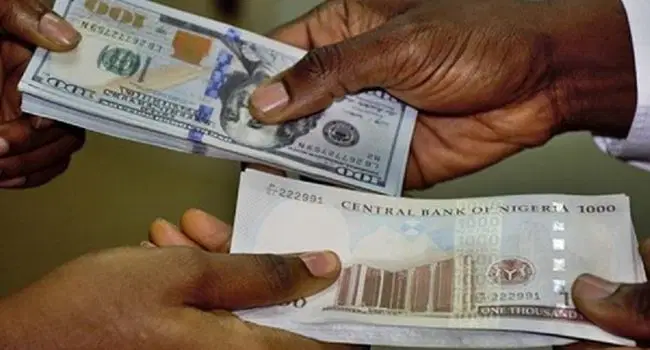
BLACK/PARALLEL MARKET RATES
1390DOLLAR (US
₦1835POUND (GBP)
₦1510EURO (EUR
₦970 CANADIAN DOLLAR (CAD)
₦65 SOUTH AFRICAN RAND (ZAR)
₦350 UAE DIRHAM (AED)
₦190 CHINESE YUAN (CNY)
₦100 GHANAIAN CEDI (GHS)
₦2300 West African CFA F.(XOF)
₦2200 Central African CFA F.(XAF)
₦850 Australian Dollar AUSSIE (AUD)
OFFICIAL CBN EXCHANGE RATES
DOLLAR (USD)₦1346.93
POUND (GBP)₦1807.72
EURO (EUR)₦1512.26
SWISS FRANC (CHF)₦1644.21
JAPANESE YEN (JPN)₦8.52
West African CFA FRANC (XOF)₦2.30
WEST AFRICAN UNIT OF ACCOUNT (WAUA)₦1825.03
CHINESE YUAN (CNY)₦201.92
SAUDI RIYAL (SAR)₦359.15
SOUTH AFRICAN RAND (ZAR)₦81.37


JUST IN: Ronaldo Ends 23-year Portugal Career, Hangs National Team Boots

JUST IN: Court sacks Mark-led ADC, invalidates Atiku Abubakar’s nomination

Naira Exchange Rates Thursday, 5 Nov 2026

BREAKING: Lagos Govt Declares Today, Thursday Work-Free to Mark 2026 Ìṣẹ̀ṣe Day

Tech Expert, Zuckerberg trains with UFC champions, Adesanya, Alexander

Organ Trafficking: Ekweremadu bags 10 years in UK prison
-

 Business1 day ago
NNPCL wants to sell 10% equity via IPO on NGX, LSE
-

 Business1 day ago
Naira Exchange Rates Wednesday, 4 Nov 2026
-

 Business2 days ago
MTN migrates MoMo Customers to Alipay+ platform
-
 Business2 days ago
Naira Exchange Rates 3 November,2026
-

 News1 day ago
Sanusi: Critics Are Not Enemies Of The Govt
-

 International22 hours ago
Democrats Win US midterm elections
-

 Politics19 hours ago
2027 Elections Campaign: NDC Reacts To Today’s Attack On Peter Obi in Cross River
-

 Sports2 days ago
Boxer Stabs To Death in Ibadan street fight