
News
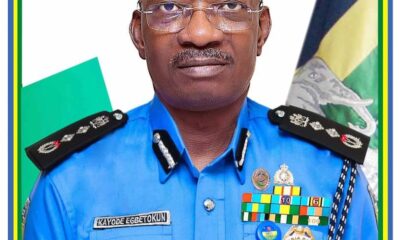
JUST IN: IG withdraws mobile policemen from ex-govs, ministers, VIPs

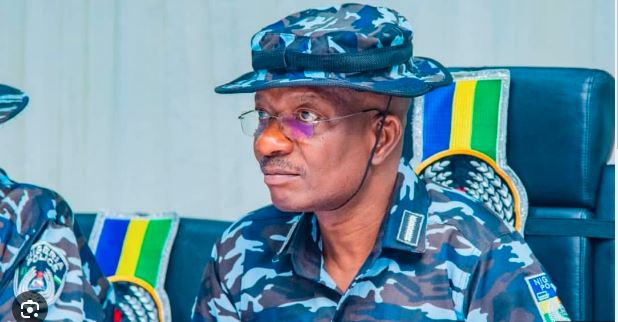
The Federal Government has withdrawn the Mobile Police Force personnel attached to several Very Important Persons, including ex-governors, former ministers and lawmakers.
The order, which was contained in a police wireless message from Mopol 45 Force Headquarters, Abuja, affected Daura Buhari, brother to former President Muhammadu Buhari as well as former First Lady, Aisha Buhari’s sibling and former Secretary to the Government of the Federation, Boss Mustapha.
The development came a few weeks after the IG vowed to withdraw Police Mobile Force personnel from VIP escort and guard duties.
He had also announced plans to establish the Special Intervention Squad, which according to him, would have 40,000 highly trained police officers including selected officers from the Police Mobile Force.
This, the IG said, was to allow the police to take back its place in the “internal security architecture” of the country.
Egbetokun, who spoke during a meeting with Squadron leaders and Tactical Commanders in Abuja, on June 26, stated, “We shall effect the withdrawal of PMF personnel from VIP escort/guard duties. While the protection of dignitaries remains paramount, it is imperative that we realign our priorities to address the escalating security challenges faced by the nation as a whole. By relieving the PMF of VIP escort and guard duties, we can redirect their focus and efforts toward addressing critical security concerns that affect our communities at large.
“In a bid to kick-start the process of regaining our pride of place in the internal security architecture of our dear country first and foremost, modalities for the creation of a new special squad – the Special Intervention Squad have been initiated.
“This special squad shall consist of 40,000 specially trained elite officers. The Squad will be formed by selecting officers from the pool of existing Police Mobile Force personnel and all tactical units in the country.
“These officers will undergo intensive pre-deployment training to make them combat-ready for frontline operational duties in all the states of the Federation, with a particular focus on areas plagued with unrest and turmoil.
“By pooling together the expertise and experience of our PMF personnel and other tactical units, we can establish a formidable force that is well-equipped to handle the evolving challenges we face.”
Egbetokun set up a committee headed by the Deputy Inspector-General of Police (Operations), Adeleke Bode, to assess and advise on how the new policies could be implemented seamlessly.
The committee submitted
Recall that thousands of police operatives were attached to public officials, ex-political officer holders, businessmen and other private individuals, thus reducing the number of police personnel required to protect the public while fewer officers were available for core police duties like investigations and patrols.
Though previous IGs had withdrawn the police orderlies deployed to protect some politicians in the past, the cops found their way back to the VIPs.
Statutorily, only the president, vice president, governors, local council chairmen, legislative principal officers in the states and at federal level, magistrates and judges are entitled to police protection.
But this privilege has over the years been extended to just about anybody who can pay, leaving ever fewer personnel for real police work.
However, the Force headquarters in its order with reference CB: 4001/DOPS/45PMF/FHQ/ABJ/VOL.15/353 signed by the AIG MOPOL, directed the addressees to implement the directive with immediate effect.
The message was addressed to DSPs Lauretta Iruonagbe; Yusuf Ishaq; Okeme Emmanuel; Ilesanmi Temidayo; Emmanuel Akaniro; Yakubu Francis; Chindo Atege; Zakari Mohammed and ASPs Osori Sani; Job Andrew; Iyabo Oluwadamilola, and Yakubu Anthony who are believed to be attached to some of the affected dignitaries.
VIPs affected by the withdrawal order include former governors of Imo State, Ikedi Ohakim and Rochas Okorocha; former governor of Bauchi, Adamu Muazu; ex- Gombe State governor, Danjuma Goje and former governors of Ogun and Zamfara, Gbenga Daniel and Bello Matawalle, respectively.
Similarly, the MOPOL attached to some former ministers who served under the Buhari administration were withdrawn.
They are ex-Minister of Police Affairs, Maigari Dingyadi; former Minister of State for Petroleum, Timipreye Sylva; former Minister of State for Mines and Steel, Gbemisola Saraki; former Minister of State for Science, Technology and Innovation, Henry Ikoh; former Minister of State for Budget and National Planning, Clem Agba and former Minister of State for Power, Goddy Agba.
Also, the orderlies working with the former Chairman Senate Committee on Police Affairs, Haliru Dauda; former Chairman House Committee on Police Affairs, Rabiu Lawan, and Senator Stephen Adey, were equally withdrawn.
The mobile police officers to the suspended National Chairman of the Peoples Democratic Party, Iyorchia Ayu were also affected.
The order read in part, “You are directed to withdraw all personnel mine attached to the under-listed politicians: Former governor of Imo state, Ikedi Ohakim; former Secretary to the Government of the Federation, Boss Mustapha; former governor of Bauchi, Adamu Muazu; former governor of Imo, Rochas Okorocha; former governor of Gombe State, Danjuma Goje; former governor of Ogun, Gbenga Daniel; former governor of Zamfara, Bello Matawalle; former Minister of Police Affairs, Maigari Dingyadi; former Minister of State for Petroleum, Timipreye Sylva; former Clerk of the National Assembly; Aisha Buhari brother; Daura, brother to the former president Buhari ; APC National women leader; former Minister of State for Mines and Steel; former Chairman Senate Committee on Police Affairs, Haliru Dauda; former Minister of State for Science, Technology and Innovation; former Minister of State for Power; National Chairman of the Peoples Democratic Party, Iyocha Ayu; former Chairman House Committee on Police Affairs, Rabiu Lawan; Minister of State for Budget and National Planning, Clem Agba and former Senator Stephen Adey. Treat as very important.”
Reacting to the action of the police authorities, the media aide to Senator Gbenga Daniel, Steve Oliyide, said it was in the power of the IG to determine the security architecture of the country.
Oliyide said, “It is actually within the precinct and powers of the IGP to determine the security architecture for the country and Senator Otunba Gbenga Daniel will support any and every initiative towards strengthening the country’s security system, notwithstanding any temporary discomfort to his personal safety.’’
“Once there are composite security arrangements for the entire country, it also suggests that VIPs too will also be secured, and Senator Daniel has implicit confidence in the capacity of the IGP to provide and make adequate security for all in the circumstance. Where and when the need arises, I am sure he will arrange complimentary security supports,” he added.
The former SGF could not be reached for comment on Sunday as he did not respond to several calls and a message sent to him on WhatsApp.
Also, Matawalle, who was also affected by the new development, was not available for comment. The former Principal Private Secretary to the former governor, Lawal Maradun failed to react on behalf of his principal despite repeated messages sent to his mobile phone number.
Commenting on the development, Deputy Inspector-General of Police Adedayo Adeoye (retd.) commended the IG for making good his word.
He, however, expressed fear that the directives could be truncated by the VIPs.
Adeoye said, “I am in total support of what the IG is doing but my fear is that they will not allow him to complete this. Others have tried it in the past and did not succeed.
‘’He needs the president’s support to implement this to the letter. For me, there should be no special protection unit for anybody. The law provides a guideline for people entitled to police protection. We should follow that.”
A retired Commissioner of Police, Emmanuel Ojukwu described the attachment of the mobile police to VIPs as an abuse, adding that the VIPs had denied Nigerians the valuable contributions of the mobile police personnel.
The former force spokesman noted, “The police have what is called a special protection unit for the VIPs to harvest police to protect them. Mobile Police was not created for that. The mobile police is the combatant arm of the police; As a result, the VIPs want the utmost protection; that explains why they have been going for the mobile police.”
A retired FCT Commissioner of Police, Lawrence Alobi, said the withdrawal of mobile police would bolster the security architecture of the country.
He added that the VIPs have nothing to fear as the personnel of the Special Protection Unit are equal to the task.
“Security operations are about the need and the reality on the ground. The IG must have assessed these before giving that order. Also, the primary duty of the government is to secure the lives and properties of the citizens and not only the VIPs,”.






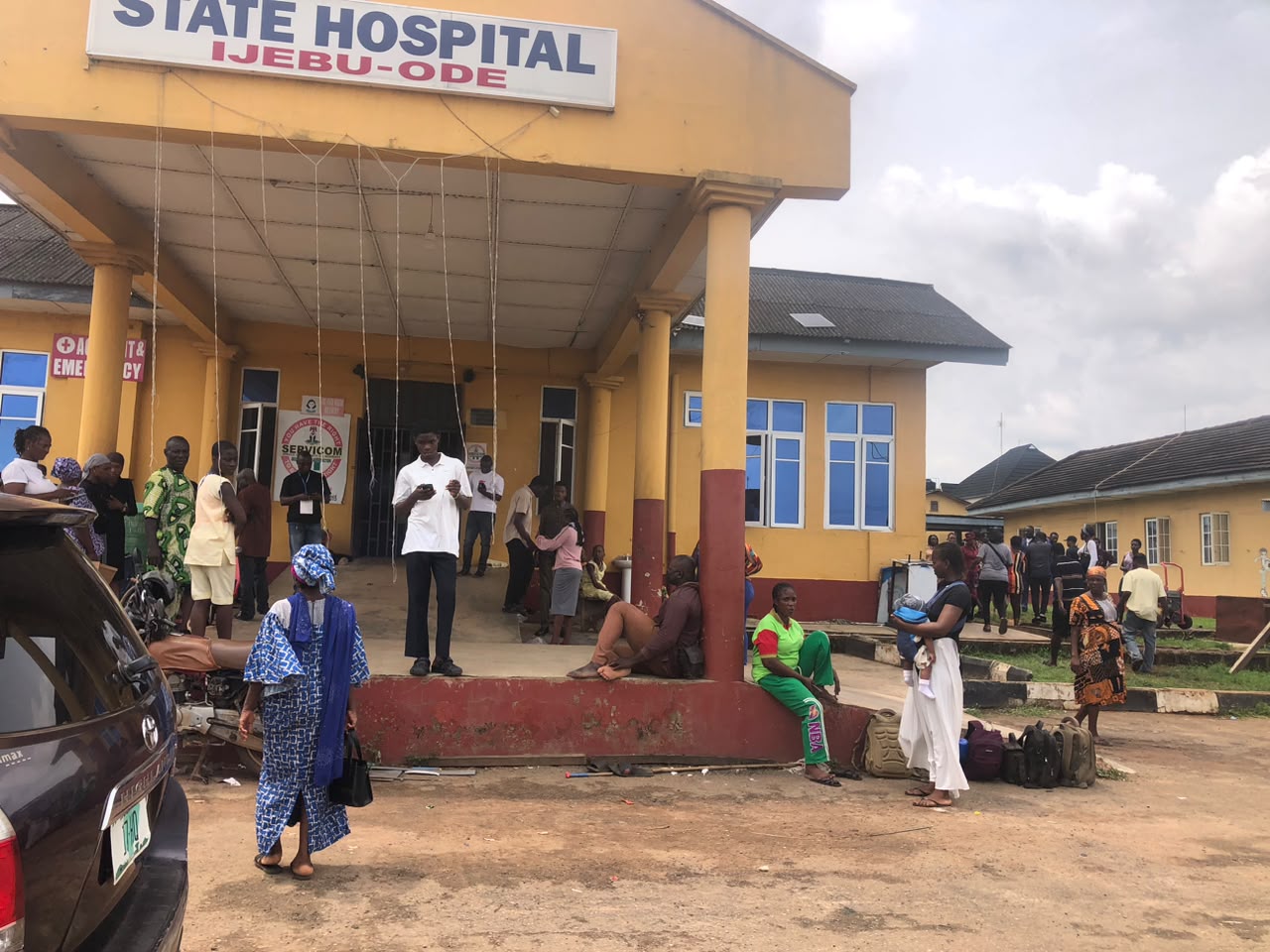
Hundreds of students were hospitalised on Wednesday morning after fresh gaseous emissions hit parts of Ogun State, including Ijebu-Ode, Ijebu-Igbo and Ago-Iwoye.
The incident affected pupils at Anglican Girls Grammar School, Obalende, Ijebu-Ode, and Ijebu-Igbo Girls Grammar School. Several schools in Ago-Iwoye suspended academic activities and sent students home as a precaution.
Kehinde Bello, General Manager of the Ogun State Environmental Protection Agency (OGEPA), visited the affected areas and linked the emissions to underground gas previously recorded in Ijebu-Ode since April 2026. He said the situation was under control and attributed the releases to natural geological and tectonic fault lines, ruling out sabotage or a gas pipeline leak.
Bello assured residents that the state government was working on a lasting solution. He advised anyone exposed to the odour to cover their noses and mouths with wet handkerchiefs.
The recurring emissions have renewed concerns about the safety of students and residents in the affected communities.

Former Delta State Governor Dr. Emmanuel Eweta Uduaghan is dead. He passed away on the morning of Monday, October 19, 2026, at the age of 71, after a period of illness.
A family statement announced his death, describing it as a devastating loss. Uduaghan, a medical doctor, served as Delta State Commissioner for Health (1999–2003) and Secretary to the State Government (2003–2007) before becoming governor from 2007 to 2015. He was known for contributions to infrastructure and human capital development in the state.
Delta State Governor Sheriff Oborevwori has expressed deep sadness over the passing. In a condolence message, he described Uduaghan as a detribalised leader whose service left a lasting mark on Delta State.
Oborevwori extended heartfelt condolences to Uduaghan’s wife, Roli, his children, the Uduaghan family, the Itsekiri nation, and the people of Delta State, praying for the peaceful repose of his soul.
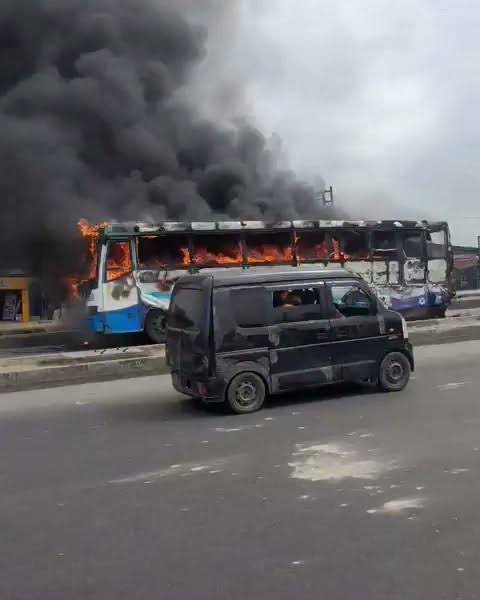
An angry mob has set a Bus Rapid Transit (BRT) bus on fire after it reportedly crushed a commercial motorcyclist to death at Ogolonto Bus Stop along Ikorodu Road in Lagos State.
The incident occurred on Friday, October 16, 2026. Eyewitness accounts and social media reports indicate that the motorcyclist was riding alone along the restricted BRT lane when the collision happened. He died at the scene.
Enraged residents and youths then attacked the bus driver and set the vehicle ablaze. Police officers and officials of the Lagos Neighbourhood Safety Corps (LNSC), who were nearby, intervened promptly and rescued the driver unharmed.
The identity of the deceased motorcyclist and the exact circumstances of the crash had not been officially confirmed at the time of filing this report. It was also unclear whether any arrests had been made in connection with the burning of the bus.


JUST IN: Gas Emissions Hit Ogun Schools, Hundreds of Pupils Hospitalised

Ebola In Nigeria: Symptoms, Spread and How To Protect Yourself

NDC Plans Fresh Congresses To Replace Defector Members

BREAKING: Lagos Govt Declares Today, Thursday Work-Free to Mark 2026 Ìṣẹ̀ṣe Day

Tech Expert, Zuckerberg trains with UFC champions, Adesanya, Alexander

Organ Trafficking: Ekweremadu bags 10 years in UK prison
-
 Business17 hours ago
Currency Words You Should Know
-

 Sports2 days ago
Mbappé wins Onze d’Or award for 2025/26 season
-

 Business17 hours ago
Naira Exchange Rates Wednesday, October 21, 2026
-

 Business16 hours ago
NCC, CBN To Warn Companies By Flagging Fraudulent Phone Numbers
-

 News2 days ago
JUST IN: Ex-Delta Gov Uduaghan Dies at 71, Oborevwori Mourns
-
 Sports2 days ago
Ronaldo Gets 30-Day Suspension For Portugal Camp Walkout
-
 Business16 hours ago
JPMorgan Eyeing Entry Into Nigeria’s Banking Industry
-

 Business16 hours ago
How I steal ATM users’ PINs, defraud them