
Business
NEPZA to go live on RevOP, FTe-R
Oyedele added that a total of 31 MDAs had already gone live on the platform and 21 more agencies are to be captured next, as the government is working assiduously to achieve 100 percent financial probity before the end of the year.

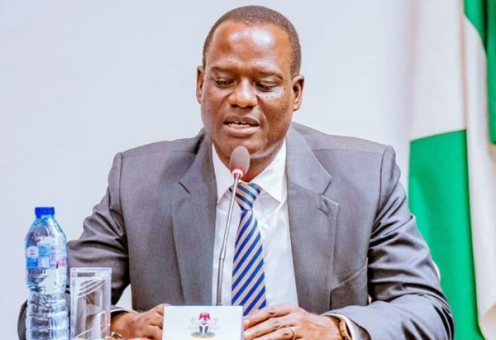
Photo: Minister of Finance, Taiwo Oyedele
The Nigeria Export Processing Zones Authority (NEPZA) and 20 other Federal ministries and agencies (MDAs) have made a firm commitment to integrate and adopt the Revenue Optimisation and Assurance Platform (RevOP) and the Federal Treasury e-Receipt (FTe-R) to improve overall transparency in Federal Government financial operations.
RevOP is a digital, technology-driven system used to track, collect, reconcile, and protect financial revenues. These platforms are typically designed to identify revenue leakages, prevent fraud, automate billing, and ensure that every transaction is visible and traceable in real time.
This revelation came after a meeting between the Minister of Finance and the Chief Executive Officers of 21 affected agencies in Abuja on Tuesday.
The new RevOP was approved by the Federal Executive Council to eliminate day-to-day financial fraud and to advance the financial transparency initiative of President Bola Ahmed Tinubu’s administration.
The Minister, who was represented by the Permanent Secretary of the Ministry of Finance, Muhammed Sanusi, reminded the CEOs that the new revenue monitoring platform was created by the government to comprehensively record its revenue and expenses.
Oyedele added that a total of 31 MDAs had already gone live on the platform and 21 more agencies are to be captured next, as the government is working assiduously to achieve 100 percent financial probity before the end of the year.
Business
Nigerian Exchange Emerges Top In Africa By Dollar Values
By comparison, Zimbabwe Stock Exchange, trails Nigeria when returns are converted into dollars, underscoring how currency movements can significantly alter relative market standings from a global investment perspective.

The Nigerian equities market has emerged Africa’s strongest performer in U.S. dollar terms with a 68.2 percent Year- till-Date (YtD) return in the first seven months of 2026.
The bourse performance between January and July 24, 2026 outpaced other continental stock markets helped by investors confidence on the back of reforms by the Nigerian government.
The strong performance in dollar terms highlights the impact of exchange rate dynamics and renewed foreign portfolio participation.
By comparison, Zimbabwe Stock Exchange, trails Nigeria when returns are converted into dollars, underscoring how currency movements can significantly alter relative market standings from a global investment perspective.
Source: ThisDay
Business
Phillips Consulting Report Ranks Enugu Nigeria’s Fastest Improving State
The report assigned Enugu under Governor Peter Mbah a Momentum Score of +1.15, the highest among the 33 states assessed, placing it ahead of Jigawa, which scored +0.77, and Abia with +0.67 to complete the top three.

• Governor Peter Mbah
Enugu State has been ranked as Nigeria’s fastest-improving state in the 2026 Phillips Consulting State Performance Momentum Index, outperforming 32 other states in the latest assessment of governance and development across the country.
The report assigned Enugu under Governor Peter Mbah a Momentum Score of +1.15, the highest among the 33 states assessed, placing it ahead of Jigawa, which scored +0.77, and Abia with +0.67 to complete the top three.
According to Phillips Consulting, the Momentum Index measures the rate at which states improved relative to the national average during the review period. Positive scores indicate above-average progress, while negative scores reflect slower-than-average improvement.
The report said Enugu’s emergence as the national leader reflected deliberate governance, strong fiscal discipline, and sustained implementation of reforms, while the South-east recorded the strongest overall regional performance among Nigeria’s six geopolitical zones
Business
IMF Warns of AI Financial Shocks Across Institutions, Markets
The recommendation was made by the IMF’s Financial Counsellor and Director of the Monetary and Capital Markets Department, Tobias Adrian, in a blog post outlining how AI is transforming financial markets, lending, supervision and risk management.
The International Monetary Fund (IMF) has called on central banks and financial regulators to strengthen governance frameworks for Artificial Intelligence (AI), warning that the rapid adoption of the technology across the financial system could create new systemic risks if left inadequately supervised.
The recommendation was made by the IMF’s Financial Counsellor and Director of the Monetary and Capital Markets Department, Tobias Adrian, in a blog post outlining how AI is transforming financial markets, lending, supervision and risk management.
Adrian noted that AI is increasingly being used to price financial risks, allocate credit, execute trades and support supervisory activities, creating opportunities for greater efficiency while introducing new vulnerabilities that regulators must address.
He identified three immediate priorities for policymakers: strengthening oversight of AI-driven trading, lending and supervisory technology (SupTech); improving transparency around AI adoption, model dependencies and correlated investment strategies; and expanding international cooperation on cyber security and operational resilience.
According to him, AI has compressed the speed of financial transactions, allowing trading, lending decisions and supervisory analysis to occur in real time. While these innovations have improved market efficiency, they also increase the speed at which financial shocks can spread across institutions and markets.


Ex-Int’l Football Player Bag 24 Years Jail Term for Cocaine Importation

JUST IN: Suspect confesses to stealing Super Falcons’ money at Morocco hotel

TCN Foils Theft Attempt, Recovers Tower Members at Bauchi Substation

Tech Expert, Zuckerberg trains with UFC champions, Adesanya, Alexander

Organ Trafficking: Ekweremadu bags 10 years in UK prison

SAINT OBI: Between his marriage and his death
-

 Business9 hours ago
Naira Exchange Rates To Foreign Currencies Monday, July 27
-
 Business7 hours ago
Phillips Consulting Report Ranks Enugu Nigeria’s Fastest Improving State
-
 Business8 hours ago
IMF Warns of AI Financial Shocks Across Institutions, Markets
-

 Sports8 hours ago
Saudi’s Club Al-Ittihad Table €10.5m Bid For Super Eagles Captain Ndidi
-

 News2 days ago
Zamfara LG Chairman Abduction: Security operatives intensify rescue efforts
-

 Business7 hours ago
Nigerian Exchange Emerges Top In Africa By Dollar Values
-

 Business8 hours ago
Rural Electrification Agency targets 3.7GW solar manufacturing to close Nigeria’s power gap
-
 Politics6 hours ago
Why I committed to one term presidency – Peter Obi