
Business
Supreme Court Overturns Appellate’s Ruling on $2bn Debt Recovery Battles Nestoil /Neconde Energy vs FBNQuest Merchant Bank
In the lead judgment read by Justice Mohammed Baba Idris, the five-member apex court panel held it was a “legal anomaly” to allow lawyers appointed by the Receiver/Manager to also represent the companies, citing a conflict of interest.


The Supreme Court of Nigeria on Friday ruled in favor of Nestoil and Neconde Energy, overturning a previous appellate court decision that disqualified their legal counsel, including Wole Olanipekun (SAN) and Muiz Banire (SAN).
The court upheld the companies’ right to appoint their own lawyers to challenge the ongoing receivership.
The apex court ruled that despite the receivership initiated by a consortium of banks, Nestoil and Neconde retain the right to appoint their own legal counsel to challenge that very receivership.
Nestoil Limited (an oil services firm) and its affiliate Neconde Energy Limited (which holds interests in Oil Mining Lease 42) are embroiled in a multi billion-dollar debt recovery suit filed by lenders, primarily FBNQuest Merchant Bank Limited and First Trustees Limited.
The lenders allege that Nestoil, Neconde, and their promoters (Ernest Azudialu-Obiejesi and Nnenna Azudialu-Obiejesi) owe over $2 billion (plus N430 billion in related liabilities) under financing arrangements, including a Common Terms Agreement.
In the lead judgment read by Justice Mohammed Baba Idris, the five-member apex court panel held it was a “legal anomaly” to allow lawyers appointed by the Receiver/Manager to also represent the companies, citing a conflict of interest.
The judgment affirms that the boards of the companies retain the authority to act in defense of the companies’ interests.
A receiver/manager was appointed over the companies’ assets and interests, leading to disputes over who controls the companies and who can represent them in court.
In January 2026, the Supreme Court sent related appeals back to the Court of Appeal to resolve the preliminary issue of legal representation before proceeding on the merits.
On January 23, 2026, the Court of Appeal disqualified senior advocates Wole Olanipekun (SAN) (for Neconde) and Muiz Banire (SAN) (for Nestoil), ruling that the Ernest Azudialu-Obiejesi-led boards lacked authority to appoint counsel once the receiver/manager was in place. It allowed counsel appointed by the receiver to represent the companies instead.
Nestoil/Neconde and their promoters appealed this disqualification to the Supreme Court (one key appeal being SC/CV/48B/2026 by Neconde).
The apex court had reserved judgment after hearing arguments from a five-member panel.
In Friday’s ruling, the Supreme Court upheld the appeal by Nestoil and Neconde (and their promoters).
It set aside the Court of Appeal’s judgment disqualifying the companies’ chosen counsel.
Their boards (led by Ernest Azudialu-Obiejesi) retain the authority to appoint counsel of their choice to defend their interests, particularly since the validity of the receivership itself is being challenged.
Allowing the receiver/manager’s counsel (appointed by the lenders) to represent the companies would create a serious conflict of interest and undermine fairness and independence in legal representation.
The arrangement involving the lenders (FBNQuest and First Trustees) as appointors of the receiver was deemed fundamentally flawed.
The appointments of Wole Olanipekun (SAN) and Dr. Muiz Banire (SAN) (along with their teams) as counsel for Neconde and Nestoil are restored.
The companies are now free to proceed with their preferred lawyers in the ongoing debt recovery proceedings.
The ruling is procedural (focused solely on representation) and does not decide the merits of the underlying debt claims or receivership.
Those substantive issues will now continue in the lower courts with the restored counsel.








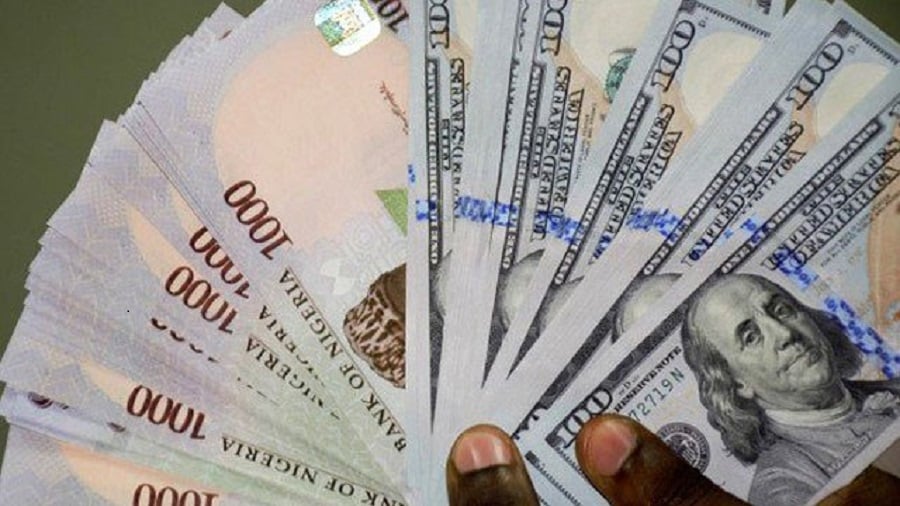
BLACK MARKET RATES
US DOLLAR (USD) Buy ₦1,405 Sell ₦1,410
GREAT BRITISH POUND (GBP) Buy ₦1,880Sell: ₦1,900
EURO (EUR) Buy ₦1,570 Sell ₦1,590
CANADIAN DOLLAR (CAD) Buy ₦1,020 Sell ₦1,080
SOUTH AFRICAN RAND (ZAR) Buy ₦75 Sell ₦90
UAE DIRHAM Buy ₦350 Sell ₦370 CHINESE YUAN Buy ₦190 Sell ₦205
GHANA CEDI (GHS) Buy ₦95 Sell ₦110
WEST AFRICAN CFA Buy ₦2, 300 Sell ₦2, 400
CENTRAL AFRICAN CFA Buy ₦2,150 Sell 2,250
AUSTRALIAN DOLLAR Buy ₦800 Sell ₦900
Commercial Bank Exchange Rates
Fidelity Bank
Currency Sell
USD / NGN ₦1375.00
GBP / NGN ₦1863.40
EUR / NGN ₦1596.10
Official CBN Exchange Rates
US DOLLAR (USD) ₦1,362. 21
GREAT BRITISH POUND (GBP) ₦1,814.05
EURO (EUR) ₦1,550.19
SWISS FRANC (CHF) ₦1,665.29
JAPANESE YEN (JPN) ₦8.32
CHINESE YUAN (CNY) ₦201. 32
WEST AFRICAN CFA (XOF) ₦2. 39
WEST AFRICAN UNIT ACCOUNT (WAUA) ₦1,867.90
SAUDI RIYAL (SAR) ₦362.87
SOUTH AFRICAN RAND (ZAR) ₦81.28
Business
IEA Cushions Global Oil Supply By 290 Million Barrels March -July
Ultimately, a full and unconditional reopening of the Strait of Hormuz remains essential to avoid a further deterioration in global energy security.

Image credit : IEA Oil Market Report
The International Energy Agency (IEA) said that its member countries had so far released 290 million barrels of oil available to the market.
IEA Executive Director, Dr Fatih Birol confirmed,in a statement posted on the website, Monday.
” Since the announcement on 11 March of the IEA collective action to make 400 million barrels of oil available to the market, around 290 million barrels have been released by IEA Member countries, with more continuing to flow to the market.”
Birol said that IEA countries still hold a substantial volume of emergency stocks in reserve, including over 1 billion barrels of government-controlled stocks.
He emphasised that, for the moment, crude oil and gas markets have continued to benefit from several cushioning factors.
These include significant supplies from Gulf producers – notably through major efforts by Saudi Arabia and the United Arab Emirates – that have continued to reach global markets via various routes. In addition, oil producers in other regions – notably the United States, Brazil, Venezuela and Kazakhstan – have increased exports, helping offset some of the supply losses.
On the demand side, China has played an important role in stabilising markets by reducing its crude oil imports by nearly 50% compared with pre-war levels. is closely monitoring the situation in oil markets following recent developments in the conflict in the Middle East – with the escalation in hostilities affecting the Strait of Hormuz and energy infrastructure in the region increasing security of supply concerns and casting greater uncertainty over the market outlook.
Threats to the Bab el-Mandeb Strait, an increasingly important alternative shipping route for bypassing Hormuz, are adding to those concerns.
Dr Birol emphasised that there is no room for complacency on oil security amid the escalation in hostilities and drawing down of available commercial inventories.
Refinery activity and product supplies have not picked up as much as crude deliveries, meaning that markets for refined oil products, including diesel and gasoline, are considerably tighter than those for crude.
Ultimately, a full and unconditional reopening of the Strait of Hormuz remains essential to avoid a further deterioration in global energy security.
For natural gas, a large majority of the liquefied natural gas (LNG) supply lost due to the Hormuz disruptions has been offset by LNG flows from other markets, led by the United States.
But further delays in resuming Gulf exports risk keeping global LNG markets tighter for longer, Dr Birol warned.
Business
Nigerian Exchange Emerges Top In Africa By Dollar Values
By comparison, Zimbabwe Stock Exchange, trails Nigeria when returns are converted into dollars, underscoring how currency movements can significantly alter relative market standings from a global investment perspective.

The Nigerian equities market has emerged Africa’s strongest performer in U.S. dollar terms with a 68.2 percent Year- till-Date (YtD) return in the first seven months of 2026.
The bourse performance between January and July 24, 2026 outpaced other continental stock markets helped by investors confidence on the back of reforms by the Nigerian government.
The strong performance in dollar terms highlights the impact of exchange rate dynamics and renewed foreign portfolio participation.
By comparison, Zimbabwe Stock Exchange, trails Nigeria when returns are converted into dollars, underscoring how currency movements can significantly alter relative market standings from a global investment perspective.
Source: ThisDay


Real Madrid generate €1.2bn revenue despite failing to win a trophy

Sports betting industry spending on US midterm elections surpasses $72 million

FIFA plans to establish new $20 billion subsidiary, UEFA not happy

Tech Expert, Zuckerberg trains with UFC champions, Adesanya, Alexander

Organ Trafficking: Ekweremadu bags 10 years in UK prison

SAINT OBI: Between his marriage and his death
-

 Business2 days ago
Naira Exchange Rates To Foreign Currencies Monday, July 27
-

 Sports2 days ago
Saudi’s Club Al-Ittihad Table €10.5m Bid For Super Eagles Captain Ndidi
-

 Business2 days ago
Phillips Consulting Report Ranks Enugu Nigeria’s Fastest Improving State
-

 Business2 days ago
Rural Electrification Agency targets 3.7GW solar manufacturing to close Nigeria’s power gap
-
 Business2 days ago
IMF Warns of AI Financial Shocks Across Institutions, Markets
-

 Business2 days ago
Nigerian Exchange Emerges Top In Africa By Dollar Values
-

 Politics2 days ago
Why I committed to one term presidency – Peter Obi
-

 International2 days ago
Spain and France wildfires force more than 300,000 to flee as Macron calls crisis meeting