Business
Nigerian Govt Suspends Single Use Plastic Tax of 10%


By Ocheneyi Alli
The Nigerian government , today, announced the suspension of its green tax of 10 percent on Single Use Plastics (SUPs), including plastic containers and bottles.
President Bola Ahmed Tinubu, gave the directives to the Ministry of Finance, and the Customs authority, after he had signed four Executive Orders which includes the suspension of the 10 percent Single Use Plastics tax, five percent excise tax on telecommunication services; some imported vehicles as well as the excise duties escalation on locally manufactured products.
Also, President Tinubu shifted the commencement date of Finance Act 2022 from May 23, 2023 to September 1, 2023.
He said that the suspension was to ensure adherence to the 90 days minimum advance notice for tax changes as contained in the 2017 National Tax Policy.
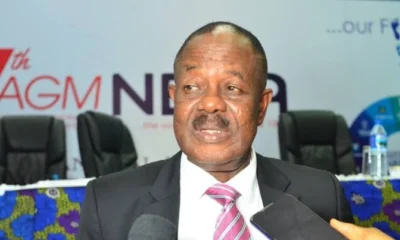
Ohibaba.com, reported that two months ago, the Manufacturers Association of Nigeria ( MAN) kicked against the surcharge of 10 percent on Single Use Plastic under HS Code 3919.10.00.00 and 3919.90.00.00 as well as Headings – 39.20; 39.21 and 39.23 (Plastic Containers, Films and Bags).
Otunba Francis Meshioye, President of MAN, said that the tax on Single Use Plastics was ill-timed and hasty in view of the fact that the government, through the Federal Ministry of Environment, is currently working towards instituting a Plastic Recycle Waste Management Policy with technical assistance from the United Nations Industrial Organisation (UNIDO) along with support from the Japanese government.
” The project is to institute a long-term solution to manage the menace of plastic wastes and assist the affected industries to retrofit, thereby reaching the threshold of the United Nations goal of green environment as being espoused by the series of the UN organized Conference of Parties (COP),” he said .
Global Ban On Single Use Plastics
On the global scene, the OECD estimated that global plastic pollution could nearly triple to 1.0 billion metric tons by 2060.
And while they estimate that the share of plastic that escapes waste management systems will fall from 22% (2019) to 17% (2060), that’s still a lot of plastic to deal with.
Also, the tide is turning against single-use plastics as many governments have banned the it.
Bangladesh was the first country to ban plastic bags in 2002, while the U.S. banned microbeads in personal care products in 2015, followed by the UK (2018), Canada (2018), and then China (2020-2022).








Business
CBN Pledges Policy Consistency Into 2027
The single-digit inflation target remains the anchor.


The Central Bank of Nigeria says that it will keep a consistent monetary policy direction in 2027, as it pursues the single-digit inflation target.
The stance puts policy continuity at the centre of the CBN’s inflation fight.
The bank is tying its inflation goal to consistency in monetary policy rather than a change in direction.
The single-digit inflation target remains the anchor.
The CBN’s message is that the target still stands and that policy will stay consistent in 2027.
₦1450 DOLLAR (USD)
₦1875POUND (GBP)
₦1575EURO (EUR)
₦950 CANADIAN DOLLAR (CAD)
₦70 SOUTH AFRICAN RAND (ZAR)
₦350 UAE DIRHAM (AED)
₦190 CHINESE YUAN (CNY)
₦100 GHANAIAN CEDI (GHS)
₦2240 WEST AFRICAN CFA F.(XOF)
₦2180 CENTRAL AFRICAN CFA F.(XAF)
₦820 AUSTRALIAN DOLLAR (AUD)
Business
MAN Seeks Tobacco Exclusion From NAFDAC Bills Over Regulatory Overlap
The association further maintained that the existing regulatory framework, administered through the Federal Ministry of Health and Social Welfare and the Federal Ministry of Industry, Trade and Investment, already provides for the regulation of the legal tobacco sector.
The Manufacturers Association of Nigeria (MAN) has called on the National Assembly for explicit tobacco products exclusion from two proposed bills seeking to repeal and reenact the laws establishing the National Agency for Food and Drug Administration and Control (NAFDAC), warning that their passage could create overlapping regulatory responsibilities and increase compliance costs for manufacturers.
The bills are the National Agency for Food and Drug Administration and Control (Repeal and Enactment) Bill, 2026 (SB. 940) and the Food, Medical Products and Related Products (Registration, Etc.) Bill, 2026 (SB. 952).
The Director-General of MAN, Segun Ajayi-Kadir, therefore urged the lawmakers to remove all references to tobacco from both bills, including relevant definitions, schedules and consequential provisions.
It also called for an explicit exclusion clause to prevent tobacco products from subsequently being brought under the proposed legislation through administrative instruments.
According to the association, such a provision would preserve clarity in institutional mandates and regulatory responsibilities while preventing unnecessary regulatory overlaps.
MAN maintained that regulatory reforms should strengthen public-health protection, address demonstrable regulatory gaps and improve compliance without creating additional administrative burdens for legitimate businesses.
It argued that clear institutional mandates, proportionate enforcement and effective inter-agency coordination were essential to achieving these objectives while supporting manufacturing, employment and investment.
The association further maintained that the existing regulatory framework, administered through the Federal Ministry of Health and Social Welfare and the Federal Ministry of Industry, Trade and Investment, already provides for the regulation of the legal tobacco sector.
MAN reaffirmed its readiness to engage constructively with the National Assembly and relevant government institutions, particularly the two federal ministries, to ensure that the proposed legislation delivers effective regulation without unnecessary duplication, conflicting institutional mandates or regulatory uncertainty.


Senator Idiat Oluranti Adebule Dies at 56

JUST IN: Obi-Kwankwaso Movement Suspends DG with Immediate Effect

CBN Pledges Policy Consistency Into 2027

BREAKING: Lagos Govt Declares Today, Thursday Work-Free to Mark 2026 Ìṣẹ̀ṣe Day

Tech Expert, Zuckerberg trains with UFC champions, Adesanya, Alexander