
Business
Cardoso warns excess cash, 2027 election threaten Nigeria’s economic gains
Cardoso expressed the concern during the National Economic Council (NEC) Conference 2026 at the Presidential Villa, themed: “Delivering Inclusive Growth and Sustainable National Development: The Renewed Hope National Development Plan,” Cardoso addressed the “Fiscal and Monetary Outlook 2026–2030: Priorities and Imperatives” panel.

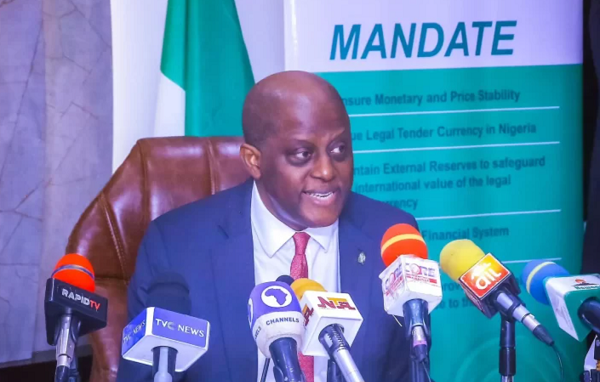
Central Bank of Nigeria (CBN) Governor, Olayemi Cardoso, has warned that excess liquidity and the 2027 election cycle could threaten Nigeria’s hard-won economic stability, urging careful management to protect reforms that have strengthened the economy.
Cardoso expressed the concern during the National Economic Council (NEC) Conference 2026 at the Presidential Villa, themed: “Delivering Inclusive Growth and Sustainable National Development: The Renewed Hope National Development Plan,” Cardoso addressed the “Fiscal and Monetary Outlook 2026–2030: Priorities and Imperatives” panel.
Cardoso said: “The cost of loose monetary policy accessibility, the cost of having to soak up all that liquidity was a problem.
Next slide and persistent inflation. Inflation has served the 34.6% dysfunctional FX market.
You all remember, there’s a huge backlog of over $7 billion and that the parallel market premium exceeded 16% loss of investor confidence.
Everybody took flights, nobody went to hold Naira, and it was a very desperate situation.h
Then, of course, there was direct intervention by the Central Bank, which reached an unprecedented level of 10.93 trillion Naira, which honestly was a huge problem.”
He noted that these interventions “provided short-term support, which many people would argue, but created long-term mandatory distortions, excess liquidity and increased cost of liquidity management.”
Cardoso outlined the three-pillar response that restored stability.
First, “a decisive monetary policy on V set NPR increased by a very aggressive 875 basis points to decisively tackle inflation. And of course, we move back to what we call orthodox monetary policy.
We phase out all quasi-fiscal development finance interventions to focus squarely on price stability, because without that, you have no growth, you have no investment, you have no growth.”
Second, he stressed the importance of transparency and market-driven reforms: “Engineering a market-driven ethics regime, which we’ve been talking about for a long time, unification and price discovery, clearing the FX backlog and institutionalised transparency, which, to my mind, is a very, very key ingredient of managing the FX market.”
Third, Cardoso highlighted fiscal coordination: “Enhanced fiscal coordination, adhering to statutory limits of deficit financing, good ways and means advances to the government, and we had to have a sharp decline in that, from 2.65% in 2023 to 0.69% in 2024.”
The results, he said, are evident across key economic indicators:
“Sustained GDP growth of 3.98%, strong current accounts, for a very long time we haven’t had that $3.42 billion surplus recorded in the third quarter of 2020, by a significant improvement, significant maturation, inflation at 15.15%, banking sector soundness, and growing external reserves of $49 billion as of February 5, 2026.”








BLACK MARKET RATES
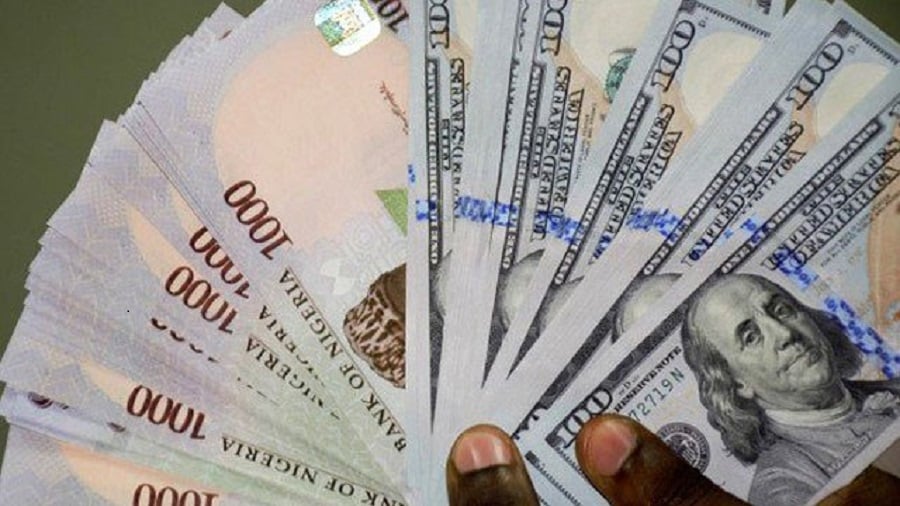
US DOLLAR (USD) Buy ₦1,422 Sell ₦1,428
GREAT BRITISH POUND (GBP) Buy ₦1,885 Sell: ₦1,910
EURO (EUR) Buy ₦1,590 Sell ₦1,610
CANADIAN DOLLAR (CAD) Buy ₦1,020 Sell ₦1,080
SOUTH AFRICAN RAND (ZAR) Buy ₦75 Sell ₦90
UAE DIRHAM Buy ₦350 Sell ₦370 CHINESE YUAN Buy ₦190 Sell ₦205
GHANA CEDI (GHS) Buy ₦95 Sell ₦110
WEST AFRICAN CFA Buy ₦2, 300 Sell ₦2, 400
CENTRAL AFRICAN CFA Buy ₦2,150 Sell 2,250
AUSTRALIAN DOLLAR Buy ₦800 Sell ₦900
Commercial Bank Exchange Rates
Fidelity Bank
Currency Sell
USD / NGN ₦1370.00
GBP / NGN ₦1869.7
8EUR / NGN ₦1604.54
Sterling Bank
Currency Buy Sell
USD / NGN ₦1350.00 ₦1370.00
GBP / NGN ₦1803.95 ₦1871.77
EUR / NGN ₦1537.93 ₦1601.81
ZAR / NGN ₦82.28 ₦86.99
Official CBN Exchange Rates
US DOLLAR (USD) ₦1,364.90
GREAT BRITISH POUND (GBP) ₦1,842.61
EURO (EUR) ₦1,575..50
SWISS FRANC (CHF) ₦1,684.02
JAPANESE YEN (JPN) ₦8.57
CHINESE YUAN (CNY) ₦202.34
WEST AFRICAN CFA (XOF) ₦2. 40
WEST AFRICAN UNIT ACCOUNT (WAUA) ₦1,858.53SAUDI RIYAL (SAR) ₦363..60
SOUTH AFRICAN RAND (ZAR) ₦84.31
BLACK MARKET RATES
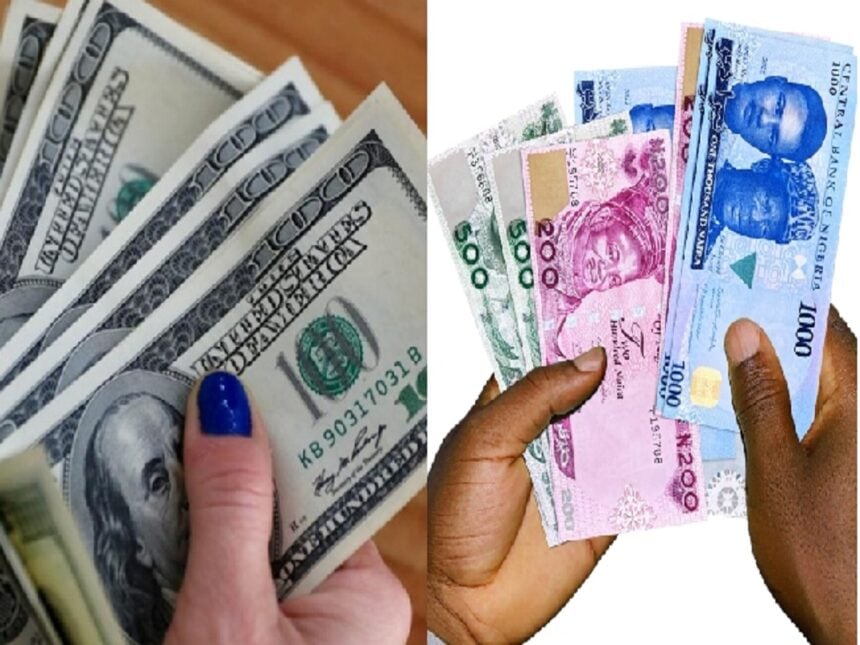
US Dollar (USD) Buy ₦1,423 Sell ₦1,428
Great British Pound (GBP) Buy ₦1,890 Sell: ₦1,910
EURO (EUR) Buy ₦1,600 Sell ₦1,620
Canadian Dollar (CAD) Buy ₦1,020 Sell ₦1,080
South African Rand (ZAR) Buy ₦75 Sell ₦90
UAE Dirham Buy ₦350 Sell ₦370
Chinese Yuan Buy ₦190 Sell ₦205
Ghana Cedi (GHS) Buy ₦95 Sell ₦110
West African CFA Buy ₦2, 300 Sell ₦2, 400
Central African CFA Buy ₦2,150 Sell 2,250
Australian Dollar Buy ₦800 Sell ₦900
Commercial Bank Exchange Rates
Fidelity Bank
Currency Sell
USD / NGN ₦1370.00
GBP / NGN ₦1869.78
EUR / NGN ₦1604.54
Sterling Bank
Currency Buy Sell
USD / NGN₦1350.00 ₦1370.00
GBP / NGN ₦1800.68 ₦1868.46
EUR / NGN ₦1539.16 ₦1603.07
ZAR / NGN ₦82.44 ₦87.16
Official CBN Exchange Rates
US Dollar (USD) ₦1,360. 14
Great British Pound (GBP) ₦1,838.50
EURO (EUR) ₦1,571. 10
Swiss Franc (CHF) ₦1,680.85
Japanese Yen (JPN) ₦8.56
Chinese Yuan (CNY) ₦201.61
West African CFA (XOF) ₦2. 40
West African Union Account (WAUA) ₦1,864.27
Saudi Riyal (SAR) ₦362.22
South African Rand (ZAR) ₦84.07
Business
NAICOM Revokes Nigeria Reinsurance’s Licence, Freezes Operations Over Capital Shortfall
Banire directed banks, financial institutions, policyholders and members of the public not to honour any instruction relating to the company except those issued by him or persons expressly authorised by him.
The National Insurance Commission (NAICOM) has revoked the operating licence of Nigeria Reinsurance Corporation for failing to meet the statutory Minimum Capital Requirement (MCR) and appointed Senior Advocate of Nigeria, Dr. Muiz Banire, SAN, as Receiver/Provisional Liquidator to wind up the company’s affairs.
The appointment took effect on August 3, 2026, following the cancellation of the company’s certificate of registration by the insurance regulator.
In a public notice dated August 4, 2026, Banire said NAICOM appointed him, in exercise of its statutory powers, to oversee the receivership and liquidation of Nigeria Reinsurance Corporation (RR-002).
In the notice, the company’s licence was revoked after it failed to comply with the prescribed Minimum Capital Requirement applicable to its category of licence within the stipulated compliance period, in accordance with the Nigerian Insurance Industry Reform Act (NIIRA) 2025 and other extant laws, regulations and guidelines.
Banire said his appointment authorises him to immediately trace, recover, secure and take possession of the company’s assets, collate and settle its liabilities in line with the NIIRA 2025, liaise with NAICOM on matters relating to the liquidation, and submit periodic reports to the Commission.
Banire directed banks, financial institutions, policyholders and members of the public not to honour any instruction relating to the company except those issued by him or persons expressly authorised by him.
Source: ThisDay


Millions Rushing To Watch Solar Eclipse in Europe

NBA’s Los Angeles Lakers to be sold for $12.5bn – Report

Osun Polls: INEC Includes SDP Candidate, Deputy On Ballot Papers

Tech Expert, Zuckerberg trains with UFC champions, Adesanya, Alexander

Organ Trafficking: Ekweremadu bags 10 years in UK prison

SAINT OBI: Between his marriage and his death
-
 News3 days ago
Tinubu Flags Off Eko, Marine Bridge Repairs
-

 Crime2 days ago
Governor Mbah Commends Security Forces Over Arrest Of Affa Church Kidnappers
-

 Crime3 days ago
Troops Rescue 33 Hostages in Zamfara (Photos)
-
 International2 days ago
Trump cancels 175,000 visas for violations of public safety
-

 News3 days ago
147 Lagos Structures to Face Impact From Coastal Highway
-

 Crime2 days ago
Police Rescue 16 Kidnapped Victims in Kogi, Neutralise Armed Bandits (Video)
-
 Business2 days ago
Naira Exchange Rates Tuesday, August 11
-

 Crime2 days ago
UK court jails Congolese for murder of Nigerian