
Business
Financial Inclusion: FG Engages ICAN, CIBN and four other Professional Bodies to Train 10 million Nigerians
Shettima noted that the nation “cannot build a one-trillion-dollar economy on weak skills, fragmented standards, or disconnected professional ecosystems.

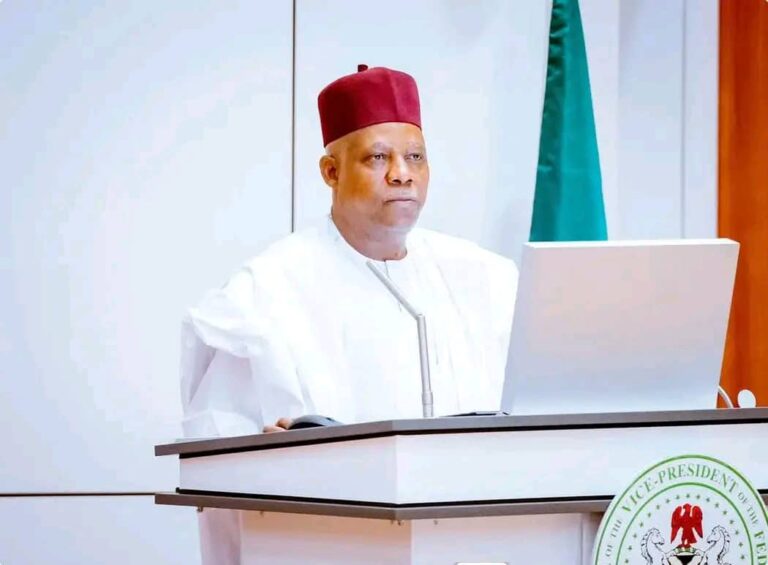
• VP Shettima
The Federal Government, through the Office of the Vice President, has launched a nationwide training program to educate 10 million Nigerians on financial inclusion and literacy.
The training being implemented through the Presidential Committee on Economic & Financial Inclusion (PreCEFI), chaired by Vice President Kashim Shettima, is designed to equip Nigerians, particularly women and youths, with essential financial skills, investment knowledge, and digital competencies for sustainable wealth creation.
The Office of the Vice President, through the PreCEFI, on Monday, signed the Memorandum of Understanding (MOU) with the Institute of Chartered Accountants of Nigeria (ICAN); Chartered Institute of Bankers of Nigeria (CIBN); Chartered Institute of Stockbrokers (CIS); National Institute of Credit Administration (NICA); Chartered Risk Management Institute (CRMI) and Nigeria Institute of Innovation and Entrepreneurship (NIIE.
They are to jointly design training programmes, certification pathways, digital skills initiatives, and mentorship platforms that would strengthen Nigeria’s financial and enterprise workforce.
Vice President Shettima, commented: “The training is a strategic national investment in capacity as infrastructure which is the human, institutional, and ethical foundations upon which inclusive growth must rest.
Shettima noted that the Aso Accord on Economic and Financial Inclusion, which the PreCEFI is mandated to implement, recognises the fact that “financial inclusion is not achieved by access alone, but by competence, trust, and capability.”
Shettima noted that the nation “cannot build a one-trillion-dollar economy on weak skills, fragmented standards, or disconnected professional ecosystems.
VP Shettima pointed out that while capacity building is financial inclusion, “without accountants who understand MSME formalisation, credit administrators who can assess risk beyond collateral, bankers who embed consumer protection, risk professionals who anticipate digital threats, and innovators who translate ideas into enterprises, inclusion remains a slogan rather than a system.”
Maintaining that the training programme must prioritise young Nigerians and women, the VP said,
“Importantly, this collaboration prioritises women and youth inclusion and digital transformation, recognising that Nigeria’s demographic dividend will only materialise if young people are equipped with relevant skills and ethical grounding for a fast-evolving digital economy.”
He charged the PreCEFI and the professional bodies not to treat the MoU as a mere document, but as a living platform for execution.
Earlier, the President of the Institute of Chartered Accountants of Nigeria (ICAN), Mallam Haruna Nma Yahaya, applauded the administration of President Bola Ahmed Tinubu for its bold economic reforms that has culminated in the flag off of the financial inclusion free training programme for 10 million women and youths in Nigeria.
He said the decision to embark on the project was prompted by visible improvements in the economy as a result of the gains of the Federal Government’s policy reforms.
Yahaya assured the Vice President of their professional support in the realisation of set objectives, describing their involvement in the project as an institutional honour.
The CEO of WAWU Africa – technical partners in the programme, Mr Emmanuel Lennox, assured of the company’s readiness to deliver on the project, particularly in providing the digital platform and overall enabling environment for its success.
The Technical Adviser to the President on Economic and Financial Inclusion, Dr Nurudeen Abubakar Zauro, emphasised why the training of 10 million Nigerians on financial inclusion had become necessary.
“Exclusion is not only by lack of access, but by limited skills, weak institutional capacity, and insufficient professional support.
Consequently, financial inclusion is not achieved by infrastructure alone; it is achieved when people and institutions are equipped to use that infrastructure responsibly, productively, and sustainably,” he said
The high point of the event was the signing of the MoU for the capacity building programme by the Federal Government and the six professional bodies.
Business
History of Naira Revaluation and Devaluation (1973–2026) (Part 1)
Why was the naira devalued?
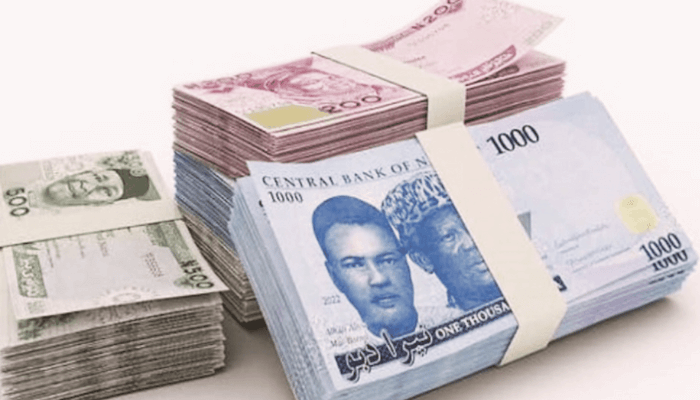
The history of the Nigerian naira is marked by two major developments: periods when the currency gained value or was officially strengthened, and prolonged periods when it lost value against major international currencies, particularly the US dollar.
Since its introduction in 1973, the naira has undergone several exchange-rate policy changes, including fixed exchange rates, currency devaluations, foreign-exchange market liberalisation, attempts to unify exchange rates and market-driven depreciation.
The Central Bank of Nigeria (CBN) has played a central role in managing these changes.
- Introduction of the Naira in 1973
Nigeria introduced the naira on January 1, 1973, replacing the Nigerian pound.
The conversion rate was:
£1 Nigerian pound = ₦2.
₦1 = 10 shillings under the old currency system.
₦1 = 100 kobo.
The new currency was introduced during a period of expanding oil revenues and economic growth.
Nigeria initially maintained a relatively strong, managed exchange rate, supported by foreign-exchange controls and the country’s oil earnings.
The introduction of the naira was a currency change, not a devaluation.- The 1970s: A Relatively Strong Naira
During the 1970s, rising oil revenues strengthened Nigeria’s foreign-exchange position.
The government maintained a controlled exchange-rate system, initially linking the naira to the US dollar before moving to a basket of currencies representing major trading partners in 1978.
The oil boom provided foreign exchange for imports, infrastructure and public expenditure.
However, Nigeria’s dependence on crude oil revenues left the economy vulnerable to fluctuations in international oil prices.
Key development: The naira benefited from a relatively strong external position, although its exchange rate was managed by the authorities rather than determined by an unrestricted market.- The Early 1980s: Mounting Pressure on the Naira
The economic situation deteriorated in the early 1980s as oil revenues weakened and foreign-exchange shortages intensified.
Nigeria faced several economic challenges:
• Declining oil receipts.
• Rising import bills.
• Pressure on foreign reserves.
• Growing external debt and trade arrears.
• Increasing demand for foreign currency.
The government maintained controls on foreign exchange, but the official rate became increasingly disconnected from the rate at which foreign currency could be obtained in the parallel market.
This created pressure for exchange-rate reform.
The crisis set the stage for the introduction of the Structural Adjustment Programme (SAP) in 1986.- 1986: Major Naira Devaluation Under SAP
September 26, 1986, marked a turning point in the history of the naira.
Under the military government of General Ibrahim Babangida, Nigeria introduced the Second-Tier Foreign Exchange Market (SFEM) as part of the Structural Adjustment Programme.
The objective was to allow market forces to play a greater role in determining the naira’s exchange rate.
According to an International Monetary Fund account, the naira’s value was discounted by approximately 66 per cent at the inaugural SFEM auction.
The exchange rate moved from about ₦1.60 per US dollar under the previous administered rate to approximately ₦4.60 per dollar at the initial auction.
Why was the naira devalued?
The policy was intended to:
•Reduce the overvaluation of the naira.
•Improve the allocation of scarce foreign exchange.
•Encourage non-oil exports.
•Improve the competitiveness of Nigerian products.
•Reduce distortions in the foreign-exchange market.
However, the weaker currency also increased the naira cost of imported goods and production inputs.
The 1986 reform began a prolonged period of exchange-rate adjustments.- …To be continued
Business
Obasanjo Accuses Tinubu : “You Made Every Nigerian Poor By 300% Naira Devaluation”
The former President also rejected the argument that Tinubu needed more time to complete his reforms, saying he did not see the economy improving.
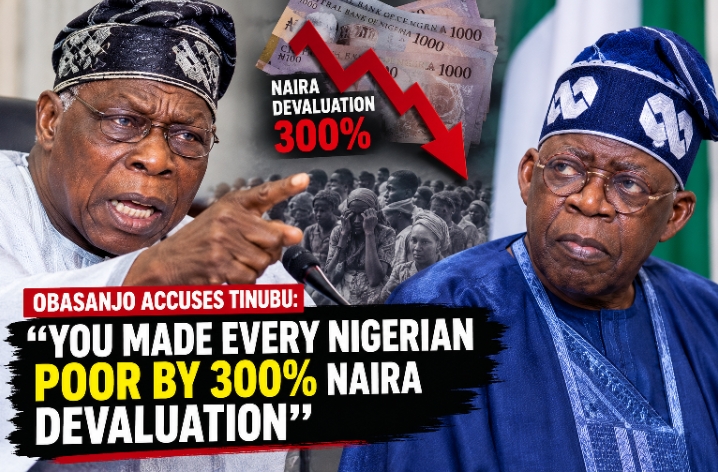
Image: AI generated
Former President Olusegun Obasanjo has accused President Bola Tinubu of making every Nigerian poor by 300 per cent through the devaluation of the naira.
Obasanjo spoke on Wednesday during the Financial Times Africa Summit 2026 in London, United Kingdom.
He said that the naira lost its value overnight due to economic reforms undertaken by the Tinubu administration in 2023.
“We do not live in isolation as a country. We interact with the rest of the world. And overnight, you devalue the currency by 300 per cent. The naira went from N500 to a dollar to N1,500 to a dollar. What that meant was that every Nigerian is made poor by 300 per cent.”
Obasanjo said that had made Nigeria “the poverty capital of the world,” which he said meant the country had the largest number of poor people in the world.
“You cannot say to me that that is good for Nigeria. You cannot say to me that that is good for us in any sense,” he noted.
The former President also rejected the argument that Tinubu needed more time to complete his reforms, saying he did not see the economy improving.
Business
CBN Licences Abbey Bank to Start Full Commercial Banking in November 2026
Adewumi said: “The year 2026 represents a defining moment in the history of Abbey. Our approval to transition to commercial banking is a testament to the work invested in building this institution and the confidence placed in us by our regulators, shareholders, customers and employees.”

The Central Bank of Nigeria (CBN) has approved Abbey Bank Plc to begin operation as a regional commercial bank, effectively from November 2026.
The licence opens retail banking, small and medium-sized enterprise lending, trade finance and corporate banking to the lender.
Abbey Bank had operated as a mortgage bank for more than three decades.
The commercial banking licence was issued in June 2026 after the bank completed its capital-raising process.
Managing Director and Chief Executive Officer Mobolaji Adewumi said the bank began internal discussions on the transition in 2023 and submitted a formal application in 2024.
He said regulatory approval arrived in October 2024.
Adewumi said: “The year 2026 represents a defining moment in the history of Abbey. Our approval to transition to commercial banking is a testament to the work invested in building this institution and the confidence placed in us by our regulators, shareholders, customers and employees.”


History of Naira Revaluation and Devaluation (1973–2026) (Part 1)

JUST IN: 1 Dead, 3 Rescued in Fadeyi Building Collapse, Lagos

Obasanjo Accuses Tinubu : “You Made Every Nigerian Poor By 300% Naira Devaluation”

BREAKING: Lagos Govt Declares Today, Thursday Work-Free to Mark 2026 Ìṣẹ̀ṣe Day

Tech Expert, Zuckerberg trains with UFC champions, Adesanya, Alexander

Organ Trafficking: Ekweremadu bags 10 years in UK prison
-
 Business3 days ago
Currency Words You Should Know
-

 Business3 days ago
Naira Exchange Rates Wednesday, October 21, 2026
-

 Business3 days ago
NCC, CBN To Warn Companies By Flagging Fraudulent Phone Numbers
-
 Business3 days ago
JPMorgan Eyeing Entry Into Nigeria’s Banking Industry
-

 Business16 hours ago
Naira To Dollar, Pound, Euro… Today October 23
-

 Business3 days ago
RMRDC Taking 2027 Africa Raw Materials Summit To Kenya
-

 Health3 days ago
Ebola In Nigeria: Symptoms, Spread and How To Protect Yourself
-

 Health2 days ago
Ebola Outbreak: Don’t Panic, FG Assures Nigerians