
News
JUST IN: ASUU rejects Core-Curriculum designed by NUC


The Core Curriculum Minimum Academic Standards prepared by the National Universities Commission has been rejected by the Academic Staff Union of Universities, saying that the curriculum was nightmarish, a threat to quality university education, and an erosion of powers of the university Senate in Nigerian universities.
A statement signed by the national president of ASUU, Prof. Emmanuel Osodeke, on Friday, explained that it was inexplicable that NUC pre-packaged 70 per cent CCMAS contents were being imposed on the Nigerian University System, adding that university Senates, who are statutorily responsible for academic programme development, were left to work on only 30 per cent.
It stressed that there were growing concerns about the numerous shortcomings and gross inadequacies of the CCMAS documents.
“ASUU is not unaware that setting academic standards and assuring quality in the NUS is within the remit of the NUC. Section 10(1) of the Education (National Minimum Standards and Establishment of Institutions) Act, Cap E3, Laws of the Federation of Nigeria 2004, enjoins the NUC to lay down the minimum standards for all universities and other degree awarding institutions in the Federation and conduct the accreditation of their degrees and other academic awards.
“However, the process of generating the standard is as important (if not more important) than what is produced as “minimum standards”.
“In this instance, the NUC has recently, through some hazy procedures, churned out CCMAS documents containing 70% curricular contents in 17 academic fields with little or no input from the universities. The academic disciplines covered are (i) Administration and Management, (ii) Agriculture, (iii) Allied Health Sciences, (iv) Architecture, (v) Arts, (vi) Basic Medical Sciences, (vii) Computing, (viii) Communication and Media Studies, (ix) Education, (x) Engineering and Technology, (xi) Environmental Sciences, (xii) Law, (xiii) Medicine and Dentistry, (xiv) Pharmaceutical Science, (xv) Sciences, (xvi) Social Sciences, and (xvii) Veterinary Medicine,” it read partly.
It stressed that many university administrators, though dissatisfied, were shying away from making public comments on CCMAS.
The statement revealed that, however, some university Senates did not hide their displeasure with the ongoing efforts to impose CCMAS on Nigerian universities by the NUC.
It read, “The CCMAS is a nightmarish model of curriculum reengineering. It is an aberration to the Nigerian University System. The CCMAS documents are flawed both in process and in content. There is no basis for the 70% “untouchable CCMAS,” which cannot stand the test of critical scrutiny of university Senates.”
However, it suggested that “NUC should encourage universities, as currently being done by the University of Ibadan, to propose innovations for the review of their programmes. Proposals from across universities should then be sieved and synthesised by more competent expert teams to review the existing BMAS documents and/or create new ones as appropriate.
“The difference here is the bottom-up approach, unlike the top-bottom or take-it-or-leave-it model of the CCMAS.”



News
FG launches new digital postcodes
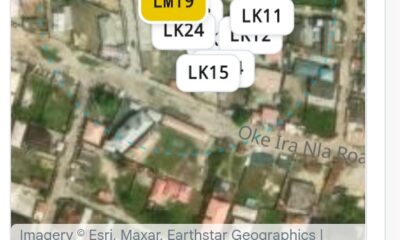
The code is designed to provide a precise, GIS-enabled reference for identifying locations.

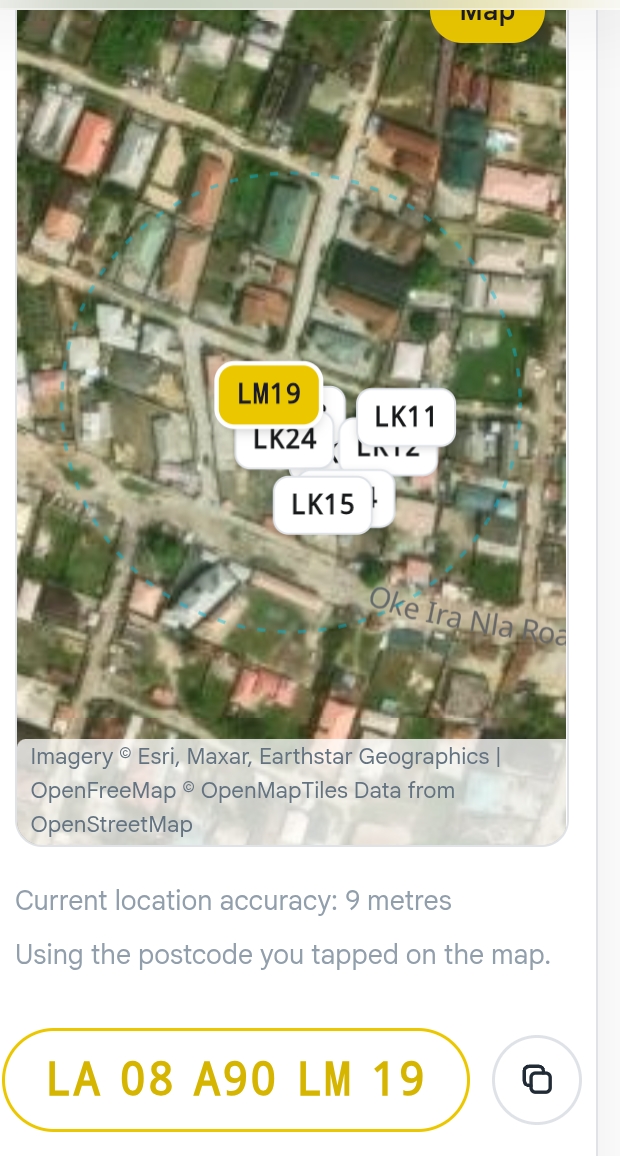
• Image credit: NIPOST
The Federal Government has launched the National Digital Alphanumeric Postcode System, urging Nigerians to find and begin using their postcodes.
The National Digital Alphanumeric Postcode, operated by the Nigerian Postal Service, gives every addressable building a unique 11-character code — the code is designed to provide a precise, GIS-enabled reference for identifying locations.system. Easier to find, share and use.
The Minister of Communications, Innovation and Digital Economy, Bosun Tijani announced the launch in a post on X on Thursday.
Tijani described the system as a step towards making locations across the country easier to identify and connecting people and businesses to services and opportunities.
Tijani said the system could help businesses reach customers beyond their immediate neighbourhoods, enable families to provide accurate locations during emergencies and help government agencies reach communities with essential services.
The minister encouraged Nigerians to search for their postcodes through the official Digital Postcode website, postcode.gov.ng, and share them with family members, friends and businesses.
News
Nigeria @ 66: President Tinubu says next phase of reforms’ll cut cost of living
“Our reforms did not create the weaknesses in our economy. They confronted them,” he said, while warning against attempts to reverse the policies and return to what he described as the “abuse of addictive subsidies”.
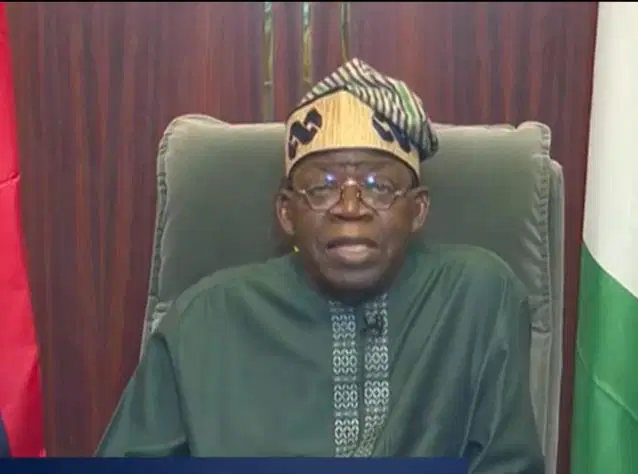
President Bola Tinubu has declared that the next phase of his administration’s reform will be focused on reducing the cost of living, creating jobs and ensuring that the benefits of economic growth were widely shared.
President Tinubu gave the assurance in his Independence Day address to mark Nigeria’s 66th anniversary, titled “From Reform to Prosperity”, in which he defended the economic policies of his administration and urged Nigerians to stay the course.
Tinubu said the reforms undertaken since his assumption of office had corrected the country’s economic direction, describing them as painful but necessary treatment for longstanding structural problems.
Using a cancer patient as an analogy, the President said Nigeria had for too long treated the symptoms of its economic problems rather than confronting their underlying causes.
“By 2023, poverty was rising, and hope was nearly gone. The country’s situation was darker than ever. We had no choice but to act,” he said.
Tinubu said previous administrations had chosen “morphine” by sustaining inefficient arrangements and postponing difficult decisions, while his administration chose to “excise the cancer”.
He acknowledged that the reforms had produced painful “side effects”, but argued that the hardship should not be confused with the underlying economic problems they were designed to address.
“Our reforms did not create the weaknesses in our economy. They confronted them,” he said, while warning against attempts to reverse the policies and return to what he described as the “abuse of addictive subsidies”.
The President’s speech came as some stakeholders and analysts regretted that, despite various reforms embarked upon by successive Federal Governments, the country was yet to come out of the woods economically and socially.

Former Vice President Atiku Abubakar has demanded the immediate release of five men arrested in Borno State for wearing T-shirts bearing the slogan “Tinubu Must Go.”
In a statement issued on Wednesday, the African Democratic Congress (ADC) presidential candidate condemned the arrests, describing the slogan as a legitimate political expression rather than a crime. He argued that wearing a T-shirt with a political message should not lead to detention in a democracy.
The five men — identified as Baba Aji Gremami, Mustapha Abba Yemen, Abacha Mohammed Ali, Adam Umar Gubio and Abdulhamid Mohammed — were reportedly arrested by the Borno State Police Command in Maiduguri and charged with offences including criminal conspiracy and inciting disturbance.
Atiku recalled that President Bola Tinubu had previously protested against the fuel pricing policies of the Goodluck Jonathan administration. He insisted that Nigerians must equally be free to express dissatisfaction with current government policies.
“‘Tinubu Must Go’ is a demand for political change. It is not a weapon, a threat or a crime,” Atiku said. “Tinubu was free to tell Jonathan that his policies were hurting Nigerians. Nigerians must be free to tell Tinubu that his policies are hurting them. Release these five citizens now.”
He called on the authorities to disclose the detainees’ whereabouts, grant them access to their families and lawyers, and free them if the political slogan was the sole basis for their arrest.


Naira Rates To Dollar, Pound ,Euro… Friday, October 2

Obafemi Hamzat promises to end ‘unauthorised levies’ in Lagos if he is elected

President Tinubu, Other Political Leaders Watch MKO Documentary

Tech Expert, Zuckerberg trains with UFC champions, Adesanya, Alexander

Organ Trafficking: Ekweremadu bags 10 years in UK prison

SAINT OBI: Between his marriage and his death
-
 Business1 day ago
Naira To Dollar, Pound, Euro… Rates Friday, October 1
-
 News1 day ago
Nigeria @ 66: President Tinubu says next phase of reforms’ll cut cost of living
-
 News2 days ago
FG Declares October 1 Public Holiday to Mark Independence Day Anniversary
-

 News2 days ago
Atiku Demands Release of 5 Arrested Over ‘Tinubu Must Go’ T-Shirts
-

 Business1 day ago
Court orders NMDPRA to continue issuing fuel import licences to Matrix Energy, AA Rano, AYM Shafa
-
 Business2 days ago
ON-GOING: Dangote $16 billion refinery groundbreaking holds in Kenya (Images)
-

 International2 days ago
Plane Makes Emergency Landing After Pilots Fight in Cockpit
-
 News1 day ago
FG launches new digital postcodes