
Business
Why Northern Industries Collapse – Dangote
“Without electricity, you cannot have growth, no matter how hard you try,” he warned.

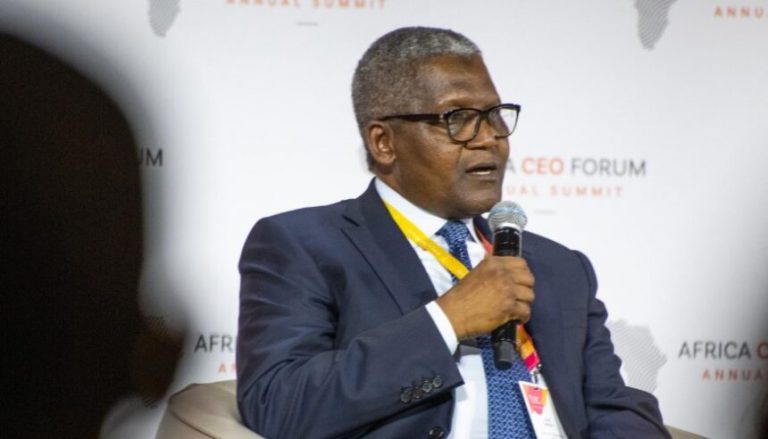
Africa’s richest man, Alhaji Aliko Dangote, has linked the North’s slow economic growth and rising insecurity to decades of policy inconsistency and chronic electricity shortages.
Dangote spoke today during the Arewa Consultative Forum (ACF) 25th anniversary dinner in Kaduna State.
He told the ACF leaders that many promising northern industries collapsed because government policies “kept shifting the goalpost,” eroding investor confidence.
He recalled that Arthur Andersen (now part of KPMG) was commissioned to study why northern textile magnates and other industrialists failed despite strong starts.
The findings, he said, pointed largely to unpredictable government policies and an unreliable power supply.
Dangote disclosed that his group connects to public electricity to public electricity only in South Africa and Ethiopia, because of Nigeria’s unstable grid.
“Without electricity, you cannot have growth, no matter how hard you try,” he warned.
He added that today’s insecurity — banditry, youth joblessness and economic displacement — is a direct consequence of long-standing neglect.
Dangote urged northern leaders to commit to a coherent, long-term economic roadmap anchored on education, industry and agriculture, aligning with the transformation agenda highlighted by the former Vice President Atiku Abubakar.
Atiku stressed that the ACF was conceived not only to foster political harmony, but to drive development in line with the vision of Sir Ahmadu Bello.
He cited the Sardauna’s 1961 priorities — education, agriculture and industrial growth — noting that they remain more urgent today than ever.
He outlined past initiatives such as the Northern Education Project, which exposed the region’s crumbling school system and triggered reforms that boosted enrolment and transition rates.
He also referenced the Northern Development Project, NDP, which sought to rebuild agricultural value chains and address climate-induced productivity challenges.
Yet, he lamented that key obstacles— from energy poverty to multiple taxation — still plague northern industries two decades on.
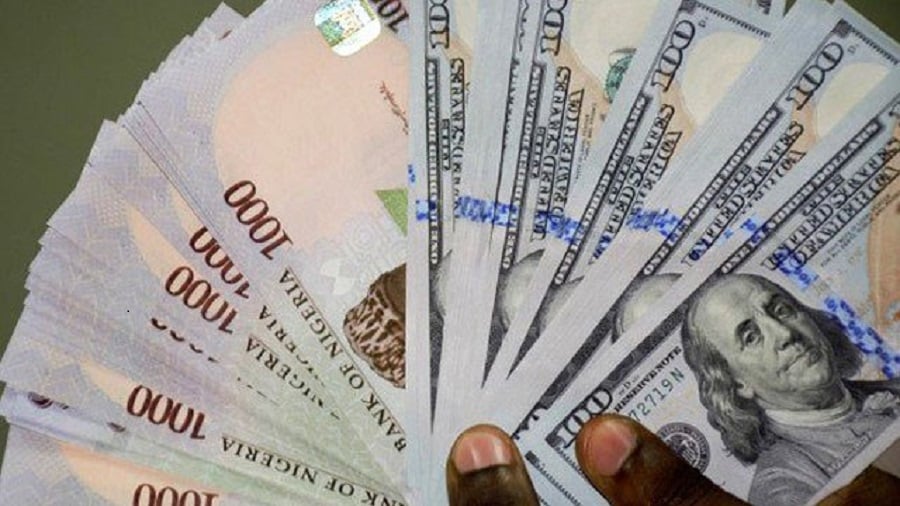
BLACK MARKET RATES
US DOLLAR (USD) Buy ₦1,416 Sell ₦1,423
GREAT BRITISH POUND (GBP) Buy ₦1,890 Sell: ₦1,910
EURO (EUR) Buy ₦1,590 Sell ₦1,610
CANADIAN DOLLAR (CAD) Buy ₦1,020 Sell ₦1,080
SOUTH AFRICAN RAND (ZAR) Buy ₦75 Sell ₦90
UAE DIRHAM Buy ₦350 Sell ₦370 CHINESE YUAN Buy ₦190 Sell ₦205
GHANA CEDI (GHS) Buy ₦95 Sell ₦110
WEST AFRICAN CFA Buy ₦2, 300 Sell ₦2, 400
CENTRAL AFRICAN CFA Buy ₦2,150 Sell 2,250
AUSTRALIAN DOLLAR Buy ₦800 Sell ₦900
CBN Exchange Rates
US DOLLAR (USD) ₦1,357. 65
GREAT BRITISH POUND (GBP) ₦1,834.04
EURO (EUR) ₦1,567.00
SWISS FRANC (CHF) ₦1,671. 98
JAPANESE YEN (JPN) ₦8.53
CHINESE YUAN (CNY) ₦201. 34
WEST AFRICAN CFA (XOF) ₦2. 39
WEST AFRICAN UNIT ACCOUNT (WAUA) ₦1,858.02
SAUDI RIYAL (SAR) ₦361.62
SOUTH AFRICAN RAND (ZAR) ₦84.23
Business
Traders shut down Enugu ‘s Obollo-Afor market over N25,000 haulage levy
However, Chairman of ESIRS, Emmanuel Nnamani, in a letter to the traders, said the haulage levy was not paid by traders buying or selling goods in the markets, but was applicable strictly to truck drivers plying interstate routes.
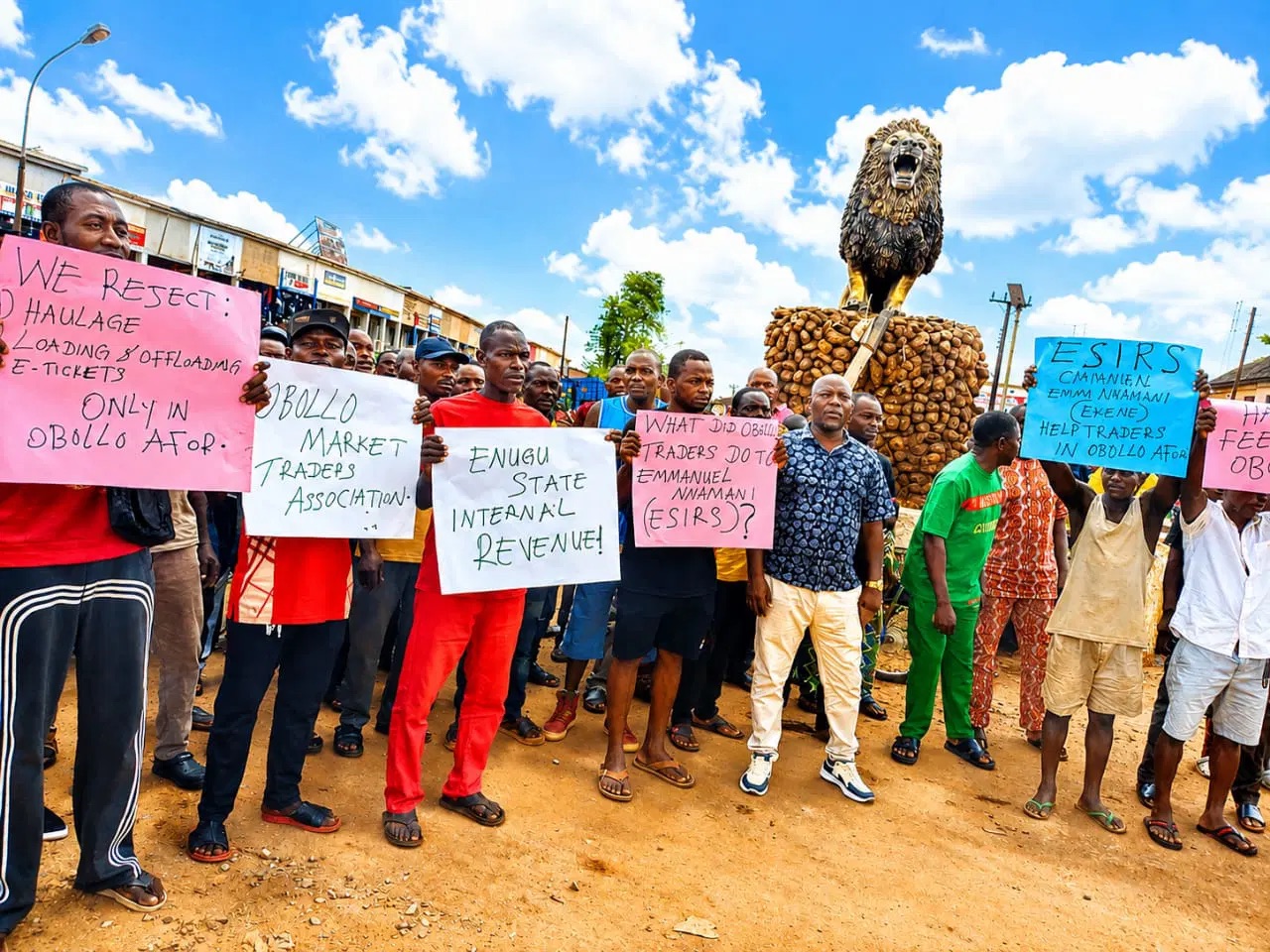
All shops and markets at Obollo-Afor, Udenu Local Government Area of Enugu State were shut yesterday, as traders staged a peaceful protest against alleged selective collection of a N25,000 haulage levy in the market.
The traders, who locked their shops and took to the streets in large numbers, carried placards with various inscriptions, alleging that the Enugu State Internal Revenue Service (ESIRS) had singled out Obollo-Afor Market for the collection of N25,000 haulage fee on every truckload of goods loaded or offloaded in the market.
However, Chairman of ESIRS, Emmanuel Nnamani, in a letter to the traders, said the haulage levy was not paid by traders buying or selling goods in the markets, but was applicable strictly to truck drivers plying interstate routes.
Addressing officials of the Udenu Local Government Council at the council secretariat, where the protesters marched to present their grievances, Chairman, Obollo-Afor Market Traders Association, Charles Eze, lamented that truck operators bringing foodstuffs, building materials, and other commodities to the market had stopped coming because of the levy.
Business
Nigeria’s oil production dropped by 4% in July – NUPRC
“In the month under review, the daily peak production of crude oil and condensate was 1.78mbpd, while the lowest daily production was 1.57mbpd.”

The Nigerian Upstream Regulatory Commission (NUPRC) data has shown Nigeria’s average daily oil production fell by four percent in July, 2026.
According to the NUPRC, Nigeria produced 1.505 million barrels per day (bpd) of crude oil and 0.17 million bpd of condensate, bringing the combined daily production to 1.67 million bpd.
The commission said the country met and exceeded its Organisation of the Petroleum Exporting Countries (OPEC) quota of 1.5 million bpd for the third consecutive month.
“In the month under review, the daily peak production of crude oil and condensate was 1.78mbpd, while the lowest daily production was 1.57mbpd.”


HAPPENING NOW: Security Beefed up at INEC Office in Osun Ahead of Saturday’s Governorship Election

Gov Mbah Invest in world-class Enugu International Hospital

Committees hit the ground running for 8th Kwara State Sports Festival

Tech Expert, Zuckerberg trains with UFC champions, Adesanya, Alexander

Organ Trafficking: Ekweremadu bags 10 years in UK prison

SAINT OBI: Between his marriage and his death
-
 Business2 days ago
FG approves tax waivers for 4,000 electric vehicles
-

 Business2 days ago
Azikel Refinery in Bayelsa Set To Add 25,000 bpd To National Capacity
-

 Business2 days ago
Guaranty Trust Bank doubles naira card international spending limit to $40,000
-
 Business2 days ago
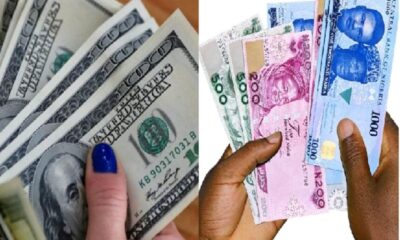
Naira Exchange Rates Thursday, August 13
-

 Business2 days ago
Nigeria’s oil production dropped by 4% in July – NUPRC
-

 Sports2 days ago
Katsina United player declared dead found alive in mortuary
-

 International3 days ago
Millions Rushing To Watch Solar Eclipse in Europe
-

 Sports3 days ago
NBA’s Los Angeles Lakers to be sold for $12.5bn – Report