
News
Cash Crisis Fuels Loan App Nightmare in Nigeria

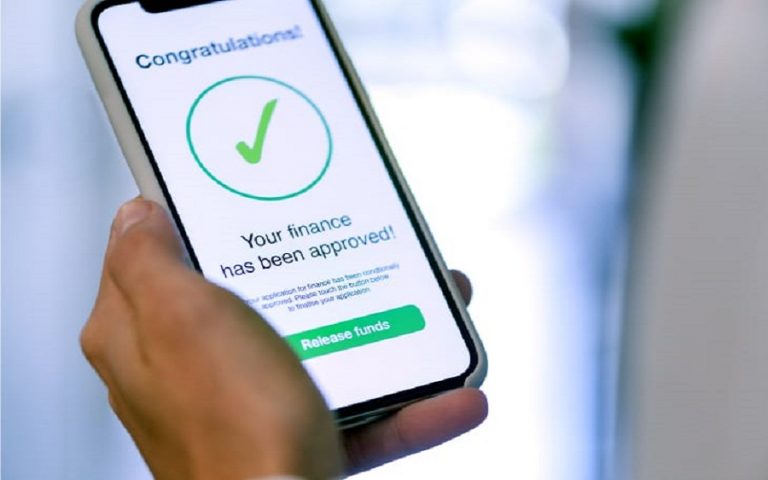
Cash-strapped and in dire need of N30,000 (about $20), Mariam Ogundairo turned to a loan app, downloading it and registering her phone number.
The money was quickly sent over but came with a 21.6 percent interest rate, due in two weeks.
Like many in Nigeria, battered by inflation, Ogundairo was too broke to pay back what she owed.
Then came a deluge of harassment — a tactic that has become the hallmark of many loan apps in Africa’s fourth-largest economy.
“They started calling my phone contacts when I couldn’t pay back on time, saying I owed them. “I lost my security, and it makes me so sad and scared,” Ogundairo told AFP.
Such loan apps in Nigeria, branded “predatory” by campaigners, are texting threats and leaking sensitive photos to their mobile phone contacts when people squeezed by the country’s ongoing economic crisis cannot pay up.
Often enticed by false promises of low interest rates, thousands of Nigerians have turned to personal finance apps seeking quick access to short-term loans as galloping prices put pressure on incomes, with inflation standing at 21.8 percent at the end of July.
Ogundairo struggled through the embarrassment for weeks until she was able to pay off her balance.
– ‘Quick fix’ gone wrong –
“A friend recommended it because I needed a quick fix,” another victim, a 24-year-old who took out a loan two years ago as a university student and asked his name not be used, told AFP.
After spending more than N300,000 conducting laboratory investigations for his final thesis and still needing more funds to complete his research and beat submission deadlines, the money seemed like a lifesaver.
He took out N70,000 when he was a final-year student in 2023. He was meant to pay back about N110,000 within a month, but was too broke.
The loan app then began sending messages to his phone contacts that he was a “ritualist killer”. He said he was not aware he had given the app access to his contacts.
“A couple of my coursemates got the messages.
“It wasn’t the case of unwillingness to pay; it was just a case of impossibility,” he told AFP.
An increasing number of Nigerians have turned to personal loans following reforms by President Bola Tinubu to shock the country’s moribund economy and remove costly subsidies.
Though some economists have voiced approval for the measures, Tinubu’s policies have sent inflation skyrocketing and the value of the naira plunging, hitting many ordinary Nigerians in their pockets.
Even when apps mislead people on interest rates, they can often provide better rates than traditional banks — with the benchmark interest rate at 27.5 percent, conventional loans can come with interest rates at 27 to 48 percent.
While there was no breakdown for so-called fintech apps, lenders in the country handed out about 470 billion naira in personal loans in the last quarter of 2024.
By December, outstanding personal loans jumped “by 21.27 percent to 3.82 trillion naira compared with the level at end-September 2024”, the Central Bank of Nigeria (CBN) said in March.
As of the same month, the Federal Competition and Consumer Protection Commission (FCCPC) approved 408 loan apps, up from 269 in September 2024, with 42 receiving conditional clearance.
The CBN approved 23 apps, up from 14 in the third quarter of last year.
Forty-seven were delisted and 88 placed on watchlists for various offences, including harassment.
The watchdog had said in the past that some loan apps were operating in the country illegally.
– Loan sharks ‘thrive’ –
Many of the loan apps’ ease of access and swift processing create a trap, said Funmi Oderinde, a lawyer at Citizens’ Gavel, a civil society organisation that has been pushing back against the lenders.
The organisation has so far received at least 1,300 complaints over “predatory digital loan apps”.
“These promises are deceptive, and borrowers soon face unethical recovery practices such as defamation, harassment, threats, breaches of data privacy, arbitrary fines, and excessively high interest rates aimed at pressuring them into repayment,” Oderinde said.
Some victims of the harassment have formed different support groups on Facebook. One such group has more than 21,000 members.
A victim told Citizens’ Gavel that, after her phone was accessed remotely, a fake obituary and a real nude photo were shared with her contacts by a loan app.
According to Oderinde, two of the people who approached the organisation for legal help “could have died” due to harassment from loan app agents.
The FCCPC, in a note sent to lenders in August, said it would “periodically monitor interest rates for services of consumer lending, and ensure rates are not exploitative”.
But despite regulatory moves, dozens of apps continue to operate under new names, and desperate borrowers often do not check approval lists before applying.
The result is that loan sharks “thrive”, Oderinde said, “because of weak sanctions and poor enforcement”.
AFP
News
Ex-Supreme Court Judge Justice Kalgo dies at 89
Kalgo JSC was appointed Justice of the Court of Appeal in February 1988 and was later elevated to the Supreme Court of Nigeria on November 25, 1998, where he served honourably as a Justice of the Supreme Court (JSC) until his statutory retirement at age 70 in May 2007.

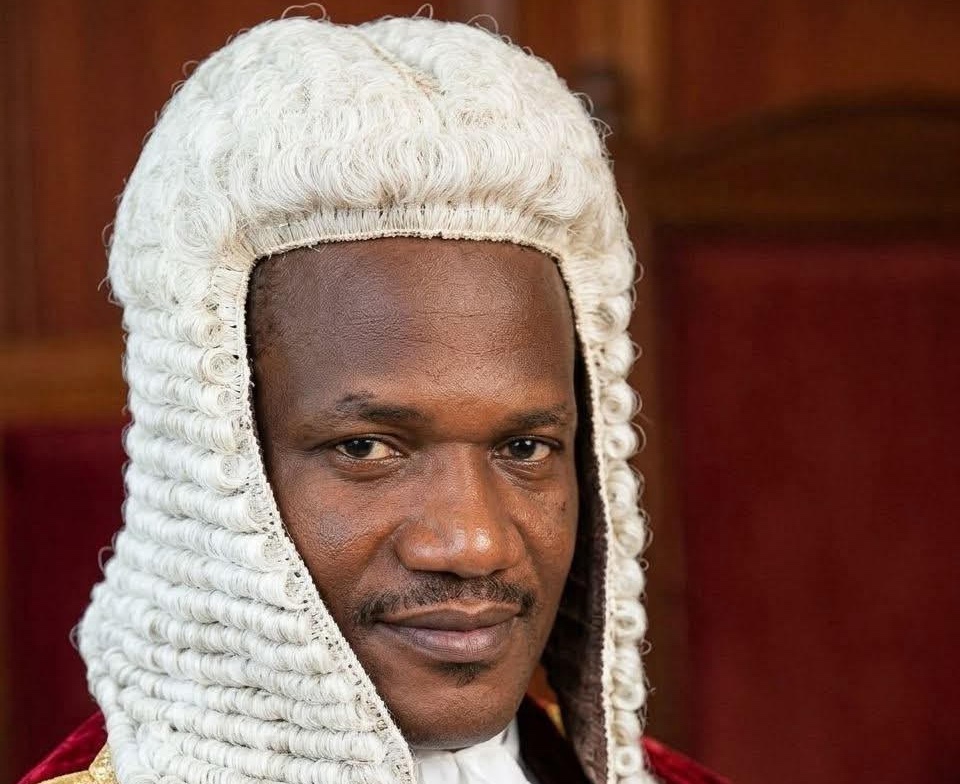
•Justice Umaru Atu Kalgo (1937-2026)
A former Justice of the Supreme Court of Nigeria Hon. Justice Umaru Atu Kalgo (Rtd.), is dead, aged 89.
The retired jurist died at about 3:00 am on Tuesday morning after a prolonged illness and was buried by 2:30 pm in Sokoto in accordance with Islamic rites.
His transition, it was noted, marks the end of an era for a legal icon who dedicated nearly five decades of his life to the service of the law, justice and the Nigerian judiciary.
According to records, the late jurist was born on May 12, 1937, in Kalgo, Kebbi State (then part of the North-Western State).
He attended Elementary School Kalgo, Middle School Sokoto, Middle School Birnin-Kebbi and Government College Zaria (1953–1958).
Late Justice Kalgo pursued legal studies at the Institute of Administration, Ahmadu Bello University (ABU), Zaria; Council of Legal Education, London; College of Law Holborn, London; and the Nigerian Law School, Lagos. He was called to the Nigerian Bar in 1965.
Kalgo JSC began his career as an Administrative Officer in Northern Nigeria before transitioning to State Counsel (1965–1972) and later Deputy Solicitor-General of the North-Western State.
He was appointed High Court Judge for Kano and North-Western State in 1974, later serving on the Sokoto State High Court Bench. He was elevated to Chief Judge of Sokoto State on January 1, 1981, serving with distinction until 1988.
Kalgo JSC was appointed Justice of the Court of Appeal in February 1988 and was later elevated to the Supreme Court of Nigeria on November 25, 1998, where he served honourably as a Justice of the Supreme Court (JSC) until his statutory retirement at age 70 in May 2007.
Major contributions to the legal profession and development of Nigerian jurisprudence:
He penned numerous landmark judgments across constitutional, civil and criminal law during his tenure at the Appellate Court and Supreme Court, leaving behind a rich legacy of case law.
Justice Kalgo played critical roles in national law reform, including serving on the Constitution Review Committee (1987–1988), the Constituent Assembly (1988–1989) and the Law Revision Committee for the Laws of the Federation (1990).
…..by Chukwudi Achife, Chief Press Secretary to the Tax Ombud.
Nigerian lawyers have thrown their support behind the Office of the Tax Ombud’s campaign to boost voluntary tax compliance, describing taxation as a critical source of government revenue for infrastructure and social services.
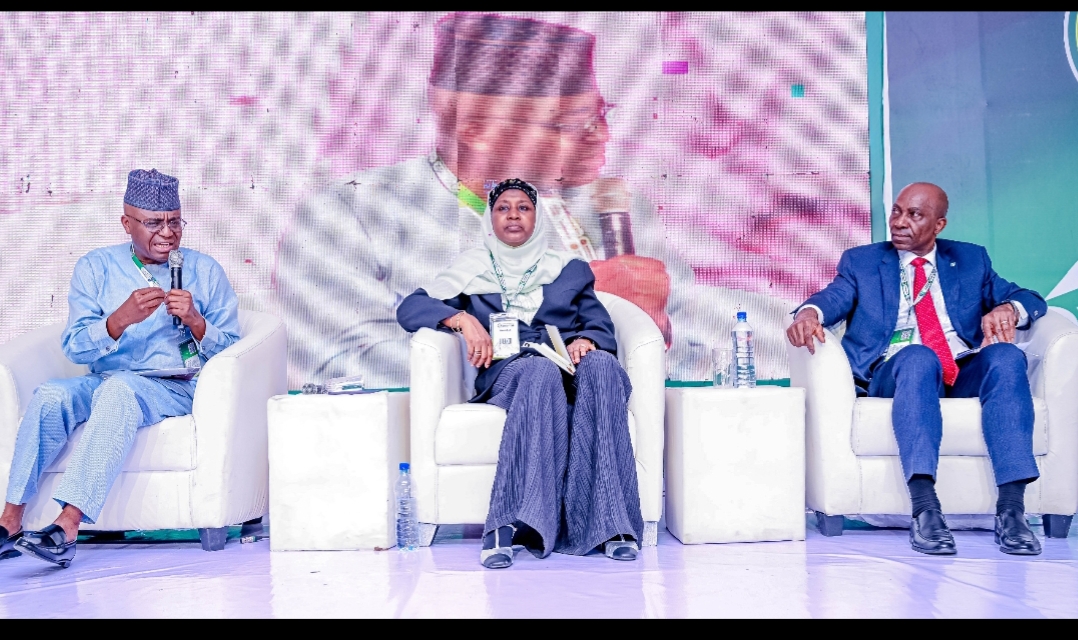
The endorsement came during a panel discussion titled “Pay Now, Prosper Later” at the 66th Annual General Conference of the Nigerian Bar Association (NBA) in Port Harcourt, Rivers State.
The session featured Tax Ombud and Chief Executive Dr. John Nwabueze alongside senior lawyers, including Ahmed Raji, SAN. Participants stressed the need to strengthen public trust in tax authorities as a pathway to higher voluntary compliance and increased revenue.
R-L: Tax Ombud/Chief Executive, Office of the Tax Ombud, Dr. John Nwabueze, Nigerian Revenue Service’s representative, Mrs. Bolanle Oniyangi, and Ahmed Raji, SAN, during a panel discussion recently at the 66th Annual General Conference of the Nigerian Bar Association (NBA) in Port Harcourt, Rivers State.
Dr. Nwabueze told the audience that the Office remains committed to offering taxpayers an independent and impartial channel for resolving tax-related complaints fairly and promptly.
“The Office of the Tax Ombud will alleviate the burden of administrative and procedural issues for taxpayers, helping to foster trust between citizens and tax authorities,” he said. “It is our belief that the Office will contribute significantly towards bridging the gap between taxpayers and tax administration, making the tax system more accessible and trusted. We strive to ensure that tax grievances are resolved in an open and accountable manner, ultimately strengthening Nigeria’s tax system.”
Since opening to the public in January, the Office has received 22 complaints and resolved 14 of them, Dr. Nwabueze disclosed. He added that ongoing stakeholder engagement and public-awareness efforts aim to expand access to its services.
While noting that the Office is non-judicial, he described it as an important early-dispute-resolution mechanism that can ease pressure on the courts and other tax adjudication bodies.
Nigerians seeking information or wishing to lodge a complaint are encouraged to contact the Office of the Tax Ombud. Officials expressed confidence that growing public awareness will enable the Office to play a larger role in building a fairer, more transparent and trusted tax system.
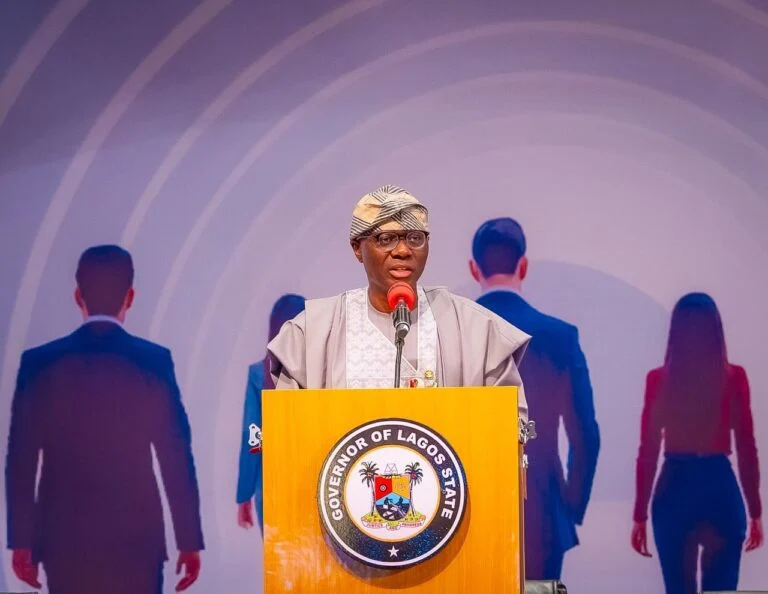
…..As the Governor Prepares to Deliver Keynote on Diaspora Investment
The Governor of Lagos State, Mr. Babajide Sanwo-Olu, has been named the recipient of the 2026 Global Transformation and Good Governance Prize by the Millennium Excellence Award USA.
In a letter from the Board of Directors of the Millennium Excellence Foundation (MEF), the award was conferred on Governor Sanwo-Olu after a rigorous selection process that recognised the extraordinary achievements and developmental trajectory of Lagos State under his leadership.
The letter stated: “The Board has unanimously resolved to confer upon His Excellency Babajide Sanwo-Olu one of the most prestigious honours bestowed under the auspices of the Foundation – the Global Transformation and Good Governance Prize by the Millennium Excellence Award USA.”
The award is conferred under the Royal Patronage of His Majesty Otumfuo Osei Tutu II, Asantehene of Kumasi. The Asantehene, regarded as one of Africa’s most respected monarchs, will personally present the honour alongside Her Royal Highness Lady Julia, Queen Consort, at the ceremony.
The Millennium Excellence Awards USA recognises outstanding individuals of African heritage and global contributors who have made significant impact in business, science, arts, philanthropy, and public service.
The ceremony will take place at the Warner Theatre, Washington D.C., on Saturday, 29th August 2026, with the Red Carpet commencing at 2:30 p.m.
Governor Sanwo-Olu will deliver a keynote address on positioning Lagos State, Africa’s largest sub-national economy, to diaspora communities. The address aims to attract investment in urban infrastructure, finance, and the state’s pipeline of investment-ready projects.
He will also participate in other sessions, including “Government Addresses: The Political Will Behind the Deal,” plenaries, and roundtable discussions focused on strengthening economic and social ties between Lagos and the diaspora.
Past laureates include Archbishop Desmond Tutu, Dr. Kofi Annan, Mo Ibrahim, Wole Soyinka, South African President Cyril Ramaphosa, Aliko Dangote, Tony Elumelu, and President John Dramani Mahama.


Naira Exchange Rates Wednesday, August 26

Ex-Supreme Court Judge Justice Kalgo dies at 89

Lawyers Back Tax Ombud’s Push for Greater Voluntary Compliance

Tech Expert, Zuckerberg trains with UFC champions, Adesanya, Alexander

Organ Trafficking: Ekweremadu bags 10 years in UK prison

SAINT OBI: Between his marriage and his death
-

 Business1 day ago
Naira Exchange Rates Tuesday, August 25
-

 Politics23 hours ago
President Tinubu Retrieves APC Campaign List For Readjustment
-

 Politics23 hours ago
Amaechi to Sowore: Close Your Mouth When Politicians Are Talking
-

 News24 hours ago
FG Moves To Fix Benin-Asaba Federal Highway
-
 Politics21 hours ago
[UPDATED] 2027: APC dismisses report of campaign council list withdrawal
-
 Politics3 days ago
APC Chair Dies After Collapse at Kogi Meeting
-

 News3 days ago
Tinubu Names Yari, DG Presidential Campaign Council
-
 News22 hours ago
Enugu iron-smelting site Gets $125,000 US Grant