
Business
Food For Lagos Project Will Make Kogi Farmers Richer – Governor Ododo
“Agriculture in Kogi is receiving the biggest attention it has ever received.”


Governor Ododo didn’t just go there to sign papers. He has since returned home to roll up his sleeves to make the partnership a huge success.
The Kogi State Government has reiterated its commitment to transforming the state’s agricultural sector and improving the livelihood of farmers through the recently signed Food for Lagos partnership, aimed at creating a robust food supply chain between Kogi and Lagos State.
This was disclosed in a statement made available to journalists in Lokoja on Thursday by the State Commissioner for Information and Communications, Kingsley Femi Fanwo, who highlighted the strategic steps already taken to actualize the economic potential of the initiative.
According to Fanwo, less than two weeks after the agreement with the Lagos State government was signed, Governor Ahmed Usman Ododo has begun implementing concrete measures to boost food production, improve infrastructure, and attract high-value investments into the state’s agricultural sector.
“Governor Ododo didn’t just go there to sign papers. He has since returned home to roll up his sleeves to make the partnership a huge success.
With the Governor’s efforts, Kogi farmers will earn more from their agricultural produce.”
He revealed that the State Ministry of Agriculture has already mapped out key areas with comparative advantages for specific crops, ensuring that each region contributes meaningfully to the value chain.
Kogi, he said, is already a leading producer of cassava in Nigeria and West Africa, and the administration is working hard to dominate other areas of food production.
“We are not just talking about being the food basket of the nation, we are taking real steps to become one,” he said.
He praised Governor Ododo as a visionary leader who, from the outset of his administration, placed agriculture at the center of his development agenda.
“During his campaigns and in his inaugural speech, he emphasized the need for Kogi to be self-sufficient in food production. Today, he is fulfilling that promise.”
Fanwo also highlighted major government-backed programs such as RAAMP (Rural Access and Agricultural Marketing Project), which is facilitating the rehabilitation of rural roads to improve access to markets, and ACReSAL (Agro-Climatic Resilience in Semi-Arid Landscapes), which is channeling investments into rural farming communities.
“Agriculture in Kogi is receiving the biggest attention it has ever received,” Fanwo affirmed.
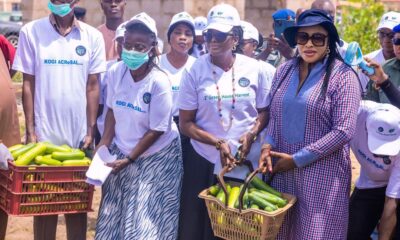
“Our youth and women from Ibaji to Gegu and Egbe are now fully involved in the agricultural revival sweeping across the state.”
He further noted that the state’s growing success in combating rural insecurity has contributed to increased farming activity and boosted confidence among local farmers.
The Information Commissioner said that the Food for Lagos Project is a game-changer, not only for food supply in Nigeria’s largest city but also for wealth creation and economic empowerment in Kogi State.
“With sustained implementation, this partnership will make Kogi farmers richer and the state stronger economically,” he said.

Business
Invest in Lagos 3.0 Summit Attracts more than 600 delegates
Ohibaba.com reports that the summit, themed “Lagos: The Business Gateway to Africa,” featured presentations from representatives of the Presidency and the governors of Lagos, Imo, Abia, Plateau, Taraba and Nasarawa states.

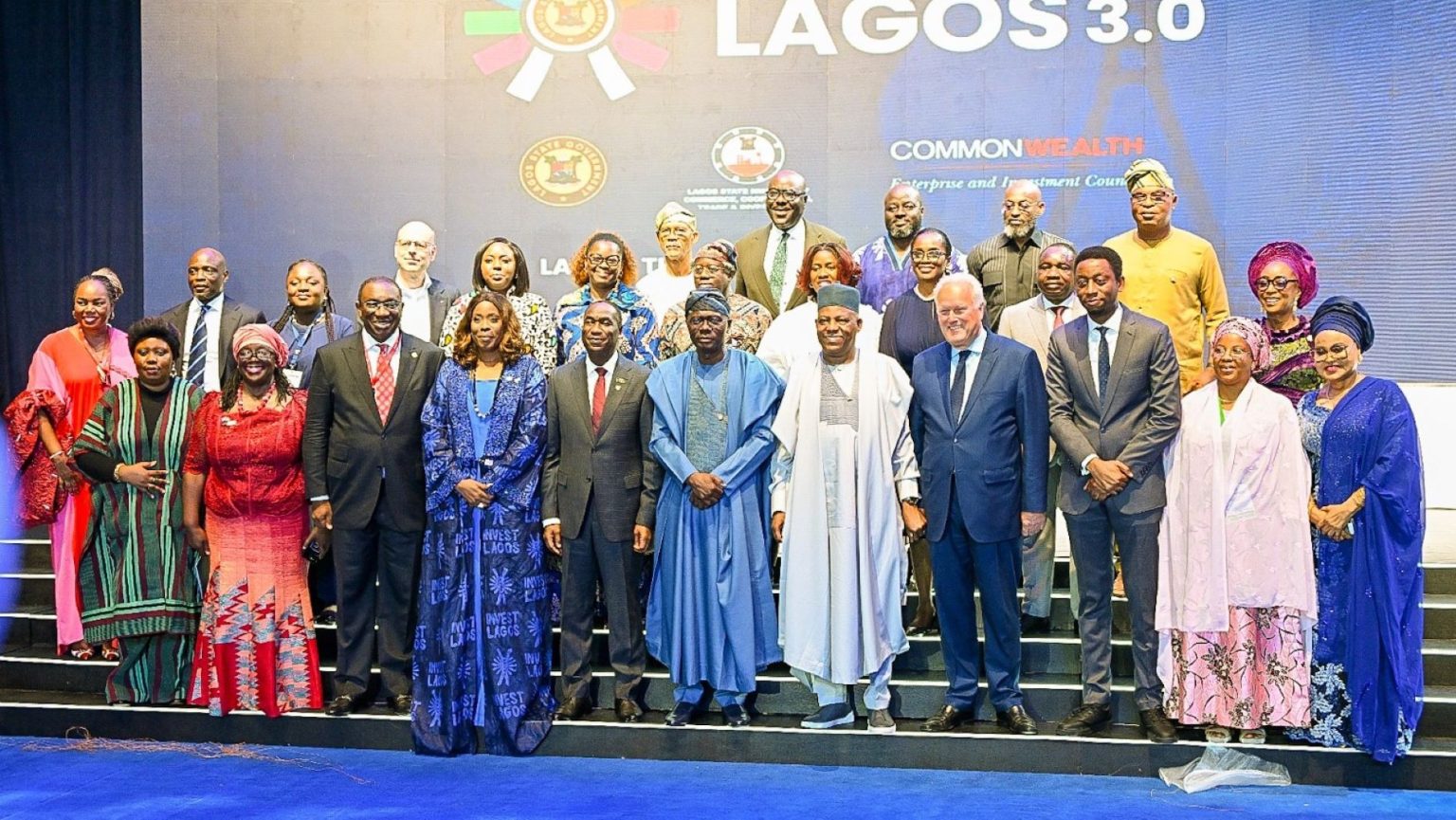
• Representatives of government and private sector delegates at the summit
Invest in Lagos 3.0 Summit attracted more than 600 delegates—including global institutions, sovereign wealth funds, development finance institutions and trade networks.
Ohibaba.com reports that the summit, themed “Lagos: The Business Gateway to Africa,” featured presentations from representatives of the Presidency and the governors of Lagos, Imo, Abia, Plateau, Taraba and Nasarawa states.
The host governor, Babajide Sanwo-Olu, called for increased private sector investment in rail transport, energy, agriculture, agro-processing and water infrastructure.
He said that addressing transportation challenges would unlock Lagos’ economic potential, reduce travel time, boost productivity and improve returns on investment.
Minister of Finance, Dr. Taiwo Oyedele, assured investors of the Federal Government’s commitment to creating a conducive business environment through ongoing fiscal reforms. He said the new tax law has eliminated multiple taxation, improved compliance and provided relief for small and medium enterprises.
Oyedele added that stamp duty collection has been transferred to state governments and commended states that have adopted harmonised tax systems.
Business
UBA wins 2026 ‘Banker Technology’ award for AI innovation
UBA’s recognition centres on integrating Leo, its AI-powered chatbot, with the Pan-African Payment and Settlement System (PAPSS), enabling customers to send funds across borders in local currencies via a conversational interface.
United Bank for Africa (UBA) Plc, has been named the winner of the African category at the 2026 Banker Technology Award
In its assessment of UBA’s winning entry, The Banker noted that “the bank has cemented its status as a leading digital operator by placing technology at the centre of its growth strategy across more than 20 countries, with this approach most visible in its work on cross-border transfers, spanning digital payments, AI-driven engagement, and e-business”
UBA’s Executive Director Designate, Digital Banking, Emmanuel Lamptey, received the award on behalf of the bank.
He emphasised that the bank’s aim to fully digitise banking across the entire continent“.
” Africa’s financial future will not be built on branches or borders. It will be built on intelligence, interoperability, and trust at scale,” Lamptey said.
Business
Tony Elumelu’s United Capital Secures approval to operate in Ethiopia
Elumeu lauded the transformational Prime Minister of Ethiopia, His Excellency @AbiyAhmedAli , for promoting economic reforms and regional cooperation, the Director General of Ethiopian Capital Market Authority @CMAEthiopia , Ms. Hana Tehelku, and the team at @UnitedCap on this landmark achievement.
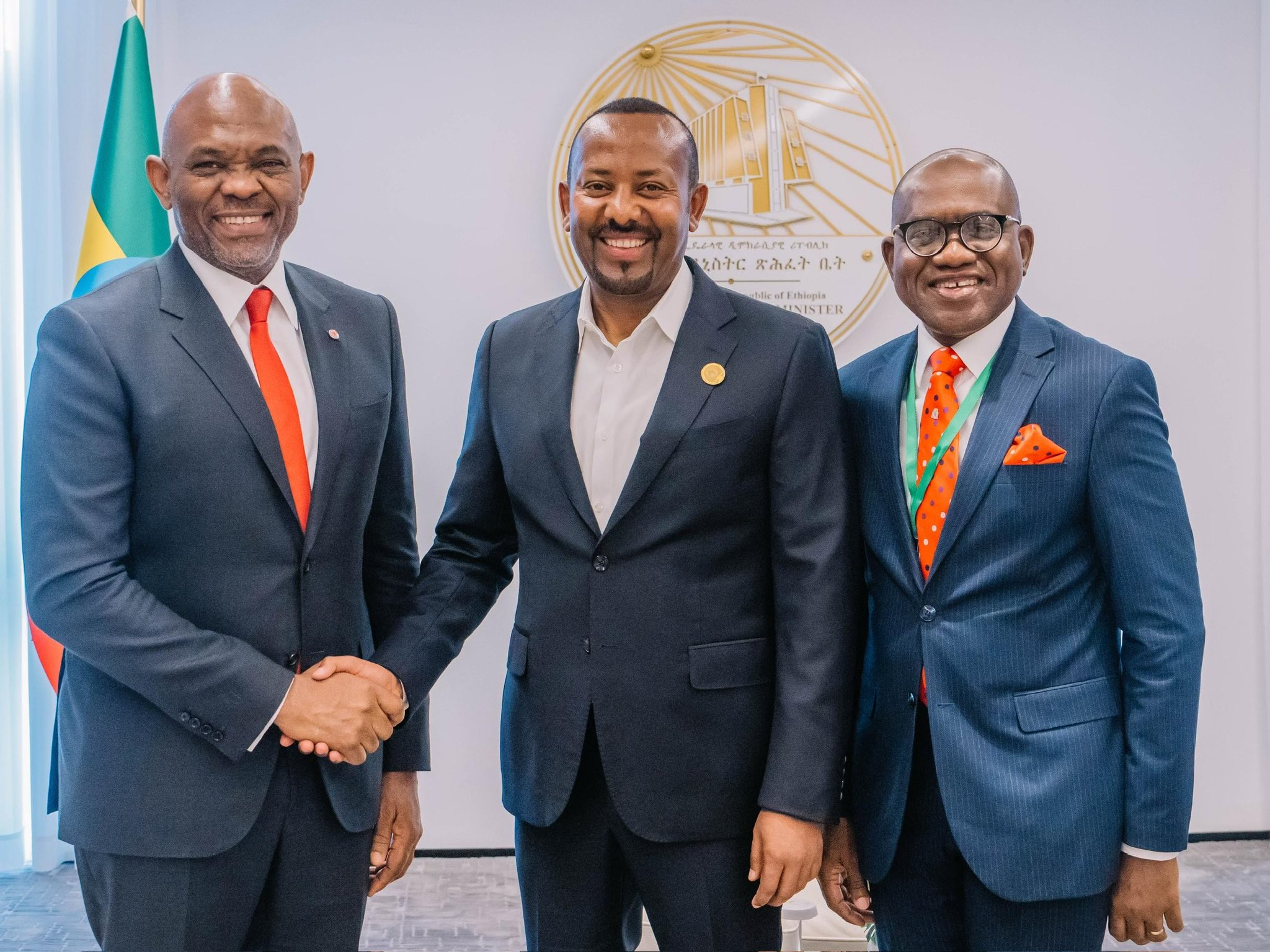
United Capital Group has again secured regulatory approvals to commence operations in Ethiopia.
Its Chairman, Tony Elumelu, broke the news on Tuesday, via his official X.
” This development is particularly noteworthy because Ethiopia only recently opened its financial sector to foreign participation, making United Capital’s entry a historic step for both the company and the ongoing integration of African capital markets,” said Elumelu.
Last month, United Capital commenced operations in Rwanda, marking its formal entry into East Africa and reinforcing its ambition to build a leading continental financial services institution.
The Group’s newly established entities include United Capital Trustees Rwanda Limited, licensed to provide trusteeship services, and United Capital Financial Services Rwanda Limited, licensed to offer investment management services, including portfolio management, investment advisory, capital mobilisation, capital market advisory, and fund management solutions.
With this development, United Capital now operates in 11 countries, including Nigeria, with a strong presence in key African markets, a recent expansion into the eight countries within the West African Economic and Monetary Union (WAEMU) region, alongside a growing footprint in East Africa.
According to Elumelu, African institutions are increasingly leading, competing, and succeeding across the continent.
For decades, Africa witnessed foreign capital flowing in while profits largely flowed out.
That narrative is beginning to change.
This is Africapitalism in action — a vision that recognizes the importance of both indigenous and international capital working together to finance Africa’s development and unlock shared prosperity.
Elumeu lauded the transformational Prime Minister of Ethiopia, His Excellency @AbiyAhmedAli , for promoting economic reforms and regional cooperation, the Director General of Ethiopian Capital Market Authority @CMAEthiopia , Ms. Hana Tehelku, and the team at @UnitedCap on this landmark achievement.


Olympic qualifier: Comoros to face Super Falcons following 30-0 victory over Sudan

Ebola: President Tinubu approves N10bn to strengthen NCDC preparedness

Invest in Lagos 3.0 Summit Attracts more than 600 delegates

Tech Expert, Zuckerberg trains with UFC champions, Adesanya, Alexander

Organ Trafficking: Ekweremadu bags 10 years in UK prison

SAINT OBI: Between his marriage and his death
-

 News2 days ago
Court Voids ₦110bn N’Assembly Vehicles, Allowances
-
 Business2 days ago
Senate’s approval of Sugar – Sweetened Beverages Tax Bill, Shocking, says CPPE, Lobbying Reps for rejection
-
 News3 days ago
Court Declares National Assembly’s N110bn SUV and Allowance Schemes Unlawful
-
 News2 days ago
FG Clears Five-Month Allowance Arrears for University Lecturers
-

 News2 days ago
Lagos Begins 500-Tree Campaign to Tackle Extreme Heat
-

 Politics2 days ago
NDC Declares Party Supremacy, Approves Code of Conduct Committee
-

 Politics1 day ago
2027: Lagos APC picks Damilola as Hamzat ‘s Deputy Governor
-

 Entertainment2 days ago
Nigerian-British Singer Talay Riley Dies in London Stabbing, Others Mourn