
International
Netherlands returns over 100 Benin Bronzes looted from Nigeria

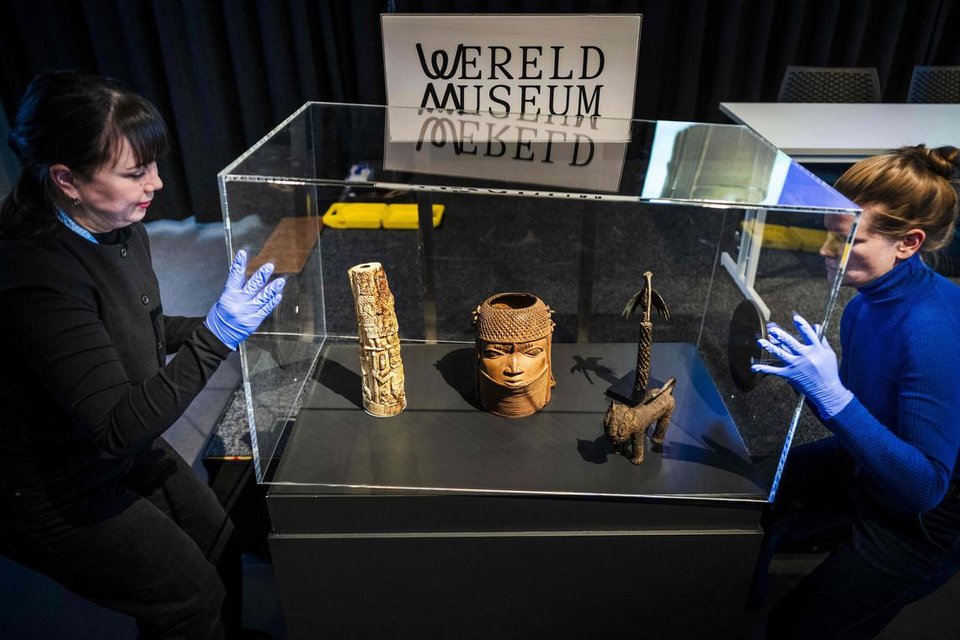
Nigeria has taken delivery from the Netherlands of 119 pieces of priceless “Benin Bronze” artefacts looted more than 120 years ago, the country’s museum commission and the Dutch embassy said June 18.
It is the latest return of artefacts to Africa, as pressure mounts on Western governments and institutions to hand back the spoils of colonial oppression.
“On this historic occasion it gives us great joy to finally welcome the return of 119 Benin Bronzes from the Netherlands,” said Mr Olugbile Holloway, director-general of Nigeria’s National Commission for Museums and Monuments.
“This represents the largest physical return to Nigeria and the people of Benin since the looting of the Benin Royal Palace by the British in 1897,” he said in a statement jointly issued with the Dutch embassy in Nigeria.
“The symbolism of this occasion cannot be overemphasised and what it means for the pride and dignity of not just the Benin people, but the whole of Nigeria,” added Mr Holloway.
The story of the Benin Bronzes is one of violence and tragedy. It began when nine British officers were killed on a trade mission to the then-independent kingdom of Benin, in the south of present-day Nigeria.
The British reaction was fierce. London deployed a military expedition to avenge its officers.
The troops killed several thousand locals and torched Benin’s capital city. They looted the royal palace, stealing hundreds of artworks, including the Benin Bronzes.
Most of the ornate bronzes were then sold to finance the expedition, auctioned off or sold to museums across Europe and the United States.
This was in 1897, and 128 years later, Nigeria is still negotiating the return of the bronzes around the world – with mixed results.
Dutch Ambassador for International Cultural Cooperation Dewi van de Weerd hailed Nigeria for persistently campaigning for the return of the cultural artefacts.
“We hope that this restitution is not the final chapter, but the foundation for further cooperation between Dutch and Nigerian museums,” said Ms van de Weerd in the joint statement.
Of the 119 objects, 113 were part of the Dutch State Collection, while the Rotterdam municipality returned the other six. The pieces will be officially handed over on June 21.



International
Millions Rushing To Watch Solar Eclipse in Europe
Mainland Europe has not experienced a total solar eclipse for 20 years while Spain has not witnessed one in more than a century.

• Solar Eclipse 2026
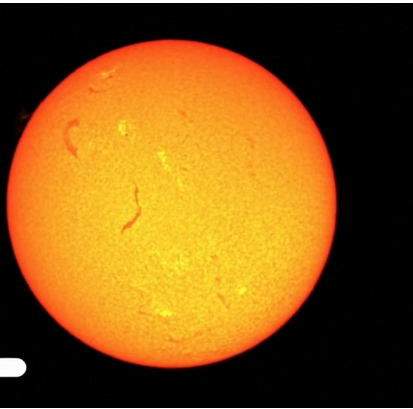
Millions of people are turning their gaze skywards in the hope of witnessing one of nature’s greatest spectacles, a rare total solar eclipse, as it sweeps over mainland Europe to briefly turn day into night.
The Moon is first expected to blot out the Sun, leaving only the shimmering glow of its outer corona, in Russia’s remote Arctic north, before parts of Greenland and Iceland are enveloped in the arc of its eerie shadow.
Excitement is highest in Spain, where tourists thronged the streets of normally quiet villages to experience the dramatic natural phenomenon as the eclipse’s narrow path cuts across the Iberian Peninsula from the northern Atlantic coast to the Mediterranean Sea in the south.
Mainland Europe has not experienced a total solar eclipse for 20 years while Spain has not witnessed one in more than a century.
Iceland’s capital, Reykjavik, however, has not seen a total solar eclipse since 1433.
Supplies of special viewing glasses were in high demand as a partial eclipse will be visible for millions more in most of Europe, Canada, the northern United States and northwest Africa.
However, a total eclipse of the Sun is expected to only be visible in a handful of places.
Credit: EURO NEWS
International
Trump cancels 175,000 visas for violations of public safety
The State Department said its continuous-vetting programme is designed to identify visa holders who violate the conditions attached to their visas, commit crimes, defraud Americans or pose public safety risks.

The United States has revoked more than 175,000 visas issued to foreign nationals since President Donald Trump returned to office.
Donald Trump took office on January 20, 2025, when he was sworn in as the 47th President of the United States.
The State Department disclosed the figure on Monday, saying most cancellations followed law enforcement encounters involving criminal activity fraud, assault, reckless driving, theft and drug-related offences.
Other cases involved child molestation, fraud, embezzlement and more serious offences including kidnapping, sexual battery, domestic violence and possession of child sexual abuse material.
The State Department said its continuous-vetting programme is designed to identify visa holders who violate the conditions attached to their visas, commit crimes, defraud Americans or pose public safety risks.
It stressed that obtaining a US visa does not guarantee permanent permission to enter the country, describing a US visa as a privilege rather than a right.
International
Man jailed for keeping dead mother in freezer to claim £78,000 in benefits
Passing sentence, Judge Lloyd-Clarke said Phillips repeatedly deceived medical professionals to hide the fact that his mother had died.

•Christopher Phillips
A 60-year-old man has been sentenced to two years and four months in prison after keeping his late mother’s body in a chest freezer for nearly three years while fraudulently collecting more than £78,000 in her pension and benefits.
Christopher Phillips was jailed by Merthyr Tydfil Crown Court after admitting to preventing the lawful and decent burial of his 89-year-old mother, Silvia Phillips, and pleading guilty to two counts of fraud.
The court heard that Phillips concealed his mother’s death after she died on March 8, 2023, by storing her body in a chest freezer in the living room of their home in Porthcawl, Wales.
Prosecutors said he failed to notify the Department for Work and Pensions and Bridgend County Borough Council of her death, allowing her pension and benefits to continue being paid into bank accounts he could access.
Passing sentence, Judge Lloyd-Clarke said Phillips repeatedly deceived medical professionals to hide the fact that his mother had died.
“You continued to collect her prescriptions and misled medical professionals about her whereabouts, lying when enquiries were made about your mother, repeatedly telling medical staff that she did not wish to attend appointments or undergo tests,” the judge said.
(Source: Tribune)


Committees hit the ground running for 8th Kwara State Sports Festival

NMMA shortlist 972 entries for 2026 awards

Osun governorship election will be transparent, says INEC

Tech Expert, Zuckerberg trains with UFC champions, Adesanya, Alexander

Organ Trafficking: Ekweremadu bags 10 years in UK prison

SAINT OBI: Between his marriage and his death
-

 Business1 day ago
Naira Exchange Rates Thursday, August 13
-

 Business1 day ago
Azikel Refinery in Bayelsa Set To Add 25,000 bpd To National Capacity
-

 Business1 day ago
FG approves tax waivers for 4,000 electric vehicles
-

 Business1 day ago
Guaranty Trust Bank doubles naira card international spending limit to $40,000
-

 Business1 day ago
Nigeria’s oil production dropped by 4% in July – NUPRC
-

 News3 days ago
Nigerian Law school student dies after falling from hostel rooftop
-

 Sports1 day ago
Katsina United player declared dead found alive in mortuary
-

 Business2 days ago
Naira Exchange Rates Wednesday, August 12