
Business
Excitements As Wema Bank Clocks 80 In 8 Days
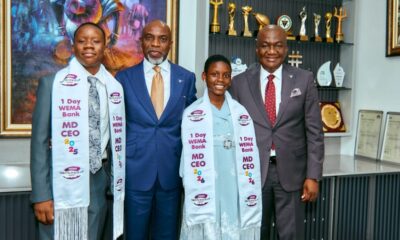
As Wema Bank counts down to its 80th anniversary on May 2nd, 2025, the world eagerly anticipates the future of possibilities that lies ahead for this phenomenal bank.


All roads lead to Lagos on May 2nd 2025, when Wema Bank, Nigeria’s oldest indigenous bank, leading innovative bank and pioneer of Africa’s first fully digital bank, ALAT, will be marking its 80th anniversary in grand style, in Lagos, the city where it all started.
Founded on May 2nd 1945 as Agbonmagbe Bank Limited, Wema Bank was established by the Late Chief Matthew Adekoya Okupe and two others—his wife, Regina Adekoya Okupe and a family friend, Reverend Alade.
In an era where the banking industry was designed to cater only to the colonial government and expatriates, Wema Bank came to life as a vanguard of indigenous banking, bridging the gap in access to financial services by providing quality financial services tailored to the needs of indigenous Nigerians and businesses.
The story of Wema Bank is one that symbolises remarkable resilience, capturing the journey of an indigenous Nigerian bank that dared to rise at the heights of the colonial era, weathering the storms of the difficult terrain, navigating challenges and constantly reinventing to continue serving Nigerians against all odds, for 8 solid decades and counting.
Founded on May 2nd, 1945, as Agbonmagbe Bank Limited, Wema Bank was established by the Late Chief Matthew Adekoya Okupe and two others—his wife, Regina Adekoya Okupe, and a family friend, Reverend Alade.
This great bank, which began as the mere vision of an illustrious philanthropist in a hollow room at Agbonmagbe Lodge, Yaba, Lagos, has now grown to not only become Nigeria’s longest standing indigenous and most resilient bank but also, Nigeria’s most innovative bank.
In truth, Wema Bank’s formidable legacy is proof that Nigerian businesses have the capacity to last, transcend time, adapt and innovate to remain valuable to customers, stakeholders, shareholders, industries, and the nation at large.
From empowering Nigerians with the finest quality of financial services to providing tailored opportunities for underserved categories of the population, spearheading the future of banking and being a backbone for Nigeria’s FinTech industry by not only pioneering the continent’s first fully digital bank, ALAT, but also allowing FinTechs to operate using the Bank’s secure and advanced network; Wema Bank has built a legacy of impact since 1945.
As Wema Bank counts down to its 80th anniversary on May 2nd, 2025, the world eagerly anticipates the future of possibilities that lies ahead for this phenomenal bank.
While details of the grand Wema at 80 event are yet to be disclosed, the event is reported to be the most star-studded and exclusive corporate celebration of the year.
It is convening generations of Nigerians in Lagos in a night of momentous reflection, merriment, and grandeur with the dress code and timeless elegance.





Business
Diesel Costs Bite: LAMATA Accelerates Shift To CNG, Electric Buses
The move comes as diesel prices have more than doubled, rising from about N950 per litre at the beginning of the year to between N1,950 and N2,100 per litre, depending on the source.
Lagos is accelerating its transition away from diesel-powered public transport as the Lagos Metropolitan Area Transport Authority (LAMATA) begins phasing out diesel buses from its regulated fleet, amid a surge in diesel prices that has pushed operating costs sharply higher.
LAMATA is targeting clean-energy propulsion for 52 per cent of its Bus Rapid Transit (BRT) fleet by 2050, with compressed natural gas (CNG) and electric vehicles (EVs) taking the place of conventional diesel buses under a policy that took effect at the beginning of 2026.
The Managing Director and Chief Executive Officer of LAMATA, Mrs. Abimbola Akinajo, disclosed this weekend, during the handover of 20 additional high-capacity CNG buses under the Presidential Initiative on CNG and EVs.
The latest delivery brings LAMATA’s CNG fleet to about 170 buses, following the deployment of approximately 150 CNG buses before the new vehicles were received.
The authority also operates high-capacity and medium-capacity electric buses.
Akinajo said some of the new CNG buses would be deployed on the busy Ikorodu–Tafawa Balewa Square corridor, where passenger demand remains high.
“We will only work with CNG or EV buses, and this has been the policy since the beginning of the year,” she said.
The move comes as diesel prices have more than doubled, rising from about N950 per litre at the beginning of the year to between N1,950 and N2,100 per litre, depending on the source.
For LAMATA, the shift is therefore not only an environmental policy but also a cost-management strategy aimed at shielding commuters and transport operators from the impact of rising fuel expenses.
Akinajo said regulated public transport fares had not been increased, partly because the lower operating costs of CNG and electric buses were helping to contain the pressure on operators.
“Regulated public transport fares have not increased, and these buses have helped us achieve that,” she said.
Diesel phase-outUnder the new policy, existing diesel-powered buses in the regulated system will be progressively replaced with CNG and electric alternatives.
Akinajo said the long-term direction was for the regulated system to ultimately operate an entirely electric fleet, while the broader clean-energy target provides a pathway towards reducing emissions from Lagos’ transportation sector.
Transportation remains a major source of emissions in the megacity, making the switch to cleaner buses a key component of Lagos State’s long-term ambition of achieving net-zero emissions by 2050.
BLACK MARKET RATES
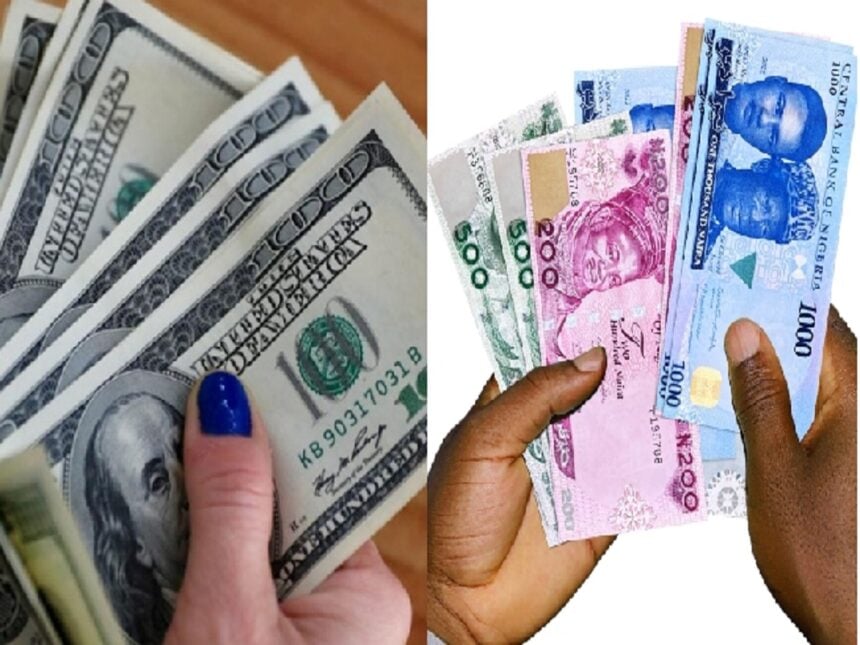
₦1375DOLLAR (USD)
₦1845 POUND (GBP)
EURO (EUR) ₦1550
₦1000 CANADIAN DOLLAR (CAD)
₦70 SOUTH AFRICAN RAND (ZAR)
₦370 UAE DIRHAM
₦190 CHINESE YUAN (CNY)
₦100 GHANA CEDI (GHS)
₦2350 CFA F.(XOF)
₦2250 CFA F.(XAF)
₦850 AUSTRALIAN DOLLAR (AUSSIE)
Official CBN Exchange Rates
DOLLAR (USD)₦1329.16
POUND (GBP)₦1766.59
EURO (EUR) ₦1510.06
SWISS FRANC (CHF) ₦1593.91
JAPANESE YEN (JPN)₦8.47
CFA FRANC (XOF) ₦2.30
WEST AFRICAN UNIT OF ACCOUNT (WAUA) ₦1807.23
CHINESE YUAN (CNY) ₦198.25
SAUDI RIYAL (SAR) ₦353.97
SOUTH AFRICAN RAND (ZAR) ₦81.18
Business
Obasanjo: “Aliko Embarrass Me”
He got all his workers together in that refinery and said, without telling me, and there, said…
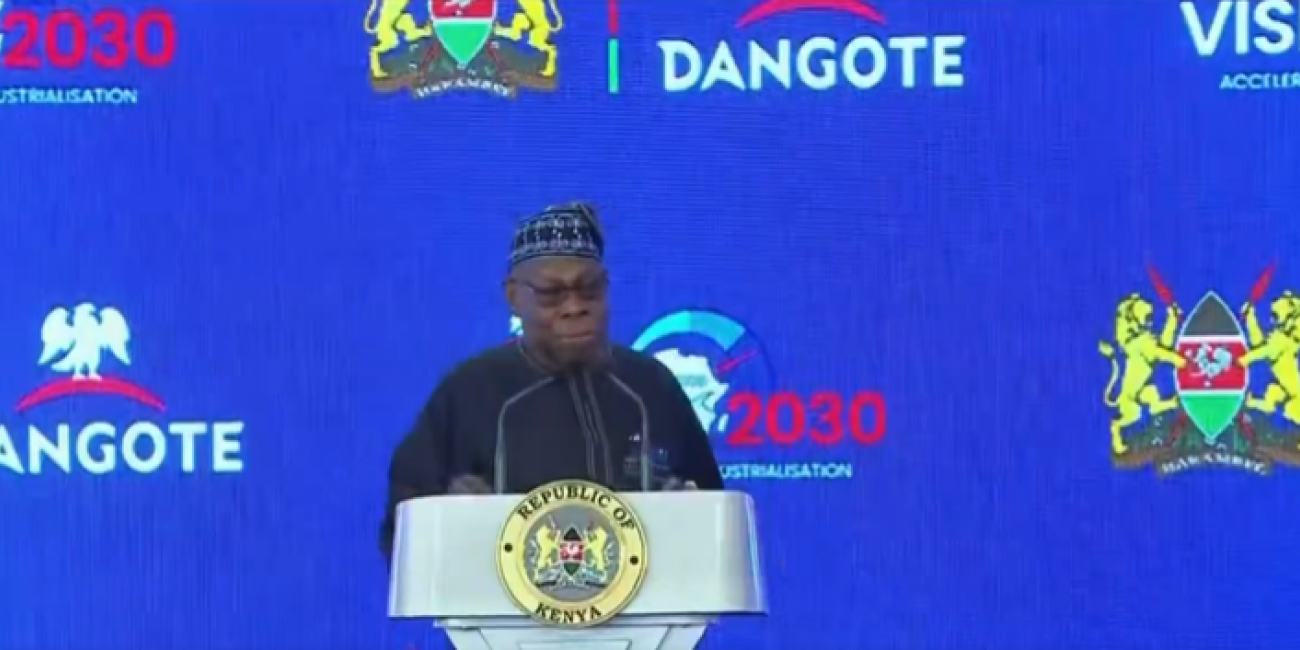
Former President of Nigeria, Olusegun Obasanjo, has described Aliko Dangote as his “boss”, crediting the businessman’s industrial achievements to the policies and encouragement provided by his administration.
Obasanjo said this while speaking at the groundbreaking ceremony of the Dangote East Africa Refinery in Lamu, Kenya, where he recalled his recent visit to the Dangote refinery and the businessman’s acknowledgement of the role he played in his transition from cement importation to production.
He said, “About two months ago, three months ago, I visited the refinery which you visited last week. And I just couldn’t stop being surprised what Aliko did. But then Aliko embarrassed me.”
According to Obasanjo, Dangote had gathered his workers during the visit and publicly attributed part of his success in cement production and the eventual development of his refinery to the policies and encouragement of the former president.
He said, “He got all his workers together in that refinery and said, without telling me, and there, said, all of you working here, all of you, the man you have to thank is this man, that’s me. I didn’t have anything to do with his refinery or what it is.
He said, without this man, I would not have been in cement production.“And it is the cement production that provided the encouragement, the inspiration for the refinery. So, thank you. They all shouted and thanked me.”
Obasanjo said Dangote had expanded the opportunities created by his administration beyond Nigeria, particularly through cement production across Africa, and was now replicating the model in the petroleum refining sector.
“May God continue to expand your coast. And you are my boss. You will continue to be my boss.”


Ethiopian woman says she hasn’t eaten or drunk water since age 10

Nigerian-Born Former Texas Professor Gets 78 Months For $921,000 Student Aid Fraud

Italy marks 800 years since death of Saint Francis of Assisi

Tech Expert, Zuckerberg trains with UFC champions, Adesanya, Alexander

Organ Trafficking: Ekweremadu bags 10 years in UK prison

SAINT OBI: Between his marriage and his death
-
 Business3 hours ago
Diesel Costs Bite: LAMATA Accelerates Shift To CNG, Electric Buses
-

 International3 hours ago
US’s Gullah Geechee communities celebrate historic cultural festival rooted in West Africa
-
 Politics3 days ago
Obafemi Hamzat promises to end ‘unauthorised levies’ in Lagos if he is elected
-
 News2 hours ago
Nigerian-Born Former Texas Professor Gets 78 Months For $921,000 Student Aid Fraud
-
 International2 hours ago
Italy marks 800 years since death of Saint Francis of Assisi
-

 Business3 days ago
Naira Rates To Dollar, Pound ,Euro… Friday, October 2
-
 International56 minutes ago
Ethiopian woman says she hasn’t eaten or drunk water since age 10