
News
BREAKING: Pope Francis dies at 88

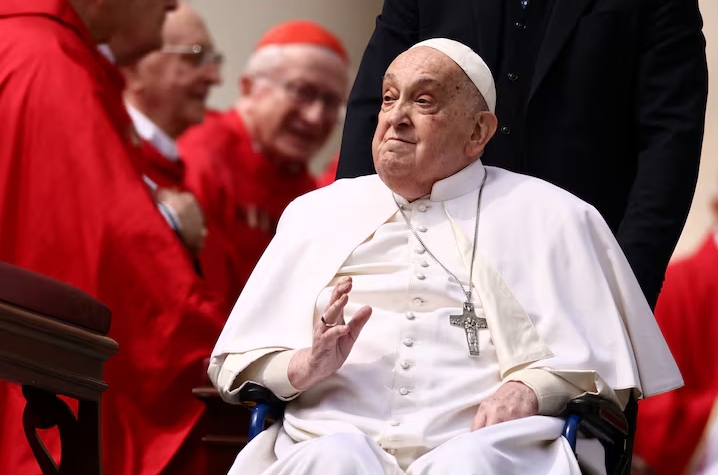
Pope Francis has died at the age of 88.
The Vatican confirmed that the pontiff passed away on Easter Monday at his residence in the Casa Santa Marta within Vatican City.
Camerlengo of the Apostolic Chamber, Cardinal Kevin Farrell, announced the death of Pope Francis from the Casa Santa Marta on Monday morning.
Farrel said the Pope died at exactly 7.35am.
His death comes hours after he greeted Catholic faithful who were at the Vatican on Sunday for the Easter mass.
The announcement by Cardinal Farrel read, “Dearest brothers and sisters, with deep sorrow, I must announce the death of our Holy Father Francis.
“At 7:35 this morning, the Bishop of Rome, Francis, returned to the house of the Father.
“His entire life was dedicated to the service of the Lord and of His Church. He taught us to live the values of the Gospel with fidelity, courage, and universal love, especially in favour of the poorest and most marginalised.
“With immense gratitude for his example as a true disciple of the Lord Jesus, we commend the soul of Pope Francis to the infinite merciful love of the One and Triune God.
”It would be recalled that Pope has been undergoing recovery after he was discharged from the Agostino Gemelli Polyclinic Hospital.
After 38 days in hospital, the late Pope returned to his Vatican residence at the Casa Santa Marta to continue his recovery.
The Pope was admitted on Friday, February 14, 2025, after suffering from a bout of bronchitis for several days.
Pope Francis’ clinical situation gradually worsened, and his doctors diagnosed bilateral pneumonia on Tuesday, February 18.
In 1957, in his early 20s, Jorge Mario Bergoglio underwent surgery in his native Argentina to remove a portion of his lung that had been affected by a severe respiratory infection.
As he aged, Pope Francis frequently suffered bouts of respiratory illnesses, even cancelling a planned visit to the United Arab Emirates in November 2023 due to influenza and lung inflammation.
In April 2024, the late Pope Francis approved an updated edition of the liturgical book for papal funeral rites, which will guide the funeral Mass, which has yet to be announced.
The second edition of the Ordo Exsequiarum Romani Pontificis introduces several new elements, including how the Pope’s mortal remains are to be handled after death.
The ascertainment of death takes place in the chapel, rather than in the room where he died, and his body is immediately placed inside the coffin.
According to Archbishop Diego Ravelli, Master of Apostolic Ceremonies, the late Pope Francis had requested that the funeral rites be simplified and focused on expressing the faith of the Church in the Risen Body of Christ.
“The renewed rite,” said Archbishop Ravelli, “seeks to emphasise even more that the funeral of the Roman Pontiff is that of a pastor and disciple of Christ and not of a powerful person of this world.”







News
UK court jails Nigerian man for masturbating in front of a woman
British Transport Police said Odutola approached a woman on the train, looked her up and down and became aggressive when she refused to engage with him. He then exposed himself while sitting in a wheelchair and began masturbating while staring at the woman and telling her to “come over”


•A Nigerian man and registered sex offender, Babatunde Odutola
A Nigerian man and registered sex offender, Babatunde Odutola has been jailed in the UK after exposing himself and masturbating in front of a woman on a train travelling towards Manchester.
Odutola, 36, of no fixed address, was sentenced to 44 weeks in prison at Manchester Magistrates’ Court on Monday, September 14, after pleading guilty to outraging public decency and breaching a suspended sentence order.
The incident occurred around 7pm on Friday, September 11, on a train travelling through Cheshire towards Manchester Piccadilly railway station.
British Transport Police said Odutola approached a woman on the train, looked her up and down and became aggressive when she refused to engage with him. He then exposed himself while sitting in a wheelchair and began masturbating while staring at the woman and telling her to “come over”.
A fellow passenger intervened and escorted the distressed woman from the carriage.
According to police, CCTV footage showed Odutola continued masturbating as other passengers walked through the carriage.
British Transport Police officers arrested him after the train arrived at Manchester Piccadilly. He was subsequently prosecuted and jailed within 72 hours of the incident
News
Digital Economy Minister Says NDPC Now Properly Functional With New HQ
” An asset recovered on behalf of the Nigerian people has now been returned to productive use for the Nigerian people. That is reform made tangible,” he said .

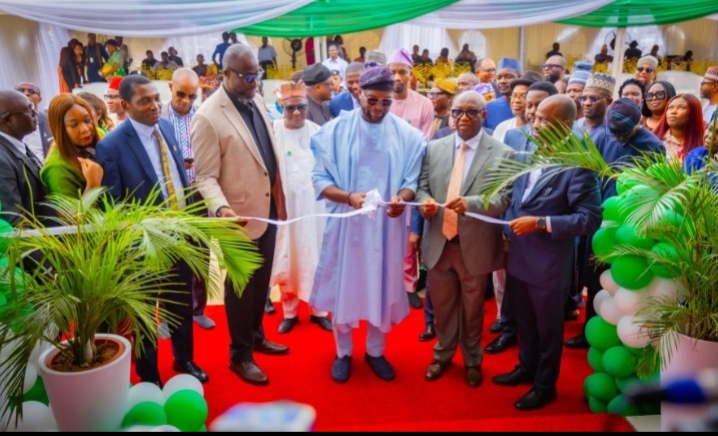
Abuja| NDPC new headquarters commission , Tuesday, 15 September,2026.
An EFCC-recovered property allocated to the Ministry of Communications, Innovation & Digital Economy, has been transformed to the new headquarters of the Nigeria Data Protection Commission (NDPC) in Abuja, as its headquarters.
Speaking during the commissioned ceremony of the building, the Honourable Minister incharge of the ministry, Dr. ‘Bosun Tijani, described the facility as a tangible demonstration of the visionary leadership of President Bola Ahmed Tinubu, and his commitment to building strong institutions that can support Nigeria’s growing digital economy.
The Minister emphasised that said the occasion represented more than the opening of a new office, but a reflection of the administration’s commitment to strengthening the institutions required to protect Nigerians and build trust in the country’s digital economy.
Dr. Tijani said, “Shortly after assuming office in 2023, President Tinubu signed the Nigeria Data Protection Act into law, giving the NDPC the appropriate legal foundation and authority to protect the data and privacy rights of Nigerians.
The President also directed Ministries, Departments and Agencies of the Federal Government to comply with established data protection laws and frameworks, demonstrating that government must lead by example in upholding the standards it expects from citizens and businesses.”
He added, “In the early days of the Commission, it was difficult to ask an institution to protect the data of over 200 million Nigerians and support one of Africa’s largest digital economies without the institutional resources to do so.
President Tinubu recognised this challenge and moved to solve it, approving the resources required for the NDPC to become properly operational and functional, while building towards becoming a sustainable institution in its own right.
He also directed that an EFCC-recovered property be allocated to the Commission as its headquarters.
“An asset recovered on behalf of the Nigerian people has now been returned to productive use for the Nigerian people. That is reform made tangible,” he said .

Boko Haram has strongly denied reports of a ceasefire agreement with the Federal Government and insisted that it will continue its campaign of attacks.
In a statement released by the group, the militants dismissed claims of any truce or negotiated pause in hostilities, describing such reports as false and misleading.
The group reaffirmed its commitment to ongoing operations against government forces and other targets, vowing that its attacks will persist without interruption.
The denial comes against the backdrop of persistent insecurity in the northeast and other affected regions, where the group has maintained a long-standing insurgency.
Security sources note that the latest statement appears aimed at clarifying the group’s position and rejecting any suggestion of dialogue or de-escalation with the authorities.
Military and government officials have not issued an immediate detailed response to the claim, though security operations against the militants remain active. Authorities continue to urge vigilance as the group signals its intention to sustain violence.


Macron Hosts Tinubu for Private Dinner at Élysée Palace (Photos)

Madonna Returns To MTV Video Music Awards, After 23 years

Emir Sanusi mobilises Kano People “Buy Dangote Refinery’s Shares Now”

Tech Expert, Zuckerberg trains with UFC champions, Adesanya, Alexander

Organ Trafficking: Ekweremadu bags 10 years in UK prison

SAINT OBI: Between his marriage and his death
-
 Health2 days ago
Ondo ‘Monkey Tail’ herbal drink kills 49
-

 Business2 days ago
Nigerians Speak As Petrol sells N1,500/litre
-
 Business2 days ago
Emir Sanusi mobilises Kano People “Buy Dangote Refinery’s Shares Now”
-
 News2 days ago
Digital Economy Minister Says NDPC Now Properly Functional With New HQ
-

 News2 days ago
UK court jails Nigerian man for masturbating in front of a woman
-
 Entertainment2 days ago
Madonna Returns To MTV Video Music Awards, After 23 years
-
 International1 day ago
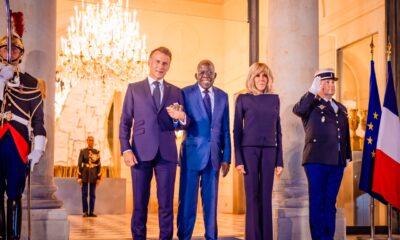
Macron Hosts Tinubu for Private Dinner at Élysée Palace (Photos)