
Business
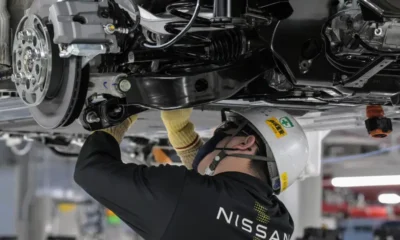
JUST IN: Honda and Nissan scrap merger talks


Japanese auto giants Honda and Nissan confirmed on Thursday they had scrapped merger talks that would have created the world’s third-largest automaker by unit sales.
AFP reports that the bid to join forces had been seen as a bid to catch up with US titan Tesla and Chinese firms in the electric vehicle market, as well as providing a lifeline to struggling Nissan.
The firms said in a joint statement that they “agreed to terminate the MOU (memorandum of understanding) signed on December 23 last year for consideration of a business integration between the two companies”.
That the both companies were not able to reach an agreement is very regrettable,” Honda’s CEO and president Toshihiro Mibe told reporters.
Mibe insisted in December that any merger would not be a bailout for Nissan, which announced last year thousands of job cuts after reporting a 93 percent plunge in first-half net profit.
Further illustrating its problems, Nissan said on Thursday that it was now expecting an annual loss of $518 million owing to slumping sales.
Japanese media reports have said the discussions unravelled after Honda proposed making its struggling rival a subsidiary instead of the plan, announced in December, to integrate under a new holding company.
The automakers confirmed in the joint statement that Honda “proposed changing the structure from establishing a joint holding company… to a structure where Honda would be the parent company and Nissan the subsidiary through a share exchange”.
Under a joint board, “the decision-making speed may slow when a tough decision is required,” Mibe said.


Business
CBN Pledges Policy Consistency Into 2027
The single-digit inflation target remains the anchor.


The Central Bank of Nigeria says that it will keep a consistent monetary policy direction in 2027, as it pursues the single-digit inflation target.
The stance puts policy continuity at the centre of the CBN’s inflation fight.
The bank is tying its inflation goal to consistency in monetary policy rather than a change in direction.
The single-digit inflation target remains the anchor.
The CBN’s message is that the target still stands and that policy will stay consistent in 2027.
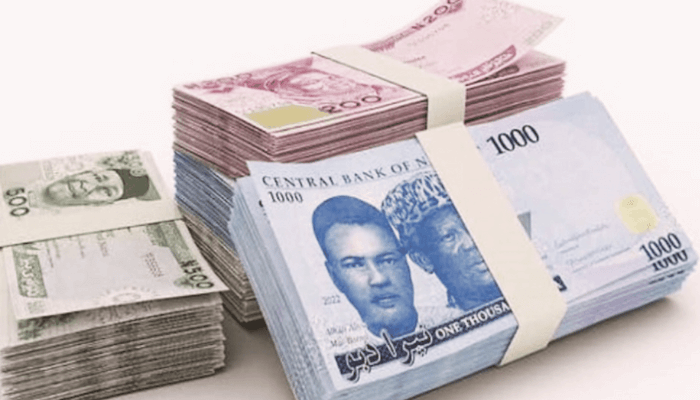
₦1450 DOLLAR (USD)
₦1875POUND (GBP)
₦1575EURO (EUR)
₦950 CANADIAN DOLLAR (CAD)
₦70 SOUTH AFRICAN RAND (ZAR)
₦350 UAE DIRHAM (AED)
₦190 CHINESE YUAN (CNY)
₦100 GHANAIAN CEDI (GHS)
₦2240 WEST AFRICAN CFA F.(XOF)
₦2180 CENTRAL AFRICAN CFA F.(XAF)
₦820 AUSTRALIAN DOLLAR (AUD)
Business
MAN Seeks Tobacco Exclusion From NAFDAC Bills Over Regulatory Overlap
The association further maintained that the existing regulatory framework, administered through the Federal Ministry of Health and Social Welfare and the Federal Ministry of Industry, Trade and Investment, already provides for the regulation of the legal tobacco sector.
The Manufacturers Association of Nigeria (MAN) has called on the National Assembly for explicit tobacco products exclusion from two proposed bills seeking to repeal and reenact the laws establishing the National Agency for Food and Drug Administration and Control (NAFDAC), warning that their passage could create overlapping regulatory responsibilities and increase compliance costs for manufacturers.
The bills are the National Agency for Food and Drug Administration and Control (Repeal and Enactment) Bill, 2026 (SB. 940) and the Food, Medical Products and Related Products (Registration, Etc.) Bill, 2026 (SB. 952).
The Director-General of MAN, Segun Ajayi-Kadir, therefore urged the lawmakers to remove all references to tobacco from both bills, including relevant definitions, schedules and consequential provisions.
It also called for an explicit exclusion clause to prevent tobacco products from subsequently being brought under the proposed legislation through administrative instruments.
According to the association, such a provision would preserve clarity in institutional mandates and regulatory responsibilities while preventing unnecessary regulatory overlaps.
MAN maintained that regulatory reforms should strengthen public-health protection, address demonstrable regulatory gaps and improve compliance without creating additional administrative burdens for legitimate businesses.
It argued that clear institutional mandates, proportionate enforcement and effective inter-agency coordination were essential to achieving these objectives while supporting manufacturing, employment and investment.
The association further maintained that the existing regulatory framework, administered through the Federal Ministry of Health and Social Welfare and the Federal Ministry of Industry, Trade and Investment, already provides for the regulation of the legal tobacco sector.
MAN reaffirmed its readiness to engage constructively with the National Assembly and relevant government institutions, particularly the two federal ministries, to ensure that the proposed legislation delivers effective regulation without unnecessary duplication, conflicting institutional mandates or regulatory uncertainty.


CBN Pledges Policy Consistency Into 2027

Naira Exchange Rates, Thursday,26 Nov

MAN Seeks Tobacco Exclusion From NAFDAC Bills Over Regulatory Overlap

BREAKING: Lagos Govt Declares Today, Thursday Work-Free to Mark 2026 Ìṣẹ̀ṣe Day

Tech Expert, Zuckerberg trains with UFC champions, Adesanya, Alexander

Why we Increase the 2025 Budget by ₦700bn – Bichi
-

 Entertainment2 days ago
BREAKING: Veteran Nollywood Actor Chief Pete Edochie Dies at 79
-

 News2 days ago
Katsina Suspends Emir of Daura Over Sexual Allegations By Polish Tourist
-
 News2 days ago
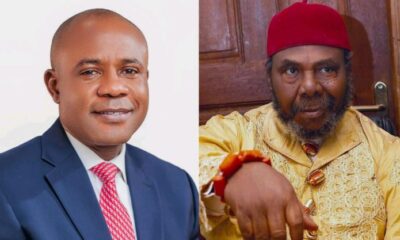
“We’ve Lost a Titan, Legend, an Icon,” Gov Mbah Mourns Edochi
-

 News2 days ago
Arise TV Obaigbena Denies Police Invitation, Calls Declaration ‘Smear Campaign’
-
 Business1 day ago
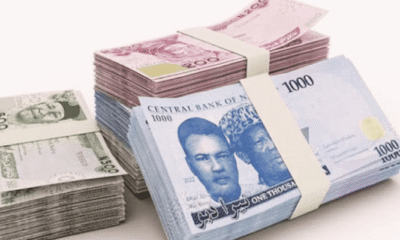
Naira Exchange Rates, Thursday,26 Nov
-

 News2 days ago
Mother, daughter crushed to death by truck in Abuja
-
Business2 days ago
Naira Exchange Rates, Wednesday, 25 Nov 2026
-

 Business2 days ago
Cardoso : Pressure on The Naira Is Seasonal Factors- It won’t last