News
2027: Coalition’s bid to unseat Tinubu faces setback as PDP suffers mass exodus

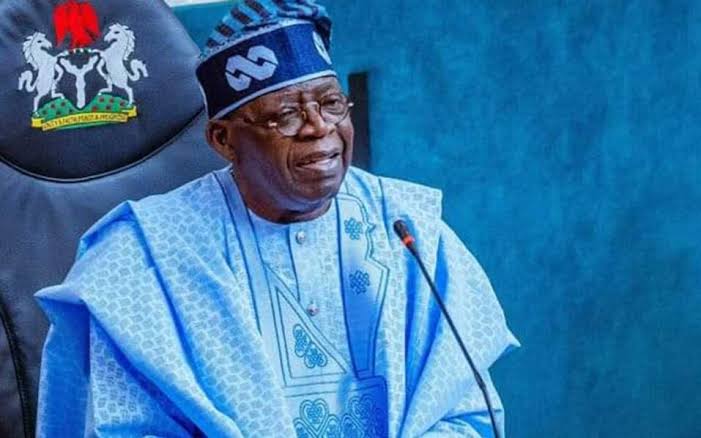
With two years to the next presidential election, mixed reactions have trailed the gale of defections by high-profile politicians from the Peoples Democratic Party, PDP, into the All Progressives Congress, APC.
This comes as it was hinted that the coalition spearheaded by former PDP’s presidential candidate Atiku Abubakar may not succeed against the President Bola Tinubu-led APC due to moves by some Fulani interests to escalate the Fulani war that has birthed itself in Nigeria.
Recently, Atiku, his counterpart from the Labour Party Peter Obi, Babachir Lawal, former Kaduna State governor Nasir El-Rufai, announced the formation of the coalition under the Social Democratic Party.
Since the announcement, no political bigwig has joined the party in their push to wrest power from Tinubu in 2027.
This is as the PDP and Atiku’s camp lost two major stakeholders from the South-South, Ifeanyi Okowa and Governor Sheriff Oborevwori of Delta State.
Okowa, who was Atiku’s presidential running mate in the 2023 election, had dumped the PDP for the APC alongside Oborevwori at a stakeholders’ meeting in Asaba, Delta State.
It was observed that Oborevwori’s defection now puts the APC in the lead in the Nigerian Delta region, Delta, Edo, and Cross River states are APC, while the governors of Akwa Ibom and Rivers states have backed President Tinubu, leaving only Bayelsa State with the PDP.
In the Southwest, the APC may likely retain votes from the region because Tinubu hails from the area.
For the North, there have been agitations over the region’s political leaning ahead of the 2027 presidential election, with former presidential aide Hakeem Baba-Ahmed saying the North will decide its political direction in the next six months because the administration of former President Muhammadu Buhari made the region wiser.
Baba-Ahmed said, “In the next six months, the North will decide where it stands. If the rest of the country wants to join us, fine. If not, we will go our own way.”
While Baba-Ahmed, a former spokesman of the Northern Elders Forum (NEF), El-Rufai has been trying to galvanize the North to tilt their votes towards the opposition coalition with his visit to the Emir of Kano, Muhammadu Sanusi, and former presidential candidate of the New Nigeria Peoples Party, Rabiu Kwankwaso amid talks with other prominent politicians from the rregion.






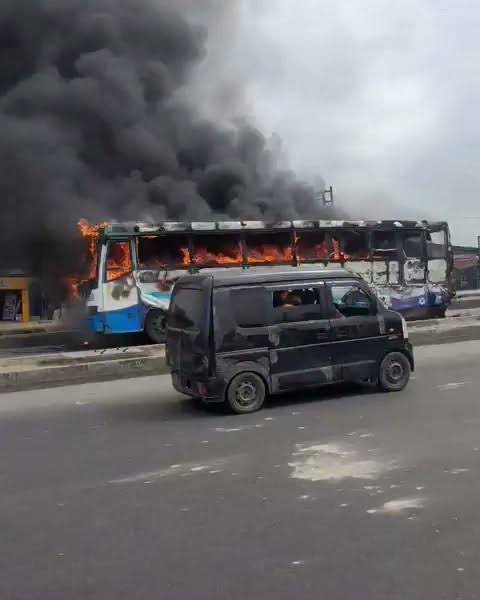
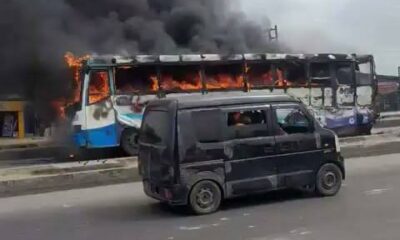
An angry mob has set a Bus Rapid Transit (BRT) bus on fire after it reportedly crushed a commercial motorcyclist to death at Ogolonto Bus Stop along Ikorodu Road in Lagos State.
The incident occurred on Friday, October 16, 2026. Eyewitness accounts and social media reports indicate that the motorcyclist was riding alone along the restricted BRT lane when the collision happened. He died at the scene.
Enraged residents and youths then attacked the bus driver and set the vehicle ablaze. Police officers and officials of the Lagos Neighbourhood Safety Corps (LNSC), who were nearby, intervened promptly and rescued the driver unharmed.
The identity of the deceased motorcyclist and the exact circumstances of the crash had not been officially confirmed at the time of filing this report. It was also unclear whether any arrests had been made in connection with the burning of the bus.
News
ARISE News Wins Seven Honours At Nigerian Broadcasters Merit Awards
The awards recognised the network’s achievements in television journalism and programming, with ARISE News winning the Best TV Channel (Viewer’s Choice) category.

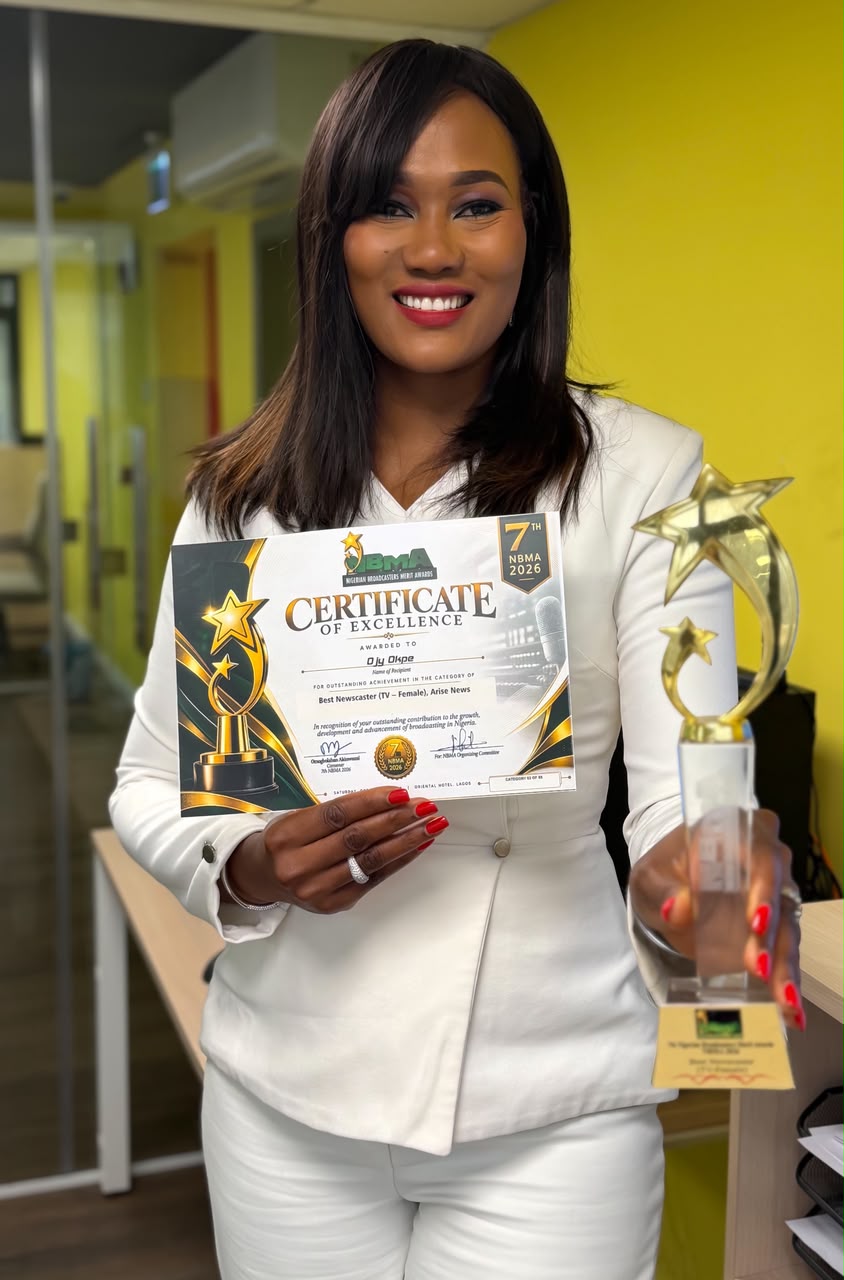
• ARISE News Anchor and host of What’s Trending Ojy Okpe was named Best Newscaster (TV – Female)
ARISE News has emerged as one of the major winners at the just ended Nigerian Broadcasters Merit Awards (NBMA).
ARISE News won seven honours across television broadcasting, news reporting, presentation and production during the ceremony.
The awards recognised the network’s achievements in television journalism and programming, with ARISE News winning the Best TV Channel (Viewer’s Choice) category.
The network’s flagship breakfast programme, The Morning Show, also won the Best TV Talk Show award, further strengthening its recognition in television broadcasting.
ARISE News Anchor and host of What’s Trending Ojy Okpe was named Best Newscaster (TV – Female).
Rufai Oseni was named Nigerian Broadcaster of the Year (Male), while Vimbai Mutinhiri-Ekpeyong received the Nigerian Broadcaster of the Year (Female) award.
The recognition extended to the network’s newsroom, with Ovieteme George winning Best TV News Reporter (Male) for his contributions to television news reporting.
Behind the camera, Sam Adeyemi received the Best Camera Operator/Cinematographer award, recognising his work in television production and visual storytelling.
News
Meta removes 3.7 million accounts in West Africa scam crackdown
The joint operation led to 28 arrests, identified more than 30 suspected scam centres and rescued 117 people allegedly trafficked and forced to work in scam compounds in Ghana.
Meta, the parent company of Facebook and Instagram, has removed more than 3.7 million Facebook and Instagram accounts, pages and groups linked to suspected scam networks operating in West Africa.
The joint operation led to 28 arrests, identified more than 30 suspected scam centres and rescued 117 people allegedly trafficked and forced to work in scam compounds in Ghana.
The company announced the crackdown in a statement on Tuesday, October 13, 2026. It involved 14 technology companies and law enforcement agencies from 10 countries.
The United Kingdom’s National Crime Agency coordinated the operation with the US Department of Justice, the Federal Bureau of Investigation and other agencies. Nigerian authorities were involved.
Other countries included Ghana, Australia, Canada, New Zealand and India.Tech companies that took part included Google, Microsoft, OpenAI, Coinbase, Starlink and Adobe.
Meta said the partnership let participants share intelligence across digital platforms, countries and financial systems to identify criminal networks.


JUST IN: Mob Sets BRT Bus Ablaze After Motorcyclist’s Death in Lagos

BREAKING: DSS Arrests Fugitive Maina Son, Hands Him to EFCC

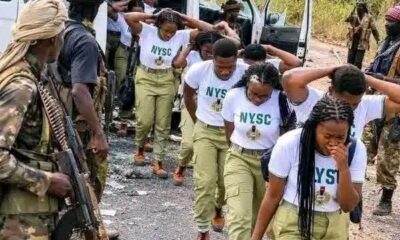
BREAKING: 5 Arrested Over Imo NYSC Abduction

BREAKING: Lagos Govt Declares Today, Thursday Work-Free to Mark 2026 Ìṣẹ̀ṣe Day

Tech Expert, Zuckerberg trains with UFC champions, Adesanya, Alexander