
International
14 bodies Found by Sri Lanka Navy As Chinese Boat Capsizes


At least 14 bodies have been recovered by Sri Lanka’s navy inside a Chinese fishing boat that had capsized last week with 39 crew on board.
The discovery came a day after a preliminary Chinese government probe concluded there were no survivors.
The Lu Peng Yuan Yu 028 overturned on May 16, with 17 Chinese, 17 Indonesians and five Filipinos on board within Australia’s vast search-and-rescue region, 5,000 kilometres (2,700 nautical miles) west of Perth.
The Sri Lankan navy said its divers had recovered two bodies and spotted 12 more on Tuesday, releasing photos showing the upturned red hull of the vessel and bodies being hauled out of the water.
“Due to decomposition and the potential health hazards posed by operating in contaminated waters with limited protective gear, it was determined that retrieving those bodies would be exceedingly dangerous,” the navy said in a statement.
It said the locations of the 12 bodies inside the boat were mapped and handed to Chinese authorities. The nationalities of the located bodies were not immediately known.
The Sri Lankan navy statement came a day after a preliminary probe by the Chinese transport ministry concluded that all those on board had died.
Australia had sent three aeroplanes and four ships to help in the international search-and-rescue efforts.
Rescuers had trawled an area of around 64,000 square kilometres (18,700 square nautical miles), and “did not find any sign of survivors”, according to the Chinese transport ministry.
The fishing vessel’s distress beacon was first detected last week as Cyclone Fabian drove waves as high as seven metres (23 feet) and winds as strong as 120 kilometres per hour (75 miles per hour) through the area.
Rough weather held back rescue efforts, with the Joint Rescue Coordination Centre (JRCC) in Canberra warning of “challenging” survival conditions.
The vessel was owned by the Penglai Jinglu Fishery Company, one of China’s major state-run fishing firms.
It was authorised to fish for neon flying squid and Pacific saury, according to the North Pacific Fisheries Commission.
It left Cape Town in South Africa on May 5 for Busan in South Korea, according to the Marine Traffic tracking website, which last located the vessel on May 10 southeast of Reunion, a tiny French island in the Indian Ocean.
Penglai Jinglu Fishery also runs squid and tuna fishing operations in international waters, including the Indian Ocean and seas surrounding Latin America.
AFP

International
Iran reopens Strait of Hormuz following two-week cease-fire agreement with Trump
Pakistan, which has mediated between Tehran and Washington, said that an immediate ceasefire between Iran and the US had taken effect.

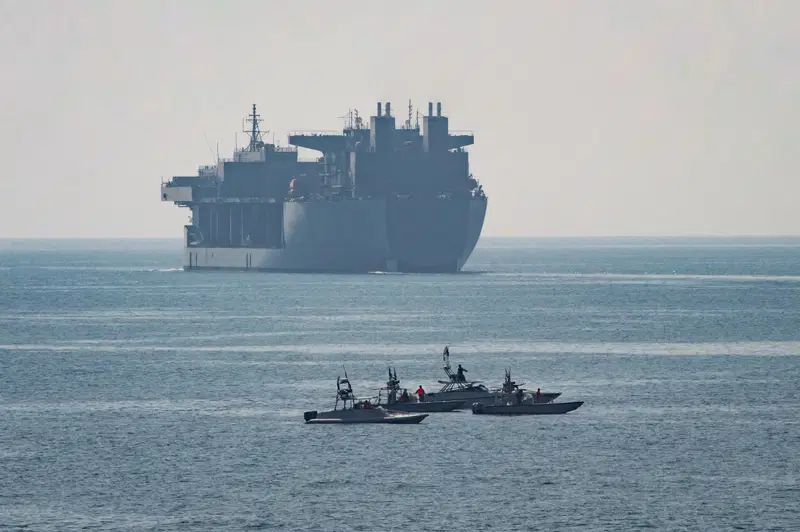
Iranian Foreign Minister Abbas Araghchi said safe passage through the Strait of Hormuz would be possible for two weeks in coordination with Iran’s armed forces “and with due consideration of technical limitations.”
The development follows a two-week ceasefire announced by U.S. President Donald Trump, the Tasnim news agency, which is close to the Islamic Revolutionary Guard Corps (IRGC), reported early on Wednesday.
Pakistan, which has mediated between Tehran and Washington, said that an immediate ceasefire between Iran and the US had taken effect.
Prime Minister Shehbaz Sharif wrote on X that the Islamic Republic of Iran and the U.S., along with their allies, had agreed to an “immediate ceasefire everywhere,” including in Lebanon.“
Trump had made reopening the waterway a condition for the ceasefire and had threatened to target Iran’s energy sector and infrastructure, including bridges, if Tehran failed to comply, setting a deadline of 0000 GMT.
The Strait of Hormuz, crucial to global oil and gas trade, has been largely closed since the United States and Israel launched large-scale attacks on Iran on Feb. 28.
According to a senior U.S. official, Israel will also adhere to what Trump described as a “double sided CEASEFIRE.”
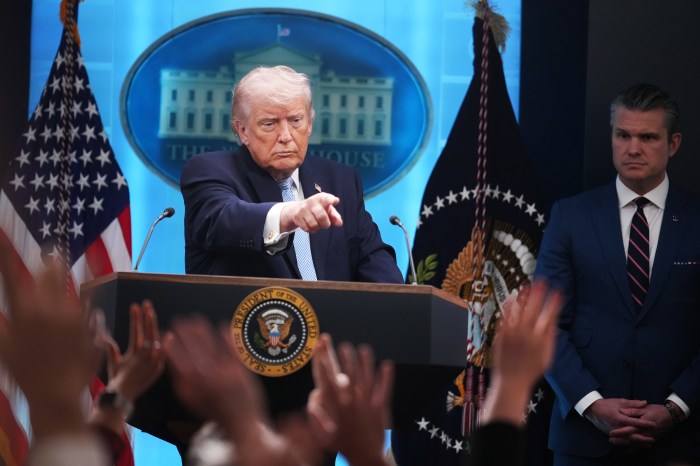
Oil prices climbed sharply while global stocks wavered and mostly declined on Tuesday as President Donald Trump’s looming deadline for Iran to reopen the Strait of Hormuz or face escalated U.S. strikes heightened geopolitical tensions and investor anxiety.
Brent crude futures rose about 1% to trade near $111 per barrel, with U.S. West Texas Intermediate crude also pushing higher amid fears that prolonged disruption to the critical waterway through which a significant portion of global oil supplies passes could worsen energy shortages. Oil has surged more than 50% since the conflict intensified.
Meanwhile, major U.S. stock indexes showed mixed but largely cautious trading, with many shares slipping as investors weighed the risk of further military escalation, including potential strikes on Iranian power plants and infrastructure.
European and Asian markets were similarly tentative, reflecting broader concerns over inflation, energy costs, and economic fallout from the ongoing Middle East conflict.
Trump has set a firm deadline of 8 p.m. ET Tuesday (1 a.m. GMT Wednesday) for Iran to reach a deal and reopen the strait, warning of decisive action if unmet. He has threatened to “decimate” Iranian bridges and power plants, stating the country “could be taken out in one night.
”Iran has rejected recent ceasefire proposals, calling instead for a permanent end to hostilities, while markets remain on edge with no clear resolution in sight.
Analysts warn that sustained high oil prices could fuel global inflation and slow economic growth, though some investors still hope for a last-minute diplomatic breakthrough.
The developments come as the International Energy Agency has described the current oil and gas crisis linked to the Hormuz blockade as potentially more severe than previous major shocks combined.
International
Trump warns Entire Iran could be ‘taken out’ Tuesday night
” The entire country could be taken out in one night, and that night might be Tuesday night,” he said.
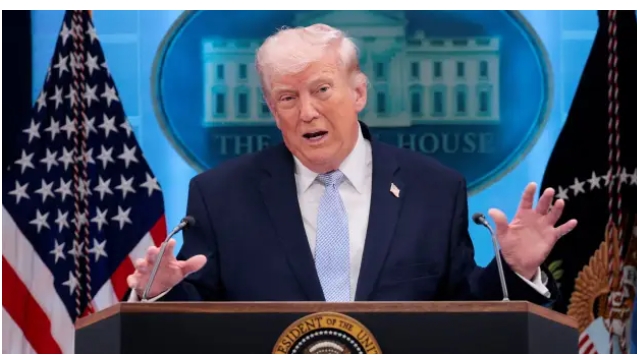
US President Donald Trump says Iran could be “taken out” in one night as the deadline set for the country to open the Strait of Hormuz to shipping traffic approaches.
On Saturday, Trump gave Iran 48 hours to comply or risk facing “hell”.
He later threatened that the US would blow up Iran’s power plants and bridges if Tehran failed to adhere to his warning.
The US president said Iran had until Tuesday at 8 p.m. ET (1 am WAT) to make a deal.
In a press conference on Monday, Trump reiterated and intensified his threats.
“The entire country could be taken out in one night, and that night might be Tuesday night,” he said.


FG Unmasks 60 Persons and Corporates Behind Terrorism Financing, Order Banks To Freeze Their Accounts

Police reopens, handover PDP Hqtrs to Wike backed Faction

Gunmen Kill Traditional Ruler, Four Others in Imo State, Set Bodies Ablaze

Tech Expert, Zuckerberg trains with UFC champions, Adesanya, Alexander

Organ Trafficking: Ekweremadu bags 10 years in UK prison

SAINT OBI: Between his marriage and his death
-

 News2 days ago
CBN Debunks Viral Fake News of ₦5,000 Banknote Featuring President Tinubu’s Image
-

 News3 days ago
INEC releases updated voters registration figure nationwide
-

 Politics2 days ago
2027: Bode George warns INEC, Judiciary Drifting Nigeria Towards ” One Party Rule”
-

 Crime2 days ago
Tinubu Mourns Soldiers Killed in Benisheikh Terror Attack
-
 Business2 days ago
DR Congo Central Bank Announces Ban on Foreign Currency Cash Transactions from 2027
-
 News3 days ago
US Declares 23 Nigerian States High-Risk for Citizens
-

 Politics2 days ago
NBA Cautions Lawyers Against Involvement in Political Party Disputes
-

 News2 days ago
Police Debunk Viral “Terror Attack” Video in Abuja, Launch Investigation