
Health
WHO Declares Emergency As Ebola Kills 88 In Congo
Early symptoms include fever, muscle pain, fatigue, headache, and sore throat, and are followed by vomiting, diarrhoea, a rash, and bleeding.

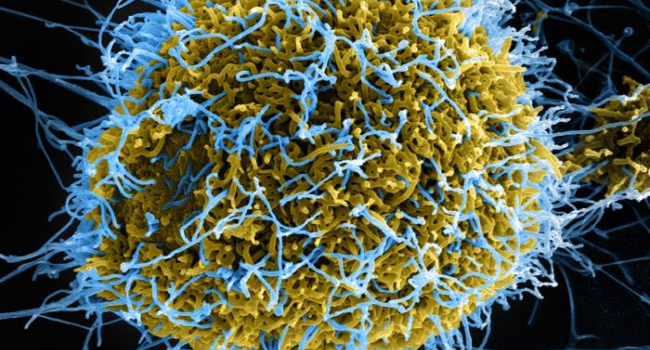
• Ebola
The World Health Organization (WHO) has declared the latest Ebola outbreak in the DRC and neighbouring Uganda a “public health emergency of international concern”.
The outbreak, originating in eastern DRC’s Ituri province, which has seen around 246 suspected cases, involves the rare Bundibugyo strain of Ebola.
The variant has no approved vaccine or treatment.
Health authorities said the outbreak poses a high regional risk because infections have already been detected in Uganda, and cases linked to the outbreak have reached Congo’s capital, Kinshasa, and killed 88 people.
The WHO, however, stopped short of declaring a pandemic, saying it did not meet the necessary criteria.
The United Nations agency advised countries against closing borders or restricting trade.
Early symptoms include fever, muscle pain, fatigue, headache, and sore throat, and are followed by vomiting, diarrhoea, a rash, and bleeding.


Health
Ebola In Nigeria: Symptoms, Spread and How To Protect Yourself
According to the WHO, transmission between people occurs primarily through direct contact with the blood or other body fluids of an infected person who has developed symptoms, or someone who has died from the disease.
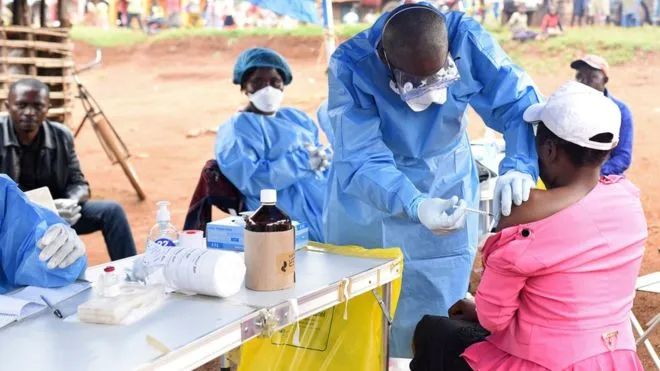
•Health workers attend to an Ebola patient in Democratic Republic of Congo
Ebola is a severe viral disease that can cause high levels of mortality.
The WHO says the average case fatality rate across Ebola disease outbreaks is approximately 50 per cent, although the rate varies substantially according to the virus, outbreak circumstances and access to care.
The virus is not airborne in the manner of infections that spread through ordinary breathing in shared indoor spaces.
According to the WHO, transmission between people occurs primarily through direct contact with the blood or other body fluids of an infected person who has developed symptoms, or someone who has died from the disease.
Infection can occur when contaminated fluids enter the body through broken skin or the eyes, nose or mouth.
Objects contaminated with infectious body fluids, including clothing, bedding and medical equipment, can also spread the virus.
People may also become infected through contact with infected animals, particularly when handling sick or dead wildlife or consuming inadequately handled products from infected animals.
Traditional burial practices involving direct contact with the body of someone who died from Ebola can contribute to transmission if appropriate precautions are not taken.
Healthcare workers and family members caring for patients without suitable protective measures can face a heightened risk.
The WHO says people infected with Ebola do not transmit the disease before symptoms develop.
Once symptoms begin, they can remain infectious while the virus is present in their blood.
The incubation period — the time between infection and the appearance of symptoms — ranges from two to 21 days.

The Federal Government has confirmed Nigeria’s first case of Ebola virus disease in the current regional outbreak, authorities announced Tuesday.
A woman who recently arrived in the country on an international flight from Uganda tested positive after being treated for several days at a private hospital in the Federal Capital Territory (FCT), Abuja. Laboratory confirmation was received on October 20.
The patient is now in isolation and receiving medical care. Health officials have identified 44 close contacts so far and begun contact tracing. These include healthcare workers, other patients, caregivers, and travel contacts.
Coordinating Minister of Health and Social Welfare Prof. Muhammad Ali Pate said the Federal Ministry of Health, the Nigeria Centre for Disease Control and Prevention (NCDC), and FCT health authorities are working together to contain the infection and prevent further spread. Surveillance has been intensified, and the hospital where the patient was treated is receiving support to strengthen infection prevention and control measures.
Pate urged healthcare facilities nationwide to maintain a high index of suspicion, promptly isolate suspected cases, and report them immediately. He also called on the public to cooperate with contact-tracing teams, avoid spreading unverified information, and refrain from stigmatising those who may have been exposed.
Nigeria successfully contained an Ebola outbreak in 2014. Officials say the country has the experience and public health systems needed to respond to this case. The confirmation comes amid a wider regional outbreak linked to cases in the Democratic Republic of the Congo and elsewhere.
Health
Millions of bedbugs crawl out of mattresses and walls in huge outbreak
Bedbugs can enter homes on clothes, luggage, or second hand furniture – and “hide” in mattresses or walls, according to the NHS.

Millions of bedbugs were crawling out of mattresses in what a pest controller said was the worst outbreak he had seen in 38 years.
They were even in the walls and under the wallpaper, with the mattresses and bed frames needing to be incinerated.
Cardiff pest controller Gareth Davies had to wear full protection as his team tackled the problem in the Canton area of the city, using a specialist vacuum cleaner to collect millions of the bugs.
It came after they had tackled a large cockroach outbreak last month in a scene he likened to a horror movie.
“This house was just horrific,” he told BBC Radio Wales Breakfast.
“Hundreds of thousands of them when you lifted the mattresses up.
“They were coming out of the wallpaper, it was horrendous.”
Bedbugs can enter homes on clothes, luggage, or second hand furniture – and “hide” in mattresses or walls, according to the NHS.
Credit: BBC


JUST IN: Gas Emissions Hit Ogun Schools, Hundreds of Pupils Hospitalised

Ebola In Nigeria: Symptoms, Spread and How To Protect Yourself

NDC Plans Fresh Congresses To Replace Defector Members

BREAKING: Lagos Govt Declares Today, Thursday Work-Free to Mark 2026 Ìṣẹ̀ṣe Day

Tech Expert, Zuckerberg trains with UFC champions, Adesanya, Alexander

Organ Trafficking: Ekweremadu bags 10 years in UK prison
-

 Sports2 days ago
Mbappé wins Onze d’Or award for 2025/26 season
-

 Business24 hours ago
Naira Exchange Rates Wednesday, October 21, 2026
-

 Business23 hours ago
Currency Words You Should Know
-

 Business23 hours ago
NCC, CBN To Warn Companies By Flagging Fraudulent Phone Numbers
-

 News3 days ago
JUST IN: Ex-Delta Gov Uduaghan Dies at 71, Oborevwori Mourns
-

 Sports2 days ago
Ronaldo Gets 30-Day Suspension For Portugal Camp Walkout
-
 Business22 hours ago
JPMorgan Eyeing Entry Into Nigeria’s Banking Industry
-
 Health2 days ago
BREAKING: Nigeria Confirms First Ebola Case