
News
WAEC and NECO Exams Not for under 18 — Minister

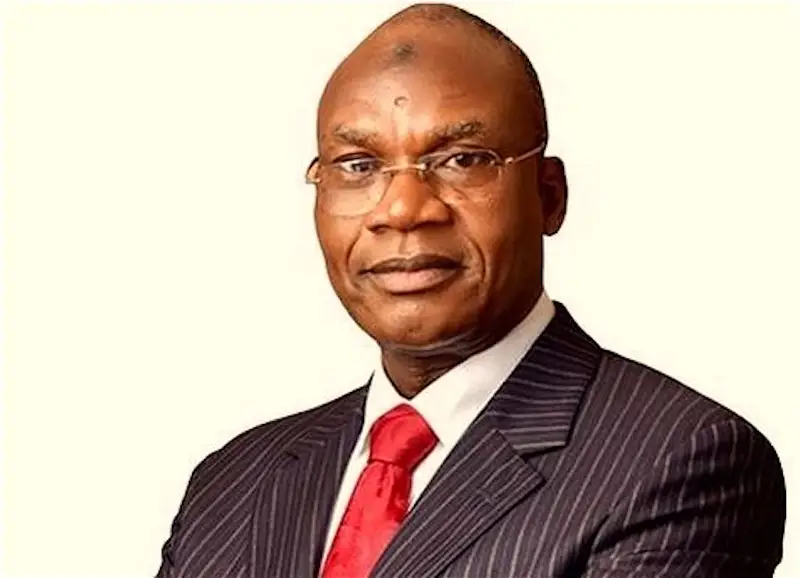
The Minister of Education, Prof. Tahir Mamman, has clarified that the West African Examinations Council (WAEC) and the National Examinations Council (NECO) are not for under eighteen-year-old candidates in secondary schools to sit for.
Prof Mamman disclosed this when he appeared on Channels Television’s ‘Sunday Politics’ programme on Sunday night.
He stressed that both the West African Examinations Council (WAEC) and the National Examinations Council (NECO) must now enforce an 18-year age limit for candidates taking the WASSCE and SSCE exams, respectively.
The minister also clarified that this is not a new policy but a reinforcement of existing regulations.
His words: “It is 18 (years). What we did at the meeting that we had with JAMB (in July) was to allow this year and for it to serve as a kind of notice for parents that this year, JAMB will admit students who are below that age but from next year, JAMB is going to insist that anybody applying to go to university in Nigeria meets the required age which is 18
he minister also clarified that this is not a new policy but a reinforcement of existing regulations.
His words: “It is 18 (years). What we did at the meeting that we had with JAMB (in July) was to allow this year and for it to serve as a kind of notice for parents that this year, JAMB will admit students who are below that age but from next year, JAMB is going to insist that anybody applying to go to university in Nigeria meets the required age which is 18.
“For the avoidance of doubt, this is not a new policy; this is a policy that has been there for a long time.
“Even basically if you compute the number of years pupils, and learners are supposed to be in school, the number you will end up with is 17 and a half – from early child care to primary school to junior secondary school and then senior secondary school. You will end up with 17 and a half by the time they are ready for admission.
“So, we are not coming up with new policy contrary to what some people are saying; we are just simply reminding people of what is existing. In any case, NECO and WAEC, henceforth, will not be allowing underage children to write their examinations.
In other words, if somebody has not spent the requisite number of years in that particular level of study, WAEC and NECO will not allow them to write the examination.”
The minister also stated that the age limit for candidates taking the Unified Tertiary Matriculation Examination (UTME), administered by the Joint Admissions and Matriculation Board (JAMB), remains set at 18 years.






News
South African kills Nigerian bar worker
Olaleye was allegedly shot by a South African national following an argument over whether a drinking glass should be taken outside the bar.
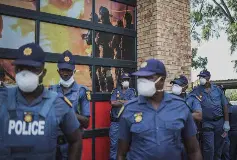
• South African police
The Nigerian Union in South Africa (NUSA) says Olatunde Olaleye, a 40-year-old father of two, has been shot dead in the country.
According to NAN, NUSA said Olaleye, an indigene of Ikere-Ekiti, was killed on September 21 while working at Spanata Bar and Grills in Mamelodi, Pretoria.
Smart Nwobi, NUSA president-general, in a statement on Thursday, said Olaleye was a husband and father of two children, adding that his death has left his family devastated.
He said the union is concerned by reports that Olaleye was allegedly shot by a South African national following an argument over whether a drinking glass should be taken outside the bar.
According to him, there were also reports that the suspect returned to the premises to threaten the bar’s management, with a promise that members of his crew would return.
Nwobi called for a thorough, transparent and impartial investigation into the circumstances surrounding the incident.
“We cannot continue to lose Nigerians under circumstances that leave families devastated and communities traumatised,” he said.
News
Nigerian Editors Brace for Democracy Protection Ahead of 2027 Elections
“As editors, we must remain above board in an increasingly polarised environment. We must not become agents of disorder. Neither should we display contradictory tendencies that cause the citizenry to question our credibility,” Anaba said.
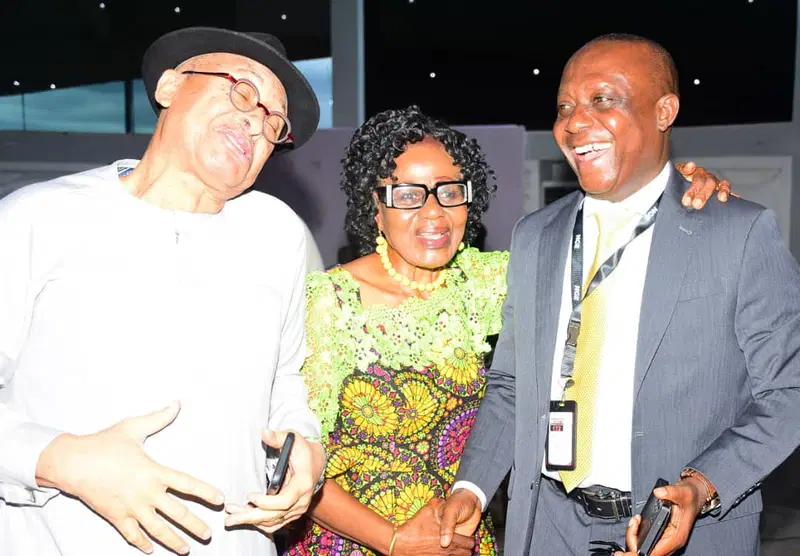
Enugu|•L-R Prof Pat Utomi; Prof Chinyere Okunna and Eze Anaba President Nigerian Guild of Editors at the 22nd All Nigerian Editors Conference in Enugu. Photo. Nwankpa Chijioke
Nigerian editors have been urged to protect the credibility of the ballot and help safeguard democracy as the country prepares for the 2027 general elections.
The call was made by Eze Anaba, President of the Nigerian Guild of Editors (NGE) and Editor of Vanguard Newspaper, in his welcome address at the 22nd Annual All Nigerian Editors Conference, which opened today in Enugu.
The conference is themed, “The Ballot, the Media and the Task of Keeping Democracy Alive.”
Anaba said the media, alongside other critical institutions, had a responsibility to nurture democracy by ensuring that voters were adequately informed and that electoral outcomes reflected the choices of the people.
According to him, the ballot can only fulfil its democratic purpose when voters have access to credible information and are able to make their choices freely, without intimidation or undue influence.
He urged editors and journalists to uphold verification, independence, accuracy, fairness, accountability and courage, particularly in an era of social media, artificial intelligence, deepfakes and the rapid spread of misinformation.
“As editors, we must remain above board in an increasingly polarised environment. We must not become agents of disorder. Neither should we display contradictory tendencies that cause the citizenry to question our credibility,” Anaba said.
He stressed that the media’s overarching responsibility was to serve the public good and help ensure that government derived its legitimacy from the consent of the people.
News
Works Minister Orders Tinubu’s Pictures On First Niger Bridge
“The President has worked so hard and we need to reward his hard work by decorating this bridge with his pictures.”

Minister of Works, David Umahi, has ordered the removal of illegal advertisements from the rehabilitated First Niger Bridge and their replacement with pictures of President Bola Tinubu, saying the display would recognise the President’s work on infrastructure.
Umahi gave the directive during an inspection of ongoing rehabilitation works on the bridge linking Anambra and Delta states.
He said the bridge was expected to reopen to motorists next week, subject to the completion of critical structural work.
“Once we are done with work on this bridge, I want all the illegal adverts on this bridge removed. Anyone who wants to advertise should apply to the Ministry of Works. For now, the bridge will be decorated with the pictures of President Tinubu,” Umahi said.
“The President has worked so hard and we need to reward his hard work by decorating this bridge with his pictures.”


Congo military plane crash kills 13, including three officers

Manchester City Faces Expulsion For Breaching 114 EPL Financial Rules

TIME Names Moniepoint CTO Felix Ike Among 50 Global Executives of the Year

Tech Expert, Zuckerberg trains with UFC champions, Adesanya, Alexander

Organ Trafficking: Ekweremadu bags 10 years in UK prison

SAINT OBI: Between his marriage and his death
-
 Business3 days ago
FG Engages Stakeholders On Nigeria’s Rice Value Chain
-

 Business3 days ago
Naira To Dollar, Pound , Euro Rate Wednesday September 23
-
 Business2 days ago
Airtel Money Targets October Listing On London Stock Exchange
-
 Business2 days ago
MAN Urges CBN To Consider CRR Cut Next Phase of Monetary Easing
-

 Crime1 day ago
JUST IN: Zamfara LG Chairman Freed After 61 Days in Captivity
-

 Business3 days ago
Cardoso Says Multiple FX Windows Cost Nigeria 3% of GDP, Higher Than Fuel Subsidy
-
 Sports1 day ago
FIFA names Nigerian referee among 81 officials for U-17 World Cup
-

 News2 days ago
VP Shettima, Gov Mbah to address Over 500 editors on 2027 election issues