
International
The 14-point US-Iran pact to halt war
The United States of America undertakes with regional partners to develop a definitive, mutually agreed plan with at least USD 300 billion for the reconstruction and economic development of the Islamic Republic of Iran.

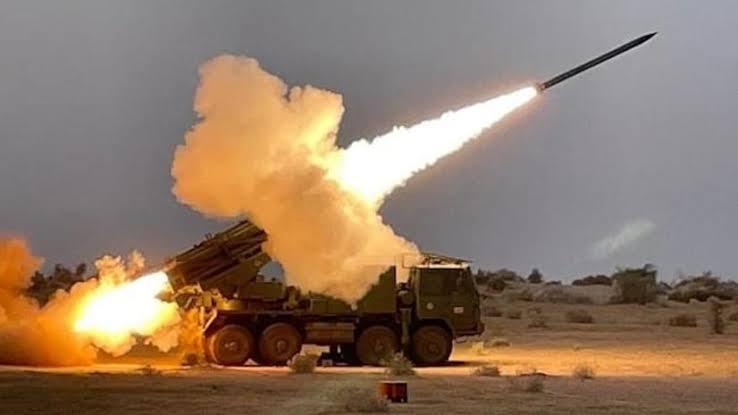
The United States on Wednesday read out the text of the interim U.S.-Iran agreement to halt the war in Iran and open the Strait of Hormuz.
The agreement, read to reporters by a senior U.S. official, outlines in 14 points a high-level understanding that defers many of the most difficult issues, such as how to wind down Iran’s nuclear program, until a final deal is reached.
It paves the way for a broader 60-day negotiation period due to begin in Switzerland on Friday.
According to Reuters, here is the full document, titled “Islamabad Memorandum of Understanding between the United States of America and the Islamic Republic of Iran:
1. The United States of America and the Islamic Republic of Iran and their allies in the current war, by signing this MOU (Memorandum of Understanding), declare the immediate and permanent termination of military operations on all fronts, including in Lebanon, and undertake from now on not to initiate any war or any military operation against each other, and to refrain from the threat or use of force against each other, and ensuring the territorial integrity and sovereignty of Lebanon. The final deal will confirm the permanent termination of the war on all fronts, including in Lebanon, and other provisions of this paragraph.
2. The United States of America and the Islamic Republic of Iran undertake to respect each other’s sovereignty and territorial integrity, and to refrain from interfering in each other’s internal affairs.
3. The United States of America and the Islamic Republic of Iran commit to negotiating and achieving the final deal in maximum 60 days extendable with mutual consent.
4. Immediately upon the signing of this MOU, the United States of America will begin the removal of its naval blockade and any disturbances or impediments against the Islamic Republic of Iran, and will fully end the naval blockade within 30 days.
During this period, the traffic of vessels will be in proportion to the numbers of pre-war traffic being restored by the Islamic Republic of Iran.
“Islamabad Memorandum of Understanding between the United States of America and the Islamic Republic of Iran”
The United States of America further undertakes to remove its forces from the proximity of the Islamic Republic of Iran within 30 days after the final deal.
5. Upon the signing of this MOU, the Islamic Republic of Iran will make arrangements using its best efforts for the safe passage of commercial vessels with no charge for 60 days only from the Persian Gulf to the Sea of Oman and vice versa. The traffic of commercial vessels will immediately start and, considering the need for removing the technical and military obstacles and de-mining by the Islamic Republic of Iran, will be instated within 30 days.
The Islamic Republic of Iran will conduct dialog with the Sultanate of Oman to define the future administration and maritime services in the Strait of Hormuz, in discussion with other Persian Gulf littoral states in line with the applicable international law and the sovereign rights of coastal states of the Strait of Hormuz.
6. The United States of America undertakes with regional partners to develop a definitive, mutually agreed plan with at least USD 300 billion for the reconstruction and economic development of the Islamic Republic of Iran. The mechanism for the implementation of this plan will be finalized as part of final deal within 60 days. All required licenses, waivers, and permissions needed for the relevant financial transactions will be granted by the United States of America.
7. The United States of America undertakes to terminate all types of sanctions against the Islamic Republic of Iran, including the United Nations Security Council resolutions, i.e. IAEA Board of Governors resolutions, and all unilateral U.S. sanctions, primary and secondary, in an agreed upon schedule as part of the final deal. The Islamic Republic of Iran and the United States of America acknowledge the critical importance of the sanctions termination issue above mentioned and express their intentions to immediately address these issues in the negotiations in order to achieve mutual agreement on them.
8. The Islamic Republic of Iran reaffirms that it shall not procure or develop nuclear weapons.
The United States of America and the Islamic Republic of Iran have agreed to resolve the disposition of stockpiled enriched material pursuant to a mechanism that will be mutually agreed upon, in accordance with the schedule mentioned in paragraph seven with the minimum methodology to be down blending on site under the supervision of the IAEA. The two parties also agreed to discuss the issue of enrichment and other mutually agreed matters related to the Islamic Republic of Iran’s nuclear needs, based on a satisfactory framework being agreed upon in the final deal. The final deal will confirm the provisions of this paragraph.
The United States of America and the Islamic Republic of Iran acknowledge the critical importance of the nuclear issues above mentioned and express their intention to immediately address these issues in the negotiations in order to achieve mutual agreement on them.
9. Pending the final deal, the United States of America and the Islamic Republic of Iran agree to maintain the status quo. The Islamic Republic of Iran will maintain the current status quo of its nuclear program and the United States of America will not impose any new sanctions and will not deploy additional forces in the region.
10. The United States of America undertakes that immediately upon the signing of this MOU and until the termination of sanctions, U.S. Department of Treasury will issue waivers for the export of Iranian crude oil, petroleum products, and derivatives, and all associated services, including banking transactions, insurances, transportation, etc.
11. The United States of America undertakes to make fully available for use the frozen or restricted funds and assets of the Islamic Republic of Iran. Upon the implementation of this MOU, the United States of America and the Islamic Republic of Iran will mutually agree on the procedures related to the release of these funds during the negotiation. Such funds, whether retained in the original account or transferred, shall be made fully usable for payment to any ultimate beneficiary designated by the Central Bank of the Islamic Republic of Iran.
The United States of America undertakes to issue all necessary licenses and authorizations accordingly.
12. The United States of America and the Islamic Republic of Iran agree that an executive mechanism will be established to monitor the successful implementation of this MOU and the future compliance of the final deal.
13. After signing this MOU, and subject to the beginning of the implementation of paragraphs 1,4,5,10 and 11 of this MOU, and the continuing implementation of these measures, the United States of America and the Islamic Republic of Iran will start negotiations regarding the final deal exclusively on the other paragraphs.
14. The final deal will be endorsed by a binding UNSC resolution.


International
Ethiopian woman says she hasn’t eaten or drunk water since age 10
Despite claiming not to eat, Ambaw said she enjoys preparing meals for her family and visitors.

•Muluwork Ambaw
An Ethiopian woman, Muluwork Ambaw, has claimed that she has not eaten food or drunk water since she was 10 years old, saying she suddenly lost her appetite as a child.
Ambaw, who is now 26 and lives in Jimma, Ethiopia, said her last meal was lentil stew before she stopped eating and drinking.
Her extraordinary claim gained international attention after travel content creator Drew Binsky visited her in Ethiopia and documented her story and daily life.
According to Ambaw, the change began when her family would ask her to have breakfast before going to school.
Her extraordinary claim gained international attention after travel content creator Drew Binsky visited her in Ethiopia and documented her story and daily life.
According to Ambaw, the change began when her family would ask her to have breakfast before going to school.
“I used to live with my family, and they asked me to eat breakfast and go to school. I said I had eaten, but I was pretending,” she said, according to an account shared by Binsky.
Ambaw said she simply stopped feeling hungry or thirsty and has continued living without consuming food or water.
Despite claiming not to eat, Ambaw said she enjoys preparing meals for her family and visitors.
She reportedly grows vegetables in her garden so she can cook fresh food when her sister or guests visit.
“I cook as much as I want, but I have no appetite,” she said.
International
Italy marks 800 years since death of Saint Francis of Assisi
More than 3,000 pilgrims and tourists have arrived in the city to take part in the celebrations, which culminate in an address to the Nation by the President of the Republic, Sergio Mattarella, from the loggia of the Sacred Convent.

•Saint Francis of Assisi
This Sunday, 4 October, marks the 800th anniversary of the death of Saint Francis of Assisi, Italy’s patron saint. From this year, and for the first time since 1977, 4 October once again becomes a national holiday.
To mark the occasion, the city of Assisi is celebrating this historic anniversary by exceptionally bringing together all of Italy’s Regions and provincial capital municipalities, with 18 Regions and just as many municipalities already represented.
More than 3,000 pilgrims and tourists have arrived in the city to take part in the celebrations, which culminate in an address to the Nation by the President of the Republic, Sergio Mattarella, from the loggia of the Sacred Convent.
The day of prayer and festivities follows a tightly scheduled programme that began at midnight on Saturday with the festive ringing of the bells.
At 6.00 a.m. mass is celebrated for the community of friars, presided over by the Minister General, Friar Carlos Alberto Trovarelli, followed at 6.50 a.m. by the offering of prayers at the Saint’s Tomb.
The arrival of President Mattarella is expected by 9.45 a.m. for the solemn mass in the Upper Basilica, presided over by Cardinal Matteo Maria Zuppi.
During the celebration, attended also by ambassadors and representatives of accredited countries, Umbria will offer the oil and the mayor of Assisi, Valter Stoppini, will light the votive lamp on behalf of all Italian municipalities.
This will be followed, at 11.20 a.m., by official speeches and, at noon, by the live broadcast of Pope Leo XIV’s Angelus prayer on the giant screens in the square.
International
US’s Gullah Geechee communities celebrate historic cultural festival rooted in West Africa
Gullah Geechee culture has its roots in the late 17th and 18th Century, when African peoples were increasingly brought to English colonies in what is now the United States and enslaved on plantations.
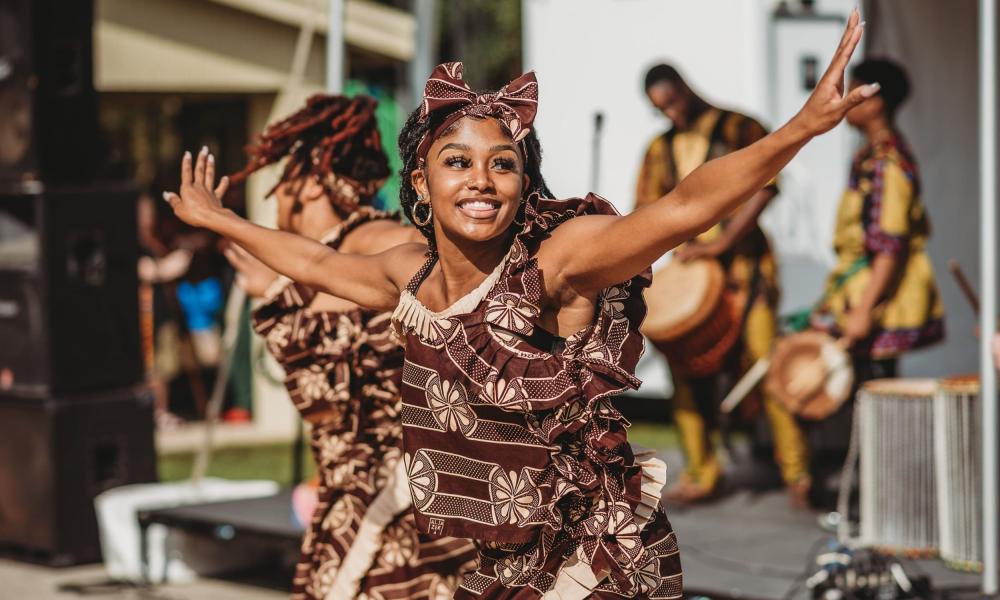
• File photo of Gullah Geechee Heritage Festival 2025.
On 12 October 2026, the Gullah Geechee Cultural Heritage Corridor will celebrate the 20th anniversary of when the United States Congress designated it a National Heritage Area.
According to BBC, spanning from North Carolina to southern Florida, Gullah Geechee culture lives on through its unique language, musical traditions and beliefs, offering travellers a window into the many ways African culture directly shaped the US.
Gullah Geechee culture has its roots in the late 17th and 18th Century, when African peoples were increasingly brought to English colonies in what is now the United States and enslaved on plantations.
Planters in the Carolina Lowcountry along the Eastern seaboard sought out people from Central African countries and West Africa’s Rice Coast, exploiting their agricultural knowledge to cultivate rice, indigo and Sea Island cotton in the coastal wetlands and islands.
The working conditions were brutal, but that same geographical isolation helped the enslaved and their descendants retain – and adapt – African cultural practices.
Traditional West and Central African one-pot cooking techniques combined with local seafood, vegetables, grains and meats gave rise to Gullah Geechee cuisine.
Lowcountry red rice, which combines rice, tomatoes, spices, smoked pork and sausage, is often compared to jollof rice, a one-pot rice stew cooked with tomatoes, spices and meat strongly associated with the Senegambia region of West Africa.
West African coiled basketry traditions were likewise adapted to the Lowcountry, using readily available sweetgrass, bulrush, palmetto and pine.
The “ring shout” – a Gullah Geechee ritual where participants form a circle, then move counterclockwise in a rhythmic pattern while stomping their feet, clapping their hands and singing in “call and response” – recalled West African musical and spiritual practices.
• Culled from BBC


BREAKING: APC Chairmen Accused of Leading Armed Attacks on ADC Members in Igueben

UPDATE: NAF Release Identities of Ondo Crash Victims

I sleep And Eat Thinking About Tinubu’s Re-Election – Wike

Tech Expert, Zuckerberg trains with UFC champions, Adesanya, Alexander

Organ Trafficking: Ekweremadu bags 10 years in UK prison

SAINT OBI: Between his marriage and his death
-

 Business2 days ago
Diesel Costs Bite: LAMATA Accelerates Shift To CNG, Electric Buses
-

 International2 days ago
US’s Gullah Geechee communities celebrate historic cultural festival rooted in West Africa
-

 International2 days ago
Italy marks 800 years since death of Saint Francis of Assisi
-

 Sports2 days ago
FIFA to decide 2030 World Cup final venue in 2028 as Morocco, Spain wait
-

 News2 days ago
NGE Tasks Newsrooms, INEC on Must-Do Measures for Credible 2027 Polls
-

 News2 days ago
Nigerian-Born Former Texas Professor Gets 78 Months For $921,000 Student Aid Fraud
-

 International2 days ago
Ethiopian woman says she hasn’t eaten or drunk water since age 10
-

 Entertainment2 days ago
BBNaija season 11: “And The Winner is Temi Nkem”