
Business
Senate Pegs 6-year Single Term For CBN Governor, N1trn Bank Capital Base

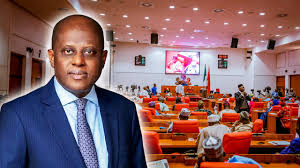
In an amendment bill, the National Assembly is seeking to make the Central Bank of Nigeria (CBN) governor’s tenure one term of six years.
The amendment of the CBN Act 2007 will foreclose a renewable term for the head of the apex bank and make it a single term of six years.
The National Assembly through the Senate is also proposing N1 trillion recapitalisation for commercial banks. It presently stands at N100 billion.
As the Senate undertakes sweeping reforms in the organisation, administration and functions of CBN through an amendment bill read for second reading in plenary on Tuesday, its committee on Banking, Insurance and other Financial Institutions screened nominees for board of directors of the Bank.
Proposal for six-year single term for CBN governor, deputy governors and members of board of directors, was contained in a bill seeking for an amendment of the CBN Act 2007 sponsored by Adetokunbo Abiru (APC Lagos East), chairman, Senate Committee on Banking.
Abiru, in his lead debate on the bill co-sponsored by 41 other members of the committee , said the six-year single term for CBN governor , deputy governors and board of directors was geared towards reducing political influence on them.
“The Bill proposes to amend this provision to provide a single non-renewal term of 6 years for the Governor and the Deputy Governors.
“This is the practice adopted by many independent Banks such as the US Federal Reserve and the European Central Bank where their chief executive officers serve only one non-renewable term.
“Empirical evidence shows that a single term for the members of the Executive and Board members of central banks helps to reduce political influence on monetary policy decisions and the time inconsistency problem associated with non-independent central banks,” he said.




Business
Airtel Money Targets October Listing On London Stock Exchange
Airtel Money’s parent company is Airtel Africa, a telecoms provider that is part of the Indian conglomerate Bharti Enterprises, which is ultimately controlled by the billionaire Sunil Bharti Mittal.

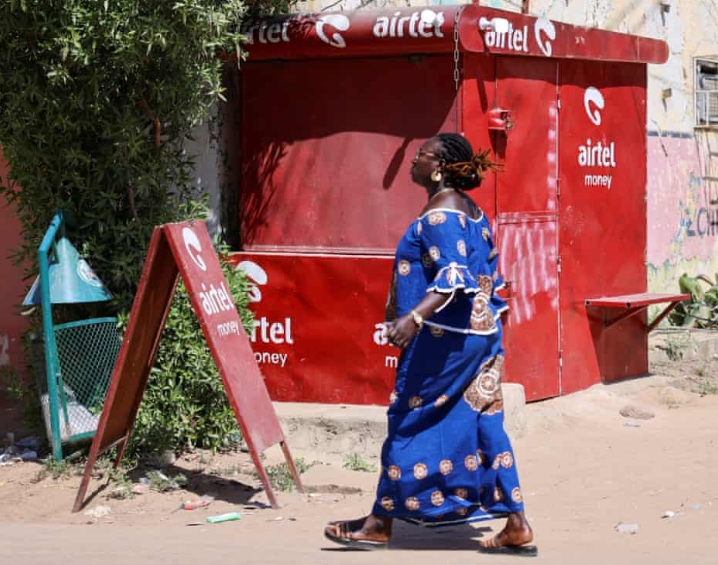
Airtel Money, the mobile money arm of Airtel Africa, has concluded plans to float on the London Stock Exchange in October.
Airtel Money’s chief executive, Ian Ferrao, made the disclosure Wednesday emphasising that the company would announce more details about the float in early October, including the indicative price range and number of shares to be offered, with final pricing to follow later in the month.
Airtel Africa had originally targeted a listing in the first six months of 2026 but delayed it to the second half of the year, blaming unfavourable market conditions as a result of the US-Israeli war on Iran. Several other companies also pushed back planned IPOs amid the market volatility caused by the conflict.
The company is hoping to raise about $800m (£601m) from the initial public offering (IPO) and is targeting a valuation of $8bn to $9bn, which would make it one of London’s largest listings in recent years.
Airtel Money has 53 million monthly active users across 13 countries in sub-Saharan Africa, including Uganda, Zambia and the Democratic Republic of Congo.
It operates through a network of branches and kiosks, which enable customers to load money on to their phones, withdraw cash and access other money services, and the company generated revenues of just under $1.4bn in the last financial year.
Airtel Money’s parent company is Airtel Africa, a telecoms provider that is part of the Indian conglomerate Bharti Enterprises, which is ultimately controlled by the billionaire Sunil Bharti Mittal.
Business
Cardoso Says Multiple FX Windows Cost Nigeria 3% of GDP, Higher Than Fuel Subsidy
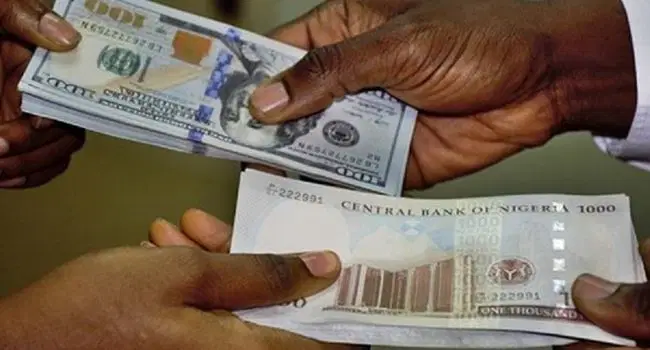
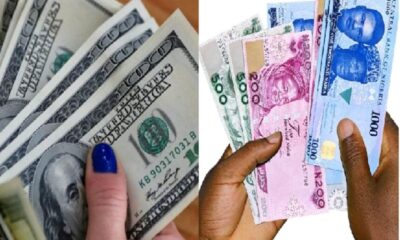
Before the CBN introduced FX reforms in 2023 to unify exchange rates, Nigeria had different channels through which dollars could be bought and sold. Different rates applied to different users and transactions.

Central Bank of Nigeria Governor Olayemi Cardoso has estimated that Nigeria lost about three per cent of its gross domestic product to multiple foreign exchange windows.
Mr Cardoso spoke in Abuja on Tuesday while answering questions after the 307th meeting of the Monetary Policy Committee.
He put the losses from the fuel subsidy regime at about 2.2 per cent of GDP, meaning the two distortions together cost the country roughly 5.2 per cent of GDP.
The committee cut the benchmark Monetary Policy Rate to 23 per cent from 26.5 per cent, a decision the governor described as an important operational realignment aimed at strengthening monetary policy transmission.
Mr Cardoso compared the cost of the old exchange rate system to the fuel subsidy, which he said was already a staggering amount of money.
The losses that we were making as a result of these multiple exchange rate windows was more. It was 3 per cent of GDP. So between those, you had 5.2 per cent of GDP lost,” he said.
Before the CBN introduced FX reforms in 2023 to unify exchange rates, Nigeria had different channels through which dollars could be bought and sold. Different rates applied to different users and transactions.
Black Market Rates
₦1382 DOLLAR (USD)
₦1860 POUND (GBP)
₦1555 EURO (EUR)
₦1000 DOLLAR (CAD)
₦70 SOUTH AFRICAN RAND (ZAR)
₦370 UAE DIRHAM (AED)
190 YUAN (CNY)
₦100 G.CEDI (GHS)
₦2250 CFA F.(XOF)
₦2250 CFA F.(XAF)
₦850 AUSSIE (AUD)
CBN Exchange Rate
DOLLAR (USD) ₦1327.78
POUND (GBP) ₦1774.31
EURO (EUR) ₦1521.37
SWISS FRANC (CHF) ₦1619.04
JAPANESE YEN (JPN) ₦8.44
CFA FRANC (XOF) ₦2.33
WEST AFRICAN UNIT OF ACCOUNT (WAUA)₦1814.83
CHINESE YUAN (CNY) ₦198.16
SAUDI RIYAL (SAR) ₦353.57
SOUTH AFRICAN RAND (ZAR) ₦81.82


Airtel Money Targets October Listing On London Stock Exchange

Cardoso Says Multiple FX Windows Cost Nigeria 3% of GDP, Higher Than Fuel Subsidy

Naira To Dollar, Pound , Euro Rate Wednesday September 23

Tech Expert, Zuckerberg trains with UFC champions, Adesanya, Alexander

Organ Trafficking: Ekweremadu bags 10 years in UK prison

SAINT OBI: Between his marriage and his death
-

 Business1 day ago
Gambia Orders Nigerian Banks To Replace Foreign Staff by December 2026
-

 International1 day ago
Trump launches ‘Trump TV’ as US networks halt White House coverage
-
 News1 day ago
Independent Panel Begins Probe into 37 Deaths in Civil Defence Custody
-

 Business2 days ago
CBN, MOF sign pact to align monetary, fiscal policies
-
 Business1 day ago
Dangote Whets Investors Appetite Ahead 2028 Fertiliser IPO
-

 Sports1 day ago
Mbappé Leaves Nike To Promote Swiss Sportswear Brand On
-

 Health1 day ago
Nigerian hospital successfully performs kidney cancer surgery via tele-robotic
-
 Business1 day ago
Naira To Dollar, Pound, Euro…Rate Today, September 22