
Health
Senate passes bill to establish Malaria Elimination Agency
The bill, sponsored by Ned Nwoko, scaled third reading on Wednesday after the Senate considered and adopted the report of its Committee on Health (Secondary and Tertiary), chaired by Ipalibo Banigo.

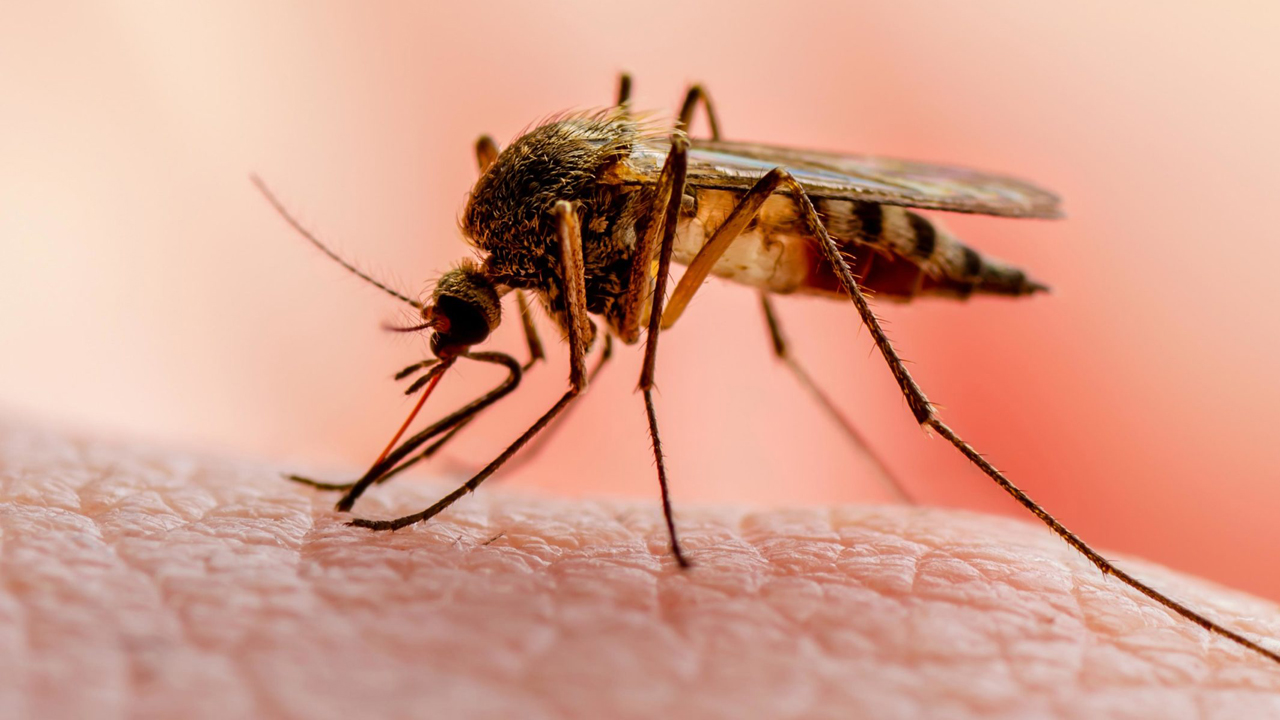
The Senate has passed a bill seeking to establish a National Agency for Malaria Elimination saddled with the responsibility of preventing, controlling and ultimately eliminating malaria in Nigeria.
The bill, sponsored by Ned Nwoko, scaled third reading on Wednesday after the Senate considered and adopted the report of its Committee on Health (Secondary and Tertiary), chaired by Ipalibo Banigo.
Presenting the report on behalf of Banigo, Sampson Ekong said the proposed agency would serve as the central body responsible for coordinating national efforts aimed at preventing, controlling and ultimately eliminating malaria in Nigeria.
The Senate said the agency seeks to mark a shift in the country’s approach to malaria management from treatment-focused interventions to preventive and elimination strategies.
“The agency, when established, will help shift the country’s approach from curative measures to prevention and eventual elimination of malaria,” it stated.
(Source: The SUN)

The Nigeria Centre for Disease Control and Prevention (NCDC) has cautioned that the country remains not Ebola-free, even though no new cases have been recorded since an imported infection was confirmed last month.
NCDC Director-General Dr Jide Idris issued the update on Tuesday, stressing the need for continued nationwide vigilance while Nigeria awaits clearance from the World Health Organization (WHO). He noted that 28 of the 62 contacts linked to the index case—a traveller from Uganda who tested positive for Bundibugyo virus disease on October 20—were still under monitoring as of November 9. The other 34 had completed their individual 21-day follow-up periods.
“Because they have left the quarantine does not mean we are Ebola-free. We can only be declared Ebola-free after another 21 days again. And it is not by ourselves to declare ourselves Ebola-free. WHO must be involved,” Idris said. He added that the absence of new cases does not end the response, as each contact’s monitoring period runs separately based on their last possible exposure.
The agency is maintaining contact tracing, laboratory testing, investigation of alerts, infection prevention measures, and surveillance at airports and land borders in collaboration with the Federal Ministry of Health and Social Welfare, the Federal Capital Territory Administration, state authorities, and partners. Alerts from states including Adamawa, Rivers, and Borno have so far tested negative.
Idris clarified that identification as a contact does not mean a person has the virus; monitoring allows early detection of symptoms and a rapid public health response. He urged healthcare workers to stay alert, take travel and exposure histories, follow infection control protocols, and report suspected cases promptly.
Nigeria currently has no confirmed active cases following the medical evacuation of the index patient (and her husband) to Switzerland. Under WHO protocols, a country is typically declared free of Ebola only after 42 days without new confirmed or probable cases.
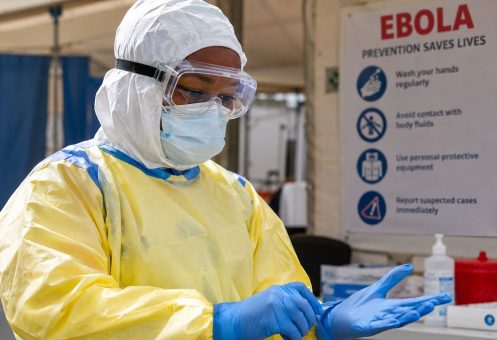
The Nigeria Centre for Disease Control and Prevention (NCDC) has reported two new suspected cases of Ebola virus disease in the country’s North-East region.
In an update released on Saturday, October 31, 2026, the agency said the two individuals have been isolated. Contact identification and listing are ongoing, and laboratory testing is underway to confirm or rule out the infection.
“Being classified as suspected cases does not mean they are confirmed Ebola cases; confirmation is subject to laboratory results,” the NCDC stated. The agency advised the public to maintain good hand hygiene, practise enhanced sanitation, and follow guidance from public health authorities. Further updates will be provided as verified information becomes available.
The development comes after Nigeria confirmed its first Ebola case in more than a decade on October 20. That case involved a 42-year-old woman who had travelled from Uganda to Abuja and tested positive for the Bundibugyo strain of the virus. She was later medically evacuated to Switzerland along with her husband.
Health authorities continue to monitor contacts linked to the earlier confirmed case while strengthening surveillance nationwide.
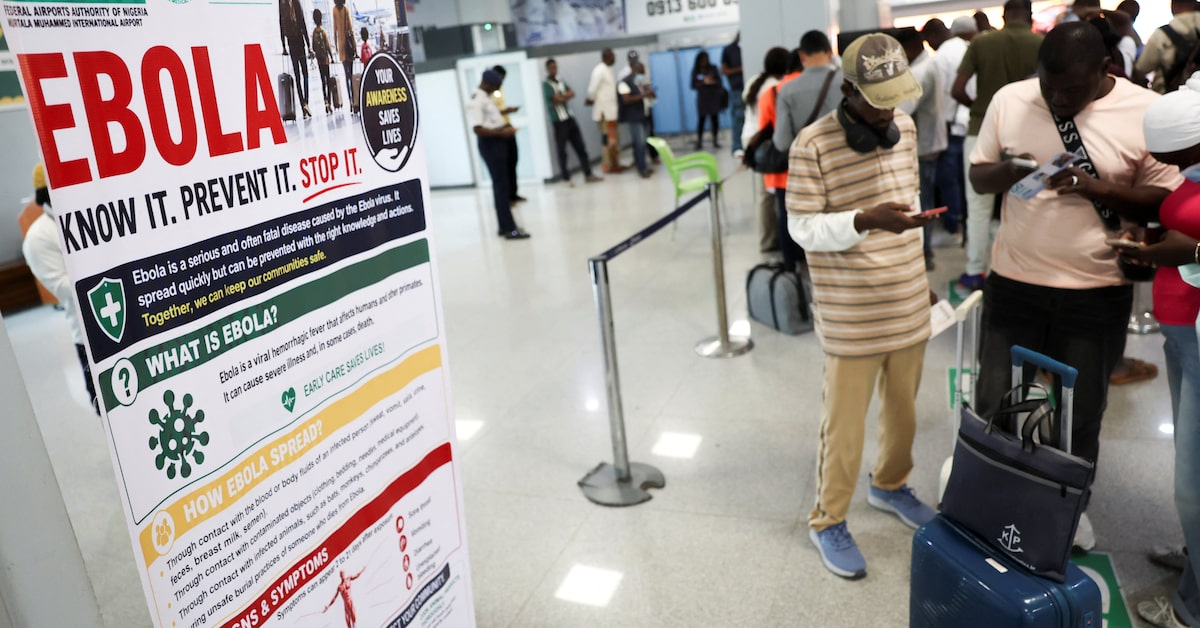
Nigeria’s Coordinating Minister of Health and Social Welfare, Prof. Muhammad Ali Pate, confirmed on Monday that the country’s first imported Ebola patient has been evacuated from Abuja to Switzerland.
In a statement posted on X, Pate said the patient was clinically improving, stable and conscious but remained potentially infectious, necessitating strict safety protocols throughout the evacuation process.
The patient travelled with her spouse, who has remained asymptomatic. The minister commended healthcare workers for their efforts in managing the case.
Pate assured Nigerians that public health measures remain in place to contain the virus and urged citizens to stay vigilant while relying only on credible information.


Seven UNN Pharmacy Graduates Die After Private Sign-Out Ceremony (Photos)

BREAKING: DSS Seizes Arms Cache in Sokoto

Panic as Fully Loaded CNG Passenger Bus Explodes in Lagos

BREAKING: Lagos Govt Declares Today, Thursday Work-Free to Mark 2026 Ìṣẹ̀ṣe Day

Tech Expert, Zuckerberg trains with UFC champions, Adesanya, Alexander

Organ Trafficking: Ekweremadu bags 10 years in UK prison
-

 Politics1 day ago
Exclusive: 2027 Presidential Election: APC, ADC, NDC Manifestos Compared– Who Is Offering What To Nigerians?
-

 Sports1 day ago
BREAKING: Tinubu Rewards Flamingos with Massive Cash, Savings Certificates (Video)
-

 Business2 days ago
Domestic Flights Fare Surges Ahead of Christmas, New Year
-

 Business2 days ago
Naira Exchange Rates Tuesday,10 Nov 2026
-
 Politics3 days ago
INEC removes 1.6m invalid voter records
-

 Sports2 days ago
Senate Approves N100m For World Cup Winning Flamingos
-

 Sports2 days ago
Flamingos bring World U-17 trophy home to Abuja
-
 News2 days ago
Senate Fails to Meet Quorum Again as Akpabio Warns on 2027 Campaigns