
Politics
Rivers High Court Halts Impeachment Proceedings Against Governor Fubara

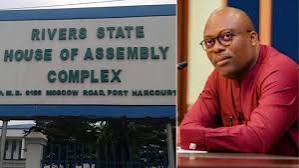
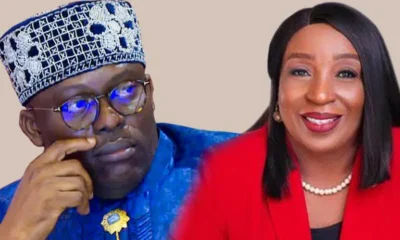
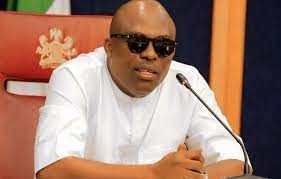
In a significant development amid the ongoing political crisis in Rivers State, a Rivers State High Court sitting in Oyigbo Local Government Area, Port Harcourt, has granted an interim injunction restraining the Rivers State House of Assembly from proceeding with impeachment steps against Governor Siminalayi Fubara and his Deputy, Prof. Ngozi Odu.
The ruling, delivered by Justice F.A. Fiberesima on Friday following ex parte motions in two separate suits filed by the governor (Suit No. OYHC/7/CS/2026) and his deputy (Suit No. OYHC/6/CS/2026), bars the Speaker of the House, Martin Amaewhule, the Clerk of the House, and other defendants from forwarding any resolution, articles of impeachment, or related documents to the Chief Judge of Rivers State, Justice Simeon Chibuzor-Amadi.
The court also specifically restrained the Chief Judge from receiving, considering, forwarding, or acting on any such communications for the purpose of constituting a seven-member investigative panel to probe allegations of gross misconduct against the governor and deputy.
The interim order is effective for seven days, pending the hearing of the substantive motion, adjourned to January 23, 2026.
This judicial intervention comes hours after the Rivers State House of Assembly, during its plenary on Friday, unanimously resolved to press ahead with the impeachment process.
The lawmakers formally requested the Chief Judge to set up the panel, insisting the move was in line with constitutional provisions despite earlier withdrawals and reversals by some members.
The impeachment proceedings were initiated on January 8, 2026, with the Assembly citing alleged gross misconduct by Fubara and Odu, including issues related to the demolition of the Assembly complex and unauthorized spending.
The process has seen fluctuations, with four lawmakers initially withdrawing support in favor of dialogue before some reversed their stance.
The Assembly has reportedly dismissed the court order, arguing that the judiciary lacks the power to intervene in legislative impeachment processes under the constitution.
The ruling provides temporary relief to Governor Fubara amid heightened tensions in the oil-rich state, where the political rift has drawn national attention.
The case continues to unfold as both sides prepare for the next court date.


Politics
Police reopens, handover PDP Hqtrs to Wike backed Faction
The propertie sealed in November following a leadership dispute between a faction led by Tanimu Turaki and a caretaker committee backed by Nyesom Wike.

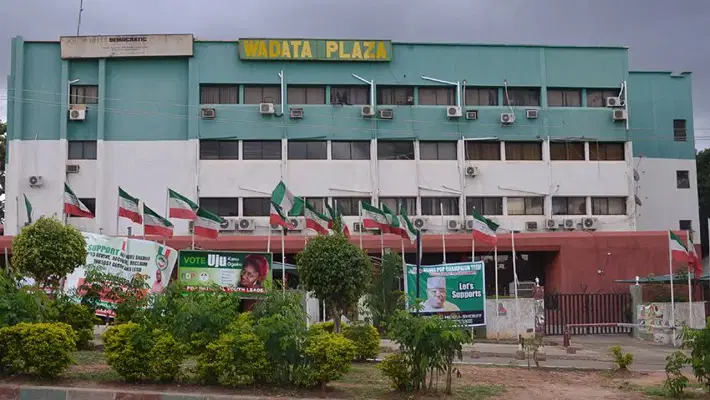
The Nigerian Police on Saturday reopened the Peoples Democratic Party’s (PDP) Wadata Plaza, as well as The Legacy House, Maitama, and handed over to the National Chairman, Hon. Abdulrahman Mohammed Takushara and Senator Samuel Anyawu, National Secretary.
In a statement, the party’s National Publicity Secretary, Hon. Jungudo Haruna Mohammed disclosed that following the recent convention, a Federal High Court in Abuja directed the police to unseal the affected properties and return them to the party’s leadership.
According to him, the reopening of the secretariat is expected to facilitate the resumption of full administrative activities at the party’s national headquarters.
The propertie sealed in November following a leadership dispute between a faction led by Tanimu Turaki and a caretaker committee backed by Nyesom Wike.
“The party commends the Nigeria Police Force for its professionalism and adherence to the rule of law. This action is a clear demonstration of respect for constitutional order and due process,” he said.
Politics
NBA Cautions Lawyers Against Involvement in Political Party Disputes
The association cited Section 83 of the Electoral Act, which it said restricts courts from entertaining suits relating to the internal affairs of political parties, warning that such actions could undermine Nigeria’s democratic process ahead of the 2027 general elections.
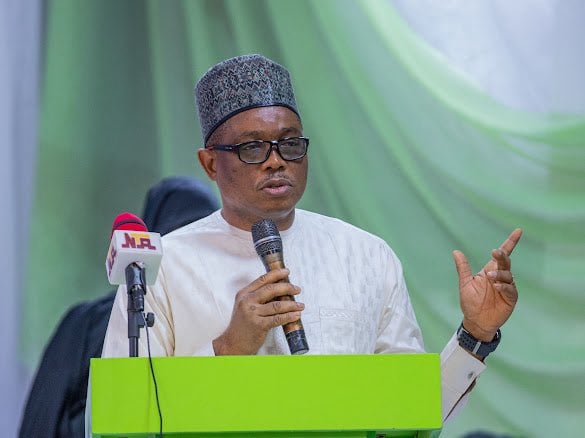
Photo: NBA President, Afam Osigwe (SAN) | Credit: NBA (X).
The President of Nigerian Bar Association (NBA), Afam Osigwe (SAN) on Friday cautioned lawyers and courts against involvement in the internal affairs of political parties.
The association cited Section 83 of the Electoral Act, which it said restricts courts from entertaining suits relating to the internal affairs of political parties, warning that such actions could undermine Nigeria’s democratic process ahead of the 2027 general elections.
Osigwe, in a statement said that the NBA had observed a growing trend of litigation aimed at drawing courts into intra-party disputes, despite clear statutory provisions limiting judicial intervention in such matters.
Osigwe emphasised that the recent political and legal developments arising from the interpretation of the Electoral Act 2022 raise serious constitutional and rule-of-law concerns.
Osigwe further noted that the law also prohibits courts from granting interim or interlocutory injunctions in such disputes.
The statement read in part, “Where any action is brought in negation of this provision, no interim or interlocutory injunction shall be entertained by the Court, but the Court shall suspend its ruling and deliver it at the stage of final judgment and shall give accelerated hearing to the matter.”
The NBA expressed concern that, contrary to these provisions, courts have continued to entertain such cases, sometimes issuing orders that affect party leadership contests and internal governance structures.
It also accused some lawyers of filing suits aimed at securing judicial intervention in political disputes through forum shopping and what it described as “mala fide applications” to obtain favourable orders.“
This emerging trend of subverting the clear letters of the Electoral Act and dragging courts into the internal affairs of political parties through disingenuous litigation, forum shopping, and mala fide applications designed to secure undemocratic political advantage does no good for our democracy,” the association said.
The NBA warned that continued judicial involvement in such matters could turn court processes into instruments of political manipulation.
It stressed that the relevant provisions of the Electoral Act were designed to prevent abuse of court processes and preserve the integrity of internal party democracy.
The association also reminded legal practitioners of their professional responsibilities, stating that lawyers must not act as political agents in pursuit of partisan outcomes.“The filing of actions intended to draw courts into internal political party disputes, particularly where jurisdiction is expressly excluded, constitutes an abuse of court process and a violation of professional responsibility,” it said.
The NBA warned that it would initiate disciplinary action against any lawyer found to have violated these provisions.
Politics
2027: Bode George warns INEC, Judiciary Drifting Nigeria Towards ” One Party Rule”
” They are ready to destroy all democratic fundamentals, tenets and ethos to have their way, ” said Chief George , urging all leaders and elders, regardless of party affiliations, to rise and condemn what is happening,
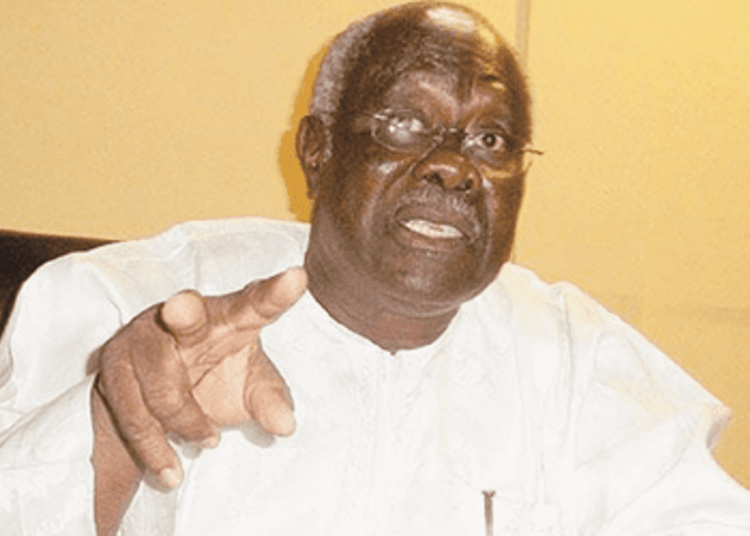
“You want to be the only presidential candidate in 2027, in a multi-cultural, multi-religious and multi-ethnic country like Nigeria in the 21st Century. How is that possible? We must encourage a multi-party democracy. That is the spinal cord of participatory democracy.’’
That’s Chief Olabode George, an elder statesman and the former Deputy National Chairman of the Peoples Democratic Party (PDP), while reflecting on the current happenings in the country ‘s government and politics space.
Chief George, who stated this in a statement issued by him on Thursday, said that actions and utterances coming from APC and INEC in recent weeks showed that they don’t want any other presidential candidate to emerge in 2027 aside from President Bola Tinubu of the APC
“They are ready to destroy all democratic fundamentals, tenets and ethos to have their way, ” said Chief George , urging all leaders and elders, regardless of party affiliations, to rise and condemn what is happening, emphasising, “You don’t appease evil. You deal with evil.”
The elder statesman said that the Chairman of INEC, Prof. Joash Amupitan, was a pitiable sight when he appeared on a television programme to defend the actions of the Electoral umpire in using technicalities to sack Excos of political parties.
“Enough is enough. This nation must not sink. At 80 years, what am I looking for? I was in Form 4 in secondary school when the Western Region crisis started in 1962. I don’t think some of those causing a crisis in the polity today were born then. Military or civilian, I have seen it all. We must not allow this country to go down,” he said.
We are firing the warning shot now. Nigeria is too big to be manipulated by a greedy and selfish few
Chief George said that he chose to sound a note of warning because Nigeria is too big to be manipulated.
“We are firing the warning shot now. Nigeria is too big to be manipulated by a greedy and selfish few. Look at insecurity. This country is gradually collapsing. I don’t want to hear anything like external factors or elements.
Those killing and kidnapping Nigerians all over the place are in this country. Instead of the president, as the Commander-in-Chief, to deal with these bloodthirsty maniacs, he is busy using INEC to destroy opposition parties.”
He appealed to Nigerians not to allow such a thing to happen, saying, “It is unfortunate that the electoral body has become an undertaker, mandated by the ruling party to destroy this democracy.
“Unfortunately, our judiciary is also drifting. I remember the glorious years of Justices Elias, Kayode Eso, Oputa, Belgore, Uwais, and others. Today, the rot in the judiciary is appalling.
“Any evil is a reflection of injustice. There is evil in the country today. Clearly, injustice can never overcome justice. When you deliver good judgments, justice is done. When you use technicalities to deliver wrong judgments, it is injustice,” he said.


FG Unmasks 60 Persons and Corporates Behind Terrorism Financing, Order Banks To Freeze Their Accounts

Police reopens, handover PDP Hqtrs to Wike backed Faction

Gunmen Kill Traditional Ruler, Four Others in Imo State, Set Bodies Ablaze

Tech Expert, Zuckerberg trains with UFC champions, Adesanya, Alexander

Organ Trafficking: Ekweremadu bags 10 years in UK prison

SAINT OBI: Between his marriage and his death
-

 News2 days ago
CBN Debunks Viral Fake News of ₦5,000 Banknote Featuring President Tinubu’s Image
-
 News3 days ago
INEC releases updated voters registration figure nationwide
-
 Politics2 days ago
2027: Bode George warns INEC, Judiciary Drifting Nigeria Towards ” One Party Rule”
-
 Crime2 days ago
Tinubu Mourns Soldiers Killed in Benisheikh Terror Attack
-
 Business2 days ago
DR Congo Central Bank Announces Ban on Foreign Currency Cash Transactions from 2027
-
 News3 days ago
US Declares 23 Nigerian States High-Risk for Citizens
-
 Politics2 days ago
NBA Cautions Lawyers Against Involvement in Political Party Disputes
-
 News2 days ago
Police Debunk Viral “Terror Attack” Video in Abuja, Launch Investigation