
News
Prominent PDP Figure Kola Ologbondiyan Resigns from Party After Decades of Service

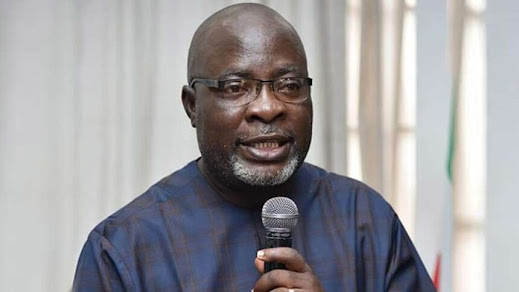
In a surprise move that has sent ripples through Nigeria’s opposition politics, Kola Ologbondiyan, the former National Publicity Secretary of the Peoples Democratic Party (PDP), has formally resigned from the party, ending a storied career that spanned national leadership roles and high-stakes election campaigns.
Ologbondiyan, a seasoned political communicator and ex-journalist, announced his departure in a heartfelt letter dated December 5, 2025, addressed to the PDP Chairman of Okekoko Ward (Ward 09) in Kabba/Bunu Local Government Area of Kogi State.
The missive was made public on his X (formerly Twitter) account on Saturday, underscoring the finality of his decision amid ongoing internal PDP tensions.
In the letter, Ologbondiyan reflected on his journey with the party, extending profuse thanks to its leadership for the platforms afforded to him. “Let me start by thanking you as well as other levels of leadership in the Peoples Democratic Party (PDP) for the opportunities provided for me to serve the party as well as our fatherland, Nigeria,” he wrote, evoking a sense of closure to his contributions.
The resignation stems from a deeply personal reckoning, Ologbondiyan explained. After a thorough self-assessment of his role within the PDP’s structure, he determined that stepping away was the most appropriate path forward.
“It is now imperative to bring your attention to the fact that I have reviewed my participation in the PDP and came to the conclusion that, for personal reasons, I need to make my exit. I have therefore come to a decision to formally withdraw my membership of the PDP, henceforth,” he stated plainly.
He concluded the correspondence by notifying the ward executives of his immediate exit and extending warm wishes for the party’s future endeavors, a gesture that tempers the news with goodwill rather than acrimony.
Ologbondiyan’s tenure in the PDP was marked by pivotal media and advisory roles. He previously served as Director of Media and Publicity for the PDP Presidential Campaign Council during the 2019 general elections, where he helmed communications for Atiku Abubakar’s bid against then-incumbent Muhammadu Buhari.
Earlier in his career, he worked as a media aide to former Senate President David Mark, who now leads the African Democratic Congress (ADC), though no immediate ties to that party have been indicated in Ologbondiyan’s announcement.
The resignation comes at a precarious moment for the PDP, which has grappled with internal divisions and electoral setbacks since losing the presidency in 2015. Political analysts speculate that Ologbondiyan’s departure could signal broader disillusionment among the party’s old guard, though he has not yet hinted at future affiliations.
As of Sunday, reactions from PDP stalwarts remain muted, with the party’s national headquarters yet to issue an official response.
Ologbondiyan’s exit leaves a void in the PDP’s publicity machinery, where his sharp-witted defenses often shaped public narratives during turbulent times.






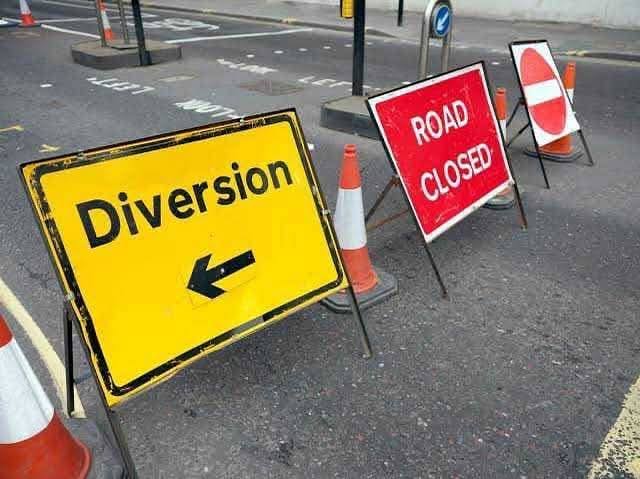
The Lagos State Government has unveiled a comprehensive traffic diversion plan for Wednesday, April 8, and Thursday, April 9, 2026, in preparation for the commissioning of several key infrastructure projects by President Bola Tinubu.
According to the state Ministry of Transportation, partial road closures and diversions will be implemented in affected areas to ensure smooth movement during the events, which include the inauguration of the Ojota-Opebi Link Bridge and other major projects such as the Lagos State Geographic Information Service building in Alausa and the Tolu Schools Complex.
On Wednesday, April 8, diversions will be enforced around venues for the commissioning ceremonies, while on Thursday, April 9, restrictions will apply between 9:00 a.m. and 1:00 p.m. during the Tolu Schools Complex event and additional project unveilings.
Motorists have been advised to use alternative routes and plan their journeys accordingly to avoid delays. The government urged residents and commuters to cooperate with traffic management officials and security personnel deployed to the areas.
The projects form part of ongoing efforts to improve infrastructure and education facilities across the state. Further details on specific diversion routes are expected to be released by the Ministry of Transportation in the coming hours.
Commuters are encouraged to monitor official announcements via Lagos State traffic radio and social media handles for real-time updates.
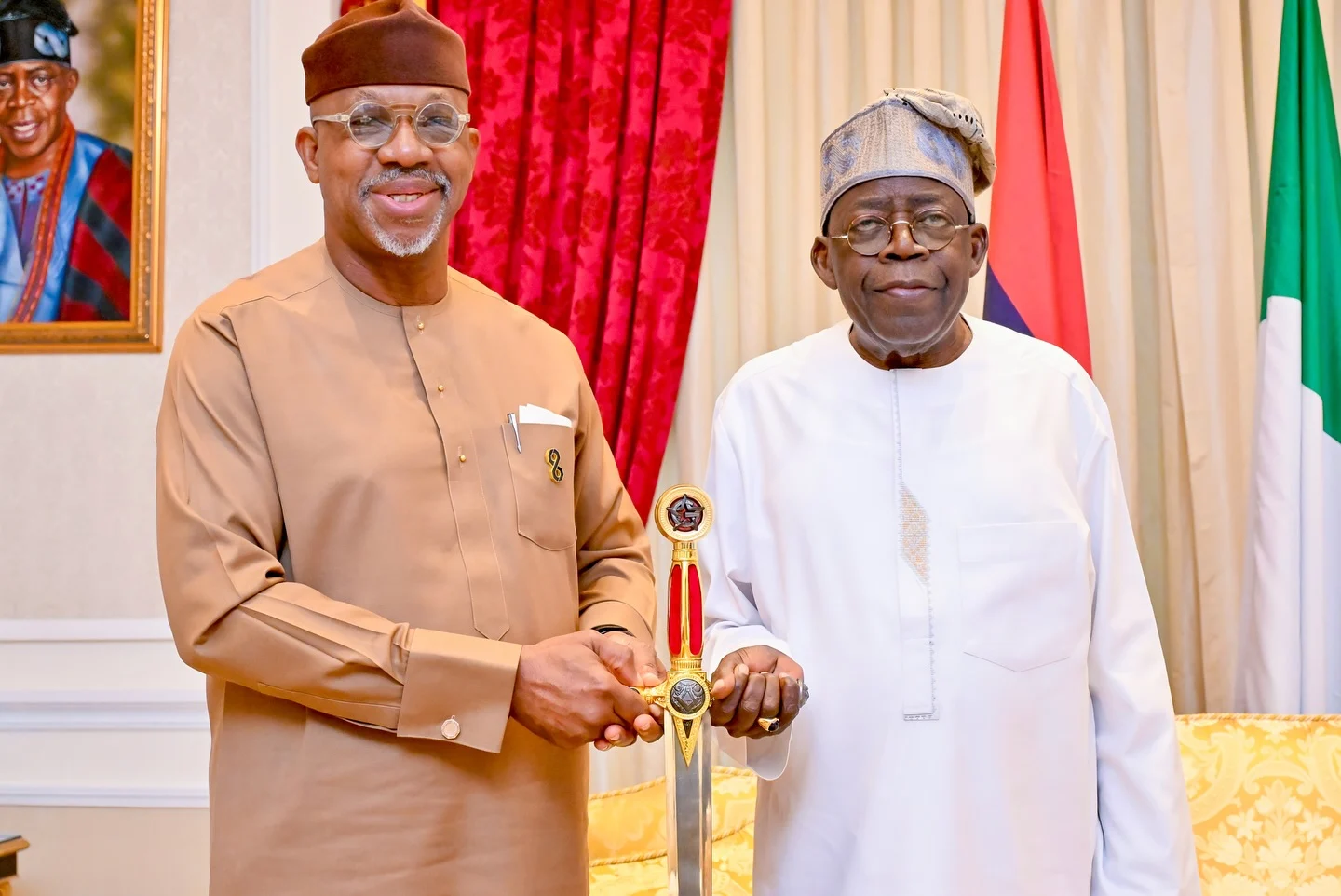
Ogun State Governor Prince Dapo Abiodun has presented a ceremonial sword to President Bola Ahmed Tinubu, symbolically conferring on him the title of “Jagaban” (leader of warriors and conquerors), while calling for continued aggressive action against crime and insecurity across Nigeria.
The presentation took place during President Tinubu’s official visit to Ogun State on Saturday, where he was received warmly by the governor and other dignitaries.
Governor Abiodun described the sword as a mark of appreciation and a charge to the President to press on with his administration’s security efforts.
In his remarks, Abiodun reminded Tinubu of the strong political and personal ties between them, noting that Ogun State was where the President had previously made significant declarations.
He urged Tinubu to maintain the momentum in the war against criminal elements, banditry, and other threats to national peace.
President Tinubu, who has repeatedly vowed to defeat insecurity by mobilising all military and law enforcement assets, received the gift amid smiles and applause. His administration has emphasised reforms in security architecture, including procurement of new equipment for the armed forces and enhanced coordination among agencies.
The event formed part of a broader visit during which the President is expected to commission key infrastructure projects in the state, including developments linked to the Gateway International Airport. Governor Abiodun used the occasion to commend Tinubu’s economic reforms, such as foreign exchange unification and fuel subsidy removal, describing them as necessary steps that are already yielding positive impacts.
Security analysts view the symbolic gesture as a show of solidarity between the state and federal government in tackling Nigeria’s persistent security challenges. The “Jagaban” title, rooted in Yoruba cultural and warrior traditions, underscores expectations of strong, decisive leadership in the ongoing fight against crime.
The Presidency has not issued a detailed official statement on the sword presentation, but sources close to the visit described it as a morale-boosting moment that reinforced the alliance between the two leaders.
This development comes as the federal government continues to prioritise national security, with recent commitments to equip the military and intensify operations against threats in various parts of the country.
News
BudgIT appoints Nigeria Country Director
He brought with him a track record in governance, research, and institutional leadership.

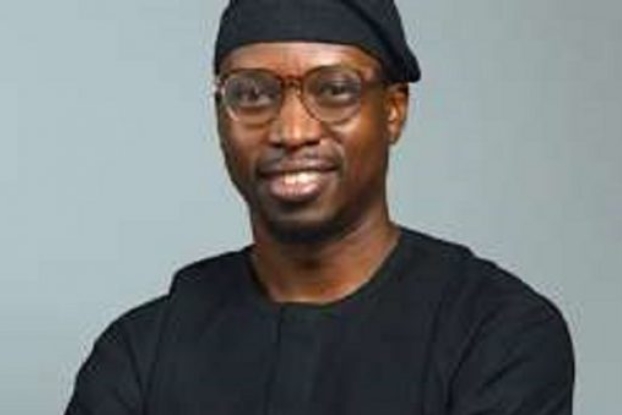
BudgIT has appointed Mr. Vahyala Kwaga as Country Director for Nigeria.
The appointment took effect on April 1, 2026.Kwaga was appointed following a leadership transition within the civic-tech organisation.
He brought with him a track record in governance, research, and institutional leadership.
Since joining BudgIT in 2021, Kwaga has held several leadership roles, including Senior Researcher, Head of the Open Government and Institutional Partnerships (OGIP) Unit, Group Head of Research and OGIP, and Deputy Country Director.
In these positions, he contributed to strengthening BudgIT’s research output, deepening its policy engagement, and improving coordination across programmes.


JUST IN: ADC Faces Fresh Crisis as New Faction Emerges, rejects David Mark-led coalition

Resident Doctors Suspend Strike, Ask Members to Resume on Wednesday

Lagos Announces Traffic Diversions for Wednesday and Thursday Project Commissionings

Tech Expert, Zuckerberg trains with UFC champions, Adesanya, Alexander

Organ Trafficking: Ekweremadu bags 10 years in UK prison

SAINT OBI: Between his marriage and his death
-

 News2 days ago
Kaduna Mando Garage Explosion Not Bomb- Police
-

 News2 days ago
Atiku hires US lobbying firm for $1.2m to boost image – Report
-
 Business2 days ago
President Tinubu Approves N3.3Trn Payments Plan To Restore Reliable Electricity
-
 Politics2 days ago
Obidients mobilise for #OccupyINEC protest
-

 Health3 days ago
Resident Doctors Set to Begin Nationwide Indefinite Strike on April 7 Over Unmet Demands
-

 Sports1 day ago
CAF confirms 16 teams for U-17 AFCON 2026
-
 Politics2 days ago
INEC suspends voter revalidation amid rising concerns by Opposition parties
-
 Politics2 days ago
ADC will resist imposing a one-party system on Nigerians – Mark